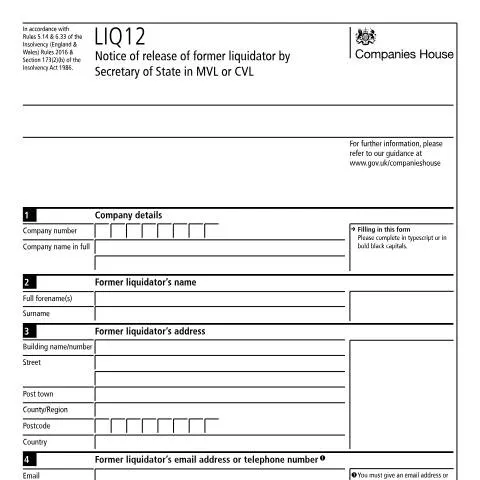
Navigating the Release of a Liquidator: Understanding the Notice by Secretary of State
When managing a company's winding-up process, understanding the procedural nuances can substantially ease the transition. One pivotal moment occurs when the Secretary of State releases a former liquidator from their duties. This important notice, commonly referred to as the "Notice of Release of Former Liquidator by Secretary of State", holds significance for various stakeholders involved in the dissolution process.
Key Terminology: Breaking Down the Notice
To effectively navigate the notice, it is essential to grasp the key terms involved:
- Former Liquidator: The individual or firm responsible for overseeing the closure of a company, ensuring all obligations are met.
- MVL: Members' Voluntary Liquidation, a solvent process initiated by the company’s shareholders.
- CVL: Creditors’ Voluntary Liquidation, utilized when a company cannot pay its debts.
The release notice itself signifies that the Secretary of State has formally acknowledged the completion of the liquidator’s responsibilities, marking a critical juncture in the winding-up process.
Understanding the Release Date: A Critical Milestone
The date of release, indicated on the notice, is a vital element. This date is not just a procedural formality; it affects various aspects of the liquidation and subsequent legal implications. Stakeholders must be aware that:
- The release date often triggers the final steps in the winding-up process.
- It serves as an official record, impacting the company's registered information and potentially affecting creditor claims.
Step-by-Step Guide to Utilizing the Notice
Utilizing the notice effectively involves a series of methodical steps:
- Preparation: Ensure all necessary details are accurate, including the company name and number, which must match the public Register.
- Filling the Notice: Complete the notice with precision. Key information includes the former liquidator’s name, address, and reason for release.
- Submission: The notice can be submitted to any Companies House address, although it is recommended to send it to the designated office in Cardiff for expediency.
- Record Keeping: Retain a copy of the notice for your records, as this document may be required for future reference.
By following these steps, companies ensure compliance with legal requirements while facilitating a smooth transition in the liquidation journey.
Common Misinterpretations and Pitfalls
Misinterpretations surrounding the notice can lead to unnecessary complications. Here are some common pitfalls:
- Assuming the Release is Automatic: Many people believe that the liquidator is automatically released upon filing certain documents. However, formal acknowledgment is crucial.
- Neglecting Communication: Providing contact information can be beneficial in case Companies House has any questions regarding the submission.
- Inconsistencies in Information: Ensure all details, particularly those related to the company and liquidator, are accurate and up-to-date to prevent delays.
Recognizing these potential misinterpretations can significantly enhance the chances of a smooth liquidation process.
The Relationship Between the Release Notice and Other Liquidation Documents
The Notice of Release is intricately linked with other documents involved in the liquidation process. Understanding these connections can provide a clearer picture of the overall procedure:
| Document | Purpose | Relation to Release Notice |
|---|---|---|
| Liquidation Report | Details the process and decisions made during liquidation. | Often precedes the release as it outlines the liquidator’s actions. |
| Statement of Affairs | Provides a snapshot of assets and liabilities. | Essential for establishing the context of the release. |
| Final Accounts | Summarizes financial activities during liquidation. | Must be completed prior to the release notice. |
Understanding the interplay between these documents ensures all procedural requirements are met and clarifies the liquidator's role through the winding-up process.
Legal Framework: Understanding the Governance Behind the Notice
This notice operates under specific legal provisions, primarily the Insolvency Act 1986 and the Insolvency (England & Wales) Rules 2016. These regulations outline the legal requirements and processes for liquidators and companies undergoing liquidation.
Sections 173(2)(b) of the Insolvency Act and Rules 5.14 & 6.33 of the Insolvency Rules provide a foundation for the notice, ensuring accountability and transparency. Familiarity with these legal frameworks not only fosters compliance but also aids in understanding the implications of the release.
Practical Tips for Stakeholders After Receipt of the Notice
Once the notice of release is received, various stakeholders, including company directors and creditors, must take specific actions:
- Directors: Review the implications of the release on your responsibilities and any outstanding obligations. Ensure all necessary post-liquidation obligations are fulfilled.
- Creditors: Assess any claims in light of the release. Understanding how the release affects your entitlements is crucial.
- Former Liquidators: Maintain a copy of the notice in your records and inform relevant parties of your release from duties.
These actions help mitigate risks and ensure all parties remain informed about their standing post-liquidation.
Conclusion: Embracing the Transition with Confidence
Receiving the Notice of Release of Former Liquidator by Secretary of State may seem like a formality, but it encompasses vital legal implications and responsibilities. By understanding the nuances of this process, preparing documents meticulously, and respecting legal frameworks, all stakeholders can navigate the winding-up procedure successfully. Embracing this transition with clarity can pave the way for a more effective closure for the company and its stakeholders.
Understanding the Role of a Liquidator in the Dissolution Process
Before diving into the notice of release of a former liquidator, it’s essential to understand the liquidator's role within the context of a company's dissolution. A liquidator is appointed to wind up the affairs of a company, ensuring that debts are settled and assets are distributed among creditors and shareholders. In the UK, this process is governed by the Insolvency Act 1986, which lays out the legal framework for liquidations, whether they are voluntary or compulsory.
Liquidators have several responsibilities: they must collect and realise the assets of the company, pay off any debts, prepare final accounts, and distribute any remaining funds to shareholders. Once these tasks are fulfilled, the liquidator must apply to be released from their duties, which is formalised by a notice issued by the Secretary of State to confirm the liquidator’s release. This step is crucial, as it legally absolves the individual from further obligations related to the liquidation process.
Procedures Following the Release of a Liquidator
After the Secretary of State issues the notice of release for a former liquidator, several important procedures and implications follow. Firstly, the former liquidator should ensure that all necessary documentation related to the liquidation process is archived appropriately. This includes the final accounts, correspondence with creditors, and any other relevant records. The retention of these documents is not only prudent but also a requirement under the Companies Act 2006, which mandates that records must be kept for a minimum of six years.
Additionally, it is advisable for the former liquidator to communicate the outcome of their release to the company's stakeholders, including shareholders and creditors. Transparency can facilitate trust and clarity regarding the completion of the liquidation process. This communication can take the form of a letter detailing the release and providing a summary of the liquidation outcomes.
Moreover, once released, the former liquidator should update their professional profiles or registrations, if applicable. This is particularly relevant for licensed insolvency practitioners who may be subject to regulatory requirements that necessitate the disclosure of their current status. It may also be an opportunity for the individual to seek new appointments, as the release signifies their availability for future roles in similar capacities.
Impact on Creditors and Stakeholders Post-Release
The release of a former liquidator has significant implications for creditors and stakeholders involved in the liquidation process. Once a liquidator is released, they are no longer accountable for the actions taken during the winding-up process. This means that creditors cannot hold the liquidator liable for any perceived mismanagement of the company's assets or distribution of funds. Understanding this release is crucial for creditors who may have unresolved issues or disputes regarding their claims against the liquidated company.
Furthermore, stakeholders should be aware that the release does not necessarily absolve the company itself from any remaining debts or obligations. Once the liquidation is complete and the liquidator is released, the company will typically be dissolved, and any unresolved debts may be written off. However, creditors may still have avenues for recovery depending on the circumstances surrounding the company's initial financial struggles.
In some cases, creditors may consider pursuing legal action against the company’s directors if misconduct or mismanagement is suspected. The release of the liquidator does not impede such actions, as the legal obligations of the directors are separate from those of the liquidator. It’s advisable for creditors to consult with legal advisors if they are considering pursuing claims after the liquidator's release.