Understanding the Role of Form D20 in Legal Proceedings
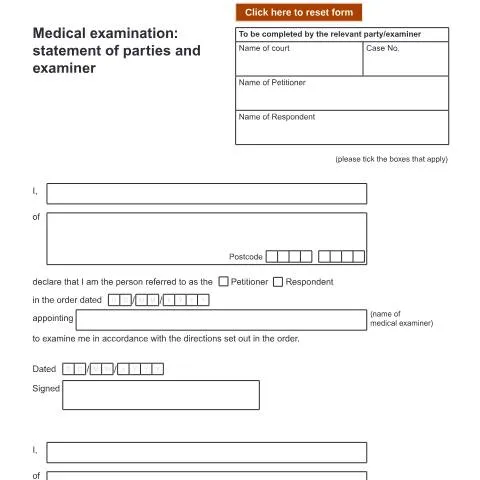
In the landscape of family law, particularly in cases involving children or vulnerable adults, the Form D20: Medical Examination Statement of Parties and Examiner plays a pivotal role. This form is essential for documenting the findings of a medical examination ordered by the court, ensuring that both the parties involved and the appointed medical examiner are aligned in their statements. Understanding the nuances of this form is critical for anyone navigating the legal system, especially those directly involved in proceedings that require such examinations.
Who is Required to Submit the D20 Form?
The parties who are typically involved with the D20 form include the Petitioner and the Respondent in a court case. The submission of this form is mandatory in cases where a medical examination has been ordered as part of the legal proceedings. Consider these key roles:
- Petitioner: This is the individual who has initiated the case and is seeking a ruling from the court.
- Respondent: The individual responding to the case brought by the Petitioner. Their interests and well-being may be evaluated through the medical examination.
- Medical Examiner: A qualified professional appointed by the court to conduct the examination and provide an objective report on the findings.
In cases involving minors or individuals unable to represent themselves, a guardian or advocate may also be involved in the submission process. It is essential that the right individuals are signing the form to ensure that the legal requirements are met.
The Procedure for Completing the D20 Form
Filling out the D20 form requires careful attention to detail. Each section must be completed accurately to avoid delays in the court process. Here’s a breakdown of the steps required in this procedure:
- Identification of Parties: Clearly state the names of the Petitioner and Respondent, including their addresses and postcodes.
- Case Information: Enter the name of the court and the case number, which can usually be found in the court documents issued earlier in the process.
- Declaration: Both the Petitioner and the medical examiner must sign this section. It is crucial that the signature of the medical examiner is done in the presence of the individual being examined.
- Dates: Ensure that all relevant dates are provided, including the date of the medical examination and the date the form is signed. Accurate dating is essential for the timeline of the court proceedings.
Failure to complete any of these sections may result in delays or complications in the case. Therefore, taking care to fill out the form correctly is paramount.
Examining the Consequences of Incomplete Forms
Submitting an incomplete or incorrectly filled D20 can have significant ramifications. Here’s how:
- Delays in Proceedings: Courts may postpone hearings if there are issues with the documentation provided. This can extend the time it takes for a resolution, causing additional stress for all parties involved.
- Legal Repercussions: In some instances, failing to comply with court orders related to medical examinations can lead to contempt of court charges.
- Impact on Outcomes: The validity of the medical examination findings may also be questioned, which could affect decisions made by the court regarding custody, access arrangements, or other critical matters.
Timeline: Key Dates and Deadlines
Time management is crucial when dealing with legal forms such as the D20. It’s essential to be aware of the timeline related to the submission:
| Action | Timeframe | Notes |
|---|---|---|
| Appointment for Medical Examination | As soon as ordered by the court | Coordinate with the medical examiner and respondent. |
| Submission of D20 Form | Prior to the court hearing | Ensure submission is ahead of the scheduled hearing date. |
| Review Period | Variable | The court may take time to assess the submitted form. |
Adhering to deadlines is critical; any lapses can adversely impact your case timeline and lead to unexpected complications.
Particular Cases: Complex Situations Involving Form D20
Certain cases require additional considerations when completing the D20 form. Examples include:
- International Cases: If one party resides outside the UK, additional legal considerations may apply. You might need to engage with international law or seek legal advice to ensure compliance with both UK regulations and those of the other jurisdiction.
- Minors: For cases involving children, the form needs to reflect that a responsible adult will be signing on their behalf. This requires careful attention to legal guardianship and consent.
- Urgent Applications: In urgent scenarios, you may need to expedite the examination and submission of the D20 form. Be prepared to communicate with the court and medical examiner to facilitate this process.
Each of these situations can introduce unique challenges that necessitate an understanding of both the legal framework and the procedural steps involved.
Distinguishing Form D20 from Similar Documents
The D20 form is often confused with other official documents used in family law proceedings. Here’s how it differs:
| Form | Purpose | Key Distinction |
|---|---|---|
| D20 | Medical examination statement | Specific to medical findings as per the court's request. |
| Form C1 | Application for a Child Arrangements Order | Focuses on custody and visitation arrangements, not medical evaluations. |
| Form D81 | Application for Financial Remedy | Deals with financial claims rather than medical assessments. |
Being aware of these distinctions can help ensure that the correct forms are submitted for the appropriate purposes, streamlining the legal process.
The Role of the Medical Examiner in the D20 Process
The medical examiner's role is crucial in the context of the D20 form. They are responsible for:
- Conducting Impartial Assessments: The examiner must provide an unbiased evaluation based on the medical examination.
- Providing Clear Documentation: They must ensure that their findings are accurately represented on the D20 form, which serves as a legal document in court.
- Adhering to Confidentiality Standards: Under the Data Protection Act 2018, the examiner must handle personal data with care, ensuring that only relevant information is disclosed in the context of the legal proceedings.
The integrity and accuracy of the medical examiner's report can significantly influence the court's decisions and the overall outcome of the case.
Final Considerations for Navigating the D20 Form Submission
When dealing with the D20 form, there are several practical tips to keep in mind:
- Seek Legal Assistance: Given the complexities involved, it is advisable to consult with a legal professional who specializes in family law.
- Maintain Copies: Always keep copies of submitted forms for your records. This can be invaluable in case of disputes or questions regarding submission dates.
- Follow Up: After submission, follow up with the court to confirm that the form was received and is being processed correctly.
Understanding the implications and requirements of the D20 form can help ensure a smoother legal process. By adhering to deadlines, filling out the form accurately, and understanding the roles of all parties involved, those navigating the legal landscape can better protect their interests and contribute to a fair resolution of their case.
Understanding the Role of Form D20 in Family Law Proceedings
Form D20 is a crucial document within the framework of family law proceedings in the UK, particularly for cases involving children, where the mental or physical health of the parties can impact decisions regarding custody and access. Its primary purpose is to facilitate a medical examination that assesses the fitness of parents or guardians to care for their children. This examination can play a pivotal role in court decisions, making it essential for practitioners and applicants to understand the implications of this form.
Typically, the form is submitted by the court following an application for a children’s decision. It is the responsibility of the parties involved in the proceedings to provide the necessary medical information as outlined in the D20 format. This may include details regarding mental health evaluations, substance use assessments, or other health-related issues that could influence the court's judgment. The requirement for a medical examination is not universal; it is contingent upon the circumstances of individual cases, highlighting the importance of tailored legal advice.
Fill in your form directly online
No printing: type your details into the boxes of the official form, tick, then download the PDF ready to send.
- 1Type into the form boxes
- 2Tick in one click
- 3Save and download the PDF
It is crucial to note that while Form D20 facilitates the collection of medical evidence, it does not in itself determine outcomes. Courts will weigh this evidence alongside other relevant information, such as testimonies and interviews, to arrive at a well-rounded conclusion. Therefore, it is advisable for parties to engage qualified professionals when navigating the complexities surrounding medical evaluations and their implications in family law.
Common Issues and Challenges Associated with Completing Form D20
While Form D20 is designed to streamline the process of obtaining medical assessments, parties often encounter several common issues that can complicate the completion and submission of this vital document. One frequent challenge is the aversion some parties may have towards undergoing a medical examination, typically due to fears surrounding the implications of the results. This reluctance can stem from a misunderstanding of the purpose of the examination. Legal representatives play a crucial role in addressing these fears, effectively communicating that the examination aims to provide clarity and support the best interests of the child.
Another issue arises from the variability of medical professionals' interpretations and reporting standards. Different practitioners may have varying approaches to assessments, which can lead to inconsistent results or reports that do not fully address the questions posed by the court. As a result, it is essential for parties to ensure that the chosen medical examiner is familiar with the legal context and the specific requirements of the D20 form.
Moreover, timelines can become a significant concern. Delays in securing appointments or receiving reports can hinder the progress of legal proceedings, causing frustration for all involved. It is vital for applicants to remain proactive by following up with medical professionals and maintaining open lines of communication with their legal representatives. This diligence can mitigate potential delays and ensure that Form D20 is completed and returned promptly, helping to avoid unnecessary postponements in court.
The Importance of Confidentiality and Data Protection in Medical Assessments
The preparation and submission of Form D20 involve sensitive personal data regarding the mental and physical health of the parties involved. Under the Data Protection Act 2018 and the UK GDPR, there are strict regulations governing how personal data should be handled, ensuring that individuals’ privacy is respected throughout the process. It is crucial for anyone involved in completing Form D20 to understand their rights regarding data protection and confidentiality.
Firstly, parties must be informed about how their medical information will be used, who will have access to it, and for what purposes. This transparency is essential not only for compliance with legal standards but also for fostering trust between the parties and their legal representatives. Applicants should always seek clarification from their legal advisors if they are unsure about how their data will be processed.
Furthermore, it is imperative that medical professionals conducting assessments are aware of their responsibilities concerning data protection. They must ensure that any reports generated from the examinations are securely stored and shared only with authorized individuals or entities. Failure to comply with data protection laws can have serious repercussions for both the medical professionals and the court proceedings, potentially undermining the integrity of the process.
In summary, an understanding of confidentiality and data protection not only improves compliance with legal requirements but also enhances the cooperative spirit needed in family law matters. Addressing such sensitive issues with care and respect fosters an environment conducive to the well-being of all parties involved, especially the children who are at the heart of these proceedings.