When High-Stakes Commercial Disputes Reach the Royal Courts of Justice
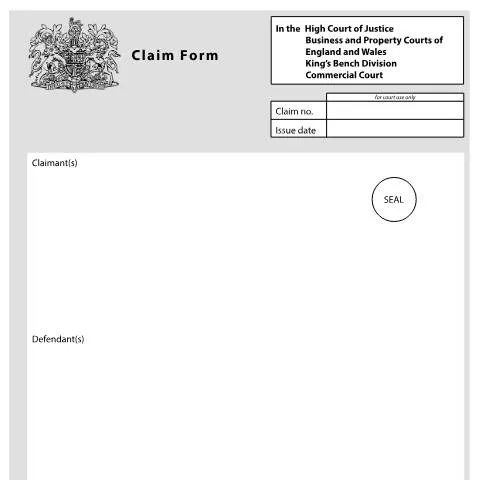
The Commercial Court within the High Court of Justice handles some of the most complex and valuable business disputes in England and Wales. When a commercial disagreement escalates beyond negotiation or alternative dispute resolution, the Form N1(CC) becomes the gateway to formal litigation proceedings. This specialised claim form initiates cases that often involve multi-million pound contracts, international trade disputes, banking controversies, and intricate commercial relationships that have broken down irreparably.
Unlike standard county court claims, Commercial Court proceedings operate under distinct rules and procedures designed for sophisticated business litigation. The form itself reflects this specialised nature, incorporating specific requirements and pathways that acknowledge the complexity of commercial law and the expertise required to navigate these waters effectively.
Navigating the Commercial Court's Specialised Territory
The Commercial Court sits within the Business and Property Courts of England and Wales, forming part of the King's Bench Division. Its jurisdiction encompasses a broad spectrum of business disputes, but not every commercial disagreement qualifies for this specialist forum. The court typically handles cases involving:
- International trade and commerce disputes, including sale of goods contracts, shipping agreements, and commodity trading arrangements
- Banking and financial services litigation, covering loan agreements, guarantees, letters of credit, and derivatives transactions
- Insurance and reinsurance matters, particularly complex coverage disputes and professional indemnity claims
- Company law disputes involving shareholders, directors' duties, and corporate transactions
- Professional negligence claims against accountants, lawyers, and other commercial advisors
- Construction and engineering contracts of significant value or complexity
The threshold for Commercial Court proceedings isn't solely monetary. While cases typically involve substantial sums, the court also considers the commercial importance and legal complexity of the dispute. A £50,000 claim involving novel points of commercial law might be more suitable than a £500,000 straightforward debt recovery case.
The Admiralty and Commercial Court Listing Office
All Commercial Court proceedings are administered through the Admiralty and Commercial Court Listing Office, located at the prestigious Rolls Building on Fetter Lane. This modern court complex, opened in 2011, represents the pinnacle of commercial dispute resolution facilities in England and Wales. The office operates between 10am and 4:30pm, Monday to Friday, serving as the central hub for all administrative aspects of Commercial Court litigation.
Dissecting the Form N1(CC) Structure and Requirements
The Form N1(CC) follows the Civil Procedure Rules Part 7 framework but incorporates specific adaptations for Commercial Court practice. Understanding each section's purpose and completing it accurately is crucial for avoiding delays or, worse, having the claim struck out for non-compliance.
Parties Identification and Representation
The claimant and defendant details section requires particular attention in commercial disputes. Unlike personal injury or housing cases, commercial litigation often involves multiple corporate entities, partnerships, or individuals trading under various business names. Each party must be identified with absolute precision, including:
| Entity Type | Required Information | Common Pitfalls |
|---|---|---|
| Limited Companies | Full registered name, company number, registered address | Using trading names instead of legal entities |
| Partnerships | Partnership name, principal place of business, partner details if suing individual partners | Confusion between partnership and individual partner liability |
| Sole Traders | Individual's full name and any business name used | Mixing personal and business addresses inappropriately |
| Overseas Entities | Full legal name in jurisdiction of incorporation, registered address, UK service address | Failing to establish proper service arrangements |
Monetary Claims and Court Fees
The financial section of Form N1(CC) requires careful calculation of the total amount claimed. This includes the principal sum, any interest claimed, and legal representative's costs if applicable. The court fee structure for Commercial Court proceedings differs from standard High Court fees, reflecting the specialised nature of these cases.
For claims exceeding £200,000, the court fee is calculated as a percentage of the claim value, subject to a maximum fee. However, parties should be aware that additional case management fees may apply as the case progresses through various stages, including allocation, listing, and trial preparation.
Crafting Effective Particulars of Claim
The "Brief details of claim" section on Form N1(CC) serves as a crucial first impression for the court and the defendant. While space is limited, this summary must capture the essence of the commercial dispute with sufficient clarity to enable proper case management from the outset.
Commercial Court judges expect a level of sophistication in pleading that reflects the complexity of business relationships. The brief details should identify:
- The commercial relationship between the parties and how it was established
- The specific breach or dispute that has arisen
- The legal basis for the claim (breach of contract, misrepresentation, etc.)
- The remedy sought and why it's appropriate
Particulars of Claim: Immediate Filing vs Future Service
Form N1(CC) provides two options for the detailed Particulars of Claim: attachment at the time of filing or service following acknowledgment of service. This choice has strategic implications that experienced commercial litigators consider carefully.
Immediate attachment is appropriate when the claim is straightforward and the claimant wants to demonstrate the strength of their position from the outset. This approach can sometimes encourage early settlement discussions and shows confidence in the legal arguments.
Deferred service allows more time to prepare comprehensive particulars, especially valuable in complex commercial disputes where extensive documentation review is required. This approach also provides an opportunity to assess the defendant's initial response before finalising the detailed case presentation.
The Statement of Truth: Commercial Court Expectations
The statement of truth section on Form N1(CC) carries particular weight in Commercial Court proceedings. The warning about contempt of court proceedings isn't merely procedural - commercial litigation regularly involves disputes over facts where the court must determine credibility and reliability of evidence.
Three distinct signing options are provided, each with specific implications:
Claimant's Personal Signature
When the claimant signs personally, they take direct responsibility for the truth of all statements in the claim form. For individual traders or company directors with direct knowledge of the disputed matters, this approach demonstrates personal commitment to the case's merits.
Litigation Friend Signature
This option applies when the claimant is a child under 18 or lacks mental capacity to conduct proceedings. In commercial contexts, this situation might arise in family business disputes or where a company's director has become incapacitated during ongoing commercial relationships.
Legal Representative Signature
Most Commercial Court claims are signed by legal representatives, reflecting the complexity of these disputes and the specialised expertise required. The representative must be "authorised by the claimant" and must confirm their belief in the statement's truth based on instructions received and investigations conducted.
Service Requirements and International Considerations
Commercial disputes frequently involve parties located outside England and Wales, making service of proceedings a critical consideration when completing Form N1(CC). The "Name and address of Defendant receiving this claim form" section must be completed with particular care for overseas defendants.
Domestic Service Arrangements
For UK-based defendants, service is typically straightforward, though commercial entities often have multiple addresses. The correct address for service might be:
- The company's registered office
- The principal place of business
- Any address specified in the relevant contract for service of legal documents
- The address of solicitors authorised to accept service
International Service Complexities
When defendants are located overseas, additional considerations apply before filing Form N1(CC). The claimant may need to obtain permission to serve out of the jurisdiction unless the case falls within specific exceptions. This requirement affects how the form should be completed and what supporting evidence must be prepared.
Countries within the European Union, despite Brexit, may still benefit from simplified service procedures under retained EU regulations or bilateral agreements. However, service in many international locations requires formal diplomatic channels or compliance with Hague Convention procedures, potentially adding weeks or months to the process.
Case Management and the Road to Commercial Court Trial
Filing Form N1(CC) initiates a sophisticated case management system designed specifically for commercial litigation. The Commercial Court operates under strict timetables and expects parties to engage constructively with case management directions from the outset.
Fill in your form directly online
No printing: type your details into the boxes of the official form, tick, then download the PDF ready to send.
- 1Type into the form boxes
- 2Tick in one click
- 3Save and download the PDF
The Case Management Conference
Shortly after the defendant files an acknowledgment of service or defence, the court will typically list a Case Management Conference (CMC). This crucial hearing sets the framework for the entire litigation, including:
- Disclosure requirements - determining what documents each party must provide
- Witness evidence timetables - establishing deadlines for witness statements and expert reports
- Trial window allocation - securing a trial date, often many months in advance
- Cost budgeting - for cases exceeding £10 million, detailed cost budgets may be required
Alternative Dispute Resolution Expectations
The Commercial Court actively encourages alternative dispute resolution, and parties filing Form N1(CC) should be prepared to demonstrate their attempts at settlement or explain why ADR isn't appropriate. The court may stay proceedings to allow mediation or other forms of ADR, particularly in cases where the commercial relationship might be preserved.
Financial Implications and Strategic Considerations
Commencing proceedings in the Commercial Court represents a significant financial commitment that extends far beyond the initial court fee. Parties must consider the full spectrum of costs that Commercial Court litigation typically involves.
Legal Costs and Representation
Commercial Court cases almost invariably require specialist legal representation. Leading commercial barristers and solicitors command premium rates, and the complexity of business disputes often necessitates extensive preparation time. Legal costs in substantial Commercial Court cases frequently exceed £500,000 per party, with the most complex cases reaching several million pounds in legal fees.
The Costs Consequences of Success and Failure
The English legal system's "loser pays" principle applies with particular force in Commercial Court proceedings. Successful parties can typically recover a substantial proportion of their legal costs from the losing party, but unsuccessful claimants face the prospect of paying both their own costs and those of the defendant.
This costs exposure creates strategic considerations when completing Form N1(CC). The strength of the legal case, the defendant's likely ability to pay both the claim and costs, and the availability of alternative remedies all influence whether Commercial Court proceedings represent the optimal approach to dispute resolution.
After Filing: Monitoring Progress and Managing Expectations
Once Form N1(CC) is filed with the Admiralty and Commercial Court Listing Office, the case enters the court system and begins following established procedural pathways. However, commercial litigation rarely proceeds smoothly without active management and strategic decision-making at each stage.
Defendant Response Timeframes
Defendants served with Form N1(CC) have specific time limits for responding, but these can be extended by agreement or court order. The initial response period provides valuable intelligence about the defendant's approach to the litigation - whether they intend to contest liability, dispute quantum, or seek to resolve the matter through negotiation.
Interim Applications and Urgent Relief
Commercial disputes often require urgent court intervention before trial. The Commercial Court has extensive experience in handling applications for freezing injunctions, search orders, and other forms of interim relief designed to preserve assets or evidence pending trial.
Parties filing Form N1(CC) should consider whether any interim applications might be necessary and prepare for the possibility that the defendant may seek similar relief, particularly in cases involving allegations of fraud or breach of fiduciary duty.
The Commercial Court's flexibility and expertise in handling complex business disputes make it an invaluable forum for resolving sophisticated commercial disagreements. However, success requires careful preparation, strategic thinking, and realistic assessment of the costs and benefits of formal litigation compared to alternative approaches to dispute resolution.