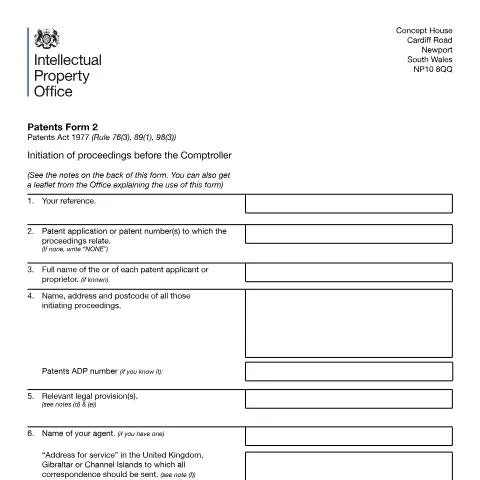
Understanding the Initiation of Proceedings Before the Comptroller
When considering the protection of intellectual property, it’s crucial to understand the procedures involved in the UK’s patent system. One such procedure is the formal initiation of proceedings before the Comptroller of Patents. This document is essential for those who seek to assert their rights, challenge decisions, or resolve disputes related to patent applications or granted patents. With the complexity of intellectual property law, being well-informed about the Ins and Outs of this document can significantly impact an applicant’s ability to successfully navigate the system.
Defining the Landscape: What Sets This Document Apart
The Initiation of Proceedings Before the Comptroller form is distinct from other patent-related forms due to its specific function in the legal framework. Unlike standard application forms or routine correspondence with the Intellectual Property Office (IPO), this document signals the start of a legal proceeding. It is vital for users to differentiate this form from others, such as the Patent Application Form (Form 1) or the Patent Grant Request, which do not carry the same implications.
Key Characteristics of the Initiation Form
- Purpose: The form initiates legal proceedings related to patents, allowing applicants to raise issues or disputes.
- Legal Authority: It operates under provisions of the Patents Act 1977, hence requiring knowledge of relevant law.
- Fee Structure: Unlike regular application forms, there is usually a fee associated with filing this form, making its completion and submission vital for formal proceedings.
Who Should Submit This Form?
The parties involved in patent disputes are primarily responsible for submitting this form. This includes:
- Patent Applicants: Individuals or entities that have applied for a patent and find themselves in legal contention over their application.
- Patent Holders: Those who have been granted patents and face challenges to their rights or wish to seek enforcement of their patents.
The form must be completed with precision, as inaccuracies can lead to delays or rejections.
The Lifecycle of the Form: From Submission to Outcome
Understanding the procedural flow surrounding the Initiation of Proceedings Before the Comptroller is paramount. Here's a detailed breakdown of the lifecycle of this form:
Step-by-Step Process
- Preparation: Before filling out the form, gather all related documentation, including the patent number and details about the other party involved.
- Form Completion: Fill in the required fields, ensuring accuracy in details such as names and addresses.
- Payment of Fees: Include the appropriate fees as specified by the IPO. This must be completed for the proceedings to be considered valid.
- Submission: Submit the form electronically via email or by post. Electronic submission is generally faster and allows for quicker processing.
- Await Response: After submission, the IPO will review the application and contact you regarding the next steps or any additional information required.
The Importance of Timeliness
The timelines involved in this process are critical. Missing deadlines, particularly those set by the Patents Act or subsequent court decisions, may adversely affect the rights of the applicant. The importance of adhering to the 31 January Self Assessment deadline, for example, is a stark reminder of how crucial timing is in legal proceedings.
Diving Deeper: Completing Each Section with Care
Completing the Initiation of Proceedings Before the Comptroller requires attention to detail. Let’s break down each section of the form, highlighting common pitfalls and tips for ensuring accuracy.
Section Breakdown
- Your Reference: This should relate to your internal tracking of the proceedings. Consistency in referencing is key.
- Patent Application or Patent Number: If there’s no number, it’s essential to clearly write “NONE”. Incorrect entries here can cause confusion.
- Full Names of Applicants or Proprietors: Ensure that all names are spelled correctly, as legal disputes often hinge on precise identification of parties.
- Address Details: The accuracy of this information is critical for correspondence purposes. Incomplete addresses can lead to delays.
- Relevant Legal Provisions: Familiarize yourself with the specific sections of the Patents Act you are invoking; this demonstrates your understanding of the legal context.
- Name of Your Agent: If represented, include your agent’s details. This section is essential for communication.
- Signature: Ensure that signatures are provided by all parties initiating proceedings unless otherwise represented legally.
- Contact Information: Providing up-to-date contact information helps facilitate communication during the proceedings.
Method of Submission: Navigating Your Options
Upon completion, the next step is submission. The IPO offers multiple channels for submitting the Initiation of Proceedings Before the Comptroller form, each with its unique considerations.
Comparing Submission Methods
| Method | Advantages | Considerations |
|---|---|---|
| Email Submission | Faster and allows for immediate confirmation of receipt. | Requires scanning and electronic submission capabilities. |
| Postal Submission | Traditional method, can be used if electronic means are unavailable. | Longer processing time and potential for postal delays. |
| In-Person Submission | Direct interaction with IPO staff, immediate feedback. | Limited to office hours and location constraints. |
Each method has its pros and cons. Choosing the right one will depend on urgency, access to technology, and personal preference.
Responding to Challenges: What If Something Goes Wrong?
Once submitted, the process is not always straightforward. Understanding how to respond if issues arise is essential for anyone engaging with the IPO.
Pitfalls and Remedies
- Incomplete Submissions: If your submission lacks required information, the IPO will contact you for clarifications, which can lead to delays. Always double-check your form.
- Missing Fees: If fees aren’t paid or noted correctly, proceedings won’t be initiated. Ensure that your payment method is reliable and that you retain a copy of proof of payment.
- Errors in Legal Provisions: Misstating relevant legal provisions could result in the dismissal of your initiation. Ensure familiarity with the corresponding sections of the Patents Act.
- Failure to Respond: If the IPO requests further information or clarification, a failure to respond in a timely manner could jeopardize your proceedings.
Being proactive and organized will mitigate these risks significantly.
Handling Refusals and Next Steps
If your application to initiate proceedings is refused, it’s essential to remain composed and understand your options moving forward.
Possible Actions After Refusal
- Review IPO Feedback: Carefully analyze any reasons provided for the refusal. Understanding these reasons is essential for addressing shortcomings.
- Amend and Resubmit: If possible, make appropriate corrections and resubmit the form. Ensure clarity and compliance with all requirements.
- Seek Legal Advice: If the matter is complex, consider consulting a legal expert well-versed in intellectual property law to navigate the next steps effectively.
- Appeal Process: There may be avenues for appeal depending on the nature of the refusal. Familiarize yourself with the relevant procedures as indicated by the IPO.
Special Circumstances: Unique Situations to Consider
There are instances where unique circumstances may affect the submission process or the utility of the form. Here are some to consider:
- International Applicants: If you or your company is based outside the UK, additional steps or documentation might be needed. Ensure compliance with both local and UK laws.
- Minors or Vulnerable Persons: If a minor is involved in the proceedings, consult legal guidance to ensure their rights and protections are upheld.
- Urgent Matters: If the nature of your issue is time-sensitive—such as a potential infringement on your patent—immediate action is advisable. Explore expedited options where available.
By recognizing these unique cases, you can better prepare for your submission and ensure all potential hurdles are addressed.
Closing Thoughts: The Path Ahead
Engaging in the patent process through the Initiation of Proceedings Before the Comptroller is no small feat. However, being thoroughly informed about the implications, processes, and potential pitfalls can empower you as an applicant. With careful preparation and attention to detail, navigating the complexities of intellectual property can lead to satisfactory outcomes, affirming your rights and protecting your innovations. Stay engaged, stay informed, and most importantly, advocate effectively for your intellectual property rights.
Understanding the Role of the Comptroller in Intellectual Property Disputes
The Comptroller General of Patents, Designs and Trademarks plays a crucial role in the administration and enforcement of intellectual property rights in the UK. This position is integral to resolving disputes related to patents, trademarks, and registered designs. Understanding the functions and responsibilities of the Comptroller can help parties navigate their claims more effectively.
One of the primary responsibilities of the Comptroller is to oversee the registration of intellectual property rights. However, the Comptroller also has the authority to adjudicate disputes about these rights. When parties initiate proceedings, they must consider the specific powers of the Comptroller, as decisions made during this process can significantly influence the outcome of a dispute.
The Comptroller can deal with a variety of issues, including applications for revocation or amendment of patents, opposition to trademark registrations, and disputes involving registered designs. It is essential for applicants to prepare comprehensive arguments and evidence to support their claims. Failure to understand the Comptroller's jurisdiction may result in missteps that delay proceedings or adversely affect the outcome.
Moreover, parties involved in contentious matters should be aware that the Comptroller operates under specific procedural rules outlined in the Patents Act 1977 and the Trade Marks Act 1994. Familiarity with these statutes, along with the relevant tribunal procedures, is vital for effective advocacy in front of the Comptroller.
Fill in your form directly online
No printing: type your details into the boxes of the official form, tick, then download the PDF ready to send.
- 1Type into the form boxes
- 2Tick in one click
- 3Save and download the PDF
Procedure for Filing a Complaint Before the Comptroller
The process for filing a complaint with the Comptroller can vary depending on the type of intellectual property involved. Generally, the initial step involves submitting a formal application or a notice of opposition to the Intellectual Property Office (IPO). Each category of intellectual property has its specific forms and requirements, which are essential to follow meticulously.
When filing a complaint, you will need to include detailed information regarding the intellectual property in question, such as the patent number or trademark details. Additionally, you should outline the grounds for your complaint clearly. For instance, if you are contesting a patent, specify whether your challenge is based on lack of novelty, obviousness, or insufficiency of disclosure.
Alternatively, should you wish to initiate an opposition against a trademark registration, you must provide strong evidence that supports your claim, such as demonstrating a likelihood of confusion or prior use of the mark in question. The IPO provides guidance on acceptable forms of evidence, and it is advisable to gather all relevant documentation before submission.
After your application is submitted, the IPO will review it to determine if it meets the necessary criteria for proceeding. If accepted, both parties will then be invited to present their cases, which may include written submissions and hearings. Timelines for each segment of this procedure can vary, so it's essential to stay informed about deadlines to ensure your rights are preserved.
Potential Outcomes and Next Steps After Proceedings
Once proceedings have been initiated and a decision is rendered by the Comptroller, various outcomes can arise based on the particulars of the case. For instance, if you are successful in your application for revocation of a patent, the patent may be invalidated, which could enable competitors to engage in activities that were previously restricted. Conversely, if the opposition against a trademark fails, the contested mark will be registered, potentially limiting your future business activities.
It's important to note that parties do have avenues for appeal following a decision from the Comptroller. Should you disagree with the ruling, you may appeal to the High Court within a specific timeframe, typically within 28 days from the decision date. The appellate process involves submitting a notice of appeal, along with grounds detailing why the original decision should be overturned or varied.
Moreover, parties should consider the implications of the decision on their business strategies moving forward. For instance, if your trademark opposition is unsuccessful, you may need to rethink your branding strategy to avoid potential infringement issues. Engaging with a solicitor who specializes in intellectual property matters can provide valuable insights and guidance tailored to your situation.
Additionally, in some cases, it may be possible to negotiate settlements or licensing agreements with the opposing party to mitigate potential disruptions to business operations. These negotiations can be complex and require an understanding of both legal rights and commercial interests, reinforcing the importance of professional legal counsel during and after the proceedings.