Navigating the Infected Blood Interim Estates Payments: A Comprehensive Guide
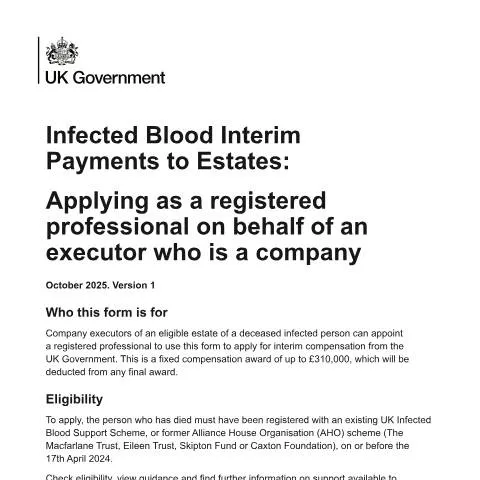
The Infected Blood Interim Estates Payments form stands as a critical entry point for companies acting as personal representatives of estates affected by the historic scandal of infected blood products in the UK. This form serves as a foundational document for securing interim financial compensation from the government, intended to support the estates of those who have tragically lost their lives due to this issue.
Context and Significance of the Form
To truly understand the importance of the Infected Blood Compensation Application Form, it is essential to delve into the historical context that necessitated its creation. The infected blood scandal has impacted countless lives, with many individuals contracting serious illnesses such as HIV and Hepatitis C through contaminated blood transfusions or treatments. In recognition of the suffering endured, the UK government established compensation schemes aimed at providing financial support to the victims and, in certain cases, their estates.
With the interim payments capped at £310,000, this form facilitates access to immediate financial relief for estates represented by companies. This compensation is crucial for covering various expenses, such as funeral costs or outstanding debts.
The Legislative Framework Behind the Compensation
Understanding the legal backdrop is paramount. The Infected Blood Compensation Scheme was introduced following the recommendations of public inquiries and reports that highlighted the government’s responsibility in the matter. Notably, the establishment of the Infected Blood Compensation Authority under the Cabinet Office has streamlined the process for those affected. The eligibility criteria stipulate that the deceased must have been registered with an existing UK Infected Blood Support Scheme before 17 April 2024, ensuring that the process remains transparent and equitable.
Who Can Submit This Application?
Only specific entities are permitted to submit the Infected Blood Compensation Application Form. In this case, the form specifically caters to company executors, allowing them to appoint registered professionals—such as solicitors, accountants, or financial advisors—to act on their behalf. This distinction is vital, as it clarifies who possesses the authority to initiate claims on behalf of the deceased’s estate.
Eligible Professionals and Their Role
- Solicitors: Legal representatives who can navigate the complexities of the application, ensuring compliance with all necessary legal requirements.
- Accountants: Financial professionals capable of providing clarity on the financial implications and documentation needed in the application.
- Financial Advisors: Experts who can help in strategizing the financial aspects of the estate management post-application.
If a registered professional's role is not listed, they are encouraged to seek guidance from the Infected Blood Support Scheme. This approach fosters collaboration and ensures that accountability remains at the forefront of the application process.
Preparing to Apply: Essential Documentation
Before initiating the application process, several key documents must be gathered. This preparation phase is critical to avoid delays and ensure accuracy in submissions. The following documents are required:
- A certified copy of the Grant of Probate or equivalent documentation confirming the company's role as the executor.
- A formal letter on company letterhead, appointing the registered professional as the representative for the interim payment application.
Both documents must be meticulously prepared, ensuring that all information is accurate and complete. Any discrepancies could lead to delays in the processing of the application.
Components of the Application Form: A Closer Look
The Infected Blood Compensation Application Form is structured into several distinct sections, each designed to gather specific information. Understanding each section's requirements can significantly enhance the application’s effectiveness.
| Section | Description |
|---|---|
| Q1 - Information about the deceased | This section gathers details about the deceased, including full name, date of birth, and last known address. Accurate records are paramount to expedite the process. |
| Q2 - Details about the appointed professional (Solicitor) | Information provided should include the solicitor’s registration number and business details, ensuring that they are qualified to act on behalf of the estate. |
| Q3 - Information for Chartered Accountant | This section is tailored for accountants, similarly requiring their professional details to affirm their role in the application process. |
Each of these sections contains specific fields that must be filled accurately. For example, in Q1, you must ensure that the last known address of the deceased matches records held by the relevant support schemes to avoid complications.
Filling Out the Form: Common Pitfalls to Avoid
Completing the Infected Blood Compensation Application Form requires careful attention to detail. Here are some common pitfalls to be aware of:
- Inaccurate Personal Details: Ensure that names, dates, and addresses are correctly entered, as even minor errors can lead to significant delays.
- Missing Documentation: Double-check that all required documents are included with the submission to prevent rejection of the application.
- Incomplete Signatures: Make sure that any necessary signatures are provided, particularly on the formal appointment letter.
Submission Process: Where to Send Your Application
Once the form is completed and the necessary documentation is assembled, the next step is submission. The process for submitting the application is straightforward, yet it remains crucial to follow the guidelines precisely as outlined by the Infected Blood Compensation Authority.
The completed application form, along with all supporting documents, must be sent to the designated address of the Infected Blood Compensation Authority. It is advisable to send these documents via a method that provides proof of delivery, such as registered mail. This precaution ensures that you have a record of your submission date, which may be beneficial should any inquiries arise later.
After Submission: What to Expect Next
Upon submission, applicants should be prepared for a waiting period as their application is processed. During this time, the Infected Blood Compensation Authority will review the documentation and may reach out for further clarification or additional information. Here’s what you can typically expect:
- Acknowledgment of Receipt: You will receive confirmation that your application has been received.
- Processing Time: While specific timelines may vary, the authority aims to process applications in an efficient manner. However, applicants should be prepared for potential delays, especially if further information is requested.
- Compensation Notification: Once the application is approved, the compensation will be communicated to the designated representative and disbursed accordingly.
Maintaining Communication with the Authority
Throughout the waiting period, it is crucial to maintain an open line of communication with the Infected Blood Compensation Authority. Should any issues arise or if there is a need for clarification on any aspect of the application, prompt communication can help expedite resolutions.
Additionally, if there are any changes to the information provided, such as a change of address for the company or the representative, these should be promptly communicated to avoid confusion.
Final Note: The Importance of Professional Guidance
Given the complexity and sensitivity surrounding the Infected Blood Compensation Application Form, enlisting the support of registered professionals can be invaluable. Not only do they bring expertise to the process, but they can also mitigate the risks of errors that may lead to delays or complications. Whether it's a solicitor, accountant, or financial advisor, having a professional on board can provide peace of mind and ensure that the application is handled with the utmost care.
Ultimately, the objective is clear: to secure the interim payments that can alleviate some of the financial burdens on the estates of those affected by this tragic chapter in UK healthcare history. By following this guide and understanding the nuances of the application process, representatives can effectively work towards obtaining the justice and support that is rightfully due.
Understanding the Role of Personal Representatives in Compensation Claims
When applying for compensation under the Infected Blood Compensation Scheme, understanding the role of personal representatives is crucial, especially when dealing with claims where a company acts in this capacity. A personal representative, in essence, is someone who manages the affairs of the deceased or incapacitated individual, ensuring their legal and financial matters are handled appropriately. In the context of the infected blood compensation, this could involve navigating complex legal frameworks and financial implications.
If a company is the appointed personal representative, several factors come into play. Firstly, the company must demonstrate its legitimacy and authority to act on behalf of the claimant. This may involve supplying documentation such as a company registration number, articles of association, and resolutions that provide evidence of the company’s designation as the personal representative. Furthermore, the company must adhere to the stipulations set out in the Data Protection Act 2018, ensuring that all personal data processed during the application is handled in compliance with the UK GDPR.
Fill in your form directly online
No printing: type your details into the boxes of the official form, tick, then download the PDF ready to send.
- 1Type into the form boxes
- 2Tick in one click
- 3Save and download the PDF
Additionally, the personal representative must understand their fiduciary duty to act in the best interests of the claimant. This includes ensuring that all relevant information is submitted with the application and managing any liabilities or responsibilities that arise during the compensation process. Failure to uphold these duties can lead to complications not only in the compensation claim but also potentially in legal standings, should disputes arise concerning the management of the estate or funds involved.
Key Documentation Required for Compensation Applications
Submitting a compensation application under the Infected Blood Compensation Scheme requires meticulous attention to detail and proper documentation. In cases where a company is acting as the personal representative, the required documentation extends beyond the standard forms, necessitating additional proof of authority and identification.
The primary form to be completed is the standard compensation application form, generally referred to as the 'Infected Blood Compensation Application Form.' In addition to this, companies must include several key documents:
- Proof of Identity and Authority: This includes the company registration details and identification documents of the representatives acting on behalf of the company.
- Death Certificate or Proof of Incapacity: If the claim is for a deceased individual, a copy of the death certificate is essential. In the case of incapacity, relevant medical documentation must be provided.
- Financial Documentation: This may include bank statements, tax returns, or other documents that demonstrate the financial status of the estate. This is vital for determining compensation amounts based on financial need.
- Legal Authority Documents: Any legal documents proving that the company has the authority to act as a personal representative. This may include a grant of probate or letters of administration.
It is crucial to ensure that all documentation is accurate and complete before submission, as incomplete applications can lead to delays and complications in the processing of the claim. Furthermore, keeping copies of all submitted documents is advisable for your records.
Common Challenges and Resolutions in the Application Process
Applying for compensation through the Infected Blood Compensation Scheme can present a number of challenges, especially when a company is involved as the personal representative. Understanding these challenges and how to address them can significantly improve the chances of a successful application.
One common issue is the gathering and submission of required documentation. Companies may encounter difficulties in obtaining timely documents from various sources such as banks, healthcare providers, or legal entities. To mitigate this, it is recommended to begin the documentation process early and maintain clear communication with all parties involved to ensure timely submissions. Creating a checklist of required documents can help streamline this process.
Another challenge often encountered is the interpretation of eligibility criteria. The Infected Blood Compensation Scheme has specific stipulations regarding who qualifies for compensation, and these can be complex. It is essential for the personal representative to thoroughly understand these criteria and, if necessary, seek legal advice to clarify any ambiguities. Engaging with a legal professional who specializes in compensation claims can provide invaluable guidance and support throughout the process.
Finally, managing expectations regarding timelines for receiving compensation can also be a hurdle. The processing times for claims can vary significantly based on the complexity of the case and the completeness of the submitted documentation. To keep stakeholders informed, it’s advisable to provide regular updates to any involved parties, including family members or financial advisors.