When Someone Needs to Know: The Critical Notification Process in Deputy Applications
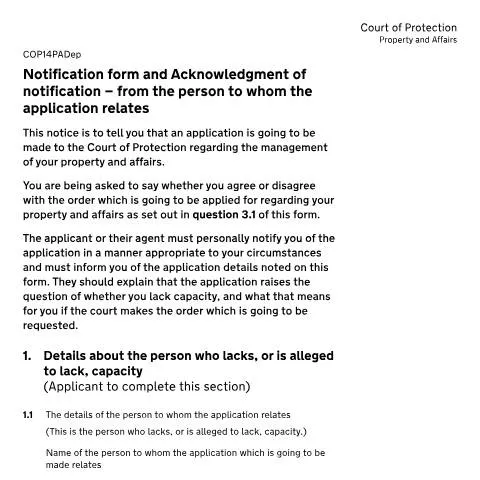
When a family member, friend, or professional believes someone has lost the mental capacity to manage their own financial affairs, the law requires a formal notification process before any deputy application can proceed. The COP14PADep form sits at the heart of this delicate procedure, serving as both a notification tool and a record of how the potentially vulnerable person responds to learning about the proposed intervention in their affairs.
This isn't simply a bureaucratic tick-box exercise. The notification process recognises that having someone else appointed to manage your property and finances represents one of the most significant intrusions into personal autonomy possible under English law. The Court of Protection therefore demands evidence that the person concerned has been properly informed about what's happening and given the opportunity to express their views, even if their capacity to understand may be compromised.
The form creates a permanent record of this crucial conversation, capturing not just whether notification occurred, but how it was delivered, understood, and received. For deputy applications to proceed legitimately, this notification must be completed with care and sensitivity, often requiring careful consideration of the person's condition, communication needs, and emotional state.
The Architecture of Notification: Understanding Form COP14PADep's Structure
The COP14PADep form follows a logical progression that mirrors the notification process itself. Section 1 establishes the identity of the person whose affairs are at stake - the individual who allegedly lacks capacity to manage their own property and financial decisions. This section requires basic demographic information but also crucially records the date when notification actually took place.
Section 2 identifies the applicant seeking to become deputy, creating transparency about who is requesting these significant powers. The form then moves to Section 3, which outlines exactly what order the Court of Protection will be asked to make. This isn't just about appointing a deputy - it might include specific restrictions, reporting requirements, or other conditions that will govern how the deputyship operates.
The most substantial part of the form, Section 4, focuses on the notification process itself. This section recognises that the applicant may not always be the appropriate person to deliver this sensitive information directly. Instead, it allows for an agent - often a healthcare professional, social worker, or other trusted individual - to conduct the notification in circumstances appropriate to the person's condition.
The Agent's Critical Role
When an agent handles notification, they must complete detailed questions about their connection to the person, the methods used to explain the application, and the person's apparent understanding and response. This creates accountability and helps the court assess whether the notification was conducted properly and sensitively.
Navigating Mental Capacity: The Delicate Balance of Information and Understanding
The notification requirements reflect the complex reality of mental capacity law. Someone may lack capacity to make complex financial decisions while retaining the ability to understand and express preferences about who should help them. The form therefore doesn't assume complete incapacity - instead, it seeks to capture whatever level of understanding and response the person can provide.
The person conducting notification must explain several key elements: who the applicant is, that the application questions whether they have capacity to manage their affairs, what this means in practical terms, and what will happen if the court grants the deputy powers being sought. This explanation must be tailored to the individual's circumstances, communication abilities, and emotional state.
| Information Required | Why It Matters | Adaptation Considerations |
|---|---|---|
| Identity of applicant | Transparency about who seeks control | May need visual aids for recognition |
| Capacity concerns | Explains why intervention is proposed | Sensitive language about abilities, not deficits |
| Practical consequences | Real-world impact on daily life | Concrete examples rather than legal abstractions |
| Deputy's proposed powers | Scope of future decision-making | Focus on specific areas of responsibility |
Documenting Understanding and Response
The form requires detailed recording of how the person responded to the notification. This might include verbal responses, emotional reactions, body language, or other forms of communication. Even if someone cannot fully grasp the legal implications, they may express clear preferences about who they trust or don't trust to help them.
These responses carry significant weight with the Court of Protection. A person's expressed wishes and feelings, even if their capacity is impaired, must be considered in any deputy appointment decision. The court might reject an application if the person has clearly expressed opposition, particularly if they've suggested alternative arrangements or shown they retain some decision-making abilities.
Timing and Legal Obligations: When Notification Must Occur
The notification process operates within strict timeframes that applicants ignore at their peril. The person conducting notification - whether the applicant themselves or an appointed agent - must complete this process before submitting the deputy application to the Court of Protection. This isn't a parallel process but a prerequisite.
When an agent conducts the notification, they have just 14 days to return the completed form to the applicant. This tight deadline recognises that deputy applications often arise in crisis situations where financial decisions cannot be delayed indefinitely, but it also prevents the notification process from becoming stale or forgotten.
The timing requirement also serves a protective function. It ensures that notification occurs close to when the application is made, reducing the risk that the person's condition or circumstances change significantly between notification and the court's consideration of the case.
Consequences of Inadequate Notification
Failing to complete proper notification can derail an entire deputy application. The Court of Protection takes these procedural requirements seriously because they protect fundamental rights. Applications may be rejected or delayed if:
- Notification was not attempted or was conducted inappropriately
- The form lacks sufficient detail about the person's understanding or response
- The notification method wasn't suitable for the person's communication needs
- The person's expressed wishes weren't properly recorded or considered
Special Circumstances: Adapting Notification for Different Needs
The form's emphasis on notification "appropriate to their circumstances" recognises that mental capacity issues arise in vastly different contexts. Someone with dementia may need repeated, gentle explanations using familiar language and visual cues. A person with learning disabilities might require information presented in easy-read format with plenty of time to process. Someone recovering from a stroke might understand perfectly but need alternative communication methods.
The notification process might involve family members or carers who know the person well, but the form is clear that this cannot substitute for direct notification to the person themselves. However, these supporters can help ensure the information is presented in ways the person can best understand and respond to.
Cultural and Language Considerations
For individuals whose first language isn't English, proper notification may require professional interpretation rather than relying on family members. The court needs confidence that the person genuinely understood what was being explained, not just that words were translated. Similarly, cultural attitudes towards family decision-making, mental health, and authority figures may influence how notification should be conducted and how responses should be interpreted.
The Agent's Perspective: Professional and Personal Responsibilities
When someone other than the applicant conducts notification, they take on significant responsibilities that extend beyond simply filling out a form. Healthcare professionals, social workers, or other agents must balance their existing relationship with the person against their role in this legal process.
The agent must honestly assess and report the person's level of understanding, even if this might complicate the deputy application. If the person shows more capacity than expected, or expresses strong opposition to the proposed deputy, the agent has a duty to record this accurately. This can create difficult situations where the agent's professional judgment about the person's needs conflicts with their legal obligation to report what actually occurred during notification.
Agents also need to consider their ongoing relationship with the person after notification occurs. Unlike applicants who may be seeking deputy powers, agents often continue working with or caring for the person regardless of the court's eventual decision. This requires particular sensitivity in how notification is conducted and explained.
Professional Standards and Documentation
Healthcare and social care professionals conducting notification must ensure their involvement complies with their professional standards and organisational policies. Many NHS trusts and social services departments have specific procedures for staff involvement in Court of Protection applications, recognising both the importance of the process and the potential conflicts of interest involved.
The detailed documentation required by the form also serves these professionals' needs for maintaining proper records of their interactions with service users, particularly in cases involving mental capacity assessments and legal proceedings.
Beyond Notification: How COP14PADep Fits the Broader Deputy Application
The completed COP14PADep form becomes part of the deputy application bundle submitted to the Court of Protection, but its influence extends far beyond proving that notification occurred. The responses recorded often provide the court with its most direct insight into the person's current understanding, preferences, and emotional state regarding the proposed deputyship.
Judges frequently refer to the notification responses when making decisions about whether to appoint a deputy, who should be appointed, and what restrictions or conditions should apply. A person's expressed preference for a family member over a professional deputy, for instance, might influence the court's decision even if that family member wasn't the original applicant.
The form also creates a baseline record of the person's condition and responses at a specific point in time. If the deputy application is contested or if circumstances change during the court process, this record helps establish what the person understood and wanted when the application was first made.
Integration with Other Court Documents
The notification record must align with other elements of the deputy application, particularly the capacity assessment and the applicant's statement about why deputyship is necessary. Contradictions between these documents - such as a capacity assessment suggesting someone lacks understanding while the notification record shows clear, reasoned responses - require explanation and may prompt the court to seek additional evidence.
The court also considers how the notification responses relate to any previous expressions of wishes the person made while they had clear capacity, such as lasting powers of attorney or advance decisions about their care and treatment.
Understanding the Court of Protection's Assessment Process
Once you've submitted Form COP14PADep, the Court of Protection initiates a comprehensive assessment process that can take several months to complete. Understanding this timeline helps manage expectations and ensures you're prepared for each stage of the evaluation.
The court typically acknowledges receipt of your application within 14 days, issuing a case number that becomes your primary reference for all future correspondence. During the initial review phase, court staff examine whether your application is complete and contains all required supporting documentation. If any elements are missing, you'll receive a specific request for additional information, which must be provided within the timeframe specified—usually 21 days from the date of the court's letter.
The substantive assessment phase involves multiple components. Court officials review the medical evidence provided by the person's GP, consultant, or other healthcare professionals to establish whether the individual lacks capacity to manage their property and financial affairs. This assessment must demonstrate that the lack of capacity is likely to be permanent or long-term, as temporary incapacity situations are handled differently under the Mental Capacity Act 2005.
During this period, the court may request additional medical reports if the existing evidence is insufficient or outdated. Healthcare professionals involved in the person's care might be contacted directly by the court for clarification on specific points. In complex cases, the court may commission an independent medical assessment, though this occurs relatively infrequently and typically involves situations where there's disagreement about the person's capacity.
The court also conducts welfare checks to ensure the proposed deputy arrangement serves the person's best interests. This includes reviewing the applicant's suitability, examining any potential conflicts of interest, and assessing whether less restrictive alternatives might be more appropriate. If concerns arise during this assessment, the court may request character references, financial statements, or arrange for a court visitor to meet with both the applicant and the person concerned.
Fill in your form directly online
No printing: type your details into the boxes of the official form, tick, then download the PDF ready to send.
- 1Type into the form boxes
- 2Tick in one click
- 3Save and download the PDF
Family members and other interested parties have specific rights during this assessment period. Anyone with legitimate concerns about the application can submit objections to the court, provided they do so within the prescribed timeframe—typically 21 days from when they were notified of the application. The court takes all objections seriously and may arrange hearings to resolve disputes between family members or address specific concerns about the proposed deputy's suitability.
Deputy Powers and Ongoing Responsibilities
The scope of powers granted to a property and affairs deputy is carefully tailored by the Court of Protection and varies significantly depending on the person's specific circumstances and needs. Understanding these powers—and their limitations—is crucial for anyone considering applying for deputyship or already serving in this role.
Standard deputy powers typically include managing bank accounts, paying bills and everyday expenses, collecting income such as benefits or pensions, and making routine financial decisions that maintain the person's standard of living. Deputies can usually sell personal possessions if necessary to fund care or living expenses, though valuable items may require specific court approval. Property transactions, including selling the person's home, almost always require explicit court permission through a separate application process.
Investment decisions fall into a grey area that requires careful navigation. Deputies can typically make low-risk investments such as placing money in savings accounts or purchasing government bonds, but more complex investment strategies require court approval. This includes purchasing shares, investing in property, or making significant changes to existing investment portfolios. The court's primary concern is protecting the person's financial interests while ensuring their money remains accessible for care and living expenses.
One of the most significant ongoing responsibilities involves annual reporting to the Court of Protection. Deputies must submit detailed financial accounts showing all income received and expenditure made on the person's behalf during the preceding year. This annual report, known as the deputy's report, must be submitted by the anniversary date of the deputy order, with late submissions potentially resulting in court sanctions or removal from the role.
The reporting requirements are comprehensive and include bank statements for all accounts held in the person's name, receipts for major expenditures, details of any gifts made (which require prior court approval), and an explanation of any significant changes in the person's financial circumstances. Deputies must also report on the person's general welfare and any changes in their care arrangements, even though their primary remit covers financial matters.
Deputies have strict obligations regarding the separation of finances. The person's money must never be mixed with the deputy's personal funds, and all transactions must be clearly documented and justifiable as being in the person's best interests. Deputies cannot use their position for personal benefit, including borrowing money from the person or receiving payment for their services unless specifically authorised by the court.
The court charges an annual supervision fee for monitoring deputy activities, which varies depending on the value of the person's estate. This fee is typically paid from the person's funds, but deputies remain personally liable if insufficient funds are available. Additional charges apply for specific applications, such as seeking permission for property sales or major financial decisions.
Alternatives to Deputyship and When They Might Apply
Before proceeding with a deputyship application, it's essential to consider whether alternative arrangements might better serve the person's needs while being less restrictive and costly. The Mental Capacity Act 2005 emphasises using the least restrictive approach that still provides adequate protection for vulnerable individuals.
Lasting Powers of Attorney (LPA) represent the most common alternative, though they must be registered while the person still has mental capacity to understand the arrangement. If an LPA for property and financial affairs was registered before the person lost capacity, this usually eliminates the need for deputyship proceedings. However, if concerns arise about an attorney's conduct or suitability, the Court of Protection can investigate and potentially revoke the LPA, leading to deputyship applications.
For individuals with limited financial assets, simpler arrangements may suffice. If the person's only income consists of state benefits and they have minimal savings, the Department for Work and Pensions (DWP) can arrange for benefits to be paid to an appointee—typically a family member or friend who can manage these payments without court involvement. This appointee system works well for straightforward situations but cannot handle more complex financial affairs or significant assets.
Banking institutions offer their own protection mechanisms for vulnerable customers. Many banks operate internal procedures allowing trusted individuals to access accounts and conduct basic transactions on behalf of someone who lacks capacity, provided appropriate medical evidence is supplied. These arrangements work effectively for routine banking but cannot address broader financial management needs or legal transactions.
Joint bank accounts, established while the person had capacity, can provide practical access to funds for daily expenses and care costs. However, this approach has limitations and potential complications, particularly regarding inheritance tax implications and the rights of other family members. Joint account holders also assume certain legal responsibilities that may not be appropriate in all circumstances.
Trust arrangements represent another alternative, particularly for individuals with substantial assets. Discretionary trusts can be established to manage the person's financial affairs while providing flexibility for trustees to make decisions based on changing needs and circumstances. However, trusts involve complex legal and tax considerations that require specialist advice and ongoing professional management.
In cases where the person's incapacity may be temporary or fluctuating, the court might consider time-limited arrangements or specific powers rather than full deputyship. For example, someone recovering from a serious illness or accident might need temporary financial management while they regain capacity, making a restricted deputy order more appropriate than permanent arrangements.
The person's own preferences, expressed while they had capacity, play a crucial role in determining the most suitable approach. Previous conversations about preferred family members handling finances, written statements about care preferences, or informal arrangements already in place all influence the court's decision-making process. The court particularly values evidence of the person's previously expressed wishes when weighing different options.