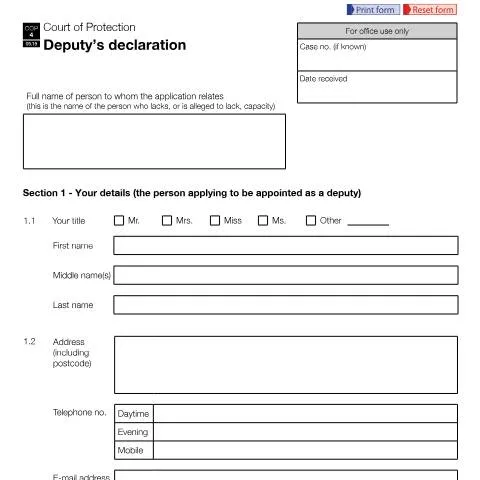
Deputy Applications: Navigating Form COP4 for Court of Protection Proceedings
When a family member loses the mental capacity to manage their own affairs, the responsibility often falls to loved ones to step forward as legal guardians. The Court of Protection oversees these sensitive arrangements through a rigorous appointment process, with Form COP4 serving as the cornerstone document where prospective deputies must formally declare their suitability and commitment to act on behalf of someone who lacks capacity.
This detailed declaration form represents far more than administrative paperwork—it constitutes a legal undertaking before the court, where applicants must demonstrate their fitness to assume significant responsibilities over another person's property, financial affairs, or personal welfare decisions. The thoroughness of COP4 reflects the gravity of deputy appointments, as successful applicants will gain considerable powers whilst accepting corresponding duties under the Mental Capacity Act 2005.
The form's comprehensive scope encompasses personal background checks, financial scrutiny, and explicit commitments regarding the exercise of deputy powers. Understanding its requirements proves essential for anyone considering this substantial legal responsibility.
The Deputy's Declaration: Understanding Your Legal Commitments
Form COP4 fundamentally serves as a declaration of fitness and intent rather than a simple application document. Section 4 of the form requires applicants to provide specific undertakings regarding their future conduct as deputies, creating binding commitments that will govern their actions throughout their appointment.
The undertakings cover three critical areas of deputy responsibility:
- Mental Capacity Act compliance: Deputies must commit to applying the Act's five key principles, particularly the best interests standard and the presumption of capacity
- Scope limitations: Acting strictly within court-granted powers and seeking additional authority when needed
- Professional standards: Exercising the same care and skill they would apply to their own affairs, with enhanced obligations for professional deputies
These undertakings carry significant weight—breaching them can result in removal from office, personal liability for losses, and potential contempt of court proceedings. The form's design encourages thoughtful consideration, allowing applicants to indicate 'No' to specific undertakings whilst explaining their reasoning, rather than forcing blanket acceptance.
Personal Background Scrutiny: What the Court Examines
Section 2 of COP4 subjects applicants to detailed personal scrutiny, reflecting the court's duty to ensure deputy appointments serve the protected person's best interests. The examination extends beyond basic biographical information to probe potential red flags that might compromise effective deputy performance.
Occupational details receive particular attention, as the court assesses whether applicants possess relevant skills and stability. Employment longevity serves as a proxy for reliability, whilst professional qualifications may indicate enhanced capability for complex property and affairs management. Retired applicants must detail their previous occupations, as relevant experience remains valuable regardless of current employment status.
The form's criminal conviction questions focus on unspent offences under the Rehabilitation of Offenders Act 1974, recognising that minor historical convictions shouldn't automatically disqualify suitable candidates. However, convictions involving dishonesty, violence, or financial impropriety will attract scrutiny and may require detailed explanation or additional safeguards.
Previous deputy or attorney appointments receive examination through question 2.3, as this experience generally strengthens applications whilst repeated appointments might suggest concerning patterns if previous roles ended problematically. The court expects transparency about circumstances affecting deputy capability, including health issues, business commitments, or family responsibilities that might interfere with duties.
Financial Probity Requirements for Property and Affairs Deputies
Section 3 represents the most rigorous component of COP4 for prospective property and affairs deputies, subjecting applicants to comprehensive financial background checks. This scrutiny reflects the substantial financial powers these deputies typically receive, including managing bank accounts, investments, property transactions, and benefit claims.
| Financial Issue | Court Concern | Typical Resolution |
|---|---|---|
| Current bankruptcy | Inability to manage finances effectively | Appointment likely refused |
| Historical bankruptcy (discharged) | Previous financial difficulties | Additional supervision or bond required |
| Refused credit applications | Potential financial instability | Case-by-case assessment |
| Outstanding judgment debts | Current financial pressures | Detailed explanation required |
The form's financial questions extend beyond personal circumstances to examine business involvement in insolvency proceedings. Directors' disqualifications or fraudulent trading declarations represent serious impediments to deputy appointment, as they indicate fundamental breaches of fiduciary duty—precisely the responsibilities deputies must assume.
Conflict of interest disclosure through question 3.9 proves particularly significant, as many family deputies face potential conflicts. Common examples include residing in property owned by the protected person, expecting inheritances under their will, or having business relationships that might benefit from deputy decisions. The court doesn't automatically reject applications involving conflicts but requires full disclosure and may impose specific conditions or supervision arrangements.
Completing the Application: Technical Requirements and Common Pitfalls
COP4 demands precise completion to avoid delays or rejection. The form's technical requirements reflect court administrative needs whilst serving as an initial test of applicants' attention to detail—a crucial deputy quality.
Personal details in Section 1 must match exactly with supporting documentation, particularly regarding names and addresses. Middle names require inclusion if they appear on official documents, whilst address details must reflect current residence rather than correspondence preferences. The protected person's details require equal precision, as these will appear on the eventual court order.
Date formatting follows standard UK conventions (DD/MM/YYYY), with the court rejecting applications containing ambiguous or incomplete dates. Birth dates prove particularly important for establishing applicant age—whilst no minimum age exists for deputy appointment, the court considers maturity and life experience when assessing suitability.
Contact information serves operational purposes beyond mere form-filling, as the court will use these details for ongoing communication throughout the application process and subsequent supervision. Email addresses receive increasing importance as court communications move towards digital delivery, making accurate provision essential.
Documentation Standards and Evidence Requirements
COP4 must accompany substantial supporting documentation, creating a comprehensive application package. The court's evidence requirements vary according to the deputy powers sought and the applicant's circumstances, but certain documents prove universally necessary.
Identity verification requires certified copies of photographic identification, typically a current passport or driving licence. The court accepts certification by solicitors, commissioners for oaths, or other prescribed officials, but will not accept simple photocopies or self-certification.
Address verification through utility bills or council tax statements must be recent (typically within three months) and match the address declared on COP4. Historical addresses may require explanation, particularly where frequent moves might suggest instability.
Court Processing and Assessment Procedures
Once submitted, COP4 enters the Court of Protection's structured assessment process, where dedicated officers examine applications against established suitability criteria. This process typically spans several months, with complex cases or contested applications requiring additional time.
The court's initial review focuses on completeness and basic eligibility, with incomplete applications returned for correction rather than progressed. Officers check supporting documentation, verify identity claims, and may conduct preliminary background checks using publicly available records.
Enhanced scrutiny applies to certain applicant categories, including those with previous court involvement, professional deputies, or applications involving substantial assets. These cases may trigger additional enquiries, professional reference checks, or interviews with court officers.
The court may request clarification or additional information at any stage, typically through written enquiries that require prompt response. Delayed responses can significantly extend processing times, whilst failure to respond may result in application dismissal.
Safeguarding Checks and Enhanced Due Diligence
All deputy applications trigger safeguarding procedures designed to protect vulnerable adults from exploitation or abuse. These checks extend beyond the information provided on COP4 to include databases not accessible to the general public.
Criminal record checks through the Disclosure and Barring Service form part of this process, examining convictions beyond those declared on the form. The court maintains discretion to request enhanced DBS checks, particularly for personal welfare deputies or those seeking powers over vulnerable individuals.
Credit reference checks verify the financial information provided in Section 3, with discrepancies requiring explanation. The court may also examine public records including bankruptcy registers, county court judgments, and Companies House filings to verify business involvement claims.
Integration with Broader Court of Protection Proceedings
COP4 forms part of a larger application package typically including Form COP1 (the main application), COP3 (assessment of capacity), and various supporting documents. Understanding how these forms interconnect proves crucial for successful applications.
The deputy declaration must align with the powers sought in COP1, as inconsistencies between forms can trigger court enquiries or application delays. Applicants seeking broad property and affairs powers must demonstrate corresponding capability through their COP4 responses, whilst those requesting limited authority can focus their declarations accordingly.
Medical evidence provided through COP3 establishes the protected person's incapacity, creating the legal foundation for deputy appointment. COP4 then demonstrates the proposed deputy's fitness to exercise the necessary powers, completing the court's assessment framework.
Fee considerations add practical complexity, as deputy applications incur substantial court fees (currently £770 for property and affairs applications, with additional charges for complex cases). Fee remission may be available for applicants with limited means, but requires separate application and supporting evidence.
Ongoing Supervision and Annual Reporting
Successful COP4 completion leads to deputy appointment, but this represents the beginning rather than end of court involvement. Deputies must submit annual reports detailing their activities, with property and affairs deputies providing comprehensive financial accounts.
The undertakings provided in COP4 Section 4 continue to govern deputy conduct throughout their appointment, with the court maintaining power to investigate complaints, impose additional conditions, or remove deputies who breach their commitments. This ongoing supervision reinforces the importance of realistic undertakings rather than overly optimistic promises.
Professional deputies face enhanced supervision requirements, including detailed fee arrangements, client money handling procedures, and professional indemnity insurance obligations. These requirements reflect the commercial nature of professional deputy services whilst protecting vulnerable clients from exploitation.
The Court of Protection's supervisory role extends to reviewing major decisions, approving significant transactions, and investigating concerns raised by family members, care providers, or other interested parties. Deputies must therefore maintain detailed records and be prepared to justify their actions throughout their appointment, making the initial commitments in COP4 practically significant rather than merely ceremonial.
Understanding the Different Types of Deputy Applications and Their Implications
The Court of Protection recognises several distinct categories of deputy applications, each with specific requirements and limitations that directly affect how you complete Form COP4. Understanding these distinctions is crucial before making your declaration, as the type of deputyship you're applying for will determine your ongoing responsibilities and the scope of decisions you can make.
Property and Financial Affairs Deputies represent the most common type of application. These appointments allow you to manage bank accounts, pay bills, handle benefits claims, and make investment decisions on behalf of someone who lacks mental capacity. However, the court may impose specific restrictions—for example, limiting your authority to transactions under £5,000 without prior court approval, or excluding certain types of investments. When completing your COP4 declaration, you must demonstrate understanding of financial management principles and show how you'll protect the person's assets from unnecessary risks.
Personal Welfare Deputies face more stringent application requirements, as these appointments are only granted in exceptional circumstances. The court typically prefers that healthcare and social care decisions are made by the person's family, care team, or through best interests meetings rather than formal deputy arrangements. If you're applying for personal welfare powers, your COP4 declaration must provide compelling evidence of why standard decision-making processes are insufficient. This might include situations where family members fundamentally disagree about care arrangements, or where complex ongoing medical decisions require consistent oversight from someone with specific expertise.
Some applicants seek hybrid appointments covering both property and personal welfare matters. These applications require particularly detailed COP4 declarations, as you must demonstrate competence in both financial management and healthcare decision-making. The court scrutinises these applications carefully, often preferring to appoint separate deputies for different areas of responsibility to ensure appropriate expertise and avoid conflicts of interest.
Fill in your form directly online
No printing: type your details into the boxes of the official form, tick, then download the PDF ready to send.
- 1Type into the form boxes
- 2Tick in one click
- 3Save and download the PDF
Joint deputy appointments involve two or more people sharing responsibility, either jointly (where all decisions must be unanimous) or jointly and severally (where deputies can act independently). Your COP4 declaration must explain how you'll coordinate with co-deputies, resolve disagreements, and ensure consistent decision-making. The court looks for evidence of compatible approaches and clear communication protocols between proposed joint deputies.
Professional deputies—typically solicitors or specialist case managers—face additional scrutiny regarding their qualifications, insurance arrangements, and fee structures. If you're applying as a professional deputy, your COP4 declaration should reference relevant professional memberships, continuing education requirements, and how you'll manage potential conflicts of interest across multiple cases.
Navigating Complex Family Dynamics and Potential Objections
Deputy applications often occur within complicated family situations, and your COP4 declaration must address potential conflicts or objections with sensitivity and transparency. The Court of Protection takes family dynamics seriously, recognising that financial control can create or exacerbate existing tensions between relatives.
When family members disagree about who should become deputy, your declaration should acknowledge these differences while explaining why your appointment serves the person's best interests. Avoid criticising other family members directly; instead, focus on your unique qualifications, availability, and relationship with the person lacking capacity. If you're geographically closer, have relevant professional experience, or have been the person's primary carer, highlight these factors constructively.
Addressing historical conflicts requires particular care in your COP4 declaration. If there have been previous disputes about the person's care or finances, acknowledge these situations briefly while demonstrating your commitment to transparent, accountable decision-making. The court appreciates applicants who recognise past difficulties and propose specific measures to prevent future conflicts—such as regular family meetings, detailed financial reporting, or involving independent advocates in significant decisions.
Some applications face objections from other family members, care providers, or local authorities. If you're aware of potential objections, address them proactively in your COP4 declaration rather than waiting for the court to raise concerns. Explain your understanding of the objector's concerns and how you plan to address them through your conduct as deputy. This might involve agreeing to specific reporting arrangements, accepting court-imposed restrictions on certain decisions, or committing to involve objecting parties in consultation processes.
Estranged family relationships present particular challenges. If you haven't had recent contact with the person lacking capacity, your declaration must explain the historical relationship and why distance or estrangement doesn't disqualify you from acting in their best interests. The court may be concerned about your current knowledge of the person's wishes, values, and preferences, so provide evidence of efforts to reconnect and understand their current situation.
When multiple family members could potentially serve as deputy, your COP4 declaration should explain why you're the most suitable candidate without unnecessarily disparaging alternatives. Focus on positive factors such as your availability, local presence, relevant skills, or existing involvement in the person's care. If you're proposing to exclude certain family members from decision-making, provide clear, objective reasons related to the person's welfare rather than personal grievances.
Professional relationships can also create conflicts. If you work in healthcare, social services, or legal fields, address potential conflicts of interest explicitly. Explain how you'll maintain professional boundaries, seek independent advice when appropriate, and ensure your professional duties don't compromise your responsibilities as deputy.
Managing Ongoing Responsibilities and Compliance Requirements
Becoming a deputy creates significant ongoing obligations that extend far beyond the initial application process. Your COP4 declaration should demonstrate understanding of these long-term responsibilities and your capacity to fulfil them consistently over potentially many years.
Annual reporting requirements represent one of the most demanding aspects of deputyship. Property and affairs deputies must submit detailed annual accounts to the Office of the Public Guardian, documenting every financial transaction and explaining significant decisions. Your COP4 declaration should indicate familiarity with these requirements and your approach to maintaining necessary records. If you're not naturally organised with financial documentation, consider how you'll develop appropriate systems or seek professional support.
The Court of Protection can impose specific conditions on deputy orders, and your declaration should show willingness to accept reasonable restrictions. Common conditions include requirements for court approval before major financial decisions, restrictions on gifts or loans to family members, or obligations to consult with specific professionals before making healthcare choices. Demonstrating flexibility and understanding of why such conditions might be necessary can strengthen your application.
Supervision and monitoring by the Office of the Public Guardian involves periodic reviews of your performance as deputy. These reviews may include interviews with you, the person you represent, family members, and care providers. Your COP4 declaration should acknowledge this oversight and explain how you'll maintain transparent, accountable practices that facilitate effective monitoring.
Changes in circumstances require ongoing attention and potentially court applications. If the person's condition improves and they regain capacity, you must apply to discharge the deputy order. Conversely, if their needs change significantly, you might need to apply for additional powers or modifications to existing arrangements. Your declaration should demonstrate understanding of these dynamic responsibilities and commitment to adapting your approach as circumstances evolve.
Financial safeguarding responsibilities extend beyond basic money management to active protection against fraud, exploitation, and abuse. As a deputy, you'll need to monitor the person's financial accounts for suspicious activity, ensure their personal information remains secure, and potentially investigate concerning transactions. Your COP4 declaration should address your understanding of these protective responsibilities and any relevant experience or training.
Insurance and liability considerations affect all deputies, particularly those managing substantial assets or making significant healthcare decisions. While the Court of Protection provides some protection for deputies acting within their authority, you may need professional indemnity insurance or other coverage. Your declaration should indicate awareness of these issues and willingness to obtain appropriate protection.
Record-keeping standards must be maintained throughout your appointment. This includes not only financial records but also documentation of significant decisions, consultations with family members or professionals, and changes in the person's condition or circumstances. The court expects deputies to maintain detailed, contemporaneous records that could withstand scrutiny during reviews or investigations. Your COP4 declaration should outline your approach to documentation and demonstrate understanding of its importance for accountability and transparency.
Deputyship can be emotionally demanding, particularly when making difficult decisions about someone you care about. Your declaration should acknowledge these challenges while demonstrating resilience and access to appropriate support systems. This might include professional supervision, family support networks, or connections with other deputies or advocacy organisations.