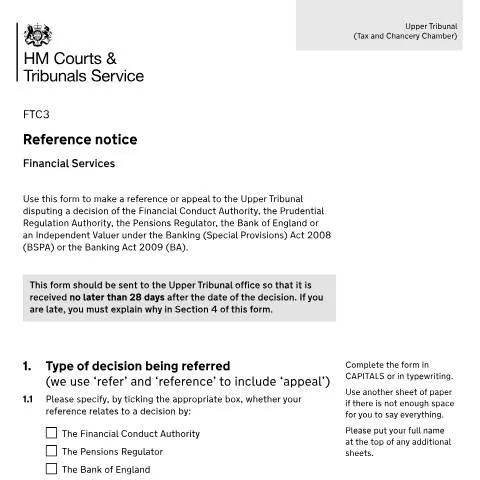
Understanding the Upper Tribunal's Appeal Process through Form FTC3
The journey through the complexities of financial regulation can often lead to contentious decisions made by authorities such as the Financial Conduct Authority (FCA) or the Prudential Regulation Authority (PRA). When you find yourself on the receiving end of a decision that seems unjust, the FTC3 form comes into play as a critical tool for appealing to the Upper Tribunal (Tax and Chancery Chamber). This document allows you to formally challenge these decisions, and understanding its nuances can be essential for navigating your legal rights.
Navigating the Appeal: The Role of Form FTC3
Form FTC3 is pivotal when disputing decisions made under the Banking (Special Provisions) Act 2008 or the Banking Act 2009. An individual or entity may choose to file this form when they believe the outcome of a decision adversely affects their interests. The form acts as an official method to reference or appeal, requiring submission within a strict timeline of twenty-eight days following the decision date.
- Financial Conduct Authority (FCA): Decisions regarding financial services regulation.
- Pensions Regulator: Matters concerning pension schemes and compliance.
- Bank of England: Issues related to monetary stability and financial oversight.
- Independent Valuer: Evaluations in specific financial contexts.
The Importance of Timeliness
The deadline is crucial for your appeal's success. Should your submission be late, you must articulate reasons in Section 4 of the FTC3 form, which could influence whether the tribunal decides to accept your late application. This emphasizes the importance of understanding timelines and preparing adequately. Missing this window could jeopardize your appeal and limit your options to effectively challenge the initial decision.
Preparing to Complete Form FTC3
Completing Form FTC3 demands accuracy and attention to detail. The form features various sections requiring thorough information about the decision being challenged, your personal details, and any representatives involved. Here’s a breakdown:
- Applicant Information: This section identifies who is making the appeal. You're asked whether you are the person to whom the decision was addressed or a person affected by it.
- Respondent Details: Here, you provide context about the decision itself, including the decision date and reference number, which facilitates efficient processing by the tribunal.
- Reasons for Appeal: You must articulate why you believe the decision was incorrect while suggesting what the appropriate decision should have been.
Additional Sheets for Clarity
If space on the form is insufficient, you may use additional sheets. Always ensure your name is clearly marked at the top to maintain organization. Clear articulation of your points increases the likelihood of a thorough review by the tribunal.
Submission Channels: Paper vs. Online vs. In-Person
Submitting Form FTC3 requires understanding the available channels:
| Submission Method | Pros | Cons |
|---|---|---|
| Online Submission | Fast, efficient, and immediate confirmation of receipt. | Requires access to a reliable internet connection and may have technical restrictions. |
| Paper Submission | Can be filled out manually, allowing for thorough review before sending. | Longer processing times and no immediate confirmation. |
| In-Person Submission | Direct interaction, ability to clarify messaging and ensure submission. | Potential for long queues and time-consuming. |
Regardless of the method chosen, maintain a copy of your submission for your records, as having this reference can be invaluable for tracking your appeal's progress.
Special Considerations: Circumstances Affecting the Appeal Process
Certain situations may complicate the appeal process, such as being a foreign national or a minor. It’s crucial to understand how these factors can affect your application:
- Foreign Nationals: If you are not a UK resident, ensure that you are aware of any specific requirements or additional documentation that may be necessary.
- Minors: A minor may require a parent or guardian to represent their interests in an appeal.
- Complex Situations: If your case involves multiple jurisdictions or regulatory bodies, consult a legal professional to ensure comprehensive representation.
Urgent Appeals
If your situation is urgent, perhaps due to impending actions from the regulatory authority, make this clear in your application. Highlighting the urgency may influence the tribunal's prioritization of your case.
Documenting Justifications: The Supporting Evidence
Preparing to submit Form FTC3 requires comprehensive documentation to support your appeal. You must provide adequate justification, including any relevant correspondence with the respondent. Consider the following:
- Original Decision Documentation: Any letters or emails regarding the decision must be included.
- Personal Statements: If your circumstances have changed, providing a statement detailing these changes can be crucial.
- Additional Evidence: Attach any documents you believe support your argument for overturning the decision. This may include previous correspondence, financial statements, or relevant regulatory guidelines.
Filing Fees and Legal Assistance
While most appeals under Form FTC3 can be submitted without a fee, it’s advisable to check if your specific circumstance requires any cost. Moreover, if your appeal involves a penalty for market abuse, you can request legal assistance as denoted in the supplementary section of the form.
What Happens Next: Understanding the Tribunal's Process
After submitting Form FTC3, the wait begins. The tribunal will review your application, and depending on their assessment, they may schedule a hearing or request further information. You will receive updates about your case, and it is crucial to respond promptly to any requests from the tribunal to avoid delays.
- Notification of Hearing: If a hearing is scheduled, ensure you prepare adequately, possibly with the assistance of your representative.
- Outcome Notification: After the tribunal's decision, you should receive written notification. Depending on the ruling, further options for appeal may be available.
Your Rights and Obligations Post-Submission
Once your appeal is lodged, you have specific rights, such as the right to be heard and to provide evidence. However, you also have obligations, including keeping the tribunal updated on any changes in your contact information or relevant circumstances. Missed obligations can hinder your appeal and affect the tribunal’s perception of your case.
Conclusion: The Importance of Preparation and Vigilance
Engaging with the Upper Tribunal through Form FTC3 is no small matter, and it demands careful preparation and timely execution. The ability to appeal decisions made by financial authorities is a powerful tool in ensuring fair treatment. By understanding your rights, the process, and the necessary documentation, you can navigate this complex landscape with confidence. Remember that each case is unique, and seeking legal advice tailored to your situation can often be the best course of action to take.
Understanding the Grounds for Appeal to the Upper Tribunal
When considering an appeal to the Upper Tribunal (Tax and Chancery Chamber), it’s crucial to understand the specific grounds on which you can base your appeal. Generally, the grounds may include legal errors made by the First-tier Tribunal, procedural unfairness, or issues related to the tribunal's jurisdiction. For instance, if you believe that the tribunal has misinterpreted the law or failed to consider pertinent evidence, these grounds could be valid for an appeal.
Another important aspect to consider is the distinction between errors of law and errors of fact. The Upper Tribunal typically does not revisit factual determinations, focusing instead on whether the law was applied correctly. Therefore, it’s essential to frame your arguments around legal principles rather than simply disputing the factual conclusions drawn by the First-tier Tribunal.
Fill in your form directly online
No printing: type your details into the boxes of the official form, tick, then download the PDF ready to send.
- 1Type into the form boxes
- 2Tick in one click
- 3Save and download the PDF
In practice, many appeals hinge on the interpretation of tax legislation, such as the Income Tax Act or Value Added Tax Act, where nuances in statutory language can lead to different outcomes. For example, if your appeal involves a misunderstanding of a specific tax relief, ensure that you provide clear citations to the relevant legislation and any supporting case law.
Preparing Your Case for the Upper Tribunal: Evidence and Documentation
Successful appeals to the Upper Tribunal often hinge on the quality and relevance of evidence presented. Unlike the First-tier Tribunal, where you may have had the opportunity to present new evidence, the Upper Tribunal is generally limited to the evidence that was available during the original hearing. Therefore, it is vital to prepare thoroughly and compile any documentation that may substantiate your appeal effectively.
When gathering evidence, consider the following:
- Documentation: Ensure you have all relevant paperwork, including the original tribunal decision, any correspondence with HMRC, and supporting documents related to your case.
- Witness Statements: If applicable, gather witness statements that can provide additional context to your appeal. This may be especially relevant if there were oral testimonies in the initial hearing that you believe were misinterpreted.
- Expert Opinions: In some complex cases, obtaining an expert opinion might strengthen your case, particularly in areas such as accounting or tax law.
Be meticulous in ensuring that all documents are well-organized and easily referenced in your appeal, as the Upper Tribunal expects a clear and concise presentation of your arguments.
Timelines and Key Dates for Appeals
Understanding the timelines associated with making an appeal to the Upper Tribunal is paramount to ensuring that your case is heard. Once you receive the decision from the First-tier Tribunal, you have a strict timeframe within which to lodge your appeal. Typically, the deadline for submitting Form FTC3 is 56 days from the date of the tribunal’s decision. This means you must act swiftly to gather your evidence and prepare your appeal documentation.
It's important to note that if you miss this deadline, your appeal may be automatically dismissed unless you can demonstrate exceptional circumstances for the delay. The Upper Tribunal may grant an extension in rare cases, but this is generally at their discretion. Therefore, it’s highly advisable to keep a calendar with key dates marked to avoid any pitfalls associated with late submissions.
After submission, be prepared for the possibility of further instructions from the Upper Tribunal, including requests for additional documentation or clarification of your legal arguments. Maintaining an ongoing dialogue with the tribunal can also aid in a smoother process.