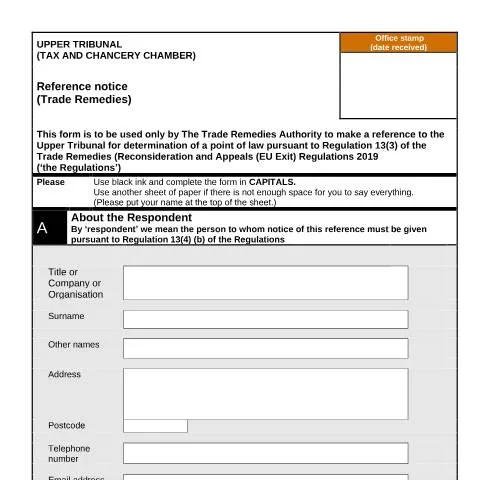
The Critical Role of Form FTC4 in Trade Remedies
The landscape of trade remedies in the UK is intricate, governed by regulations that ensure fair competition and legal recourse for those affected by trade issues. At the heart of this legal framework lies Form FTC4, a crucial document utilized by the Trade Remedies Authority (TRA) to refer points of law to the Upper Tribunal. This form facilitates a structured approach to resolving disputes and clarifying legal interpretations, ensuring that all parties have a fair opportunity to present their cases.
Who Needs to Complete Form FTC4?
Form FTC4 is predominantly used by the TRA, which acts on behalf of the government to safeguard the rights of UK industries. However, understanding who qualifies as a respondent is essential for anyone involved in this process. The definition of a 'respondent' encompasses various profiles, each with specific responsibilities and implications.
Profiles of Respondents
- Businesses: Companies or organizations impacted by trade remedy measures, such as anti-dumping duties.
- Legal Representatives: Solicitors or agents acting on behalf of the affected party, who must ensure compliance and proper representation in the proceedings.
- Individuals: In cases where individual stakeholders are significantly affected, such as sole traders, they may also be classified as respondents.
It is vital for respondents to be aware of specific circumstances that may exempt them from certain obligations or provide additional rights in this context. For instance, small businesses may have different considerations than larger enterprises, often requiring tailored guidance and support.
Navigating the Form Completion Process
Completing Form FTC4 requires diligence and precision, as inaccuracies or omissions can lead to delays or rejections. The form is structured to gather pertinent information effectively, facilitating a clear presentation of the legal matter at hand.
Section Breakdown
- About the Respondent: This section requires both personal and organizational details, including full name, address, and contact information. It’s important to ensure that all details are accurate to avoid complications later.
- Point of Law: The core of Form FTC4 lies in this section. Applicants must articulate the specific legal point they wish to raise, providing adequate context to enable the Upper Tribunal to understand the significance of the issue. Adequate detail here is crucial—using additional sheets if necessary is advisable.
- Statement of Truth: This is a formal declaration affirming the accuracy of the information provided. Misrepresentation can lead to serious legal consequences, emphasizing the importance of honesty in this declaration.
Submitting Form FTC4: Channels and Procedures
Once Form FTC4 is duly completed, the next step involves submission. The channels available for submitting this form vary, providing flexibility for respondents and their representatives.
Online vs. Paper Submission
| Submission Method | Pros | Cons |
|---|---|---|
| Online (E-Filing) |
|
Requires internet access and familiarity with online systems. |
| Paper Submission |
|
Potential delays in receipt confirmation and processing times. |
Regardless of the submission method chosen, it is critical that a copy of the reference notice is promptly sent to the respondent to ensure compliance with procedural requirements.
Understanding the Timeline: From Submission to Decision
The timeline associated with the submission of Form FTC4 can vary significantly based on several factors, including the complexity of the legal issue raised and the workload of the Upper Tribunal. Understanding the entire journey—from submitting the form to receiving a decision—can help manage expectations effectively.
Step-by-Step Timeline Overview
- Submission of Form FTC4: Once submitted, respondents should receive acknowledgment from the Upper Tribunal within a week, confirming that the form was received.
- Review by Upper Tribunal: The Tribunal will review the point of law raised, and this process duration may vary. Complex cases may take longer to assess.
- Hearing Date: If deemed necessary, a hearing may be scheduled where parties are allowed to present their cases. Notification of the hearing date will be communicated ahead of time.
- Judgment: After the hearing, the Upper Tribunal will issue a decision, detailing their findings and any resultant actions.
Regulatory Framework: The Legal Basis for Form FTC4
The use of Form FTC4 is underpinned by the Trade Remedies (Reconsideration and Appeals (EU Exit) Regulations 2019, which outline the procedural standards for legal references in trade remedy contexts. This regulatory framework is crucial for maintaining a fair and transparent process.
Key Regulatory Provisions
- Regulation 13(3): This provision allows the TRA to refer specific points of law to the Upper Tribunal, ensuring that legal interpretations remain consistent and fair.
- Regulation 13(4)(b): Establishes the requirement for notifying relevant parties, ensuring that no one is blindsided by proceedings.
These regulations provide a safety net for respondents and reinforce the legitimacy of the proceedings. They also foster a fair environment in which trade remedies can be contested and clarified.
Following Up: Keeping Track of Your Case
After submitting Form FTC4, staying informed about your case's progress is vital. The Upper Tribunal provides several avenues for tracking, ensuring that respondents can remain engaged throughout the process.
Tracking Your Submission
- Email Communication: Regular updates may be sent via email. It’s vital to ensure your email address is correct when filling out the form.
- Digital Tracking: For those who opted for E-Filing, tracking your case online is highly recommended. This feature enables easy access to case documents and updates.
- Direct Contact: For any concerns or clarifications, contacting the Upper Tribunal directly via their designated email or phone number can provide peace of mind.
Conclusion: Ensuring Effective Use of Form FTC4
Form FTC4 represents more than just a document; it embodies the ability of individuals and organizations to challenge and clarify legal decisions in the realm of trade remedies. Understanding its proper use, the profiles of those involved, the channels for submission, and the overall regulatory framework can empower respondents to navigate this complex process confidently. By ensuring meticulous completion and timely follow-up, all parties can effectively engage with the judicial system, reinforcing their rights and interests in the UK trade landscape.
Understanding the Upper Tribunal in Trade Remedies
The Upper Tribunal plays a crucial role in handling appeals related to trade remedies, specifically when it comes to decisions made by the Secretary of State for International Trade or any of the relevant authorities. Understanding its function can help parties navigate the complexities of these appeals effectively.
Trade remedies, as defined under UK law, are measures implemented to protect domestic industries from unfair trade practices such as dumping and subsidies. The Upper Tribunal is an appellate body that reviews decisions on these matters, ensuring compliance with existing regulations and providing a fair hearing to all parties involved.
When a party wishes to appeal a trade remedy decision, they must submit their appeal to the Upper Tribunal using the FTC4 form. This form requires specific details about the original decision, the grounds for appeal, and any supporting evidence that the appellant wishes to present. The tribunal's objective is to assess whether the initial decision was made in accordance with relevant laws and whether it affects the interest of the parties involved.
It's important to note that the Upper Tribunal's decisions can have far-reaching implications for domestic industries and international trade relations. Therefore, understanding how to prepare for an appeal and the potential outcomes can be beneficial for businesses seeking to protect their interests.
Key Considerations When Completing Form FTC4
Completing Form FTC4 for a reference to the Upper Tribunal requires careful attention to detail and adherence to specific guidelines. Here are some key considerations that can help streamline the process:
- Timeliness: It is critical to ensure that your Form FTC4 is submitted within the appropriate time frame. Generally, appeals must be lodged within 30 days from the date of the decision being challenged. Missing this timeline may result in the dismissal of the appeal.
- Clarity of Grounds for Appeal: Clearly articulate the grounds for your appeal within the designated sections of the form. It may be beneficial to reference applicable legislation or previous case law to strengthen your position. Providing a comprehensive explanation can aid the tribunal in understanding the nuances of your case.
- Supporting Evidence: Include any relevant documents that support your appeal. This can encompass evidence of the impact of the trade remedy on your business or industry, expert testimonies, or economic analyses. This substantiation is vital in demonstrating the merit of your case.
- Legal Representation: Consider seeking legal advice or representation. The complexities of trade remedy appeals often necessitate specialized knowledge of both substantive and procedural law. Professionals experienced in trade law can significantly enhance your chances of a successful appeal.
By acknowledging these considerations, appellants can increase the likelihood of a favorable outcome in their trade remedy appeals. Accurate and timely submissions are essential in the Upper Tribunal's procedural landscape.
Fill in your form directly online
No printing: type your details into the boxes of the official form, tick, then download the PDF ready to send.
- 1Type into the form boxes
- 2Tick in one click
- 3Save and download the PDF
Implications of the Upper Tribunal's Decision
Understanding the potential implications of a decision made by the Upper Tribunal is essential for all parties involved in trade remedy appeals. The tribunal's rulings can lead to significant changes in trade practices, affecting not only the appellant but also the broader market landscape.
1. Impact on Domestic Markets: A successful appeal could result in the overturning of a trade remedy measure, potentially allowing increased foreign competition in the domestic market. This may lead to lower prices for consumers but could pose threats to local businesses that are unable to compete on price or volume.
2. Precedential Value: Decisions made by the Upper Tribunal can set important precedents for future cases. If a decision is particularly groundbreaking, it may influence how similar cases are handled in the future, shaping the landscape of trade remedy law in the UK.
3. International Relations: The outcomes of trade remedy appeals can also affect international trade relations. If a trade remedy is lifted due to a tribunal's ruling, it may lead to negotiations or tensions with foreign governments whose products are impacted by UK trade policy.
4. Compliance Requirements: A ruling may result in changes to compliance obligations for companies involved in international trade. Businesses may need to reassess their legal and operational frameworks to remain compliant with new rulings, which can involve additional costs and adjustments.
5. Further Appeals: Depending on the situation, a decision from the Upper Tribunal may not be the final word. Parties may have the option to appeal to higher courts, such as the Court of Appeal, if they believe there has been an error in law. Understanding this possibility is crucial for parties considering their next steps post-decision.
Given the potential repercussions of Upper Tribunal decisions, it is advisable for businesses to closely monitor outcomes and assess how they may need to adapt to stay competitive in an evolving trade environment.