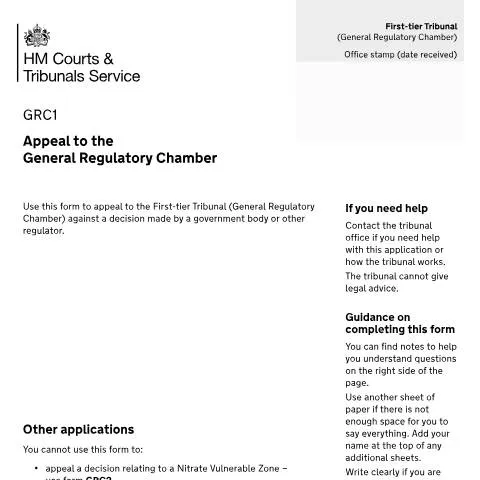
When Government Decisions Go Wrong: Understanding the GRC1 Appeal Process
The moment a regulatory body serves you with an enforcement notice, refuses your application, or makes a decision that fundamentally affects your rights, the stakes become immediately clear. Whether you're a driving instructor facing fitness concerns, a business owner hit with environmental penalties, or an individual whose data protection complaint has been dismissed, the GRC1 form represents your formal gateway to challenging these determinations through the First-tier Tribunal's General Regulatory Chamber.
This tribunal pathway handles some of the most consequential disputes between citizens and regulatory authorities across England and Wales. From Information Commissioner decisions on freedom of information requests to Environment Agency enforcement actions, the GRC1 form opens the door to independent judicial review of regulatory decisions that can impact livelihoods, reputations, and fundamental rights.
The Regulatory Appeal Landscape: Where GRC1 Fits
The General Regulatory Chamber operates within a carefully structured appeals system that distinguishes between different types of regulatory disputes. Understanding this hierarchy proves crucial for selecting the correct form and avoiding costly delays.
The GRC1 form specifically handles standard appeals against regulatory decisions, but several related forms serve distinct purposes within the same chamber. Form GRC2 deals exclusively with Nitrate Vulnerable Zone appeals, whilst GRC3 addresses data protection complaint progression orders. Forms GRC4 through GRC7 handle various procedural applications, from contempt enforcement to Upper Tribunal permission requests.
| Form Code | Purpose | Typical Use Case |
|---|---|---|
| GRC1 | Standard regulatory appeals | Information Commissioner decisions, charity regulatory orders |
| GRC2 | Nitrate Vulnerable Zone appeals | Environmental land designation disputes |
| GRC3 | Data protection complaint orders | Progressing stalled ICO investigations |
| GRC7 | Upper Tribunal permission | Second-tier appeals on points of law |
The distinction matters because using the wrong form can result in automatic rejection, forcing you to restart the process and potentially missing crucial time limits. Each regulatory area operates under specific statutory frameworks with varying appeal periods and procedural requirements.
Regulatory Bodies in the Chamber's Jurisdiction
The General Regulatory Chamber's reach extends across numerous regulatory domains, each with distinct appeal rights and procedural nuances. The Information Commissioner's Office generates perhaps the highest volume of appeals, particularly following freedom of information refusals and data protection enforcement actions. These cases often involve complex balancing exercises between transparency rights and privacy protections.
Environmental regulators present another significant category. The Environment Agency's enforcement powers span water quality, waste management, and industrial emissions. Their stop notices and civil sanctions can shut down operations overnight, making swift appeal action essential. Local authorities also feature prominently, especially regarding Assets of Community Value registrations that can restrict property transactions.
The Charity Commission brings unique challenges, as their protective orders can freeze charity operations and assets during investigations. These appeals often involve complex governance disputes and require careful presentation of organisational decision-making processes.
Driving instructor regulation through the Driver and Vehicle Standards Agency represents a more specialised jurisdiction. These appeals frequently centre on fitness and propriety assessments, where personal reputation and professional livelihood hang in the balance. The form specifically accommodates driving instructor appeals with dedicated sections addressing common scenarios like trainee licence refusals and competency challenges.
Critical Timing and Procedural Foundations
Appeal deadlines vary significantly across regulatory domains, creating potential traps for the unwary. Most regulatory appeals must be lodged within 28 days of the decision date, though some jurisdictions allow longer periods. The decision date typically means when you received the notice, not when it was issued, but regulatory bodies may dispute this interpretation.
Late appeals face strict scrutiny, with tribunals requiring compelling reasons for delay. Acceptable explanations might include serious illness, postal disruption, or fundamental misunderstanding of appeal rights. However, simple oversight or legal advice delays rarely suffice. The tribunal applies a structured test considering the length of delay, reasons for lateness, and merits of the underlying appeal.
The form demands precise identification of the decision being challenged. This includes the decision reference number, exact date, and clear description of the regulatory action. Vague references to "recent correspondence" or approximate dates can derail the appeal process from the outset.
Completing Section 3: Identifying Your Regulatory Dispute
Section 3 requires careful attention to the specific nature of your regulatory dispute. The form provides tick-boxes for common appeal types, each triggering different procedural pathways and evidential requirements.
Environmental enforcement appeals against stop notices under the Environmental Civil Sanctions Order demand immediate attention to operational impact. These notices can halt business activities pending compliance, making suspension applications under Rule 19A particularly relevant. The form specifically accommodates such applications, recognising the urgent nature of these disputes.
Appeals against Information Notices under freedom of information or data protection legislation require different preparation. These often involve complex legal arguments about exemptions, public interest balancing, or data processing lawfulness. The tribunal expects detailed engagement with the regulatory framework, not merely disagreement with the outcome.
Welfare enforcement notices under animal slaughter regulations present highly technical challenges. These appeals typically involve veterinary evidence, procedural compliance issues, and interpretation of welfare standards. The regulatory framework demands expert evidence from qualified professionals familiar with commercial slaughter operations.
Representative Arrangements and Communication Protocols
The tribunal operates strict communication protocols that can significantly impact case management. Appointing a representative through Section 2 means all tribunal correspondence goes exclusively to that representative. This includes hearing notices, directions, and final decisions. Many appellants discover too late that they've been excluded from direct communication with the tribunal.
Professional representatives bring obvious advantages in complex regulatory disputes, but their appointment requires careful consideration. Solicitors specialising in administrative law understand tribunal procedures and regulatory frameworks. However, their involvement adds substantial costs to appeals that might otherwise proceed as litigant-in-person cases.
The reference number field in Section 2.4 proves particularly important for professional representatives handling multiple cases. This internal tracking system prevents confusion when representatives act for several clients in similar disputes. However, leaving this field blank won't invalidate the application.
Specialised Pathways: Driving Instructor Appeals
Section 5 addresses the unique requirements of driving instructor regulation appeals. The Driver and Vehicle Standards Agency's decisions on fitness and propriety can end careers built over decades, making these appeals particularly high-stakes proceedings.
Appeals against fit and proper person determinations typically involve criminal convictions, professional misconduct, or competency concerns. The DVSA applies detailed guidance considering conviction relevance, time elapsed, and rehabilitation evidence. Successful appeals often require comprehensive character references, evidence of remedial action, and demonstration of continuing professional competence.
Trainee licence refusal appeals follow different pathways. These decisions usually relate to practical test failures or theoretical knowledge gaps. The form specifically requests test booking details, recognising that many appellants continue pursuing qualification whilst challenging refusal decisions. This information helps tribunals coordinate hearing schedules with planned examinations.
The tribunal expects detailed engagement with DVSA's published standards for driving instructors. Generic complaints about unfair treatment rarely succeed without specific reference to regulatory criteria and evidential standards applied during assessment processes.
Third Party Rights and Complex Procedural Scenarios
Section 6 acknowledges that some regulatory appeals involve multiple parties with competing interests. Freedom of information appeals particularly demonstrate this complexity, where the original requester, public authority, and potentially affected third parties all hold legitimate interests in the outcome.
When appealing Information Commissioner decisions on freedom of information requests, the form distinguishes between different appellant categories. The original requester challenging a dismissal of their complaint follows one pathway, whilst third parties affected by disclosure decisions follow another. This distinction affects procedural rights, evidence requirements, and potential liability for adverse costs orders.
Assets of Community Value appeals present similar multi-party dynamics. Property owners challenging local authority registrations may face community groups supporting the designation. These appeals often involve complex property law, community benefit assessments, and local planning considerations.
The tribunal manages these competing interests through careful case management directions. Early hearings may address preliminary issues like standing to appeal, disclosure obligations, and whether additional parties should join proceedings. Understanding these procedural possibilities helps appellants prepare comprehensive cases from the outset.
Successfully navigating the GRC1 appeal process requires thorough preparation, precise attention to regulatory frameworks, and realistic assessment of prospects. The tribunal operates as an independent judicial body, not a general complaints mechanism, and expects appellants to engage seriously with the legal and evidential standards governing their particular regulatory domain. Whether challenging environmental enforcement, information governance decisions, or professional regulation, the key lies in understanding both the specific regulatory context and the tribunal's procedural requirements.
Understanding the General Regulatory Chamber's Jurisdiction and Appeal Categories
The General Regulatory Chamber operates as a specialist tribunal within the First-tier Tribunal system, handling appeals across diverse regulatory sectors that significantly impact daily life and business operations. Understanding which specific regulatory decisions fall under its remit is crucial before completing Form GRC1, as submitting to the wrong tribunal can result in delays and potential dismissal of your case.
The Chamber's jurisdiction encompasses several distinct categories, each with unique procedural requirements. Information rights appeals, governed primarily by the Freedom of Information Act 2000 and Data Protection Act 2018, form a substantial portion of the caseload. These typically involve disputes where the Information Commissioner's Office has issued enforcement notices, monetary penalty notices, or has refused to investigate complaints about data protection breaches or freedom of information refusals.
Estate agent appeals represent another significant category, particularly relevant following regulatory action by the National Trading Standards Estate Agency Team or local trading standards authorities. These appeals often arise from prohibition orders preventing individuals from working in estate agency, or from enforcement notices regarding compliance with estate agency legislation. The regulatory framework here is notably complex, involving both the Estate Agents Act 1979 and various consumer protection regulations.
Transport appeals cover a broad spectrum, from driving instructor registration disputes with the Driver and Vehicle Standards Agency (DVSA) to appeals against traffic commissioner decisions affecting commercial vehicle operations. Professional driving qualification appeals, including those relating to Certificate of Professional Competence (CPC) requirements, also fall within this jurisdiction. Each transport-related appeal type has specific time limits and evidence requirements that must be carefully observed when completing Form GRC1.
Immigration services appeals involve disputes with the Office of the Immigration Services Commissioner, typically concerning registration refusals or disciplinary action against immigration advisers. These cases often require detailed knowledge of immigration law and professional conduct standards, making proper case preparation essential.
Charity appeals against Charity Commission decisions represent a growing area of the Chamber's work, particularly as regulatory oversight of the charity sector has intensified. These might involve disputes over charity registration refusals, regulatory compliance notices, or decisions to remove charities from the register. The Charities Act 2011 provides the primary legislative framework, but case law continues to evolve in this area.
Fill in your form directly online
No printing: type your details into the boxes of the official form, tick, then download the PDF ready to send.
- 1Type into the form boxes
- 2Tick in one click
- 3Save and download the PDF
Each category requires specific supporting documentation and evidence types. Information rights appeals typically need copies of the original information request, the public authority's response, and any subsequent correspondence with the ICO. Transport appeals might require professional qualification certificates, training records, or vehicle documentation. Understanding these requirements before completing Form GRC1 ensures your appeal is properly constituted from the outset.
Procedural Requirements and Case Management Directions
Once Form GRC1 is submitted and accepted, the General Regulatory Chamber initiates a structured case management process designed to ensure fair and efficient resolution of appeals. The tribunal's approach emphasises proportionality, with procedures scaled according to case complexity and the issues at stake. Understanding these procedural requirements helps appellants prepare effectively and avoid common pitfalls that can weaken their position.
Initial case management typically begins with the tribunal issuing standard directions within 14 to 28 days of receiving your appeal. These directions establish the framework for how your case will proceed, including deadlines for submitting additional evidence, exchanging documents with the respondent authority, and any preliminary issues that need resolution. The tribunal has broad case management powers under the Tribunal Procedure Rules, including the ability to strike out cases, extend time limits, or order specific steps to be taken.
Document disclosure forms a critical component of most appeals. The respondent authority - whether HMRC, the ICO, DVSA, or another regulatory body - must typically provide a response bundle containing all relevant documents they hold relating to the disputed decision. This might include internal correspondence, policy guidance applied in your case, expert reports, or records of any investigation conducted. Reviewing this bundle carefully often reveals procedural errors or factual inaccuracies that strengthen your appeal.
Witness evidence procedures vary depending on the appeal type and complexity. Simple cases might be determined on written evidence alone, while more complex disputes may require witness statements or even oral hearings with cross-examination. The tribunal has discretion to determine the most appropriate format, balancing the need for thorough examination of evidence against proportionality and cost considerations.
Expert evidence requirements can be particularly important in technical appeals, such as those involving data protection compliance or transport safety regulations. The tribunal may give directions for joint expert reports where technical issues are in dispute, or may permit each party to instruct their own expert where the issues are sufficiently complex. Understanding when expert evidence might be needed helps in budgeting for appeal costs and ensuring appropriate expertise is secured early in the process.
Case management conferences may be scheduled in complex cases to clarify issues, set timetables, and explore possibilities for settlement. These conferences, typically conducted by telephone or video link, provide an opportunity to raise procedural concerns and ensure all parties understand their obligations. Active participation in case management can significantly influence the efficiency and outcome of your appeal.
The tribunal's overriding objective, as set out in the Tribunal Procedure Rules, is to deal with cases fairly and justly. This includes avoiding unnecessary formality, using specialist expertise effectively, and ensuring proceedings are proportionate to the importance and complexity of the issues. Appellants who demonstrate understanding of these principles and engage constructively with case management directions typically achieve better outcomes, regardless of the merits of their underlying case.
Strategic Considerations for Appeal Success and Alternative Resolution Options
Developing an effective appeal strategy extends far beyond simply completing Form GRC1 correctly. Successful appellants typically approach their case with a clear understanding of the legal framework, realistic assessment of their prospects, and comprehensive preparation of supporting evidence. The General Regulatory Chamber's approach to decision-making emphasises both legal compliance and proportionate regulatory action, creating opportunities for well-prepared appellants to challenge decisions on multiple grounds.
Legal grounds for appeal vary significantly across different regulatory areas, but common themes include procedural unfairness, errors in law, disproportionate penalties, and factual errors in the original decision. Information rights appeals often succeed on grounds that the original decision-maker failed to properly consider the public interest balance required under freedom of information legislation, or misapplied data protection principles. Transport appeals frequently involve challenges to the proportionality of regulatory action, particularly where professional livelihoods are at stake.
Evidence strategy requires careful consideration of both documentary and witness evidence. The most persuasive appeals typically combine contemporaneous documents that contradict the regulator's version of events with credible witness testimony that addresses any gaps in the documentary record. Professional appellants often benefit from obtaining independent expert opinions on technical aspects of their case, particularly in areas like data security compliance or transport safety standards.
Timing considerations extend beyond the basic appeal deadlines to encompass strategic decisions about when to submit additional evidence, whether to seek interim relief, and how to respond to the regulator's defence. The tribunal's case management directions create a structured timeline, but experienced appellants understand that early preparation often provides significant advantages in terms of evidence gathering and legal argument development.
Alternative dispute resolution mechanisms deserve serious consideration before and during the appeal process. Many regulatory bodies operate internal review procedures that, while not legally binding, can provide cost-effective resolution of disputes. The General Regulatory Chamber also has powers to facilitate settlement discussions between parties, and tribunal judges often encourage exploration of settlement where appropriate.
Mediation services, while not formally part of the tribunal system, can be particularly effective in regulatory disputes where ongoing relationships between businesses and regulators are important. Professional bodies and trade associations sometimes offer mediation services specifically designed for regulatory disputes, providing expertise in both the relevant legal framework and industry practices.
Cost implications require careful evaluation throughout the appeal process. While the General Regulatory Chamber does not typically award costs against unsuccessful parties, there are exceptions where appeals are deemed vexatious or parties fail to comply with tribunal directions. More importantly, the indirect costs of pursuing an appeal - including management time, professional fees, and potential reputational impact - can be substantial. Realistic assessment of these costs against likely outcomes helps inform strategic decisions about settlement or continuing with the appeal.
Regulatory relationship management represents a often-overlooked strategic consideration. Even where appeals are successful, appellants typically need to maintain ongoing relationships with the regulatory bodies involved. Approaching appeals in a constructive manner, focusing on legal and procedural issues rather than personal criticism of regulators, often facilitates better long-term outcomes. This is particularly important for businesses operating in heavily regulated sectors where future regulatory interactions are inevitable.