When Death Disrupts the Final Rest: Understanding Exhumation Licensing in England and Wales
The permanence of burial carries profound legal weight in England and Wales, yet circumstances occasionally arise where disturbing human remains becomes necessary or desired. Whether driven by family reunification, forensic investigation, or practical cemetery management, the removal of buried human remains—including cremated remains—requires explicit permission from the Ministry of Justice through a formal licensing process.
This statutory requirement reflects the sanctity of burial principle deeply embedded in English law, where interment is presumed permanent unless compelling reasons justify disturbance. The licensing framework balances respect for the deceased, family sensitivities, and legitimate public interests through a structured application process that examines each request on its individual merits.
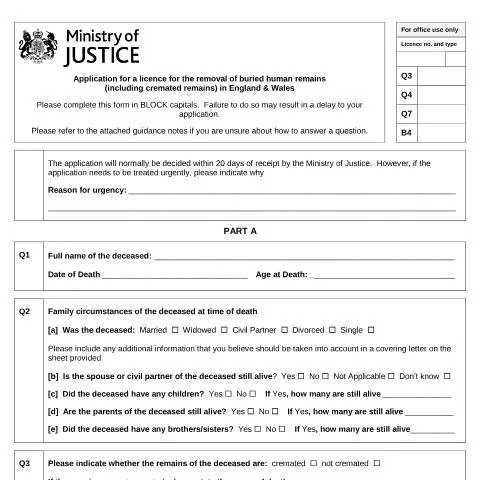
The Ministry of Justice typically processes applications within 20 working days, though urgent cases—such as those involving public health concerns or criminal investigations—may receive expedited consideration. Understanding the complexities of this process proves essential for families, legal representatives, and burial authorities navigating these sensitive circumstances.
Legal Framework and Statutory Foundations
Exhumation licensing operates under the Burial Act 1857 and subsequent legislation, establishing the Secretary of State's exclusive authority to grant removal licences for human remains in England and Wales. This centralised system ensures consistent application of standards whilst maintaining appropriate oversight of what the law considers an exceptional interference with burial.
The statutory framework distinguishes between consecrated and unconsecrated ground, with different procedures applying to Church of England burial grounds versus municipal cemeteries or private burial sites. However, all require Ministry of Justice licensing regardless of the burial ground's religious or secular status.
Importantly, the legislation covers both traditional burials and cremated remains that have been subsequently interred. This includes ashes buried in cemetery plots, interred in churchyards, or placed in columbaria—all requiring the same licensing process for removal or relocation.
Jurisdictional Boundaries and Limitations
The Ministry of Justice's licensing authority extends throughout England and Wales but excludes Scotland and Northern Ireland, which operate separate legal frameworks. Additionally, certain categories of remains fall outside this process:
- Archaeological remains older than 100 years, governed by separate heritage legislation
- Coroner-ordered exhumations for forensic purposes, which bypass the standard licensing requirement
- Remains in private burial grounds on family property, subject to different regulatory oversight
Defining the Applicant: Who Can Seek Removal Authority
The application process centres on establishing legitimate interest and family consensus, recognising that multiple parties may hold valid claims regarding the deceased's remains. The primary applicant must demonstrate their relationship to the deceased and explain any circumstances where they're not the nearest surviving relative.
Relationship hierarchy follows established precedence: surviving spouse or civil partner takes priority, followed by adult children, then parents, and subsequently siblings. However, practical considerations often complicate this sequence—estranged family members, geographical separation, or capacity issues may necessitate alternative applicants.
Complex Family Dynamics and Multiple Claimants
Modern family structures frequently challenge traditional kinship assumptions. Blended families, adoption, divorce, and remarriage create situations where multiple individuals may claim nearest relative status. The application form specifically addresses these complexities by requiring disclosure of all family members and their awareness of the proposed exhumation.
| Family Status | Priority Level | Documentation Required |
|---|---|---|
| Surviving spouse/civil partner | First | Marriage/civil partnership certificate |
| Adult children (18+) | Second | Birth certificates, consent from siblings |
| Parents | Third | Birth certificate, explanation if children exist |
| Siblings | Fourth | Birth certificates, consent from other siblings |
When applicants aren't the nearest surviving relative, they must provide detailed explanations and, crucially, demonstrate either consent from higher-priority relatives or compelling reasons why those individuals cannot or should not make the application themselves.
Justification Categories and Evidentiary Requirements
The Ministry of Justice evaluates applications against established criteria, with different justification categories requiring specific supporting evidence. Understanding these categories helps applicants structure their submissions effectively and gather appropriate documentation before submitting their request.
Family Reunification and Practical Considerations
Geographic relocation represents the most common justification, particularly when families have moved significant distances since the original burial. The Ministry typically views favourably applications seeking to relocate remains to enable regular family visits, especially for elderly relatives or young children who struggle with long-distance travel.
Cemetery closure or reorganisation creates another legitimate category, though these situations often involve bulk relocations managed directly by burial authorities rather than individual family applications. Private family requests during cemetery reorganisation still require individual licensing but may receive expedited processing.
Religious and Cultural Motivations
Changes in religious practice or cultural understanding may justify exhumation requests. For instance, families discovering that a deceased relative would have preferred burial in consecrated ground, or conversely, seeking removal from religious burial sites following family conversion to different faiths.
The application form specifically addresses consecrated ground considerations, requiring applicants to indicate whether re-interment will occur in Church of England consecrated burial sites. This information influences the Ministry's assessment and may trigger additional consultation requirements.
Forensic and Legal Necessities
Criminal investigations, paternity disputes, or inheritance challenges occasionally necessitate remains examination. These applications typically receive priority processing but require substantial legal documentation, including court orders or formal requests from investigative authorities.
Medical research or genealogical DNA testing represents a growing application category, though the Ministry maintains strict standards regarding scientific necessity and ethical oversight for such requests.
Documentary Evidence and Supporting Materials
Successful applications depend heavily on comprehensive documentation that establishes both legal authority and practical feasibility for the proposed exhumation. The Ministry requires specific evidence categories, with additional documents needed depending on the intended destination for the remains.
Core Documentation Requirements
Every application must include proof of death and burial location, typically comprising the death certificate, burial register entries, and cemetery plot records. These documents establish the basic facts surrounding the original interment and confirm the applicant's legal standing.
Family relationship documentation proves crucial, requiring birth certificates, marriage certificates, or civil partnership registrations as appropriate. When multiple family members exist at the same relationship level—such as several adult children—consent signatures from all parties become mandatory.
Destination-Specific Requirements
The intended destination for exhumed remains determines additional documentation needs. Relocation within England and Wales requires written confirmation from the receiving cemetery, churchyard, or crematorium, demonstrating their willingness and legal capacity to accept the remains.
International relocations involve significantly more complex requirements:
- Transportation confirmation from airlines or shipping agents willing to handle human remains
- Destination country import permits and health certificates
- Diplomatic or consular endorsements when required by receiving nations
- Cultural or religious authority permissions for burial in foreign religious sites
Cremation intentions require confirmation from licensed crematorium operators, including scheduling arrangements and compliance with local authority regulations governing cremation procedures.
Financial and Practical Considerations
While the Ministry of Justice doesn't charge licensing fees, applicants must demonstrate financial capability to complete the proposed exhumation professionally and respectfully. This includes arrangements with licensed funeral directors experienced in exhumation procedures, which typically cost significantly more than standard burial services.
Cemetery or churchyard permissions represent another essential component, as burial authorities maintain their own policies regarding exhumation timing, procedures, and restoration requirements for disturbed plots.
Submission Pathways and Processing Protocols
The Ministry of Justice operates a postal-only submission system for exhumation licence applications, reflecting the sensitive nature of these requests and the need for comprehensive documentary review. Unlike many government services transitioning to digital platforms, exhumation licensing maintains traditional paper-based processing to ensure thorough consideration of complex family and legal circumstances.
Applications must be submitted to the Ministry of Justice's dedicated burial licensing unit, with specific postal addresses provided in the official guidance documentation. The physical submission requirement allows for comprehensive documentation packages and ensures secure handling of sensitive personal information.
Processing Timeframes and Priority Systems
Standard applications receive processing within 20 working days from receipt, though this timeframe assumes complete documentation and straightforward circumstances. Complex family situations, international relocations, or contested applications may require extended evaluation periods.
Urgent applications receive expedited consideration when compelling circumstances exist. Public health emergencies, criminal investigations, or imminent cemetery closure situations may qualify for priority processing, but applicants must provide detailed justification for urgency claims.
The Ministry may request additional information or clarification during processing, potentially extending timeframes. Common requests include family consent clarification, destination facility confirmation, or professional qualification verification for proposed service providers.
Decision Communication and Appeal Rights
Licence approvals arrive by post with detailed conditions and restrictions governing the exhumation process. These conditions typically specify timeframes for completion, approved service providers, and reporting requirements following the procedure's completion.
Licence refusals include detailed explanations of the Ministry's reasoning and information about appeal procedures for applicants who believe decisions were made in error. Appeals follow established administrative law procedures, though they're relatively uncommon given the thorough initial assessment process.
Special Circumstances and Exceptional Cases
Certain situations require modified approaches to the standard licensing process, reflecting the diverse circumstances that may necessitate exhumation while maintaining appropriate safeguards and sensitivity.
International Complications and Cross-Border Movements
Brexit implications have created additional complexity for remains transportation to European Union countries, with new documentation requirements and potential delays in processing international movement permissions. Families planning EU relocations should anticipate extended preparation periods and additional bureaucratic requirements.
Commonwealth countries often maintain reciprocal arrangements facilitating remains transportation, though each nation retains sovereign authority over import requirements and burial regulations. Former British territories may offer streamlined procedures, but applicants shouldn't assume simplified requirements without confirming current policies.
Military and Service Personnel Considerations
Armed forces personnel buried in military cemeteries or Commonwealth War Graves Commission sites face additional regulatory layers. Service burial relocations typically require Ministry of Defence consultation alongside standard Ministry of Justice licensing, particularly for personnel buried in overseas military cemeteries.
Repatriation requests for service personnel often receive sympathetic consideration, especially when families can demonstrate ongoing hardship accessing overseas burial sites. However, Commonwealth War Graves Commission policies may restrict certain relocations to preserve historical commemoration integrity.
Child and Infant Burial Sensitivities
Applications involving deceased children receive particularly careful assessment, with enhanced attention to family consensus and psychological welfare considerations. Stillborn infant exhumations may involve additional medical record requirements and consultation with healthcare professionals involved in the original circumstances.
Multiple child burials—such as family plots containing several deceased children—require individual licensing for each set of remains, though the Ministry may coordinate processing to minimise family disruption and administrative burden.
Professional Standards and Practical Implementation
Licensed exhumations must meet strict professional standards governing both the physical procedures and respectful treatment of human remains throughout the process. These requirements ensure dignity maintenance while protecting public health and family sensitivities.
Approved exhumations typically occur during early morning hours to minimise public attention and family distress, with cemetery authorities often restricting access to essential personnel only. Professional funeral directors experienced in exhumation procedures manage the technical aspects, including appropriate equipment and transportation arrangements.
Health and Safety Protocols
Exhumation procedures follow strict public health guidelines established by Public Health England, particularly for remains that may pose infectious disease risks or have been treated with preservation chemicals. Environmental health authorities may require additional precautions or specialist expertise for certain cases.
Soil contamination considerations affect both the exhumation process and the restoration of burial plots, with cemetery authorities typically requiring professional restoration to previous conditions following the procedure's completion.
The licensing conditions specify approved timeframes for completion, usually requiring exhumation within 12 months of licence issuance to maintain validity and ensure family circumstances remain consistent with the original application assessment.