Understanding the Cremation of Body Parts: A Sensitive Administrative Process
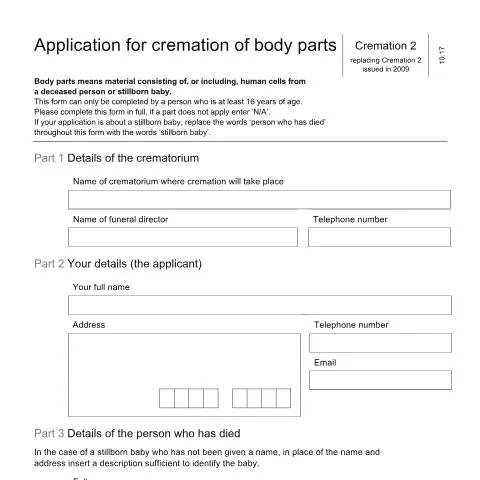
When families face the difficult circumstances requiring the cremation of body parts following a post-mortem examination, they encounter a complex administrative framework governed by the Cremation (England and Wales) Regulations 2008. The Ministry of Justice's Cremation 2 form serves as the official gateway to this process, replacing the previous version issued in 2009 and establishing clear protocols for what can be an emotionally challenging procedure.
Body parts, as defined within this regulatory framework, encompass any material consisting of or including human cells from a deceased person or stillborn baby. This definition covers organs, tissue samples, or other anatomical materials that may have been retained during coroner's investigations or hospital post-mortem examinations. The form's scope extends beyond typical funeral arrangements, addressing situations where families must navigate the administrative requirements for cremating these retained materials separately from the main burial or cremation.
The legal foundation rests on Regulation 19(a) of the Cremation (England and Wales) Regulations 2008, which establishes the mandatory framework for such applications. This regulation ensures that proper consent procedures are followed and that all relevant parties are consulted before proceeding with cremation of body parts.
Eligibility and Authority: Who Can Submit This Application
The Cremation 2 form carries strict eligibility requirements that reflect the sensitive nature of the process. Only individuals aged 16 years or older may complete and submit the application, establishing a clear threshold for legal responsibility in these circumstances.
The hierarchy of authority follows established patterns within funeral administration. Near relatives hold primary authority, with this category specifically defined to include:
- The widow, widower, or surviving civil partner of the deceased
- Parents or children of the deceased person
- Other relatives who usually resided with the deceased
- Parents of a stillborn baby in cases involving stillbirth
Executors of the deceased's estate share equal standing with near relatives in terms of authority to make this application. However, when neither near relatives nor executors are available or willing to proceed, the form accommodates alternative applicants provided they can demonstrate legitimate grounds and explain why the primary authorities are not making the application.
This flexibility recognises practical situations where families may be geographically dispersed, estranged, or where the primary relatives may be too distressed to handle administrative procedures. The form requires detailed justification in such cases, ensuring that proper protocols are maintained whilst acknowledging real-world complexities.
Consultation Requirements and Family Notification
The application process mandates comprehensive consultation with all relevant family members and executors. Applicants must confirm whether all near relatives and executors have been informed of the proposed cremation, and if any have not been contacted, provide specific reasons for these omissions.
Where objections arise from family members or executors, the form requires detailed documentation of these concerns. This consultation framework serves as a crucial safeguard, ensuring that cremation proceeds only with appropriate family consensus and addressing potential disputes before they escalate.
Detailed Application Components and Information Requirements
The Cremation 2 form follows a structured approach across seven distinct sections, each gathering specific information necessary for processing the application. The comprehensive nature reflects the legal requirements surrounding cremation procedures and the need for complete documentation.
| Section | Information Required | Key Considerations |
|---|---|---|
| Part 1 | Crematorium details and funeral director information | Must specify the exact facility where cremation will occur |
| Part 2 | Applicant's personal details and contact information | Requires full name, address, telephone, and email |
| Part 3 | Deceased person's comprehensive details | Includes age, sex, marital status, and full identification |
| Part 4 | Application specifics and consultation confirmation | Most complex section requiring detailed responses |
| Part 5 | Instructions for ash disposal | Three distinct options with specific requirements |
| Part 6 | Acknowledgment of ash recovery limitations | Particularly relevant for stillborn cases |
| Part 7 | Formal declaration and signature | Legal statement with criminal liability warnings |
Critical Information About the Deceased
Part 3 requires comprehensive identification of the deceased person, with special provisions for stillborn babies who may not have been formally named. In such cases, applicants must provide "a description sufficient to identify the baby" rather than standard name and address information.
The form captures essential demographic information including age at death, sex, and marital status. This information serves both identification and statistical purposes, contributing to official records maintained by cremation authorities.
Post-Mortem Context and Medical Examination Details
The application specifically addresses the medical context surrounding body part retention, recognising that such materials typically arise from post-mortem examinations. The form distinguishes between coroner's post-mortem examinations and hospital post-mortem examinations, each carrying different legal implications and procedural requirements.
Coroner's post-mortems occur when deaths require official investigation due to circumstances such as unexplained deaths, accidents, or suspected criminal activity. In these cases, body parts may be retained as part of the investigative process, with families later seeking cremation once the coroner's requirements are satisfied.
Hospital post-mortems, by contrast, typically serve medical or research purposes, often conducted with family consent to understand disease processes or medical conditions. The retention of materials from such examinations may occur for various legitimate purposes, necessitating separate cremation arrangements.
The form also accommodates other circumstances where body parts may require cremation, providing flexibility for situations not covered by the standard post-mortem categories. This might include materials from surgical procedures or other medical interventions where separate disposal becomes necessary.
Timing and Previous Disposal Information
Critical to the application process is establishing the timeline of events, including the original date and place of death or stillbirth, and details of any previous burial or cremation of the main body. This information helps establish the legal and practical context for the current application.
Applicants must provide the name and address of the cemetery, churchyard, or crematorium where the primary burial or cremation occurred, along with the specific date of that procedure. This creates a clear audit trail and ensures that the body part cremation aligns with previous disposal arrangements.
Ash Disposal Options and Long-term Considerations
Part 5 of the form addresses one of the most personal aspects of the cremation process: determining what happens to the ashes following cremation. The Ministry of Justice framework provides three distinct options, each with specific requirements and flexibility provisions.
Option 1: Crematorium Management allows the cremation authority to scatter, inter, or otherwise dispose of the ashes according to their standard practices. Families choosing this route can specify preferences regarding location, timing, and whether they wish to witness the disposal. Many crematoriums maintain dedicated areas for such purposes, often gardens of remembrance or designated scattering grounds.
Option 2: Family Collection enables designated individuals to collect the ashes directly from the crematorium. This option requires careful coordination regarding who will collect the ashes and by what date. The person collecting must bring appropriate identification, and families should coordinate closely with funeral directors or crematorium staff to ensure smooth collection procedures.
Option 3: Temporary Holding provides flexibility for families who need time to decide on final arrangements. Crematoriums will hold ashes for specified periods, though policies vary between facilities regarding duration and storage conditions. Families must later confirm their final decision in writing with their signature.
Flexibility and Change Provisions
The regulations recognise that grief and family circumstances may lead to changed preferences. Options 1 and 2 can be altered through written notification with signature, provided the crematorium has not yet implemented the original choice. This flexibility acknowledges the emotional complexity families face during these difficult periods.
Crematoriums typically establish specific procedures for handling such changes, including deadlines for notification and requirements for written confirmation. Families should communicate any changes promptly to avoid complications or additional costs.
Special Considerations for Stillborn Cases and Ash Recovery
The Cremation 2 form addresses the particularly sensitive circumstances surrounding stillborn babies, acknowledging both the emotional and practical challenges these situations present. Throughout the form, specific provisions recognise that stillborn cases may require different approaches to standard adult cremation procedures.
Part 6 addresses a sobering reality: despite every effort being made to recover ashes following cremation, on very rare occasions there may be no recoverable ashes. This situation occurs particularly with stillborn children due to factors including body size, bone development, and the cremation process itself.
The form requires explicit acknowledgment of this possibility, ensuring families understand and consent to proceed despite the potential absence of recoverable remains. This informed consent process serves as both legal protection for cremation authorities and emotional preparation for families who may face additional grief if no ashes result from the procedure.
Cremation authorities typically provide detailed information about ash recovery expectations during pre-cremation consultations. Families are encouraged to discuss these concerns directly with funeral directors or crematorium staff, who can provide facility-specific information about recovery rates and procedures.
Support and Guidance Through Difficult Decisions
The administrative framework recognises that families dealing with body part cremation face extraordinary circumstances requiring additional support. Funeral directors and cremation authorities typically provide enhanced guidance during these procedures, helping families understand options and implications.
Local practices regarding ash handling vary significantly between crematoriums, reflecting both practical considerations and community preferences. Families benefit from early consultation with their chosen facility to understand available options and any specific requirements or limitations that may apply.
Legal Obligations and Statement of Truth Requirements
Part 7 establishes the formal legal framework surrounding the application, requiring applicants to make specific declarations under penalty of criminal prosecution. The Statement of Truth serves as both confirmation of the application details and acknowledgment of legal responsibilities.
Applicants must specify exactly which body parts are to be cremated, providing clear identification to ensure appropriate materials are processed. This specification requirement prevents confusion and ensures that only intended materials undergo cremation.
The declaration carries significant legal weight, with the form explicitly warning that "it is an offence to wilfully make a false statement with a view to obtaining the cremation of any human remains". This criminal liability provision underscores the seriousness of the process and the importance of accurate, truthful information throughout the application.
The signature requirement, accompanied by printed name and date, creates a permanent record of the applicant's formal commitment to the accuracy of all provided information. This documentation becomes part of the official cremation record, maintained by the cremation authority for regulatory and historical purposes.
Processing Timeline and Administrative Follow-up
Following submission, cremation authorities process applications according to established procedures that typically involve verification of information, consultation with relevant medical authorities if necessary, and coordination with funeral directors regarding scheduling and logistics.
The processing timeline varies depending on circumstances, including the complexity of family consultation requirements, any objections that may arise, and the operational schedule of the chosen crematorium. Families should maintain regular contact with their funeral director or cremation authority to track progress and address any questions that may arise during processing.
Once approved, cremation scheduling depends on crematorium availability and coordination with families regarding timing preferences. The sensitive nature of these procedures often receives priority scheduling consideration, though families should expect some flexibility may be required to accommodate facility operations and other commitments.
Special Circumstances and Complex Cases
Certain situations require additional consideration when applying to cremate body parts, particularly where the circumstances surrounding the amputation or removal are complex. Understanding these scenarios helps ensure compliance with both cremation regulations and broader legal requirements.
Multiple Body Parts from the Same Individual
When several body parts from the same person require cremation—perhaps following multiple surgical procedures or a complex medical treatment—you may submit a single application covering all parts. However, each part must be clearly documented with its own identification details, removal date, and storage information. The crematorium authority may request additional documentation to verify the chain of custody for each part, particularly if they were removed at different times or stored at separate facilities.
Some crematoriums prefer separate applications for parts removed more than six months apart, as this aligns with their record-keeping systems and helps prevent administrative confusion. Check with your chosen crematorium about their preferred approach when dealing with multiple parts from extended treatment periods.
Emergency Situations and Expedited Processing
Certain medical circumstances may require urgent cremation of body parts, such as when infectious material poses ongoing health risks or when storage capacity at medical facilities becomes critically limited. While standard processing times apply in most cases, crematorium authorities can often expedite applications where genuine urgency exists.
To request expedited processing, include a detailed explanation of the urgent circumstances alongside supporting documentation from the relevant medical professional or facility. This might include infection control reports, storage capacity certificates, or clinical risk assessments. Emergency applications still require all standard documentation, but the crematorium may prioritise review and scheduling to accommodate urgent needs.
Cross-Border Considerations Within the UK
Body parts may sometimes require transportation between England, Scotland, Wales, or Northern Ireland for cremation. While cremation regulations remain largely consistent across the UK, slight variations in documentation requirements or processing procedures may apply depending on the jurisdiction where cremation will occur.
When transporting body parts across borders within the UK, ensure that transportation documentation clearly identifies the origin and destination, includes all required medical certifications, and complies with any additional requirements of the receiving jurisdiction. Some crematoriums may request confirmation that the body parts were legally removed and stored according to the regulations of their origin jurisdiction.
Financial Considerations and Cost Management
Understanding the financial aspects of body part cremation helps families and medical facilities plan appropriately and avoid unexpected expenses. Costs can vary significantly based on several factors, and various support mechanisms may be available in certain circumstances.
Typical Cost Structure and Variations
Cremation fees for body parts typically differ from those for full body cremations, reflecting the reduced time and resources required. However, costs vary considerably between crematoriums, geographical locations, and the specific circumstances of each case. Urban crematoriums often charge higher fees than those in rural areas, while some facilities offer reduced rates for multiple parts cremated simultaneously.
Additional costs may include transportation fees if the crematorium provides collection services, expedited processing charges for urgent cases, and fees for additional documentation or certification. Some crematoriums charge separately for the return of ashes, while others include this service in their standard fee. Always request a detailed breakdown of all charges before proceeding with the application.
Payment Responsibilities and Arrangements
Determining who bears financial responsibility for cremation costs depends on the circumstances surrounding the body part removal. When parts are removed during NHS treatment, the NHS trust may cover cremation costs as part of their duty of care, particularly for routine surgical removals or medically necessary amputations.
For private medical procedures, patients or their families typically bear responsibility for cremation costs unless alternative arrangements were agreed beforehand. Some private health insurance policies may cover these expenses, though coverage varies significantly between providers and policy types. Check your policy documentation or contact your insurer directly to confirm coverage before incurring expenses.
In cases where financial hardship exists, some crematoriums offer payment plans or reduced-rate services. Local authorities may also provide support in exceptional circumstances, though this varies by region and availability of funds. Contact your local council's environmental health or bereavement services department for information about potential support.
Medical Facility Obligations and Funding
NHS trusts and private medical facilities have specific obligations regarding the dignified disposal of body parts removed during treatment. These obligations typically extend to covering associated costs, though the extent of coverage may depend on the facility's policies and the circumstances of removal.
Medical facilities often have contracts with specific crematoriums, potentially securing preferential rates for routine cremations. However, families retain the right to choose alternative crematoriums, though this may affect cost coverage. Discuss financial arrangements with the medical facility before finalising cremation plans to understand what costs they will cover and what expenses may fall to the family.
Administrative Coordination and Multi-Agency Processes
Successful body part cremation often requires coordination between multiple agencies and organisations, each with distinct roles and responsibilities. Understanding these relationships and communication pathways helps ensure smooth processing and prevents administrative delays.
Medical Facility Coordination Requirements
Medical facilities play a crucial coordinating role in body part cremation, serving as the primary point of contact between families, crematoriums, and regulatory authorities. NHS trusts typically have designated bereavement officers or patient affairs coordinators who manage these processes, ensuring compliance with both medical and cremation regulations.
These coordinators maintain detailed records of all body parts requiring cremation, track documentation requirements, and liaise with chosen crematoriums to schedule services. They also ensure that families receive appropriate support and information throughout the process, including explanations of their rights and options regarding cremation arrangements.
Private medical facilities may have less formalised coordination processes, potentially placing greater responsibility on families to manage communication between different parties. In such cases, families should establish clear communication channels with all involved parties and maintain comprehensive records of all correspondence and documentation.
Local Authority Involvement and Oversight
Local authorities maintain oversight responsibilities for crematorium operations within their boundaries, ensuring compliance with environmental and public health regulations. While they don't typically involve themselves in individual cremation applications, they may become involved in complex cases or where regulatory compliance questions arise.
Environmental health departments within local councils monitor crematorium emissions, waste management procedures, and general operational standards. They also investigate complaints related to crematorium services and can provide guidance on regulatory requirements when unusual circumstances arise.
In cases where disputes occur between families and crematoriums, or where regulatory compliance questions emerge, local authorities may provide mediation services or guidance on appropriate resolution pathways. They can also direct families to relevant support services or regulatory bodies when specialised assistance is required.
Professional Body and Regulatory Coordination
Various professional bodies maintain standards and provide guidance for different aspects of body part cremation processes. The Institute of Cemetery and Crematorium Management provides professional standards for crematorium operations, while medical royal colleges offer guidance on appropriate medical procedures and documentation.
When complex professional or ethical questions arise, these bodies can provide expert guidance to ensure appropriate handling of sensitive cases. They also maintain continuing professional development programmes for relevant professionals, helping ensure current best practices are followed throughout the process.
Regulatory coordination becomes particularly important in cases involving medical research, tissue banking, or other specialised medical procedures. Multiple regulatory frameworks may apply simultaneously, requiring careful coordination to ensure all requirements are met while respecting family wishes and maintaining appropriate dignity throughout the process.