When Legal Proceedings Reach an Unexpected End: Understanding the N279 Discontinuance Process
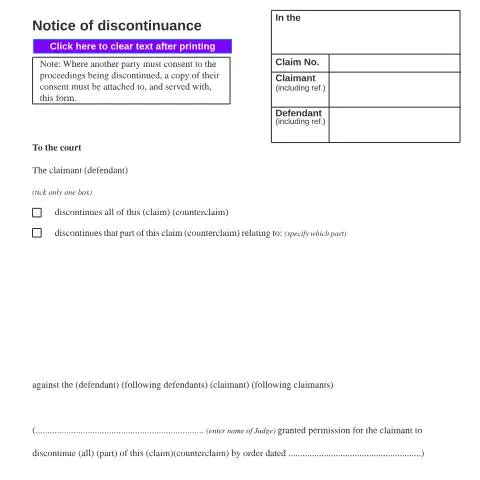
Civil litigation rarely follows a straight path from claim to judgment. Sometimes, halfway through proceedings, circumstances change dramatically—a settlement emerges, new evidence surfaces, or financial realities force a strategic retreat. When parties need to formally abandon their legal pursuit, the Form N279 Notice of Discontinuance becomes the official mechanism to withdraw from court proceedings without proceeding to trial.
This seemingly straightforward document carries significant legal weight within the English civil justice system. Unlike simply failing to pursue a claim, discontinuance through Form N279 creates formal legal consequences, affecting future litigation rights and establishing clear boundaries around what has been abandoned. The form serves both claimants seeking to withdraw their original claim and defendants who wish to discontinue a counterclaim they've raised in response.
The procedural framework surrounding discontinuance reflects the courts' need to maintain orderly case management whilst protecting the legitimate interests of all parties. Understanding when and how to use Form N279 can prevent costly procedural missteps and preserve important legal options for the future.
Strategic Timing: When Discontinuance Becomes the Prudent Choice
The decision to discontinue proceedings typically emerges from evolving circumstances rather than initial planning. Early discontinuance often occurs when claimants discover their case lacks sufficient evidence, when defendants' counterclaims prove stronger than anticipated, or when preliminary legal advice reveals fatal flaws in the legal foundation.
Settlement negotiations frequently drive discontinuance decisions. Even when formal settlement agreements aren't finalised, parties may agree to discontinue existing proceedings as part of broader dispute resolution. In such cases, the N279 serves as a formal housekeeping measure, clearing the court's books whilst parties pursue alternative resolution paths.
Financial pressures create another common discontinuance scenario. As litigation costs mount, particularly after disclosure or expert witness phases, parties may conclude that continuing would be economically irrational regardless of prospects. The form allows for partial discontinuance, enabling parties to abandon expensive aspects of their case whilst preserving core claims that remain viable.
Timing considerations prove crucial because discontinuance rights aren't unlimited. Once certain procedural milestones pass, court permission may be required, transforming what could be a unilateral decision into a contested application requiring judicial scrutiny.
The Permission Threshold: When Courts Must Intervene
The Civil Procedure Rules establish specific circumstances where discontinuance requires judicial permission rather than simple notification. This typically occurs when defendants have filed counterclaims, when interim injunctions are in place, or when the case has reached advanced stages where abandonment might prejudice other parties' legitimate expectations.
Form N279 accommodates this requirement through a specific section where parties must reference the judge's order granting permission, including the order date. This transforms the document from a simple notification into evidence of judicial authorisation for the discontinuance.
Navigating the Consent Maze: When Other Parties Hold Veto Power
One of Form N279's most complex aspects involves situations where discontinuance requires consent from opposing parties. This isn't merely procedural courtesy—it reflects substantive legal protections for parties who may have incurred significant costs or altered their position based on the ongoing litigation.
Multiple defendant scenarios create particular complications. When claims involve several defendants, discontinuing against some whilst pursuing others can disrupt joint defence strategies or create unfair cost implications. The form requires clear specification of which defendants remain in the proceedings, ensuring transparency about the litigation's new scope.
Counterclaim situations demand especially careful handling. If defendants have raised counterclaims, claimants cannot unilaterally discontinue without addressing these cross-claims. The consent requirement protects defendants' rights to pursue their own claims even when original claimants seek withdrawal.
| Scenario | Consent Required | Additional Steps |
|---|---|---|
| Simple claim, no counterclaim | No | Standard N279 filing |
| Claim with pending counterclaim | Yes, from defendant | Written consent attachment |
| Multiple defendants, partial discontinuance | Potentially, from remaining defendants | Case-specific assessment |
| Advanced proceedings with interim orders | Court permission required | Formal application process |
The consent documentation must be attached to and served with the N279, creating a complete package that demonstrates all necessary approvals have been obtained. This prevents disputes about whether proper procedures were followed.
Partial Versus Complete Withdrawal: Calibrating Your Strategic Retreat
Form N279's flexibility allows for both complete case abandonment and surgical removal of specific claims or issues. This distinction carries profound implications for ongoing litigation strategy and future legal options.
Complete discontinuance terminates the entire claim or counterclaim, creating a clean break that typically prevents re-litigation of the same issues. This finality provides certainty but eliminates future opportunities to pursue the abandoned claims, even if circumstances change or new evidence emerges.
Partial discontinuance offers more nuanced options, allowing parties to abandon problematic aspects whilst preserving viable elements. For instance, claimants might discontinue complex contractual claims whilst maintaining straightforward debt recovery actions, or abandon claims against well-defended parties whilst pursuing weaker defendants.
The form requires precise specification when partial discontinuance is sought. Vague descriptions create potential disputes about what exactly has been abandoned, potentially leading to satellite litigation about the discontinuance itself. Clear, specific language describing the discontinued elements protects both the discontinuing party and opponents who need certainty about remaining issues.
Cost Implications of Selective Abandonment
Partial discontinuance creates complex cost consequences that parties must consider carefully. Courts typically order discontinued claims' costs to be paid by the discontinuing party, but calculating these costs becomes challenging when only portions of cases are abandoned.
The interaction between discontinued and continuing elements can affect overall case costs, particularly regarding expert witnesses, disclosure exercises, and procedural steps that served both abandoned and preserved claims. Strategic discontinuance timing can minimise these complications by occurring before major cost-generating activities.
The Mechanics of Formal Withdrawal: Completing and Filing Form N279
Despite its apparent simplicity, Form N279 demands careful attention to detail that reflects the serious legal consequences of discontinuance. The document's structure follows a logical progression, but each section contains potential pitfalls for unwary parties.
The case identification section requires complete accuracy regarding claim numbers, party names, and references. Any discrepancies between the N279 and court records can create confusion or delays, particularly in complex cases with multiple parties or consolidated proceedings.
Party identification proves crucial because the form serves both claimants discontinuing their claims and defendants abandoning counterclaims. The checkbox system ensures clarity about who is discontinuing what, preventing ambiguity that could undermine the discontinuance's effectiveness.
The specification section for partial discontinuance requires particular care. Rather than general descriptions, parties should reference specific paragraphs from their statements of case, particular causes of action, or clearly defined issues. This precision prevents future disputes about discontinuance scope.
Signature Requirements and Legal Authority
Form N279's signature section accommodates various representation scenarios, from self-represented litigants to solicitor-represented parties and litigation friends acting for protected parties. Each category carries different authority requirements and potential complications.
Solicitors signing on behalf of clients must ensure they possess proper authority for discontinuance decisions. Unlike routine procedural steps, discontinuance affects substantive rights and typically requires explicit client instruction rather than general litigation authority.
Corporate parties present particular challenges, as the signatory must possess appropriate authority within the company structure. The form's requirement to specify "position or office held" ensures accountability and helps verify signing authority.
Service Requirements and Procedural Compliance
The certification requirement on Form N279 creates a formal obligation to serve copies on all other parties, transforming discontinuance from an internal decision into a procedural step that affects all participants' rights and obligations.
Service timing can prove crucial, particularly where consent requirements apply or where discontinuance affects pending applications or hearings. The Civil Procedure Rules' general service provisions apply, meaning parties must ensure proper delivery methods and timing calculations.
Multi-party cases create complex service obligations, as the discontinuing party must reach all remaining participants. This includes not just primary opponents but also third parties, interveners, or other interested parties who may be affected by the discontinuance decision.
The court filing requirement operates independently of service obligations, meaning parties must both deliver copies to opponents and submit the original to the court office. The form's footer information about court office hours reflects practical considerations about when filings can occur, though electronic filing systems may alter these traditional constraints.
Electronic Versus Paper Filing Considerations
Modern court administration increasingly emphasises electronic filing systems, but Form N279's consent attachment requirements can complicate digital submission. When third-party consents must accompany the notice, parties need to ensure proper electronic formatting and attachment procedures.
The certification about service to other parties requires particular attention in electronic filing contexts, as delivery confirmation methods may differ from traditional postal service. Parties should maintain proper records of electronic service to satisfy potential challenges about whether proper notice occurred.
Post-Discontinuance Consequences and Future Litigation Rights
Filing Form N279 triggers immediate legal consequences that extend beyond simply ending current proceedings. Understanding these implications helps parties make informed discontinuance decisions and avoid unintended restrictions on future legal options.
Cost liability typically follows discontinuance, with discontinuing parties generally responsible for opponents' costs incurred up to the discontinuance date. This default position can be varied by agreement or court order, but parties should anticipate cost consequences when considering discontinuance timing.
The interaction between discontinuance and limitation periods creates important strategic considerations. Discontinuing a claim doesn't typically restart limitation periods, meaning parties who abandon proceedings close to limitation deadlines may permanently lose their rights to pursue those claims.
Res judicata principles may apply to discontinued claims, particularly where discontinuance occurs after substantive judicial consideration. This can prevent future litigation of identical issues, even if discontinuance technically leaves the original claim undecided.
Settlement Negotiations and Discontinuance Strategy
Form N279 often operates within broader settlement contexts, where discontinuance forms part of negotiated resolution packages. The formal discontinuance may occur simultaneously with settlement agreements, creating coordinated packages that resolve disputes comprehensively.
Timing coordination between discontinuance and settlement documentation requires careful planning to ensure neither party faces exposure periods where they've abandoned claims without securing corresponding benefits from opponents.
Avoiding Procedural Traps: Common Discontinuance Complications
The apparent simplicity of Form N279 masks several procedural complexities that can create significant problems for unwary parties. Understanding these potential pitfalls helps ensure discontinuance achieves its intended purposes without creating new complications.
Incomplete consent documentation represents perhaps the most frequent complication. When consent requirements apply, parties must obtain and attach proper written agreements from all necessary parties. Verbal agreements or informal understandings don't satisfy the procedural requirements, potentially invalidating the entire discontinuance attempt.
Jurisdictional issues can arise in complex cases involving multiple claims or parties across different court levels. Discontinuing High Court proceedings whilst County Court elements remain active, or vice versa, requires careful coordination to ensure proper procedural compliance across all relevant courts.
The interaction between discontinuance and pending applications creates another common complication. Parties may discontinue claims whilst forgetting about outstanding summary judgment applications, interim relief requests, or other procedural matters that require separate resolution.
Cross-border elements add complexity where proceedings involve parties or assets in different jurisdictions. European enforcement mechanisms, international service requirements, or foreign court proceedings may all be affected by discontinuance decisions, requiring specialist advice about international implications.
Ultimately, Form N279 serves as more than a simple administrative document—it represents a formal legal mechanism for managing the strategic retreat that sometimes becomes necessary in civil litigation. Its proper use requires understanding both the immediate procedural requirements and the longer-term legal consequences that flow from discontinuance decisions. By approaching the form with appropriate care and professional advice where necessary, parties can use discontinuance as an effective tool for managing litigation risk whilst preserving their essential legal interests.