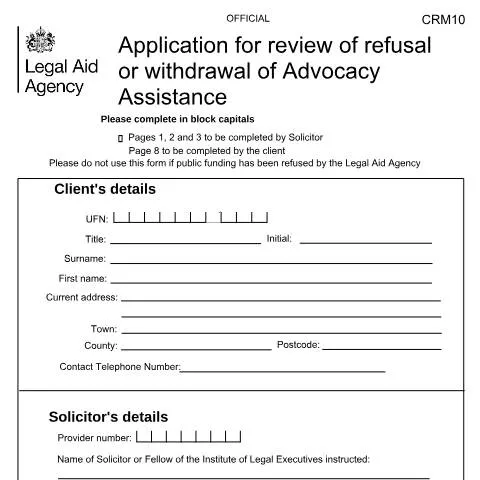
Understanding the CRM10 Form: A Critical Step in Securing Advocacy Assistance
Imagine standing at a crossroads in a legal battle where the stakes are high, and you find yourself without adequate representation. This is a reality for many individuals seeking advocacy assistance in the UK legal system. The CRM10 form, designated for applying for a review of the refusal or withdrawal of advocacy assistance, plays a pivotal role in ensuring that individuals can challenge decisions made by the Legal Aid Agency (LAA). Understanding how to navigate this process is crucial for those who need legal representation but have faced obstacles in acquiring it.
Who Needs the CRM10 Form?
The CRM10 form is primarily intended for individuals who have been denied advocacy assistance or whose assistance has been withdrawn. However, it's essential to understand the various scenarios where this form becomes relevant:
- Low-Income Individuals: Those whose financial situation qualifies them for legal aid but have not received the necessary support.
- Individuals Facing Legal Challenges: Particularly in cases involving serious criminal charges, where representation can significantly affect the outcome.
- Disenfranchised Groups: Members of vulnerable communities who may lack the resources or knowledge to navigate the legal system effectively.
Each of these groups may have unique circumstances that warrant the use of the CRM10 form, especially in complex legal situations such as parole hearings or disciplinary actions.
The Legal Framework Surrounding the CRM10
The development of the CRM10 form is rooted in the UK's commitment to providing fair legal representation, particularly for those who cannot afford it. The Legal Aid, Sentencing and Punishment of Offenders Act 2012 established the framework for legal aid, ensuring that individuals can access justice without financial barriers.
Furthermore, the Data Protection Act 2018 and the UK GDPR govern how personal data is handled within this process, emphasizing the importance of privacy and confidentiality in legal proceedings. The LAA acts as the data controller in this context, ensuring that any personal information submitted via the CRM10 form is processed in accordance with the law.
What Happens After Submitting the CRM10?
Once the CRM10 form is submitted, several key steps follow:
- Initial Review: The LAA will conduct an initial assessment to determine if the application for review meets the necessary criteria.
- Further Information: If additional information is required, the applicant may be contacted to provide further clarification or documentation.
- Decision Notification: The LAA will issue a formal notification regarding the outcome of the review, typically within a specified timeframe.
This timeline can vary, and applicants should remain proactive in monitoring the progress of their application.
Consequences of Missing Deadlines
Filing the CRM10 form is time-sensitive, and failure to adhere to stipulated deadlines can have significant repercussions. For instance, applications must be submitted promptly following the refusal or withdrawal of advocacy assistance. Missing this deadline could result in:
- Ineligibility for Review: If the application is not submitted in time, the LAA may refuse to consider it.
- Delays in Legal Proceedings: In legal situations where timing is critical, such as pending hearings, failing to act promptly may jeopardize the individual's legal standing.
It’s essential for applicants to be diligent and organized when preparing their submissions to avoid these pitfalls.
Step-by-Step Guide to Completing the CRM10
Completing the CRM10 form involves several distinct stages, each critical to ensuring thorough and accurate submission:
- Gather Necessary Information:
- Identify personal details, including your National Insurance number and contact information.
- Collect documentation supporting your case, such as previous correspondence with the LAA.
- Consult Your Solicitor: If you have legal representation, your solicitor should assist you in completing the form, particularly the sections specific to them.
- Complete the Form: Fill out all required sections clearly, ensuring all information is accurate. Pay particular attention to the details of your legal situation and the reasons for requesting the review.
- Submit the Form: Send the completed CRM10 form to the appropriate address as detailed in the submission guidelines. Retain a copy for your records.
By following these steps, applicants can enhance their chances of a successful review.
Understanding the Role of the Solicitor in the CRM10 Process
The involvement of a solicitor is crucial when navigating the complexities of the CRM10 form. Solicitors play a multifaceted role, including:
- Guidance and Support: They provide essential advice on the likelihood of success in appealing the refusal or withdrawal of advocacy assistance.
- Completing the Form: Solicitors are responsible for filling out specific portions of the CRM10, particularly those pertaining to legal merits and justifications for advocacy assistance.
- Representation: They may also represent clients in any subsequent hearings if the application progresses to further legal scrutiny.
This support can greatly influence the outcome of the CRM10 application, highlighting the importance of professional legal advice during the process.
Common Challenges and Resolutions
Applicants may encounter various challenges while completing the CRM10 form or awaiting the review outcome. Some common issues include:
- Incomplete Submissions: Missing information can lead to delays. It’s vital to double-check the form against the submission checklist provided by the LAA.
- Miscommunication with the LAA: If you do not hear back within the expected timeframe, contact the LAA for updates. Keeping a record of all correspondence is beneficial.
- Understanding Refusal Reasons: If the LAA declines the review, carefully analyze the reasons given and consider whether further action or appeal is possible.
Addressing these challenges promptly can significantly impact the effectiveness of the advocacy assistance being sought.
The Importance of Advocacy Assistance in the Legal System
Advocacy assistance is a cornerstone of fair representation in the UK legal system, especially for vulnerable populations. This support can make the difference between navigating complex legal waters effectively or being left adrift.
Individuals facing serious allegations without proper representation may find themselves at a severe disadvantage. The CRM10 form is a lifeline for those denied the services necessary to mount a competent defense or representation. By ensuring the opportunity for review, the form embodies the principle of equitable access to justice.
In summary, the CRM10 form is not merely a bureaucratic hurdle but a fundamental part of a process designed to uphold rights and access to legal assistance. Engaging with this form with clarity and diligence is paramount for anyone facing the challenges of the legal landscape in the UK.
Fill in your form directly online
No printing: type your details into the boxes of the official form, tick, then download the PDF ready to send.
- 1Type into the form boxes
- 2Tick in one click
- 3Save and download the PDF
Understanding Advocacy Assistance in the UK
Advocacy Assistance is a crucial service provided to support individuals who may need help navigating complex systems, particularly in legal contexts. This assistance is especially significant for vulnerable individuals, such as those with disabilities or those facing mental health challenges. In the UK, the Legal Aid Agency governs the provision of such services, ensuring that individuals receive the necessary guidance to articulate their needs and rights effectively.
Advocacy Assistance can take many forms, including support in understanding legal processes, representation in meetings, and assistance in communicating with various agencies. It's essential to recognize that this service is not limited to legal matters alone; it can extend to health and social care issues as well. The framework established under the Care Act 2014 emphasizes the importance of advocacy for individuals who may have difficulty engaging with services independently.
When Advocacy Assistance is requested, it can be subject to review or denial based on certain eligibility criteria. Understanding these criteria and the process for applying for a review of refusal or withdrawal of this assistance is vital for anyone who believes they have been unfairly denied support.
Eligibility Criteria for Advocacy Assistance
Before applying for Advocacy Assistance, it’s crucial to ensure that you meet the eligibility criteria set by the Legal Aid Agency. These criteria typically include the following:
- Vulnerability: You must demonstrate that you are in a vulnerable position, which can arise from issues like mental health problems, learning disabilities, or language barriers.
- Legal Needs: You must have a specific legal need that necessitates the assistance of an advocate. This could relate to a court case, a tribunal, or interactions with other public services.
- Means Testing: Depending on your financial situation, you may be required to undergo a means test to assess your eligibility for free advocacy services. This involves providing information about your income and savings.
- Jurisdiction: Advocacy Assistance is generally available for matters within specific legal areas, such as social services or mental health. It's important to ensure that your case falls within these categories.
Familiarizing yourself with these criteria can significantly impact your application process and potential review process, should your request for Advocacy Assistance be refused or withdrawn.
Preparing Your Application for a Review
When applying for a review of a refusal or withdrawal of Advocacy Assistance via the CRM10 form, preparation is key to ensuring the best possible outcome. Here are steps to consider:
- Gather Relevant Documentation: Collect all relevant documents that support your case, such as previous correspondence, medical records, or examples of how your circumstances meet the eligibility criteria.
- Clarify Reasons for Refusal: Carefully analyze the decision letter you received regarding the refusal or withdrawal of your Advocacy Assistance. Understanding the specific reasons cited will help you address them directly in your review application.
- Seek Support: If you’re unsure about the process or need help articulating your arguments, consider reaching out to local advocacy organizations. They can provide guidance and support in preparing your application.
- Draft a Clear Statement: When filling out the CRM10 form, ensure your statement is clear and concise. Address the refusal points directly and provide evidence or reasoning that counters them.
By meticulously preparing your application, you enhance your chances for a successful review. Remember that clarity, supporting evidence, and a thorough understanding of your legal needs are crucial elements in this process.