Navigating the Court of Appeal Mediation Scheme: What You Need to Know
When disputes escalate to the levels where legal intervention becomes necessary, parties often seek resolution through various channels. The Court of Appeal Mediation Scheme, through the combined use of forms 56A and 56B, offers a vital pathway for individuals or entities embroiled in disagreements to potentially resolve their issues outside the formal court proceedings. This scheme not only promotes expediency but also encourages a more amicable resolution, allowing parties to retain a greater degree of control over the outcome.
The Mediation Process: An Informal yet Structured Approach
The mediation process under the Court of Appeal is uniquely designed to foster dialogue between disputing parties with the assistance of an impartial mediator. Here’s how this unfolds:
Understanding Mediation
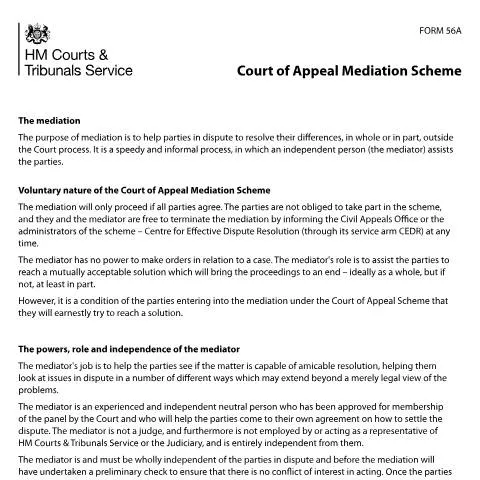
Mediation serves as a voluntary, informal process where an independent mediator aids the parties in identifying common ground and exploring options for settlement. The role of the mediator is crucial; they facilitate discussions, help clarify issues, and guide parties towards a mutually acceptable resolution without imposing decisions.
Who Participates in Mediation?
- Parties in Dispute: Both parties must agree to enter mediation.
- The Mediator: An independent professional with expertise in dispute resolution.
- Civil Appeals Office (CAO): Administrative body overseeing the mediation process.
- Centre for Effective Dispute Resolution (CEDR): The service arm managing logistical aspects of mediation.
Deciding to Mediate
Participation in the mediation scheme is entirely voluntary. If either party is hesitant, the mediation cannot proceed. This voluntary aspect is a cornerstone of the mediation process, allowing parties to withdraw at any point without penalty.
Completing the Combined Forms 56A and 56B: A Detailed Breakdown
Forms 56A and 56B are essential when initiating mediation under the Court of Appeal Mediation Scheme. Each form collects specific information necessary for the mediation to proceed smoothly.
Form 56A: Initial Application for Mediation
Form 56A primarily focuses on gathering details about the dispute and the parties involved. Follow this breakdown to ensure accuracy in completion:
- Party Information: Ensure all names and addresses are correct.
- Type of Dispute: Clearly outline the nature of the conflict.
- Requested Mediation Dates: Provide availability to facilitate scheduling.
Common Pitfalls When Filling Out Form 56A
- Incomplete Details: Missing information can delay processing.
- Ambiguous Dispute Description: Clearly articulate the issues to avoid misunderstandings.
- Failure to Indicate Conflict of Interest: Disclose any potential biases upfront to maintain transparency.
Form 56B: Agreement to Mediate
Once Form 56A is processed, Form 56B serves as an agreement between parties to engage in mediation, outlining the terms and conditions binding the parties and the mediator. Key sections in this form include:
- Confidentiality Clause: Emphasizes that discussions during mediation are 'without prejudice'.
- Mediator Selection: Allows parties to express preferences regarding mediators.
- Fees Acknowledgment: Confirms understanding of the cost implications involved in the mediation process.
Placement of Mediation in the Legal Process
The Court of Appeal Mediation Scheme is part of a broader legal framework that prioritizes alternative dispute resolution before resorting to court judgments. Understanding this hierarchy is crucial for parties:
Stages Leading to Mediation
- Initial Dispute: Parties identify a conflict.
- Attempt at Direct Negotiation: Parties first attempt to resolve the issue directly.
- Referral to Mediation: If direct negotiation fails, parties may refer to the mediation scheme.
- Mediation Session: Parties engage with a mediator.
- Outcome of Mediation: If successful, an agreement is reached; if not, further legal action can be pursued.
The Role of the Mediator in This Process
The mediator acts as a guide rather than a judge, helping parties explore their positions and encouraging creative solutions. Unlike court proceedings, where a judge issues a binding decision, mediation focuses on collaboration and voluntary agreements.
Profiles of Participants: Who Should Consider Mediation?
The mediation scheme is not limited to any specific demographic; it is accessible to a wide range of individuals and entities, including:
Individuals and Small Businesses
Individuals involved in personal disputes, such as family matters or contractual disagreements, and small businesses facing conflicts with suppliers or customers often find mediation to be a less intimidating option than formal court proceedings.
Corporations and Large Entities
Corporations may choose mediation to resolve disputes regarding contracts, employment issues, or regulatory matters. The confidentiality aspect appeals to businesses seeking to protect their reputations.
Public Institutions
Public entities can also utilize mediation, particularly in regulatory disputes where public interest is at stake, allowing for more flexible resolutions that adhere to community needs.
Unique Considerations and Complex Cases
Certain situations may necessitate tailored approaches when entering mediation. Understanding these nuances is vital.
Cases Involving Foreign Parties
Disputes involving international entities may introduce complexity in terms of jurisdiction and applicable laws. Parties should be aware of how mediation handles cross-border conflicts and ensure compliance with all relevant legal frameworks.
Minors and Vulnerable Parties
When minors or vulnerable individuals are involved in a dispute, additional care must be taken to protect their interests during mediation. The presence of guardians or legal representatives may be required to ensure appropriate support throughout the process.
Emergency Situations
In urgent cases, mediation may need to be expedited. Understanding procedures for requesting rapid mediation can be critical for parties facing time-sensitive disputes.
Financial Implications of Mediation
Understanding the costs associated with mediation is essential for parties considering this route. The financial arrangements are outlined clearly within the mediation forms:
Mediation Fees
The fixed fee structure for mediation is determined by the claim or judgment value. Reviewing this section carefully can provide clarity on the potential costs incurred:
| Claim/Judgment Value | Mediation Fee (Excl. VAT) |
|---|---|
| Less than £1 million | £950 |
| £1 million or more | £1,900 |
This fee covers mediation facilitation, preparation time, and administrative costs associated with the mediation process. Understanding the cost implications ensures all parties can budget accordingly while contemplating the benefits of resolving disputes outside of court.
Next Steps Following Mediation
Once mediation has taken place, parties will receive a summary report indicating whether a settlement was achieved. The outcomes following mediation can vary:
Settlement Reached
If the parties successfully reach an agreement, the terms will be documented, and the court will retain a record. The terms of the agreement can be kept confidential if requested, providing parties with the opportunity to enter into binding agreements without public disclosure.
Fill in your form directly online
No printing: type your details into the boxes of the official form, tick, then download the PDF ready to send.
- 1Type into the form boxes
- 2Tick in one click
- 3Save and download the PDF
No Settlement Achieved
If mediation does not yield a resolution, parties retain the option to pursue further legal action. The discussions during mediation are confidential and cannot be referenced in subsequent court proceedings, thus maintaining the integrity of negotiations.
Conclusion: Embracing Mediation in the Court of Appeal
The Court of Appeal Mediation Scheme, highlighted through forms 56A and 56B, represents a critical mechanism for achieving resolution in disputes. By understanding the intricacies of this process, participants can navigate the mediation landscape effectively, empowering themselves to pursue outcomes that better suit their needs without the burdens of lengthy court battles.
As parties consider their options, the benefits of mediation—including cost-effectiveness, confidentiality, and greater control over outcomes—cannot be understated. By fostering an environment of cooperation and understanding, mediation serves as a powerful tool for dispute resolution in today's complex legal landscape.
Understanding the Purpose and Scope of Mediation in the Court of Appeal
The Court of Appeal mediation scheme is designed to provide an alternative dispute resolution (ADR) process that allows parties to resolve their disputes without the need for a full court hearing. This mediation process is managed by trained mediators who facilitate discussions between the parties, helping them to identify issues, explore options, and ultimately reach a mutually acceptable agreement. The key objectives of this scheme are to reduce the burden on the court system, expedite the resolution of disputes, and minimize the costs associated with prolonged litigation.
The mediation process is particularly beneficial in cases where parties are open to negotiation and are willing to engage in constructive dialogues. Typically, mediation can be applied in various types of cases, including commercial disputes, personal injury claims, family law issues, and employment disputes. However, it is crucial to note that mediation is not suitable for every case; for example, cases involving allegations of serious misconduct or those with significant public interest may require a full court hearing to ensure transparency and accountability.
Steps to Initiate and Engage in the Mediation Process
To initiate the mediation process under the Court of Appeal mediation scheme, parties must first submit the combined forms 56A and 56B. These forms must be completed accurately and submitted alongside the relevant court documents. The following steps outline the process:
- Filling Out Combined Forms 56A and 56B: It is essential that both forms are filled out thoroughly. Form 56A provides information about the parties involved, the nature of the dispute, and any previous attempts at resolution. Form 56B, on the other hand, includes particulars relating to the mediation itself, detailing any agreed terms, the desired outcomes, and the willingness of the parties to participate in mediation.
- Submitting Forms to the Court: Once the forms are duly completed, they should be submitted to the Court of Appeal as part of the case management process. Ensure that all supplementary documents are included, as incomplete submissions can delay the initiation of mediation.
- Awaiting Confirmation: After submission, the court will review the forms and confirm whether the case is suitable for mediation. If accepted, the parties will receive notification and further instructions regarding the next steps.
- Engaging with a Mediator: Upon acceptance, a mediator will be assigned to the case. The parties will then have an opportunity to discuss their issues in a confidential setting. The mediator will help facilitate discussions, guiding the parties to explore viable solutions.
- Reaching an Agreement or Proceeding to Court: If the mediation is successful, the parties will draft a settlement agreement that is enforceable in court. If mediation fails, the parties retain the right to proceed with their case in court.
Throughout this process, it is crucial for parties to approach mediation with an open mind and a willingness to compromise. While the mediator does not impose a solution, their role is to assist in finding common ground that satisfies both parties.
Common Challenges and Pitfalls in the Mediation Process
While mediation can be a cost-effective and time-saving alternative to litigation, parties must be aware of potential challenges that may arise during the process. Understanding these pitfalls can help parties navigate mediation more effectively:
- Emotional Barriers: Disputes often arise from emotionally charged situations. Parties may find it challenging to set aside personal grievances when negotiating. It is the mediator's role to ensure that discussions remain focused on resolution rather than venting frustrations.
- Unrealistic Expectations: Parties may enter mediation with unrealistic expectations about the outcomes or the speed of resolution. It is essential to approach mediation with a realistic understanding of potential compromises and to be open to various solutions.
- Communication Breakdowns: Effective communication is central to successful mediation. If parties are unwilling or unable to communicate openly, the process may stall. Mediators are trained to facilitate dialogue, but both parties must contribute to establishing a constructive environment.
- Power Imbalances: In some cases, one party may hold more power or resources than the other, leading to concerns about fairness during negotiations. Mediators are trained to recognize and address power imbalances, ensuring that all voices are heard and considered.
- Confidentiality Concerns: The mediation process is confidential, but parties must understand the limits of confidentiality. Discussions held during mediation cannot typically be used in court; however, certain exceptions apply, such as if there is an admission of criminal activity or threats of harm.
Addressing these challenges proactively can significantly enhance the effectiveness of the mediation process, ultimately leading to a successful resolution.