Understanding the Appeal Process for War Pension and Armed Forces Compensation Scheme Decisions in the UK
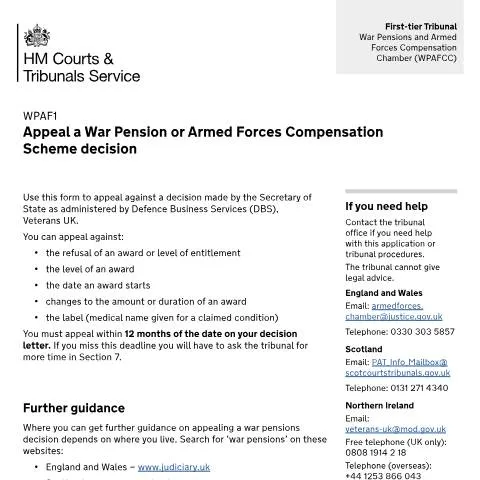
The WPAF1 form provides a structured way for individuals to challenge decisions made by the Secretary of State concerning war pensions or armed forces compensation claims. Managed by the HM Courts & Tribunals Service, this process ensures that veterans, their families, and representatives can seek a review of decisions they believe are unfair or incorrect.
Scope and Eligibility of the Appeal
This appeal process applies to decisions issued by Defence Business Services (DBS), Veterans UK, which administers the War Pensions and Armed Forces Compensation Scheme. Eligible appellants include those who have received decisions regarding:
- Refusal of an award or entitlement level
- Changes to the amount or duration of an existing award
- Adjustment of the start date of an award
- Medical labels associated with claimed conditions
Appellants must submit their appeal within 12 months of the date indicated on the decision letter. If this deadline is missed, the appellant can request an extension of time from the tribunal, but this is subject to approval.
The Structure of the Appeal: Who Can Represent You?
Appellants and Their Representatives
Individuals may choose to be represented during the appeal process. A representative can be a solicitor, a legal adviser, or a designated person authorized to act on their behalf. The form requires the details of the representative, including their name, organization, and contact information, if applicable.
Appellants with an Appointee
If the appellant is unable to manage their affairs, an appointee—such as a family member or legal guardian—can submit the appeal on their behalf. The form captures the appointee's details and confirms their legal responsibility for the appellant.
Completing the Appeal: Key Sections and Required Information
Section 1: Personal Details of the Appellant
Applicants must provide their full name, date of birth, National Insurance number, and address. It is essential to include a copy of the original decision letter along with any supporting evidence when submitting the appeal.
Section 2 and 3: Representation and Appointees
These sections gather information about any legal representatives or appointees involved in the appeal. Accurate contact details are crucial for effective communication throughout the process.
Section 4: Details of the Decision Being Appealed
Applicants must specify the date of the decision letter and indicate the nature of the appeal, such as challenging the level of entitlement or the start date of an award. Including a copy of the decision letter is mandatory to avoid delays.
Reasons for Disagreement and Supporting Evidence
In Section 5, appellants are encouraged to clearly explain why they believe the decision was incorrect. This may involve providing additional medical evidence, personal statements, or other relevant documentation. Additional sheets can be attached if necessary, with the appellant's name and National Insurance number clearly marked on each page.
Fill in your form directly online
No printing: type your details into the boxes of the official form, tick, then download the PDF ready to send.
- 1Type into the form boxes
- 2Tick in one click
- 3Save and download the PDF
Key Considerations and Next Steps
- Timeliness: The appeal must be submitted within 12 months of the original decision date.
- Supporting Documentation: Including all relevant evidence and a copy of the decision letter expedites processing.
- Legal Advice: The tribunal cannot provide legal advice; appellants may seek independent legal counsel if needed.
Once submitted, the tribunal will review the appeal and may schedule a hearing to reconsider the case. The process aims to provide a fair and transparent review for those affected by decisions related to war pensions and armed forces compensation.
Additional Guidance and Support
Appellants seeking further guidance can consult official resources specific to their region:
- England and Wales: www.judiciary.uk
- Scotland: www.patscotland.org.uk
- Northern Ireland: www.courtsni.gov.uk
Contact details for the tribunal offices are provided in the official WPAF1 documentation, ensuring applicants can receive assistance with procedural questions.