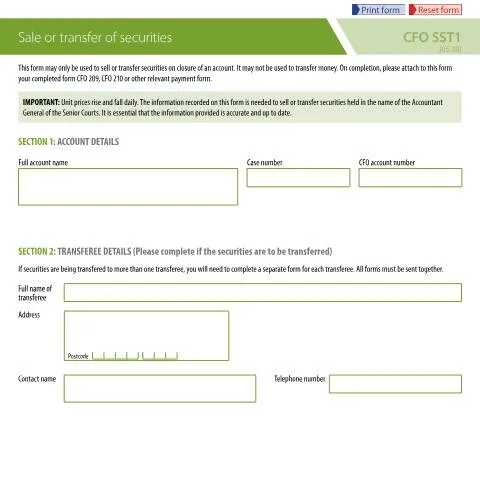
Understanding the Role of the CFO SST1 Form in Securities Transactions
Navigating financial transactions within the judicial system can be a complex process. When it comes to selling or transferring securities held under the jurisdiction of the Court Funds Office (CFO), understanding the official form known as the CFO SST1 is crucial. This particular document is not just a piece of paper; it is an essential tool for beneficiaries, executors, and other stakeholders looking to manage securities effectively. The implications of using this form are significant, as it governs how securities are processed upon the closure of accounts.
The Importance of Accuracy: Why Each Detail Matters
At first glance, the CFO SST1 might seem straightforward. However, the accuracy of the information provided is vital. Missing or incorrect details could lead to delays or even rejections of your request. The form requires specific information such as:
- Your full name and address
- Account details, including case number and CFO account number
- Securities details including ISIN (International Securities Identification Number)
- Details of the transferee, if applicable
Missing any of this information not only complicates processing but could result in financial loss — particularly because the prices of securities fluctuate daily.
Impact of Unit Price Fluctuations
When dealing with securities, one must be cognizant of the daily rise and fall in unit prices. It is crucial to ensure that you submit the form at a timely juncture, as any delay could mean that your securities are sold or transferred at a less-than-ideal price. Make sure to check current prices before submission and consult your financial advisor if you have any uncertainties regarding the security ISIN or SEDOL (Stock Exchange Daily Official List) numbers.
Navigating the Form Sections: A Closer Look
The CFO SST1 form is divided into several sections, each designed to capture specific information necessary for processing. Here’s a breakdown:
Section 1: Account Details
This section is critical as it identifies the account holder and the nature of their request. Make sure to include:
- Full account name
- Case number
- CFO account number
Errors in these details could lead to significant delays. Always double-check your entries.
Section 2: Transferee Details
Should you wish to transfer securities rather than sell them, this section collects the necessary transferee information. Note that if multiple transferees are involved, separate forms must be completed. Include:
- Full name of the transferee
- Address and postcode
- Contact information
This section ensures that the securities reach the intended recipient without unnecessary complications.
Section 3: Details of Securities for Sale/Transfer
Here, you specify the securities in question. Be sure to:
- Indicate if the securities are for sale or transfer
- Detail each transaction on a separate line if there are multiple items
- Provide the quantity accurately
Keep in mind that certain securities, like Equity Index Tracker Fund units, can only be sold upon the death of a client; they cannot be transferred to personal representatives or beneficiaries. Failure to adhere to these stipulations could invalidate your request.
What Happens After Submission? Understanding the Processing Timeline
Once the CFO SST1 form is completed and submitted, you may wonder what the subsequent steps entail. The Court Funds Office strives to process requests as promptly as possible, but timelines can vary based on the complexity of the request and the current workload.
To follow up on your submission:
- Contact the Court Funds Office via their helpline at 0300 0200 199.
- Check on the status of your request referencing your case number.
- Keep detailed records of your communications and submissions in case you need to escalate any issues.
What to Do in the Event of Refusal or Missing Documents
Receiving a refusal or being informed that there are missing documents can be distressing. Here’s a general approach you can take:
- Review the Reasons for Refusal: Often, the Court Funds Office will provide a written explanation. Understand exactly what is lacking.
- Gather Missing Documents: If additional documents are required, ensure you obtain and submit them without delay.
- Resubmit the Form: After addressing the reasons for refusal, submit the form again. Make sure to attach all necessary documents this time.
It’s advisable to keep a log of all correspondence regarding your submission, as this could prove invaluable should any disputes arise.
Understanding Your Rights and Obligations
As an individual engaging with the Court Funds Office, it is essential to be aware of your rights and obligations. Here’s a brief overview:
| Rights | Obligations |
|---|---|
| Right to accurate processing of your requests. | Responsibility to provide accurate and complete information. |
| Right to appeal decisions made by the Court Funds Office. | Obligation to follow up on any issues promptly. |
| Right to privacy regarding your data, protected under the Data Protection Act 2018. | Obligation to safeguard the privacy of any third-party information you may be submitting. |
Final Considerations: The Path Ahead
Engaging with the CFO SST1 form is a critical undertaking for anyone involved in selling or transferring securities under court jurisdiction. The outcomes of these transactions can have wide-ranging financial implications. By understanding each aspect of the form, from completion to submission and follow-up, you empower yourself to navigate this complex administrative landscape effectively.
As you prepare your CFO SST1 form, approach it with diligence and attention to detail. The stakes are high, and the importance of your submission cannot be overstated. For further support or clarification on specific sections, do not hesitate to reach out to the Court Funds Office directly at the provided contact information. Their dedicated team is there to assist you through this ongoing process.
Understanding the Tax Implications of Selling or Transferring Securities
When you decide to sell or transfer securities in the UK, it's critical to grasp the tax implications involved. The most relevant taxes are Capital Gains Tax (CGT) and Income Tax. CGT applies to the profit made from selling assets such as stocks, while Income Tax may apply if you receive dividends or interest from the securities.
For CGT, you need to calculate the gain made on the sale of the securities by subtracting the purchase price (or the value at the time of acquisition) from the sale price. As of the 2023/24 tax year, individuals have an annual exempt amount of £12,300, meaning that any gains below this threshold are tax-free. If your total gains exceed this amount, you will need to report the gain on your Self Assessment tax return using the relevant forms such as the SA108 supplement for Capital Gains.
If you are selling securities held in an Individual Savings Account (ISA), you won’t be liable for CGT at all, making ISAs a tax-efficient way to invest. However, once you withdraw funds from an ISA, the tax benefits cease, and any subsequent gain is subject to CGT if you sell those assets outside of the ISA.
Fill in your form directly online
No printing: type your details into the boxes of the official form, tick, then download the PDF ready to send.
- 1Type into the form boxes
- 2Tick in one click
- 3Save and download the PDF
Additionally, if you are considering transferring securities to another party, whether as a gift or as part of a transaction, be aware that transferring securities can also have tax implications. Gifts of certain assets can trigger a CGT event, and you may still be required to report the transfer as a disposal, depending on the circumstances surrounding the transfer.
Guidelines for Navigating Securities Transfers and Retaining Compliance
Navigating the process of transferring securities can sometimes be complex. To ensure compliance, it's important to follow established guidelines and procedures. First, confirm that you have all necessary documentation for the securities in question. This typically includes share certificates, transfer forms, and any relevant identification documents for both the transferor and the transferee.
You will generally need to fill out a stock transfer form, which is a legal document that names the parties involved and specifies the number of shares being transferred. This form must be signed by the seller and accompanied by the share certificate. It's advisable to consult the company's registrar for specific requirements, as they may vary by company. The registrar will handle the transfer and update the company’s register of members accordingly.
After the transfer is complete, ensure both parties receive any necessary documentation confirming the change of ownership. For record-keeping, maintain copies of all relevant documents, as you may need to reference them for tax reporting or in case of disputes in the future.
Furthermore, do not overlook the importance of data protection laws when transferring personal information related to the transaction. Under the Data Protection Act 2018 and the UK GDPR, you must handle personal data responsibly and ensure that you have a legitimate reason for processing this data.
Financial Instruments and Their Security Regulations
When dealing with securities, it's essential to understand the various financial instruments and the accompanying regulatory framework. Different types of securities—such as equities, bonds, and derivatives—are governed by different regulations, which can influence both the buying/selling process and the obligations of the parties involved.
The Financial Conduct Authority (FCA) oversees the regulation of securities in the UK. It's crucial to ensure that any securities transactions comply with the FCA's rules and guidelines, particularly concerning disclosures, market abuse, and insider trading. For instance, if you're privy to sensitive information about a company, using that information to trade securities can lead to severe penalties.
Additionally, the UK has specific rules in place regarding trading platforms and brokerage firms. Always ensure that the platform you choose to execute transactions is authorized and regulated by the FCA to protect your investments. Using an authorized firm not only ensures compliance but also provides an added layer of security for your financial dealings.
Finally, keep abreast of any changes in legislation that may affect securities trading. The financial landscape is constantly evolving, and staying informed can help you make better investment decisions and retain compliance with existing regulations.