Navigating the Court Funds: The Deposit Request for Life Assurance Payments
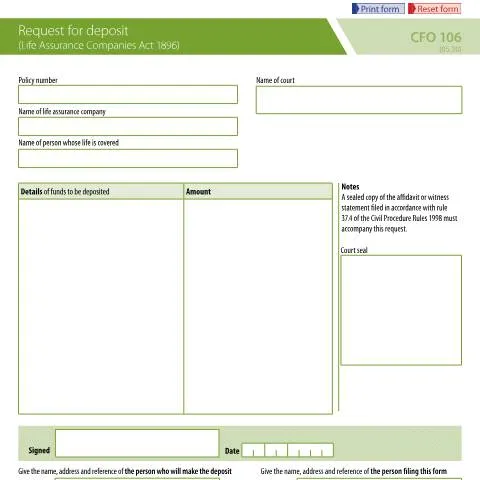
When dealing with the distribution of life assurance payments, understanding the necessary procedures is crucial for beneficiaries and representatives alike. The Ministry of Justice has established specific guidelines and requirements to ensure that these funds are handled correctly. The deposit request for life assurance payment is a pivotal document in this process, enabling the transfer of funds into the Court Funds Office for safekeeping while awaiting eventual distribution. This article will delve into the specifics of this form, its purpose, and the steps needed to successfully complete and submit it.
The Role of the Court Funds Office in Life Assurance Payments
The Court Funds Office (CFO) operates under the Ministry of Justice and serves as a safeguard for funds awarded in various court proceedings, including life assurance payouts. When a life assurance policy is claimed, the funds may be directed to the CFO, particularly when there are disputes, minors involved, or other legal considerations that necessitate oversight. This ensures that the funds are protected until they can be appropriately allocated.
Understanding the Legal Framework
The handling of life assurance payments is governed by the Life Assurance Companies Act 1896 and subsequent legal frameworks. These laws dictate how life assurance payouts should be deposited, managed, and disbursed, ensuring compliance with overarching regulations to protect all parties involved.
Who Needs to Submit the Deposit Request?
Typically, the individual or entity entitled to receive the life assurance payout will need to submit the deposit request. This may include the executor of a will, a personal representative, or a legal guardian if minors are beneficiaries. Understanding who has the authority to act on behalf of the deceased is crucial to ensuring that the request is valid and legally binding.
Identifying the Right Person
- Executor of the Will: A named individual responsible for settling the deceased's affairs.
- Administrator: Appointed by the court if there is no will, usually a close relative.
- Guardian: If a minor is involved, a legal guardian might need to act on their behalf.
Step-by-Step Guide to Completing the Deposit Request
Completing the deposit request requires careful attention to detail to avoid delays or complications. Here’s a structured approach:
Essential Information Required
- Personal Information: Include the name and address of the person making the deposit.
- Policy Information: Enter the policy number and the name of the life assurance company.
- Court Details: Specify the name of the court where the request is filed.
- Amount to Be Deposited: Clearly state the amount associated with the life assurance payment.
- Affidavit or Witness Statement: Don’t forget to attach a sealed copy of the affidavit or witness statement as required by rule 37.4 of the Civil Procedure Rules 1998.
Tips for Filling Out the Form
- Use clear and legible handwriting if submitting by paper.
- Double-check all entered information for accuracy to prevent administrative delays.
- Ensure you have the necessary signatures where indicated.
How to Submit Your Deposit Request
Once the deposit request form is completed, it can be submitted through various channels depending on your preference and the urgency of the matter.
Submission Channels Explained
| Channel | Description | Processing Time |
|---|---|---|
| Send the completed form and any required documents to the Court Funds Office at Sunderland. | Allow 5-10 working days for processing. | |
| In-person | Visit the Court Funds Office to submit the request directly. | Immediate receipt confirmation upon submission. |
| Contact the Court Funds Office via email for guidance, but note that the form must be submitted by mail or in person. | Immediate response for inquiries, but not for document submission. |
After Submission: What to Expect Next
Upon submission of your deposit request, the Court Funds Office will process the request. Monitoring the progress and understanding potential timelines is essential.
Tracking Your Request
Typically, you will receive a confirmation or a notification from the Court Funds Office once your request has been processed. If you do not hear back within the expected timeframe, consider reaching out to their Customer Helpline at 0300 0200 199 for an update. This will help prevent any unnecessary delays in receiving the life assurance funds.
Addressing Common Challenges
While the process is generally straightforward, issues may arise that require immediate attention. Understanding how to handle potential problems is key.
What If There’s an Error?
If you discover an error in your deposit request after submission, contact the Court Funds Office promptly. They can provide guidance on rectifying the information before processing. In some cases, you may need to submit an amended form.
Dealing with Missing Documentation
Omitting required documents, such as the affidavit or witness statement, can lead to significant delays. If you realize you have not included a necessary document, reach out to the CFO to discuss whether you can submit additional paperwork or if you need to resubmit the entire application.
Life Assurance Payments in the Context of Broader Legal Frameworks
The deposit request form is not only a standalone document but also serves as a thread within a more complex legal fabric. Understanding its place can provide clarity on its importance.
Connecting with Wider Legal Procedures
Life assurance payments often intersect with wills, estates, and probate law. The deposit request is part of a continuum that includes:
- Obtaining a grant of probate or letters of administration.
- Executing the will or managing the estate of the deceased.
- Distributing assets among beneficiaries in accordance with the will or court directives.
Each step must be navigated with care to ensure compliance with legal obligations and to honor the intentions of the deceased.
The Importance of Legal Guidance
Given the complexities of life assurance policies and the legal implications of the Court Funds Office, seeking legal advice can be beneficial. Legal professionals experienced in probate and estate matters can assist with:
- Navigating the deposit request and ensuring proper completion.
- Addressing disputes among beneficiaries.
- Understanding tax implications associated with life assurance payouts.
Final Thoughts: Empowering Yourself Through Knowledge
Understanding how to navigate the deposit request for a life assurance payment is imperative for beneficiaries and their representatives. By being informed about the process, the required documentation, and potential challenges, you can facilitate a smoother experience when dealing with the Court Funds Office. Always remember to stay proactive, keep clear records, and don't hesitate to reach out to the Court Funds Office or a legal professional for assistance as needed.
Fill in your form directly online
No printing: type your details into the boxes of the official form, tick, then download the PDF ready to send.
- 1Type into the form boxes
- 2Tick in one click
- 3Save and download the PDF
Understanding Court Funds: An Overview
In the UK, when individuals are awarded damages or compensation through court proceedings, especially in personal injury cases or wrongful death claims, the funds may be deposited into the Court Funds Office (CFO). These funds are held securely until they can be released to the beneficiaries. Understanding the process and the specifics of court funds is essential for claimants and legal representatives.
The Court Funds Office is part of HM Courts and Tribunals Service and operates under the jurisdiction of the Ministry of Justice. It is responsible for managing money held for individuals who cannot manage their own finances, often due to age or mental incapacity. Therefore, the deposit request for life assurance payments needs to be navigated with care, considering various regulations and guidelines.
Eligibility Criteria for Court Funds Deposits
Not every individual or case qualifies for funds to be deposited in the Court Funds Office. Understanding the eligibility criteria is vital. Generally, the following conditions must be met:
- Age of the claimant: If the claimant is a minor (under 18 years), any funds awarded must be deposited in the CFO until they reach legal adulthood.
- Court orders: The funds must stem from a court order that explicitly directs the deposit of funds into the CFO.
- Capacity to manage funds: If the claimant has been deemed incapable of managing their finances due to mental health issues, the funds may also be managed by the CFO.
It’s important to note that applications to the CFO must be supported by relevant documentation, including a copy of the court order and identification documents. If the claim is made on behalf of someone else, such as a child or incapacitated individual, appropriate legal documentation must be provided.
Steps to Request a Deposit for Life Assurance Payments
Requesting a deposit for life assurance payments involves several critical steps that must be meticulously followed to ensure compliance with legal requirements. Here’s a detailed outline of the necessary steps:
- Gather Documentation: Before making a deposit request, ensure you have all necessary documents. This includes the court order, any relevant identification, and proof of the source of funds (like the life assurance policy statement).
- Complete the Required Forms: Fill out the appropriate application form for a deposit request. Forms are often available through the Court Funds Office website or can be requested directly. Ensure the form is completed accurately, as any discrepancies may delay the processing.
- Submit Your Request: Once the application form and supporting documentation are ready, submit your request either by mail or, where applicable, electronically. Keep copies of all documents sent for your records.
- Await Confirmation: After submission, the CFO will process your request. If any additional information is needed, they will contact you. Once approved, you will receive confirmation, and the funds will be deposited securely.
It’s advisable to allow sufficient time for processing, as the review of submissions can vary depending on the complexity of the case and the volume of applications at that time.