Understanding Court Funds and Payment Release Procedures
When money is deposited into court during legal proceedings, it doesn't simply sit there indefinitely. The Court Funds Office (CFO) manages these deposits through a structured system that requires formal consent procedures before any funds can be released. This process becomes particularly crucial when defendants need to authorise payment to claimants, whether following a court order or as part of a tender in defence arrangement.
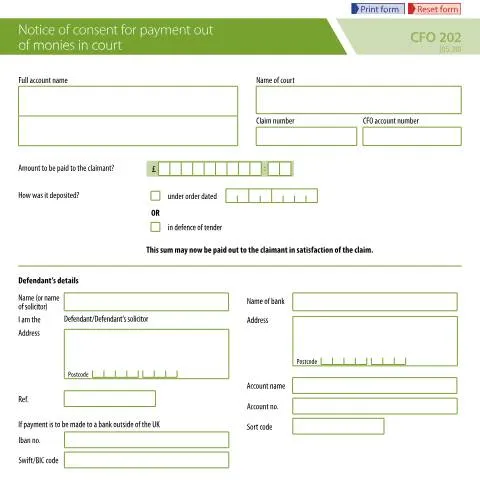
The Notice of Consent to Pay Out of Money in Court (CFO 202) serves as the key document in this release mechanism. Unlike many court forms that initiate proceedings, this notice represents the conclusion of a financial aspect of litigation, requiring careful attention to detail and proper authorisation protocols.
The Court Funds Office Framework
The Court Funds Office operates under the Ministry of Justice and maintains a centralised system for managing court deposits across England and Wales. Each deposit receives a unique CFO account number, creating an audit trail that connects the original court proceedings with the eventual payment release. This system ensures that funds remain secure and properly accounted for throughout the litigation process.
When defendants deposit money into court, they're essentially making funds available for potential payment to claimants, but this doesn't automatically trigger release. The consent procedure acts as a safeguard, ensuring that payments only occur with proper authorisation and in accordance with court orders or agreed settlements.
Navigating the Two Primary Release Scenarios
The CFO 202 notice accommodates two distinct situations where court funds may be released, each with different procedural requirements and implications.
Payment Under Court Order
When a court has issued a specific order directing payment, the process follows a more straightforward path. The court order provides the legal authority for release, and the CFO 202 notice serves to confirm consent and provide payment instructions. In these circumstances, the defendant or their solicitor must reference the specific court order date and ensure that the payment amount aligns with the court's direction.
This scenario typically arises following judgment in favour of the claimant, where the court has determined liability and quantum. The defendant's consent, while still required, operates within the framework established by the judicial decision.
Defence of Tender Arrangements
The alternative scenario involves defence of tender situations, where defendants have deposited money as part of their defence strategy. This mechanism allows defendants to argue that they had made a reasonable offer to settle the claim, potentially limiting their liability for costs if the claimant ultimately recovers no more than the tendered amount.
In tender defence cases, the consent process carries additional strategic considerations. The defendant must carefully evaluate whether proceeding with payment represents the optimal resolution, considering both the immediate financial impact and the broader implications for legal costs.
Critical Identification and Reference Requirements
Proper identification forms the backbone of the court funds release process, with multiple reference points ensuring that payments reach the correct recipients and relate to the appropriate proceedings.
Essential Case References
Every CFO 202 notice must include the claim number from the original court proceedings, linking the payment request directly to the underlying litigation. This connection prevents confusion in cases where parties may be involved in multiple disputes or where similar names might cause administrative errors.
The CFO account number provides the specific identifier for the deposited funds, distinguishing between different deposits that may exist within the same case. This becomes particularly important in complex litigation involving multiple payments or staged deposits.
| Reference Type | Purpose | Format |
|---|---|---|
| Claim Number | Links to court proceedings | Court-specific alphanumeric |
| CFO Account Number | Identifies specific deposit | Unique CFO reference |
| Court Name | Establishes jurisdiction | Full official court name |
Party Details and Representation
The notice requires comprehensive details for both claimants and defendants, including any legal representation. When solicitors are involved, their details take precedence, and the signature requirements shift accordingly. This distinction reflects the professional responsibilities and authorities inherent in legal representation.
Reference numbers used by solicitors' firms should be included to facilitate internal tracking and correspondence. These references become particularly valuable when queries arise or when additional documentation is required.
Banking Instructions and International Considerations
The payment mechanics of court fund releases involve sophisticated banking arrangements that must accommodate both domestic and international recipients.
UK Banking Requirements
For payments within the UK banking system, the standard requirements include the recipient's bank name, sort code, and account number. The account name must correspond exactly with the intended recipient as identified in the court proceedings, preventing misdirected payments.
The full account name field requires particular attention, as banks will typically reject payments where names don't match their records precisely. This includes considerations around business names, trading styles, and individual versus corporate accounts.
International Payment Protocols
When payments must reach recipients outside the UK, additional banking information becomes mandatory. The International Bank Account Number (IBAN) and SWIFT/BIC codes enable the international transfer system to route payments correctly across different banking networks and regulatory environments.
These international transfers often involve additional processing time and may incur currency conversion considerations. The CFO 202 notice doesn't address exchange rate mechanisms, suggesting that such matters require separate coordination with the Court Funds Office.
Signature Authority and Witness Requirements
The authorisation process for court fund releases incorporates strict signature requirements designed to prevent unauthorised payments and ensure proper accountability.
Primary Signature Authority
When solicitors represent the defendant, a partner in the solicitor's firm must provide the signature, reflecting the senior responsibility associated with authorising financial transactions. This requirement prevents junior staff from making decisions with significant financial implications and ensures that appropriate professional oversight occurs.
For unrepresented defendants, personal signature is required, but this must be accompanied by witness verification to provide additional security against potential fraud or coercion.
Witness Qualification Standards
The witness requirements establish a comprehensive framework of acceptable professionals and community figures. This system reflects traditional UK approaches to identity verification, drawing from established professional categories and recognised community positions.
Key categories include:
- Legal professionals: Barristers, solicitors, legal secretaries, and qualified paralegals
- Healthcare practitioners: Doctors, dentists, nurses, pharmacists, and opticians
- Public service roles: Police officers, civil servants, local government officers, and armed services personnel
- Professional and business positions: Bank officials, company directors, chartered professionals, and insurance agents
- Community figures: Justices of the Peace, councillors, ministers of recognised religions, and holders of honours
Notably, the witness must know the payee personally and cannot be a relative, ensuring genuine identity verification rather than mere administrative convenience.
Procedural Coordination with Court Funds Office
The Court Funds Office maintains centralised operations from Sunderland, providing multiple communication channels for enquiries and submissions related to fund releases.
Communication Channels
The CFO operates a customer helpline (0300 0200 199) for immediate enquiries, complemented by email support through [email protected]. For formal document submission, the office accepts both postal communications to their Sunderland address and DX delivery to DX 328004 Sunderland 19.
These multiple channels accommodate different urgency levels and communication preferences, though formal notices like the CFO 202 typically require written submission with original signatures.
Processing Timeframes and Follow-up
While the CFO 202 notice doesn't specify processing timeframes, the nature of court fund releases suggests that administrative processing periods apply. Parties should anticipate that complex cases or international payments may require extended processing times, particularly where additional verification procedures are necessary.
The requirement for original signatures means that electronic submission may not be possible for the primary notice, though preliminary enquiries and status updates can often be handled through electronic channels.
Privacy and Data Protection Considerations
The Court Funds Office operates within the framework of UK data protection legislation, including the Data Protection Act 2018 and UK GDPR requirements. The notice references comprehensive privacy information available through the government website and directly from the CFO.
Given the financial nature of court fund information, these privacy protections assume particular importance. The centralised CFO system necessarily maintains detailed records of fund movements and party details, requiring robust data security measures and clear retention policies.
Information Sharing Protocols
The court funds system involves multiple parties including courts, legal representatives, and banking institutions. The privacy notice framework ensures that information sharing occurs only as necessary for legitimate fund administration purposes, while maintaining appropriate confidentiality standards.
Parties concerned about specific privacy aspects should review the detailed privacy notice or contact the CFO directly, as the CFO 202 notice itself provides only summary privacy information rather than comprehensive detail about data handling practices.
Special Considerations for Different Types of Court Funds
The process for obtaining consent to pay out money from court funds varies significantly depending on the type of fund and the circumstances that led to its creation. Understanding these distinctions is crucial for ensuring your application follows the correct procedural pathway and includes all necessary documentation.
Personal Injury Settlement Funds
When court funds arise from personal injury settlements, particularly those involving minors or protected parties, additional safeguards apply. The Court of Protection may need to approve any payment that affects a protected party's long-term financial interests. If the original settlement included structured payments or annuities, you must demonstrate how the requested payout relates to these arrangements.
For personal injury funds, medical evidence may be required to support applications for interim payments to cover ongoing care costs or medical expenses. The court will scrutinise whether the proposed use of funds aligns with the injured party's best interests and long-term care needs. Documentation from medical professionals, care coordinators, or occupational therapists may strengthen your application.
Inheritance and Estate Funds
Court funds held pending resolution of inheritance disputes require careful attention to probate law requirements. If multiple beneficiaries have interests in the fund, all parties must either consent to the payout or receive proper notice of the application. The court will examine whether any outstanding claims against the estate could affect the distribution.
When dealing with foreign assets or beneficiaries residing outside the UK, additional complications may arise. You may need to provide evidence of compliance with international succession laws or tax obligations in other jurisdictions. Grant of probate or letters of administration must be valid and properly certified if issued by courts outside England and Wales.
Commercial Dispute Funds
For funds arising from commercial litigation, the court will consider whether any outstanding appeals or related proceedings could affect the entitlement to payment. Security for costs, undertakings given during litigation, or charging orders may create claims against the fund that must be satisfied before any payout.
If the fund represents money paid into court as security or pursuant to a freezing injunction, the court will examine whether the conditions that justified the original order have been satisfied. This may require evidence of compliance with court orders, settlement agreements, or regulatory requirements.
Navigating Objections and Contested Applications
Not all applications for payment out of court funds proceed smoothly. When objections arise, either from other interested parties or from the court itself, understanding the available options and procedures becomes essential for protecting your interests.
Formal Objection Procedures
If another party objects to your application, they must file their objection within the time limits specified in the Civil Procedure Rules. The objecting party must set out clear grounds for their opposition and provide supporting evidence. Common grounds for objection include disputes over entitlement, concerns about the proposed use of funds, or claims that proper procedures have not been followed.
When facing objections, you have the right to file a response addressing the points raised. This response should include additional evidence if necessary and may propose alternative arrangements that address the objector's concerns while still achieving your legitimate objectives. The court may order a hearing to resolve disputed issues, particularly where significant sums are involved or complex legal questions arise.
Court-Initiated Concerns
Sometimes the court itself raises concerns about a payout application, even where no formal objection has been filed. This typically occurs when the court identifies potential risks to vulnerable parties, questions about proper authority, or concerns about compliance with relevant legal requirements.
The court may request additional information, order investigations into the circumstances, or require independent assessments of the proposed arrangements. For example, if the application involves a protected party, the court might order a visit from a Court of Protection visitor or require input from the Official Solicitor.
Alternative Resolution Mechanisms
Where disputes arise, consider whether mediation or other alternative dispute resolution methods might resolve the issues more efficiently than contested court proceedings. The court may encourage or even order parties to attempt mediation before proceeding to a full hearing, particularly in family or inheritance-related matters.
If multiple parties have competing claims to the same fund, the court may order that the matter be dealt with through detailed directions rather than summary procedures. This might involve disclosure of documents, witness statements, or expert evidence to resolve the underlying disputes about entitlement.
Post-Approval Obligations and Ongoing Compliance
Obtaining court consent for payment out represents only the beginning of your obligations. Depending on the nature of the fund and the terms of the court's order, you may face ongoing reporting requirements, restrictions on how the money can be used, or obligations to account for its application.
Reporting and Accountability Requirements
The court may impose specific conditions on how paid-out funds must be used, particularly where vulnerable parties are involved or where the money was originally held for specific purposes. These conditions might include requirements to obtain court approval for major expenditures, regular reporting on how funds are being applied, or restrictions on investment or spending patterns.
For funds involving minors or protected parties, detailed accounting may be required until the person reaches majority or regains capacity. This typically involves maintaining detailed records of all receipts and expenditures, obtaining receipts for significant purchases, and providing annual or periodic reports to the court or appointed supervisors.
Where funds are released to cover ongoing care costs or medical expenses, you may need to demonstrate that the money is being applied for its intended purposes. This might require submitting invoices from care providers, medical professionals, or other service providers, along with evidence that the services are necessary and appropriate.
Tax Implications and HMRC Obligations
Payment out of court funds can trigger various tax obligations that must be carefully managed. Income generated while money was held in court may be subject to income tax, and the timing of when this tax liability crystallises can be complex. If funds have grown significantly during the period they were held in court, capital gains tax considerations may also apply.
For inheritance-related funds, inheritance tax obligations may need to be addressed before or after payout. The court will typically require evidence that all relevant tax obligations have been satisfied or that appropriate arrangements have been made with HMRC. This is particularly important where the fund represents part of a larger estate or where foreign tax obligations may also apply.
If the recipient is subject to means-tested benefits, the receipt of court funds may affect their entitlement to Universal Credit, housing benefit, or other social security payments. It's essential to notify the Department for Work and Pensions promptly about any significant change in financial circumstances to avoid overpayment recovery procedures.
Long-term Management and Investment Considerations
Where substantial sums are involved, particularly in personal injury cases or inheritance matters, the court may impose requirements about how the money should be invested or managed after payout. This might include restrictions on high-risk investments, requirements to seek professional financial advice, or obligations to maintain certain levels of readily accessible funds for immediate needs.
The court may require that funds be placed with the Court Funds Office in a different type of account, such as a specially managed fund that provides greater investment flexibility while maintaining court oversight. Alternatively, the court might approve transfer to professional trustees or investment managers, subject to appropriate safeguards and reporting requirements.
For ongoing care cases, the court may establish structured arrangements that provide regular payments rather than lump-sum transfers, ensuring that funds remain available to meet long-term needs while protecting against the risk of imprudent spending or financial exploitation.