Navigating the HMCTS Intermediary Booking Form: A Practical Guide
The Book an HMCTS approved intermediary to attend a hearing form plays a pivotal role in ensuring that individuals who require intermediary support during court or tribunal hearings receive adequate assistance. This document is not just a formality; it is a critical component within the broader context of justice, facilitating communication and understanding in legal proceedings.
The Role of the Intermediary in Legal Proceedings
Intermediaries serve as crucial facilitators, enabling communication between the court and individuals who may have difficulties expressing themselves due to various reasons, such as learning disabilities, mental health issues, or language barriers. When the court determines that an intermediary is necessary, the completion of this booking form becomes indispensable.
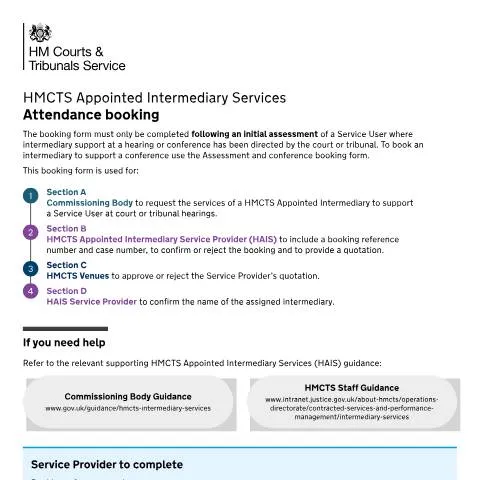
Once the court directs that an intermediary is needed, it is the responsibility of the Commissioning Body—which may include solicitors or HMCTS staff—to fill out Section A of the form. This section requests the services of an HMCTS approved intermediary, detailing the specific needs of the Service User.
Understanding the Structure of the Form
- Section A: Commissioning Body details and case specifics.
- Section B: Details from the HMCTS Appointed Intermediary Service Provider (HAIS), including booking references and case numbers.
- Section C: Approval or rejection by HMCTS, including cost details.
- Section D: Confirmation of the assigned intermediary.
Completion Process: Filling Out the Form
Understanding how to accurately fill out each section of the form is crucial for an efficient booking process. The Commissioning Body must complete Section A thoroughly, providing clear details about the Service User. This includes:
- First and last names of the Service User.
- Age and case number.
- Details of the court or tribunal involved.
Once Section A is completed, it should be saved and emailed as an attachment to the Service Provider, ensuring that the information is accurate to avoid delays.
A Closer Look at Special Requirements
In Section A, there is a space designated for any special requirements the Service User may have. It is essential to detail these needs, whether they involve gender preferences for the intermediary, specific accessibility requirements, or the need for an interpreter. Clear communication here can significantly impact the effectiveness of the intermediary's support.
The Service Provider's Role and Responsibilities
After receiving the completed booking form, the Service Provider must fill in Section B. This section confirms whether they can fulfil the booking request. If they are unable to take on the case, they must specify the reasons, which could include insufficient capacity or lack of appropriate specialism.
Furthermore, the Service Provider is expected to provide a quotation for their services. This quotation includes costs related to:
- Preparation and reading time.
- Attendance duration (full or half day).
- Travel and subsistence costs, if applicable.
Once completed, Section B should be submitted back to the Commissioning Body and the court or tribunal venue.
Quotation Acceptance: The HMCTS Review Process
In Section C, HMCTS reviews the quotation provided by the Service Provider. Their approval is vital for moving forward with the booking. If HMCTS accepts the quotation, they will complete the necessary details, including the date of approval and any relevant cost centre codes.
If the quotation is rejected, HMCTS must also provide reasons for this decision, which can help the Service Provider understand necessary adjustments for future bookings.
Specific Scenarios and User Profiles
The individuals who benefit from intermediary services are diverse, spanning various demographics and needs. Understanding these profiles can inform how the form is filled and processed.
- Children: Particularly vulnerable, children often require tailored approaches to ensure their voices are heard.
- Individuals with disabilities: Those with learning difficulties or physical disabilities may need a greater level of support and understanding.
- Non-native speakers: Language barriers can hinder effective communication, making intermediaries essential in these cases.
Each of these profiles necessitates specific consideration in the booking form, especially regarding the details filled out in Section A and the special requirements noted.
Potential Challenges: What If Something Goes Wrong?
Despite the best planning, challenges can arise. For instance, if the intermediary is not available on the requested date or if there are discrepancies in the information provided, immediate action is required. The Commissioning Body should maintain open lines of communication with both the Service Provider and HMCTS to rectify any issues promptly.
Staying proactive in following up can ensure that any complications are addressed quickly, reducing the risk of delays in the hearing process.
Connecting the Dots: The Intermediary Booking Form in Context
This booking form does not exist in isolation. Instead, it is part of a broader chain of procedures aimed at ensuring justice is accessible and fair. Understanding where this form fits within the overall process can enhance its efficacy.
From the initial assessment of the Service User's needs to the eventual hearing, each step is interconnected:
- Initial assessment by the court determines the need for an intermediary.
- Completion of the booking form initiates the process of securing an intermediary.
- Confirmation and approval by HMCTS facilitate the intermediary's presence at the hearing.
Each of these steps must be handled with care to ensure that the needs of the Service User are met throughout the judicial process.
Maintaining Compliance: Legal Framework Surrounding the Process
The use of this form is governed by several legal frameworks, including the Data Protection Act 2018 and the UK GDPR. These regulations ensure that personal data is handled appropriately throughout the booking process. As such, it is imperative that all parties involved maintain compliance to protect the rights of the individuals concerned.
Final Steps: What Happens Next?
After the form is completed and the intermediary's attendance is confirmed, it is crucial to prepare for the hearing itself. This preparation can include:
- Reviewing case notes with the intermediary to ensure they understand the context.
- Distributing documents to all parties involved well in advance of the hearing.
- Confirming the logistics of the hearing, including the time, location (or virtual link), and any required equipment.
By ensuring these details are taken care of, the likelihood of a smooth and successful hearing increases significantly.
Understanding the Role of an HMCTS Approved Intermediary
Before delving into the booking process of an HMCTS approved intermediary, it’s essential to comprehend the role these professionals play in the courtroom. An approved intermediary is specially trained to support vulnerable witnesses or defendants during hearings. Their primary function is to ensure that the individual communicates effectively with the court. This may involve making complex legal language accessible or helping the person articulate their responses. Approved intermediaries are often employed in cases involving children, individuals with learning disabilities, mental health issues, or other circumstances that may impede their understanding or communication capabilities.
The intermediary’s involvement helps maintain the integrity of the legal process. By facilitating clear communication, intermediaries ensure that vulnerable individuals are provided with the same opportunity to engage with the justice system as anyone else. Their presence can significantly affect the outcome of a case by ensuring that vital information is conveyed accurately and without misunderstanding.
Eligibility Criteria for Booking an Intermediary
Not everyone is entitled to book an HMCTS approved intermediary, and understanding the eligibility criteria is imperative for those considering this option. Generally, the need for an intermediary arises when a party involved in proceedings is deemed vulnerable due to various factors, such as age, cognitive abilities, or mental health conditions.
Eligibility is primarily assessed by the court, which considers the specific needs of the individual requiring assistance. For instance, individuals under the age of 18 or those diagnosed with conditions that impact their capacity to communicate effectively may automatically qualify for support. Additionally, the court may take into account specific circumstances, such as language barriers, where the assistance of an intermediary could enhance understanding.
Once a need for an intermediary has been established, the individual’s legal representative will typically submit a request to the court. It is crucial to provide clear evidence of vulnerability, including medical reports or statements from social workers, as this will assist in facilitating a smoother booking process. The court will then review the submissions and decide on the appointment of an intermediary based on the evidence presented.
The Process of Booking an Intermediary: Step by Step
Booking an HMCTS approved intermediary involves several key steps to ensure that the correct professional is allocated for the specific needs of the case. Here’s a detailed breakdown of the process:
- Assessment of Need: The first step in the process is to assess whether the individual involved requires the support of an intermediary. This should be done in collaboration with legal representatives, who will evaluate communication needs and vulnerabilities.
- Application to the Court: Once the need is established, the legal representative must submit an application to the court. This should include comprehensive information about the vulnerable individual, outlining their circumstances and why intermediary support is necessary.
- Court Review: After the application is submitted, the court will review the case and determine whether to grant the request. This may involve a hearing where the circumstances are presented in detail.
- Selection of Intermediary: If the request is approved, the court will proceed to select an appropriate HMCTS approved intermediary. This is vital as the intermediary’s experience and expertise must align with the specific needs of the individual. The court may have a list of approved intermediaries or may consult with intermediary service providers.
- Notification and Briefing: Once an intermediary has been selected, both the intermediary and the vulnerable person will be notified. It's crucial to schedule a briefing session where the intermediary can meet the individual and explain the process. This helps build rapport and ensures that the individual feels comfortable communicating with the intermediary during the hearing.
- Preparation for Hearing: Leading up to the hearing, the intermediary may work with the individual to prepare them for what to expect, alleviating any anxiety they may have. This includes discussing potential questions, the layout of the courtroom, and how the communication process will work.
- Support During the Hearing: Finally, on the day of the hearing, the intermediary will be present to facilitate communication. They will assist the vulnerable individual in understanding questions posed by the court and ensure their responses are communicated clearly. The intermediary also plays a crucial role in observing the individual’s reactions and needs during the hearing, providing necessary support as they navigate the legal proceedings.
By following these steps, individuals requiring assistance can effectively access the support they need to participate fully in court hearings.