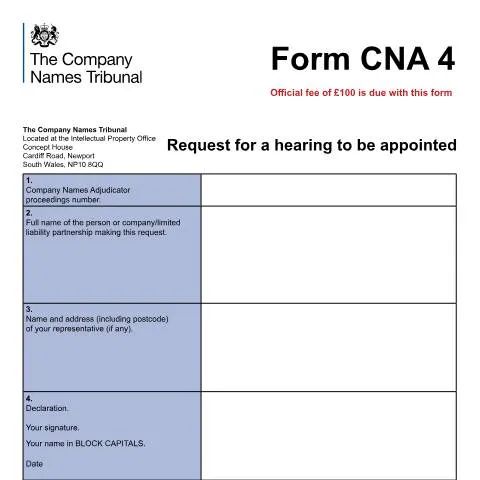
Understanding the Stakes of Form CNA 4
Imagine you're a business owner in the UK, and a dispute arises concerning your company's name. The Company Names Tribunal (CNT) is your go-to authority for resolving such issues. In this scenario, submitting Form CNA 4 is a crucial step in your journey to seek a hearing. This document is not just a piece of paper; it represents your right to contest or defend against claims regarding your company’s name. Filling it out accurately and understanding the implications of your submission is vital to ensure a fair hearing.
Who Files Form CNA 4 and Why?
Form CNA 4 is filed by parties directly involved in disputes regarding company names before the Company Names Tribunal. This may include individuals, businesses, or limited liability partnerships. Typically, the form is necessary when one party believes that another's company name infringes on their rights or is misleading. Consider these scenarios:
- A business owner: You have established a well-known brand and discover that a new company with a similar name could confuse your customers.
- A startup: You might be trying to register a name that another company has already claimed, and you believe your case is strong enough to merit a hearing.
Successfully filing Form CNA 4 signals your intention to resolve the dispute formally. This process helps safeguard your rights and ensure that company names are used fairly.
Delving into the Details: Sections of Form CNA 4
Completing Form CNA 4 requires careful attention to detail. Each section plays a significant role in the process. Below is a breakdown of what to expect:
- Proceedings Number: If you're responding to an ongoing dispute, include the adjudicator proceedings number. This helps the tribunal quickly access your case.
- Name and Address: Clearly state the full name of the person or company filing the request. Ensure that your address is accurate, including the postcode. This allows for effective communication.
- Representative Details: If you have legal representation, include their name and contact information. This can facilitate smoother communication between you and the tribunal.
- Declaration: Your signature verifies the accuracy of the information you provided. Remember to print your name in BLOCK CAPITALS, as this adds a layer of validity.
- Contact Information: Provide a daytime phone number where the tribunal can reach you. This is crucial in case they have any queries regarding your application.
- Total Fee: Note that there is an official fee of £100 required upon submission. Ensure your payment details are clearly indicated to avoid processing delays.
Each of these sections is designed to gather essential information that will assist the adjudicators in understanding your case comprehensively.
Navigating the Payment Process: Fee and Submission
Alongside completing Form CNA 4, handling the fee is a critical aspect of the submission process. The fee for filing this form is £100, and it must be accompanied by your request. Here are your payment options:
| Payment Method | Details |
|---|---|
| Debit/Credit Card | Pay via the secure website. You'll need to enter your name and total amount, and note the 16-digit reference number provided. |
| Cheque | Make it payable to ‘Intellectual Property Office’ and mail it to the specified address. |
| Bank Transfer | Use the provided account details, ensuring to include a reference for your payment. |
| IPO Deposit Account | You can choose to deduct the fee directly from your IPO deposit account, if applicable. |
It's vital to ensure that your payment method is correctly selected and processed, as the tribunal will not proceed without receiving the fee. Incorrect or incomplete payments can lead to delays or rejection of your submission.
Timing and Follow-Up: Managing Expectations
After submitting Form CNA 4, it's important to be aware of the timelines involved in the adjudication process. While the tribunal aims to resolve disputes swiftly, various factors can influence the duration:
- Complexity of the Case: Cases with multiple parties or intricate details tend to take longer.
- Response Time: The other party will need time to respond, and the tribunal will schedule a hearing accordingly.
To keep track of your case, you can reach out to the Company Names Tribunal. Maintaining an open line of communication can be beneficial, especially if you have additional documents or evidence to present.
Preparing Supporting Documents: A Best Practices Guide
Beyond Form CNA 4, prepare supporting documents that reinforce your position. These might include:
- Evidence of Use: Provide proof that your business name has been in use, such as marketing materials, business cards, or web presence.
- Correspondence Records: If there have been communication exchanges regarding the name dispute, include these to establish a formal record.
- Legal Documents: Any previous registrations, trademarks, or legal agreements that relate to the name in question should be attached.
Organizing these documents can significantly help during the hearing. The tribunal will appreciate a comprehensive and well-organized presentation of your case.
Special Considerations: Unique Circumstances and Exceptions
In certain instances, individuals may find themselves in unique circumstances that affect how they approach filing Form CNA 4. Consider the following situations:
- Foreign Applicants: If you are a business based outside the UK, your filings may have additional complexities. Engaging with a local legal representative familiar with UK laws can be advantageous.
- Minors: If a minor wishes to contest a name, they will need a legal guardian to file on their behalf. This adds an extra layer of bureaucracy to navigate.
- Emergency Situations: If you believe that urgent action is required, communicate this to the tribunal upon filing, detailing why a prompt hearing is necessary.
Each of these situations may require tailored responses and additional documentation to support your case effectively.
Final Steps: Following Through after Filing
Once Form CNA 4 is submitted and the required fee is paid, the tribunal will process your request and notify you of the hearing date. Here’s what to do next:
Fill in your form directly online
No printing: type your details into the boxes of the official form, tick, then download the PDF ready to send.
- 1Type into the form boxes
- 2Tick in one click
- 3Save and download the PDF
- Review Communication: Keep an eye on your email and postal mail for updates from the tribunal.
- Prepare for the Hearing: Use the time leading up to the hearing to organize your arguments, rehearse your presentation, and gather any witnesses or additional evidence.
- Be Punctual: Arrive on time for your hearing, prepared with all necessary documents and a clear understanding of your case.
Being proactive in these final steps can greatly affect the outcome of your hearing and ensure that your concerns are effectively addressed.
Understanding the CNA 4 Process
The CNA 4 form, which stands for "Request for a hearing to be appointed," is a crucial document within the context of the Tribunal system in the UK. It is primarily used when parties wish to appeal decisions made by certain public bodies. A key aspect of the process is understanding the grounds on which one can request a hearing. Unlike other forms of appeals, the CNA 4 specifically addresses procedural irregularities or decisions that do not comply with established regulations. It is imperative for applicants to clearly outline their reasons and provide supporting evidence to establish a strong case.
Filing the CNA 4: Step-by-Step Guide
Filing a CNA 4 involves several critical steps that must be followed meticulously to ensure that the request is valid and accepted. Here’s a comprehensive step-by-step guide:
- Gather Your Information: Collect all relevant information about the original decision you are appealing against. This includes any documentation that supports your position, such as letters of decision, previous correspondence, and any evidence of procedural errors.
- Complete the CNA 4 Form: The form needs to be filled out accurately. Pay careful attention to every section, especially the part where you need to state your grounds for appealing. Clear and concise explanations will enhance your chances of success.
- Submit Supporting Documents: Alongside the completed CNA 4 form, ensure you attach all supporting documents. This could include witness statements, expert opinions, or any other materials that substantiate your claims.
- Pay Any Required Fees: Depending on the type of appeal and the tribunal, a fee may be required. Review the latest fee schedule published by the relevant tribunal to confirm whether you need to remit payment.
- File the Application: Submit the completed CNA 4 form and accompanying documents to the specified tribunal. Make sure to send your application to the correct address based on the nature of your case to avoid delays.
- Await Acknowledgment: Once your application is submitted, you should receive an acknowledgment from the tribunal. This communication typically includes information about next steps and timelines.
Each of these steps is vital to the success of your appeal, and neglecting any may result in delays or even rejection of your application. Therefore, it is advisable to seek assistance if you are unfamiliar with the process or if your case is particularly complex.
Common Challenges and How to Overcome Them
While navigating the CNA 4 request process, applicants may face various challenges that can hinder their chances of a successful outcome. Here are some common challenges and strategies to overcome them:
- Incomplete Applications: One of the most frequent reasons for rejection is filing an incomplete form. To counter this, take time to review the form thoroughly before submission. It may also help to seek feedback from peers or professionals familiar with the process.
- Insufficient Evidence: Another common pitfall is failing to provide adequate evidence to support the appeal. To overcome this, ensure you gather comprehensive documentation and consider consulting legal professionals who can advise you on the type of evidence that would strengthen your case.
- Missed Deadlines: The importance of adhering to timelines cannot be overstated. To avoid missing deadlines, create a timeline for each phase of the application process, and set reminders for key dates. This proactive approach can alleviate stress and keep your application on track.
- Understanding of Tribunal Procedures: Many applicants find tribunal procedures daunting. A helpful way to tackle this is to familiarize yourself with tribunal processes through online resources, or by attending tribunal sessions as an observer where possible. Understanding how hearings are conducted can demystify the process and better prepare you for your own hearing.
By being aware of these challenges and proactively addressing them, applicants can enhance their chances of a successful appeal through the CNA 4 process, ensuring that they are well-prepared for the hurdles that may arise.