Navigating the Adjournment Request: Form AC001 Insights
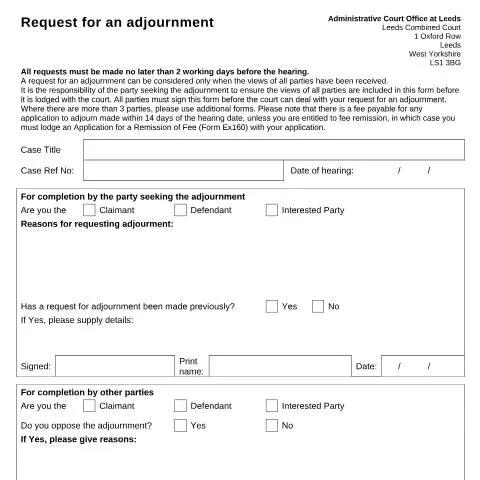
Imagine you are preparing for a crucial hearing regarding a legal dispute. Suddenly, unforeseen circumstances arise, making it impossible for you or your legal representative to attend. This is where Form AC001, the request for a hearing to be adjourned at Leeds, comes into play. Understanding this document is vital, as it serves as your official appeal to postpone proceedings, safeguarding your rights and ensuring due process.
The Importance of Timing: When to File Form AC001
Timing is critical when dealing with adjournment requests. The official directive stipulates that all requests must be submitted no later than two working days before the scheduled hearing. This requirement serves to ensure that the court can adequately assess the request and make necessary arrangements without disrupting the court's schedule. Late submissions may be disregarded, leading to complications in your case.
Understanding the Implications of Late Submissions
If you submit your adjournment request within the two-day window leading up to the hearing, you may incur additional fees unless you qualify for fee remission. It’s essential to process your request as early as possible to avoid unnecessary financial burdens and logistical headaches. If you're uncertain about your eligibility for fee remission, you may need to complete an additional form, Ex160, which requires you to provide information about your financial situation.
Drilling Down: Completing Form AC001
Form AC001 comprises various sections that must be meticulously filled out. Each part plays a pivotal role in either granting or denying your request, making it vital to understand what is required. Let’s break down the sections one by one.
Case Title and Reference Number
The first step involves providing the case title and case reference number. Ensure that this information is accurate, as errors can lead to delays or misunderstandings in your request. The case reference number is especially significant as it allows the court to quickly locate your file amidst numerous cases.
Date of Hearing
Next, you will need to specify the date of your hearing. This is an essential date, as the court will use it to assess the timeline of your request and determine if you have adhered to the two-working-day rule.
Your Status: Claimant, Defendant, or Interested Party?
The form also inquires about your status in the case: whether you are the Claimant, Defendant, or an Interested Party. Identifying your role accurately is crucial, as it informs the court about the perspectives they need to consider when evaluating your request for adjournment.
Reasons for Requesting an Adjournment
This section is arguably the most critical part of the form. You must provide a clear and concise explanation of why you are seeking the adjournment. The reasons must be compelling enough to persuade the court. Common grounds for seeking an adjournment include:
- Illness
- Unavailability of key witnesses
- Need for more time to prepare evidence
- Change in legal representation
It's beneficial to be as specific as possible while also remaining professional in your tone. Support your reasons with relevant details to reinforce your request’s legitimacy.
Previous Requests for Adjournment
Should you have filed any previous requests for adjournment, you’ll need to disclose that information here. The question answers whether a prior request has been made and, if so, it requires you to give details. Be mindful that repeated requests can be viewed unfavorably by the court, so it’s essential to clearly articulate why this request differs from the previous ones.
A Collective Effort: Input from Other Parties
One of the unique features of Form AC001 is the requirement for the views of all other parties involved in the case. The court mandates that each party sign the form, indicating their stance on the adjournment request. This ensures transparency and fairness in the legal process.
Obtaining Signatures and Collecting Opinions
This aspect can be challenging, especially if you are dealing with multiple parties. You must reach out to each party involved and gather their opinions regarding your request. If there are more than three parties involved, additional forms will need to be completed. Be sure to communicate clearly and professionally to facilitate a smooth collection of signatures.
What’s Next? Understanding the Processing Timeline
After submitting Form AC001, there’s an administrative process that unfolds. The court will review your request, along with the opinions of all parties involved, before making a decision. This process can take time, and it’s crucial to know what to expect.
Tracking Your Request
While there’s no formal tracking system for individual adjournment requests, you can follow up with the Administrative Court Office at Leeds. Be prepared to provide your case reference number so that they can expedite the process of locating your file. Generally, a decision on your request should be communicated to you before the hearing date.
Potential Outcomes: What Happens After Submission?
Once your request has been reviewed by the court, there are a few possible outcomes:
- Granted: If the court approves your request, they will inform you of the new hearing date. This outcome allows you additional time to prepare your case.
- Denied: If your request is denied, you must still attend the hearing on the original date. Understand the implications of a denial and prepare accordingly.
- Postponed Indefinitely: In rare instances, the court may decide to postpone your hearing indefinitely, requiring you to resubmit your request at a later date.
The Broader Context: Regulatory Framework and Historical Background
To understand Form AC001 fully, it is essential to appreciate its place within the wider legal framework. The right to request an adjournment is rooted in principles of fair trial and due process, ensuring that litigants have the opportunity to present their cases adequately.
Historical Precedence
The evolution of adjournment requests reflects changing societal norms and legal principles. Traditionally, the courts have upheld the importance of procedural fairness, which is why forms like AC001 are essential in modern legal practice. Familiarity with these forms can empower individuals to navigate the complexities of the legal system effectively.
The Role of Form AC001 in Your Legal Journey
Understanding Form AC001 is not merely about filling out a document; it’s about recognizing your rights as a party in legal proceedings. By taking the time to complete this form accurately and thoughtfully, you are taking proactive steps to ensure that your voice is heard in the legal system.
Fill in your form directly online
No printing: type your details into the boxes of the official form, tick, then download the PDF ready to send.
- 1Type into the form boxes
- 2Tick in one click
- 3Save and download the PDF
Legal Safeguards
The procedure for requesting an adjournment is designed to protect all parties involved in a case. By requiring signatures from all parties and supporting reasons for adjournment, the court fosters a cooperative atmosphere while safeguarding the integrity of the judicial process. Knowledge of this form equips you with essential tools to advocate for your interests.
Final Thoughts: Embrace the Process
Filing an adjournment request can feel daunting, but it is an integral part of navigating the judicial landscape. Take the time to familiarize yourself with Form AC001 and its requirements; doing so can make a significant difference in the outcome of your legal journey. Remember, being well-prepared is your best strategy for success.
Understanding the Grounds for Adjournment Requests
When seeking to adjourn a hearing using Form AC001, it is crucial to establish valid grounds for your request. The courts are generally reluctant to grant adjournments unless there are compelling reasons. Common grounds that may be considered valid include:
- Medical Issues: If you or a key witness is unwell, you should provide medical documentation to support your claim. This may include a doctor's note or hospital discharge papers.
- Legal Representation: If your solicitor or barrister is unavailable due to a conflicting commitment or emergency, this may justify an adjournment. Ensure you provide evidence of the scheduling conflict.
- New Evidence: If new evidence has come to light that could impact the hearing's outcome, you should explain why this evidence was not available earlier and how it is material to your case.
- Personal Circumstances: Sudden personal issues, such as bereavement or family emergencies, can be grounds for requesting an adjournment. Documentation supporting your situation may enhance your request’s credibility.
When submitting your request, clearly outline your grounds and provide any necessary documentation. This can significantly improve the chances of your adjournment being granted. Remember to consider that an adjournment request can also lead to delays in the resolution of your case, which may have longer-term implications.
How to Complete Form AC001 Effectively
Form AC001 is designed to facilitate your request for an adjournment, but completing it accurately is vital. Here are some practical steps to ensure your application is as effective as possible:
- Read the Guidance Notes: Before filling out the form, ensure you understand the accompanying guidance notes. These provide critical instructions on filling out the form and details on the required information.
- Be Concise and Clear: While it can be tempting to provide extensive detail about your situation, aim to be concise. Focus on the key points that justify your request and stick to the relevant information. Use simple, clear language to make your case understandable.
- Use Supporting Documents: Whenever possible, attach supporting documents. For instance, if your request is based on medical reasons, include a doctor's note. If your solicitor is unavailable, provide proof of their scheduling conflict. Such documents can strengthen your case and provide the court with the information needed to make an informed decision.
- Check for Accuracy: Before submitting the form, double-check all the details filled out. Make sure that names, case numbers, and other critical information are correct to avoid unnecessary delays or complications.
- Submit on Time: Timing is essential when submitting Form AC001. Ideally, you should submit your request well in advance of the scheduled hearing date. Late requests may not be considered, or the court may require additional justification for the delay.
Following these steps can enhance the likelihood of your adjournment request being granted, thereby providing you with the necessary time to prepare adequately for your hearing.
Potential Consequences of Adjournments
While requesting an adjournment is a legitimate part of legal proceedings, it’s essential to understand the potential consequences that may arise from either the request being granted or denied:
- Delay in Proceedings: If your adjournment request is granted, it typically results in a delay of your case. This can be frustrating, especially if you are eager for resolution. It may also prolong any associated stress or uncertainty.
- Impact on Relationships with the Court: Repeated adjournment requests can lead to a perception of unpreparedness or lack of seriousness regarding the case. This may impact how judges and court officials view subsequent requests or your overall credibility.
- Cost Implications: Delays may lead to additional costs, such as legal fees, particularly if your legal representation needs to prepare for the hearing on a new date. You may also face costs related to any additional evidence gathering or witness preparation.
- Potential for Refusal: If the court believes the reasons for your adjournment request are not compelling, it may deny your request. This could result in you being unprepared for the original hearing date, which may lead to an unfavourable outcome.
Understanding these potential outcomes is vital for making informed decisions regarding your case and adjournment requests.