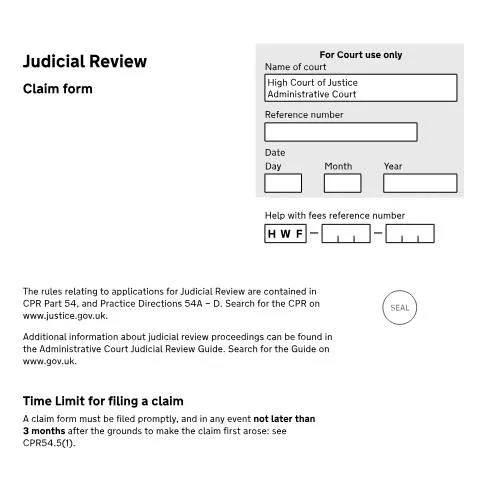
Understanding the Official Judicial Review Claim Form (Form N461) in the UK
The Form N461 is an official document used within the United Kingdom's judicial system, specifically designed for individuals or organisations seeking to challenge the lawfulness of a decision made by a public body or authority. Managed by the HM Courts & Tribunals Service, this form is a crucial component of the judicial review process, providing a structured way to initiate legal proceedings in the High Court of Justice, Administrative Court.
Purpose and Scope of Form N461
The primary purpose of the Form N461 is to request a judicial review, which is a legal process allowing the courts to examine the lawfulness of a decision or action taken by a public body. This could include decisions made by government departments, local authorities, or other statutory bodies. The form serves as a formal application, setting out the details of the claim, the parties involved, and the decision under challenge.
This form is applicable when an individual or organisation believes that a decision has been made unlawfully or unfairly, and seeks the court's intervention to quash or modify that decision. It is an essential document for those wishing to challenge administrative actions that affect their rights or interests.
Key Elements of the Form N461
1. Filing Timeline and Legal Framework
Applicants must be aware that the judicial review claim must be filed promptly, generally within three months from the date the grounds for the claim first arose, as stipulated by CPR Part 54.5(1). The form references the Civil Procedure Rules (CPR) and Practice Directions 54A–D, which govern the procedural aspects of judicial review applications. Additional guidance can be found in the Administrative Court Judicial Review Guide, available on the official government website.
2. Details of the Claimant and Respondent
The form requires comprehensive information about the claimant, including name, address, contact details, and legal representative if applicable. Similar details are needed for the defendant, which is typically the public body or authority responsible for the decision being challenged. Accurate contact information ensures proper communication throughout the proceedings.
3. Identification of Interested Parties
Any other individuals or organisations affected by the decision, known as interested parties, should also be named. This ensures that all relevant parties are notified and can participate in the process if necessary.
4. Details of the Decision Under Challenge
The applicant must specify the decision they seek to have reviewed, including the date it was made and the body or person responsible. This section provides clarity on the scope of the judicial review and helps the court understand the context of the case.
Implications for Applicants
Filing a Form N461 signifies the commencement of a formal legal challenge to a public decision. It underscores the importance of adhering to procedural rules, particularly the strict time limits for filing. Proper completion of the form ensures that the application is considered valid and can proceed to the substantive review of the decision.
Fill in your form directly online
No printing: type your details into the boxes of the official form, tick, then download the PDF ready to send.
- 1Type into the form boxes
- 2Tick in one click
- 3Save and download the PDF
Applicants should also be aware that submitting this form is just the initial step; subsequent proceedings may involve hearings, evidence submission, and legal arguments. Therefore, seeking legal advice or assistance from qualified professionals can be beneficial to navigate the complexities of judicial review.
Conclusion
The Form N461 is a vital document within the UK's judicial review framework, enabling individuals and organisations to challenge decisions that they believe are unlawful or unfair. Understanding its structure and requirements helps ensure that applications are correctly submitted, thereby facilitating access to justice and the proper oversight of public authority actions.