When Tribunal Battles Turn Financial: The Strategic Role of Form FTC2
Tribunal proceedings in the Upper Tribunal's Tax and Chancery Chamber can evolve into complex financial disputes where the question isn't merely who wins or loses, but who bears the substantial costs of legal representation, expert witnesses, and administrative expenses. Form FTC2 emerges as the crucial instrument when a successful party seeks to recover these costs from their opponent, transforming a legal victory into genuine financial relief.
The Upper Tribunal operates under different cost rules compared to ordinary courts. Unlike the general principle in civil litigation where "costs follow the event", tribunal proceedings typically operate on the basis that each party bears their own costs. This makes Form FTC2 applications particularly significant—they represent exceptional circumstances where the tribunal may depart from this norm and order one party to compensate another for their legal expenses.
Professional representatives handling complex tax disputes, corporate entities defending HMRC challenges, and individuals embroiled in substantial property or inheritance matters all find themselves navigating this territory. The form serves as both a detailed accounting exercise and a legal argument, requiring precision in financial documentation alongside compelling reasons why the usual cost principles should be displaced.
Decoding the Financial Architecture of Legal Recovery
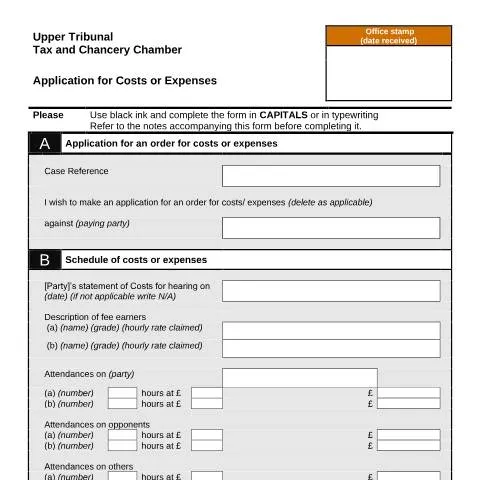
The heart of Form FTC2 lies in its comprehensive cost schedule, which transforms legal work into quantifiable monetary claims. This isn't merely about totaling invoices—it requires a granular breakdown that demonstrates both reasonableness and proportionality to tribunal scrutiny.
Fee Earner Categories and Hourly Rates
The form demands identification of each fee earner by name, grade, and claimed hourly rate. This reflects the tribunal's need to assess whether the level of representation was appropriate to the case's complexity. A straightforward tax appeal handled by a senior partner commanding £800 per hour may face different scrutiny compared to a complex multi-million pound corporate restructuring dispute.
Grades typically follow standard legal profession classifications: trainee solicitors, newly qualified solicitors, associates, senior associates, partners, and Queen's Counsel. The tribunal examines whether the work undertaken matched the seniority of the fee earner—routine document review by a senior partner raises questions about proportionality that could reduce recoverable costs.
Activity-Based Cost Breakdown
Form FTC2 categorises legal work into distinct activities, each requiring separate time recording and cost calculation:
| Activity Category | Typical Content | Tribunal Considerations |
|---|---|---|
| Attendances on Party | Client meetings, telephone conferences, instruction-taking | Reasonableness of time spent on client communication |
| Attendances on Opponents | Correspondence, negotiation attempts, procedural discussions | Whether efforts at resolution were genuine and proportionate |
| Work on Documents | Drafting statements, reviewing evidence, preparing bundles | Complexity of documentation versus time claimed |
| Attendances at Hearing | Tribunal representation, advocacy, client support | Appropriateness of representation level and duration |
The "Other work, not covered above" category requires particular attention. Vague descriptions invite tribunal challenges, while detailed explanations of specialist research, expert witness coordination, or complex legal analysis strengthen the application's credibility.
Counsel's Fees and Professional Representation
Barrister fees require separate treatment, with the form demanding identification by name and year of call. This enables tribunals to assess whether counsel's seniority matched the case's requirements. A recently called barrister's fees for straightforward advocacy may be more readily recoverable than a Queen's Counsel's charges for routine procedural matters.
The distinction between different types of counsel work—advice, conferences, document preparation, and hearing representation—allows tribunals to evaluate each element's necessity and proportionality. Emergency advice commanding premium rates needs stronger justification than routine case preparation.
Timing Dynamics and Strategic Considerations
Cost applications in the Upper Tribunal operate within specific temporal frameworks that can significantly impact both the likelihood of success and the recoverable amounts. Understanding these timing dynamics proves crucial for maximising recovery prospects.
The Post-Decision Window
Most cost applications follow successful tribunal decisions, but the window for submission isn't unlimited. While the form itself doesn't specify deadlines, tribunal practice directions and case management orders often impose strict timeframes. Late applications face additional hurdles, requiring explanations for delay that tribunals may view unsympathetically.
The timing also affects cost calculation. Costs incurred after a reasonable settlement opportunity may face scrutiny, particularly where the opposing party made realistic offers that were rejected. Tribunals increasingly expect parties to engage meaningfully with settlement discussions, and unreasonable refusal to negotiate can impact cost awards.
Interim vs Final Cost Orders
Form FTC2 can seek costs at various procedural stages, not merely after final determination. Interim cost applications often arise from:
- Procedural failures by opposing parties causing adjournments or additional work
- Unreasonable conduct during case management or evidence gathering
- Failed applications that were clearly misconceived or tactical rather than substantive
- Discovery misconduct requiring additional tribunal time and opponent effort
Interim applications require careful strategic consideration. While they can provide early cost recovery, they may also escalate disputes and influence tribunal perceptions of the applicant's approach to litigation conduct.
Wasted Costs: When Professional Standards Meet Financial Consequences
Form FTC2 includes a specific provision for wasted costs applications—a distinct category targeting legal representatives rather than opposing parties. These applications represent some of the most serious cost recovery mechanisms available, alleging that professional representatives have acted improperly, unreasonably, or negligently.
The Professional Conduct Threshold
Wasted costs applications require evidence that legal representatives have:
- Acted improperly—violating professional conduct rules or ethical obligations
- Acted unreasonably—pursuing hopeless cases or using inappropriate tactics
- Been negligent—failing to meet professional standards expected of competent practitioners
The tribunal must also be satisfied that such conduct caused the applicant to incur unnecessary costs. This causation requirement means that even if professional misconduct occurred, wasted costs may not follow unless clear financial consequences resulted.
The form's requirement to specify "Cost incurred in making this application" for wasted costs reflects the additional procedural complexity involved. These applications often require separate hearings, witness evidence, and detailed investigation of professional conduct—generating their own substantial costs that successful applicants can recover.
Strategic Implications for Professional Representatives
The existence of wasted costs provisions influences professional behaviour throughout tribunal proceedings. Solicitors and barristers must balance zealous advocacy with realistic case assessment, knowing that unreasonable conduct may expose them to personal liability for opponent costs.
This dynamic particularly affects case management decisions. Pursuing obviously hopeless procedural applications, failing to advise clients about weak cases, or continuing representation without proper instructions can all trigger wasted costs exposure. The form's detailed breakdown requirements mean that even successful wasted costs applications require substantial investment of time and resources.
Digital Transformation and Submission Protocols
The Upper Tribunal's embrace of digital case management has fundamentally altered how Form FTC2 applications are submitted and processed. The mandatory E-Filing service for professional representatives represents more than mere technological convenience—it creates different procedural pathways with distinct advantages and obligations.
Professional Representative Obligations
Legal professionals must use the HMCTS E-Filing service, which provides real-time case tracking and automatic acknowledgment systems. This digital mandate eliminates traditional posting delays and creates immediate audit trails for submission timing. However, it also requires practitioners to maintain current system access and understand platform-specific requirements for document formatting and file sizes.
The E-Filing system generates automatic case references and links FTC2 applications to existing tribunal proceedings. This integration helps prevent administrative errors but requires careful attention to case number accuracy and proper document categorisation within the system.
Litigant in Person Alternatives
Unrepresented parties retain choice between digital submission and traditional postal routes. The London office at the Rolls Building serves as the primary destination, with the Edinburgh office providing Scottish alternatives for cases with territorial connections.
This dual-track system reflects practical realities—many litigants in person lack digital literacy or reliable internet access necessary for electronic filing. However, postal submission carries additional risks around timing, receipt confirmation, and document security that digital systems largely eliminate.
Receipt Confirmation and Follow-up Protocols
Both submission routes require active monitoring for receipt confirmation. The tribunal's commitment to acknowledge receipt within one week creates a practical deadline for follow-up inquiries. Failure to receive timely confirmation demands immediate contact with the relevant tribunal office to prevent procedural default.
This acknowledgment system serves multiple purposes: confirming successful submission, establishing filing dates for procedural purposes, and triggering case management protocols within tribunal systems. Missing acknowledgments often indicate technical failures, misdirected submissions, or administrative backlogs requiring prompt resolution.
Evidential Requirements and Supporting Documentation
Form FTC2's effectiveness depends heavily on supporting evidence that substantiates both the costs claimed and the circumstances justifying departure from normal cost rules. The tribunal's assessment extends beyond mere arithmetic verification to examine reasonableness, necessity, and proportionality across multiple dimensions.
Time Recording and Contemporary Documentation
Successful cost applications typically require detailed time records that demonstrate when work was undertaken, by whom, and for what specific purpose. Retrospective cost estimates rarely achieve full recovery compared to contemporary time recording systems that capture work as it occurs.
The tribunal expects to see evidence of work done, not merely assertions about time spent. File notes, correspondence copies, research materials, and draft documents all support claimed hours and demonstrate the genuine nature of legal work undertaken.
Proportionality Assessment
The relationship between costs claimed and case value, complexity, and outcome significantly influences tribunal decisions. A £50,000 cost claim in a dispute over £10,000 faces obvious proportionality challenges, while similar costs in multi-million pound commercial disputes may appear entirely reasonable.
Tribunals also consider case management efficiency—whether parties conducted proceedings economically and avoided unnecessary procedural steps. Evidence of settlement attempts, realistic case assessment, and proportionate response to opponent arguments all support cost applications.
Cross-Party Notification and Procedural Fairness
Form FTC2 applications trigger mandatory notification requirements that ensure procedural fairness while creating additional strategic considerations for applicants. The requirement to serve copies on paying parties reflects fundamental principles of natural justice—parties facing cost orders must have opportunities to respond and present counter-arguments.
Service Requirements and Timing
Concurrent service on opposing parties means that cost applications cannot proceed by stealth. Paying parties receive immediate notice of claims against them, enabling preparation of detailed responses challenging both the quantum claimed and the circumstances justifying cost orders.
This notification requirement creates practical implications for case strategy. Applicants must be prepared for robust challenges to their cost claims, including detailed scrutiny of time records, fee rates, and work necessity. Opposing parties often engage forensic accountants or costs specialists to challenge applications, potentially escalating the overall dispute.
Response Procedures and Counter-Applications
Receiving cost application notices triggers consideration of potential counter-applications. Paying parties may identify their own recoverable costs arising from unreasonable conduct by the applicant, creating complex cross-claims that require separate tribunal consideration.
The procedural framework also permits applications for protective costs orders where paying parties demonstrate limited financial resources that could be exhausted by adverse cost orders. These applications can cap or eliminate cost exposure, fundamentally altering the economic dynamics of tribunal proceedings.
Successfully navigating Form FTC2 applications requires understanding both the mechanical process of cost calculation and the broader strategic context within which tribunal cost orders operate. The form represents a sophisticated intersection of legal procedure, financial accounting, and strategic advocacy that can determine whether tribunal success translates into genuine economic advantage or remains merely pyrrhic victory.
Understanding Different Types of Cost Orders Available Under FTC2
The FTC2 form accommodates various categories of cost orders, each serving distinct purposes within the tribunal system. Standard cost orders typically cover legal representation fees, witness expenses, and administrative costs directly related to your case preparation. These might include solicitor fees for document review, barrister costs for hearing attendance, or expert witness fees for specialist testimony.
Wasted costs orders represent a more specific category where legal representatives may be personally liable for costs due to improper, unreasonable, or negligent conduct. If opposing counsel caused unnecessary delays through frivolous applications or failed to follow proper procedures, you might seek recovery of additional expenses incurred. The tribunal requires detailed evidence of how the representative's actions directly caused extra costs.
Protective costs orders apply in cases involving significant public interest, particularly environmental or human rights matters. These orders limit your potential liability for the other party's costs if your case is unsuccessful, encouraging legitimate public interest litigation. When completing Form FTC2 for protective costs, you must demonstrate the case's wider public benefit and your limited financial resources.
Fill in your form directly online
No printing: type your details into the boxes of the official form, tick, then download the PDF ready to send.
- 1Type into the form boxes
- 2Tick in one click
- 3Save and download the PDF
For detailed assessment proceedings, where the tribunal has already made a costs order but parties dispute the amount, Form FTC2 initiates the formal assessment process. You'll need to specify whether you're seeking standard basis assessment (reasonable and proportionate costs) or indemnity basis assessment (all costs except those unreasonably incurred). The distinction significantly affects which expenses the tribunal will allow.
Security for costs applications through FTC2 require the other party to provide financial guarantee before proceeding with their case. This typically applies when the opposing party resides outside England and Wales, is a company in financial difficulty, or has previously failed to pay costs orders. You must provide evidence supporting your application, such as company accounts showing financial distress or proof of overseas residence.
When seeking interim costs orders, you're requesting immediate payment of certain costs before the final hearing. This might be appropriate if you've achieved a significant procedural victory, such as successfully striking out parts of the other party's case, or if they've made clearly hopeless applications that caused unnecessary expense.
Documentary Evidence and Supporting Materials Required
Successful FTC2 applications depend heavily on comprehensive supporting documentation. Financial records form the cornerstone of your evidence bundle. Include detailed invoices from solicitors showing hourly rates, time spent on specific tasks, and the nature of work undertaken. For barristers, provide fee notes specifying brief fees, refresher rates for additional hearing days, and any specialist advice costs.
Time records and attendance notes demonstrate the reasonableness of claimed hours. Your legal representatives should maintain contemporaneous records showing dates, duration, and description of work performed. Generic entries like "correspondence" or "case preparation" rarely satisfy tribunal scrutiny. Instead, look for specific descriptions such as "reviewing defendant's witness statements and preparing cross-examination notes - 2.5 hours" or "telephone conference with expert witness regarding technical aspects of claim - 45 minutes".
For expert witness costs, obtain detailed breakdown of charges including preparation time, report writing, conference attendance, and hearing testimony. Expert fees often face particular scrutiny, so ensure your expert can justify their hourly rate based on qualifications, experience, and market standards for their specialism. Include their CV and examples of similar work to support claimed expertise.
Travel and accommodation expenses require receipts and evidence of necessity. If your legal team travelled from distant locations, explain why local representation wasn't suitable or available. For overnight stays, provide hotel receipts and evidence that the accommodation standard was reasonable for the case's value and complexity. The tribunal expects cost-conscious decisions - luxury hotels rarely receive approval unless exceptional circumstances apply.
Court fees and administrative costs need official receipts from HM Courts & Tribunals Service. Include application fees, hearing fees, and any specialist charges such as expedited listing requests. For copying and document production, provide invoices showing per-page charges and total volumes. Electronic document management costs are increasingly accepted but require clear explanation of the system's necessity and efficiency benefits.
Communication costs including telephone conferences, video hearings, and international calls need detailed billing records. With increased remote working, tribunals now regularly see claims for video conferencing subscriptions, secure file sharing platforms, and enhanced internet connections for hearing participation. These costs are generally recoverable if reasonable and case-specific.
When claiming loss of earnings for personal attendance at hearings, provide employment contracts, pay slips, or accountant's certificates confirming your usual daily rate. Self-employed individuals need business accounts or tax returns demonstrating typical income levels. The tribunal won't compensate for speculative or inflated earning claims.
Evidence of the other party's conduct becomes crucial for enhanced cost orders. Compile correspondence showing unreasonable refusal to engage in settlement discussions, last-minute witness changes, or frivolous applications. Include hearing transcripts or judicial observations about time-wasting behaviour. Screenshots of social media posts or public statements contradicting their case position can support arguments for indemnity costs.
Procedural Timelines and Strategic Considerations
Application timing significantly impacts your chances of success. Generally, costs applications should be made promptly after the triggering event - whether a successful strike-out application, case conclusion, or specific incident of unreasonable conduct. Delayed applications face questions about whether the costs were truly necessary or whether you waived your right to claim through inaction.
For applications following final judgment, you typically have 21 days from the order date to submit Form FTC2, though specific tribunal rules may vary. Some tribunals allow longer periods, particularly in complex cases or where detailed assessment is required. Check your tribunal's practice directions for precise deadlines, as late applications require permission and compelling reasons for delay.
Pre-action protocols often require costs discussions before formal applications. Send a detailed schedule of claimed costs to the other party, allowing reasonable time for response. Their refusal to engage meaningfully with your costs schedule strengthens your FTC2 application and may justify enhanced costs orders. Document all communications, including read receipts and delivery confirmations.
Proportionality assessments have become increasingly important following court rules reforms. The tribunal considers whether your claimed costs bear reasonable relationship to the case value, complexity, and importance to the parties. A £50,000 costs claim for a £10,000 dispute faces obvious challenges unless exceptional circumstances apply, such as significant public interest or deliberate misconduct by the other party.
Consider part 36 offers and settlement attempts when timing your application. If you made reasonable settlement offers that the other party rejected, leading to a better result at hearing, this strengthens claims for enhanced costs from the offer date. Conversely, if you unreasonably refused their settlement offers, expect challenges to your costs recovery, particularly for expenses incurred after rejection.
Case management directions often include costs budgeting requirements for larger cases. If your tribunal ordered costs budgets, ensure your FTC2 application aligns with approved budgets or explains necessary variations. Significant departures from budgeted costs require compelling justification, such as unexpected witness availability issues or new evidence emergence.
For multi-track cases or those with international elements, consider currency fluctuations affecting foreign legal costs, translation expenses for overseas documents, and time zone complications for international conference calls. These factors can significantly impact total costs and require careful documentation to demonstrate reasonableness.
Interim payment applications through FTC2 can provide cashflow relief during lengthy proceedings. However, tribunals require clear evidence that you'll likely succeed on the substantive costs application and that immediate payment is necessary to avoid serious financial hardship. Provide bank statements, creditor demands, or other evidence demonstrating financial pressure.
Remember that costs applications themselves generate costs. If your FTC2 application is poorly prepared or clearly excessive, you may face liability for the other party's costs in responding. This risk increases with more substantial claims, making thorough preparation and realistic assessment essential before submission.