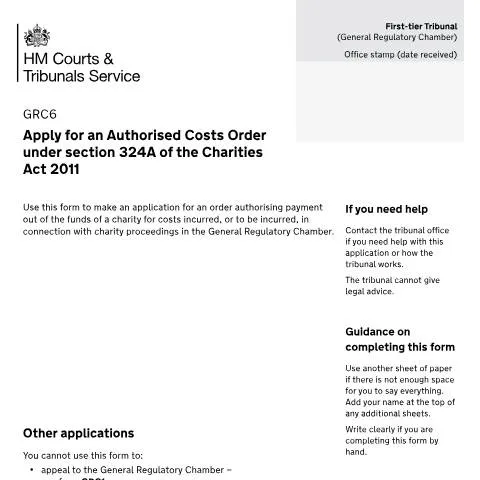
Understanding the GRC6 Application Process
The GRC6 Form serves as a crucial instrument for applicants seeking to obtain an Authorised Costs Order under section 324A of the Charities Act 2011. This form is utilized primarily within the First-tier Tribunal - General Regulatory Chamber, which addresses matters concerning charity law and governance. Understanding this process is essential for those involved in charity proceedings, as it can significantly impact the financial management and operational capacity of a charitable organisation.
The Significance of Costs Orders in Charity Proceedings
Costs orders are pivotal in balancing the financial responsibilities of charities during legal proceedings. They allow for the reimbursement of necessary expenses incurred while pursuing or defending a case. By enabling charities to apply for costs from their funds, the GRC6 form ensures that they can engage with the legal system without the fear of crippling financial burdens. This aspect is particularly vital in circumstances where the charity's activities may be hindered by ongoing legal disputes, thus impacting their ability to fulfil their charitable objectives.
Historical and Legal Framework
Adopted under the Charities Act 2011, the GRC6 form is rooted in a regulatory environment aimed at enhancing transparency and fairness in charity operations. The Act itself was designed to modernize charity law, offering a clearer structure for governance and accountability. This historical backdrop is vital for applicants to comprehend, as it frames the purpose of the GRC6 form within the broader legislative objectives of protecting charitable assets and ensuring they are used effectively.
The Role of the Tribunal
The First-tier Tribunal plays a fundamental role in adjudicating disputes and applications within charity law. Its purpose is to provide a fair and effective resolution of issues related to charities, including financial management and compliance with the law. The tribunal's handling of applications made via the GRC6 form reflects its commitment to supporting charitable organizations while ensuring that the legal processes are adhered to. Understanding the tribunal's function helps applicants navigate their applications more effectively.
Who is Eligible to File the GRC6 Application?
Eligibility to submit the GRC6 application is not restricted to a particular type of entity. Both individuals and organizations can act as applicants. A key consideration for potential applicants is whether they have the standing to bring forth proceedings related to their charitable activities. This can encompass a variety of scenarios, such as:
- Charity trustees seeking to recover costs related to ongoing disputes.
- Members of a charity who wish to challenge decisions adversely affecting their rights.
- Individuals representing the interests of the charity, such as solicitors or legal advocates.
Each category may have unique considerations, and applicants should carefully evaluate their circumstances to ensure they meet the tribunal's requirements for standing.
Special Cases: Foreign Applicants and Minors
In certain situations, such as when a charity operates internationally or involves minors, additional complexities may arise. Foreign applicants must ensure they comply with UK regulations, particularly regarding data protection laws under the Data Protection Act 2018 and UK GDPR. This aspect is crucial for protecting sensitive information and maintaining compliance within the UK legal framework.
Minors may require additional safeguards when involved in legal proceedings. Such cases often necessitate the appointment of a guardian or representative to act on their behalf, ensuring their best interests are prioritized. Understanding these nuances is essential for effective navigation through the legal landscape.
The Application Journey: From Start to Decision
The journey of submitting a GRC6 application commences with the realization of a need for an Authorised Costs Order. This could stem from various triggers, such as the escalation of legal fees during disputes or the necessity to clarify financial responsibilities regarding charity proceedings. Here’s a step-by-step guide to the process:
- Gather Required Information: Collect pertinent details about the applicant(s), including name, contact information, and a description of the relevant charity proceedings.
- Complete the GRC6 Form: Fill out the form thoroughly, ensuring to address all sections. It may include details about the representative if applicable, and reasons for the application.
- Submit Your Application: Once completed, the GRC6 must be submitted to the First-tier Tribunal. Consider the best method of delivery—a postal service or potentially through electronic means if available.
- Await Tribunal Decision: After submission, the tribunal will review the application. Applicants may be required to provide additional information or attend a hearing.
- Receive the Tribunal's Decision: The tribunal will issue a decision on whether to grant the costs order, which will detail any conditions or stipulations.
This structured approach provides clarity and ensures that applicants understand their responsibilities at each stage of the process. In complex cases, engaging with legal representation can be beneficial to navigate this journey effectively.
Timing and Deadlines: Critical Considerations
Timing plays a crucial role in the submission of the GRC6 application. Understanding the deadlines for both the application and any subsequent actions is essential. Typically, the application must be submitted promptly following the incurrence of costs or when it becomes evident that costs will be necessary in the near future.
Notably, the tribunal operates with specific timelines for responding to applications. While there is no universal timeline for all cases, applicants should be prepared for the possibility of delays, particularly in complex matters. Here’s a generalized timeline:
| Step | Timeline |
|---|---|
| Application Submission | As soon as costs are incurred or anticipated |
| Tribunal Acknowledgment | Typically within a few weeks of submission |
| Decision Notification | Varies case by case; can take several weeks to months |
Keeping track of these timelines will allow applicants to manage their expectations and plan accordingly. It’s advisable to remain proactive and ready to respond to any inquiries or requests for further information from the tribunal.
Post-Application: Monitoring Progress and Follow-Up
After submitting the GRC6 application, it’s essential to monitor its progress. Applicants can contact the tribunal office for updates or clarification regarding their application. However, it’s crucial to remember that while they can provide procedural information, they cannot offer legal advice.
In cases where applicants have not received a response within a reasonable timeframe, they should feel empowered to follow up. Maintaining an open line of communication ensures that applicants are informed about any developments and can respond promptly to any tribunal requests.
What to Expect After a Decision is Made
Once the tribunal has reached a decision, applicants will receive formal notification outlining the outcome. Depending on whether the application is successful or not, further steps may need to be taken:
- If granted: The order will detail the costs that are approved for payment and may specify conditions that must be met.
- If denied: The notification will provide reasons for the decision, and applicants can consider options for appeal if they believe there are grounds for doing so.
It’s vital for applicants to read and understand the tribunal’s decision carefully, as it will dictate the next steps in their process. If the decision allows for it, applicants may also need to prepare for compliance with any conditions outlined in the order.
Enhancing Your Application: Best Practices
While the GRC6 form is designed to be straightforward, ensuring a well-prepared application can significantly impact the outcome. Here are some best practices for applicants:
- Clarity and Detail: Provide comprehensive information on all sections of the form. Avoid ambiguity and ensure that all points are addressed clearly.
- Supporting Documents: Attach any relevant documents that support your application, such as invoices, legal correspondence, or details of prior tribunal decisions.
- Seek Professional Guidance: If unsure, consider consulting with legal professionals experienced in charity law; they can provide valuable insight and support.
- Double-Check for Accuracy: Before submission, verify that all information is correct and up to date to minimize the chances of delays.
Adhering to these best practices can streamline the application process and bolster the chances of a successful outcome. Each applicant’s situation is unique, and tailoring the application to reflect particular needs and contexts is key.
Final Thoughts on the GRC6 Application
Engaging with the legal aspects of charity governance through the GRC6 form is a significant undertaking. Individuals and organizations must understand the intricacies of the process, the legal framework in which they operate, and the implications of their applications. By approaching the GRC6 form with diligence and preparation, applicants can navigate the complexities of charity costs orders with greater confidence.
As this process unfolds, remaining proactive, informed, and engaged will ultimately enhance the applicant's ability to manage their charity’s resources effectively while fulfilling their legal obligations. By doing so, charities can continue to focus on their core missions and community contributions, unimpeded by financial concerns arising from legal disputes.
Fill in your form directly online
No printing: type your details into the boxes of the official form, tick, then download the PDF ready to send.
- 1Type into the form boxes
- 2Tick in one click
- 3Save and download the PDF
Understanding the Costs Order Process
Applying for an authorised costs order through Form GRC6 can initially seem daunting, especially for those unfamiliar with the UK legal system. It is imperative to have a clear understanding of the procedural steps involved. An authorised costs order allows you to recover costs associated with legal proceedings, but only under specific circumstances. The application must demonstrate that the costs incurred were necessary and reasonable, directly linked to the proceedings in question.
To begin the process, it is essential to confirm eligibility for the application. This typically applies to cases where there is a clear winner, and the other party is not in a position to pay the costs, or where the court has ordered that costs be paid on a specific basis. Applicants should gather all relevant documentation, including invoices from solicitors, receipts, and details of any disbursements incurred during the litigation. This evidence will strengthen your application and help the court assess the reasonableness of the costs claimed.
Furthermore, it is crucial to be aware of the court's discretion in awarding costs. The judge may decide not to award all claimed costs if they are deemed excessive or unnecessary. Therefore, being prepared to justify each item of expense can significantly impact the outcome of your application.
Common Pitfalls and How to Avoid Them
When applying for an authorised costs order using Form GRC6, several common pitfalls can hinder the application process. One prevalent issue is the failure to file the form correctly or within the stipulated timeframe. Applications submitted after the deadlines may be dismissed, regardless of their merit. Keep in mind that the form must be filed promptly after the conclusion of the proceedings for which you are seeking costs.
Another common mistake is not providing sufficient evidence to support the claimed costs. It's important to remember that the court requires detailed breakdowns of costs with appropriate documentation. Batching invoices or presenting costs in broad categories without specific context can lead to challenges. Make sure to include comprehensive information on legal fees, expert fees, and any other related costs, along with clear explanations of their necessity in your case.
Lastly, many applicants underestimate the importance of legal advice when submitting Form GRC6. While self-representation is permissible, consulting with a solicitor can provide valuable insights into the nuances of the process. An experienced legal professional can aid in compiling the necessary documentation, ensuring that the application is robust and adheres to legal standards.
What to Expect After Submission
Once you have submitted Form GRC6, it is important to understand the subsequent steps in the process. The court will schedule a hearing to review your application, during which both parties may be invited to present their arguments. Preparing for this hearing is crucial; you should anticipate questions regarding the clarity and reasonableness of your claimed costs.
If the court approves your costs order, you will receive a written order specifying the amount that the other party is required to pay. In the event that your application is rejected, the court may provide reasons for its decision, allowing you to understand any deficiencies in your application. If you believe the decision was unjust, you might consider seeking a review or appealing the court’s ruling, but this must be done within a specific timeframe and under strict procedural guidelines.
Ultimately, the journey following the submission of Form GRC6 is a critical phase where thoroughness and preparation can make all the difference in successfully recovering your legal costs.