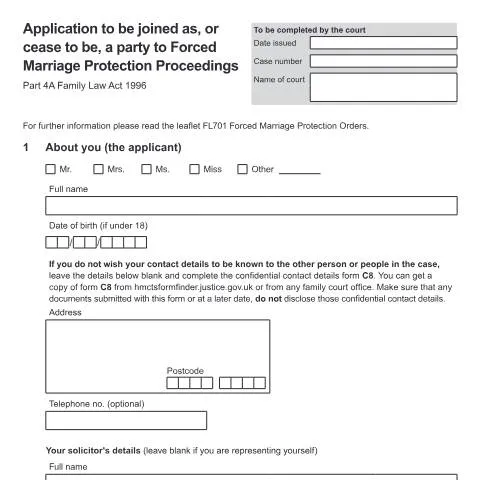
Navigating Form FL431: Your Authority in Forced Marriage Protection Proceedings
In an evolving legal landscape, understanding the intricate details of your rights and responsibilities is crucial when dealing with sensitive matters such as forced marriage protection. Form FL431 plays a vital role in this framework, allowing individuals to either join or cease being a party in ongoing Forced Marriage Protection Proceedings. This document is not merely a bureaucratic formality; it serves as a pivotal tool in safeguarding one's rights and ensuring justice within the family court system.
Key Participants: Who Engages with Form FL431?
Form FL431 is uniquely designed for individuals directly affected by forced marriage situations. The applicant could be a victim seeking protection or an individual wishing to disengage from a case. Understanding who can file this form is essential for its proper use. Below are the typical scenarios:
- Victims of Forced Marriage: Those who feel threatened or coerced into a marriage without their consent.
- Concerned Parties: Family members or guardians who wish to intervene on behalf of someone at risk.
- Legal Representatives: Solicitors acting on behalf of the applicant.
Who is Required to Complete the Form?
Completing Form FL431 is typically necessary when:
- The applicant wishes to formally join existing proceedings for protection against forced marriage.
- There is a need to formally withdraw from ongoing proceedings.
In both cases, understanding the implications of your application can greatly influence the outcome of your situation.
Breaking Down the Application: A Step-by-Step Guide
Completing Form FL431 requires careful attention to detail. Each section has specific requirements that must be fulfilled to avoid delays or misunderstandings. Here’s a concise breakdown of what to expect:
1. Personal Information
The first section of the form requires personal details about the applicant:
- Full Name: Ensure to provide your legal name as it appears on official documents.
- Date of Birth: This is mandatory for applicants under the age of 18.
- Address: If you wish to protect your address from the respondent, you must complete a Confidential Address Form (C8) and leave this section blank.
2. Reason for Application
This section is crucial as it outlines your reasons for joining or leaving the proceedings. Clear and concise reasons can enhance your application’s credibility. Here are some tips:
- Be honest and direct about your circumstances.
- Reference specific incidents or threats if applicable.
3. Respondent Information
Identifying the respondent(s) is vital for court processes. You must list each respondent's full name and address. If there are more than two, you should continue on a separate sheet. Incomplete information can lead to complications in the proceedings.
4. Court Arrangements
This section pertains to any special requirements you might have during court appearances. If you need an interpreter or special assistance due to a disability, it is crucial to specify these needs here to ensure the court provides adequate support.
Submission Channels: Navigating Your Options
Understanding how to submit Form FL431 is just as important as knowing how to fill it out. There are generally three methods of submission:
- Online Submission: This method is increasingly popular for its convenience. Ensure you have all digital copies of your required documents ready for upload.
- Postal Submission: If you prefer to send hard copies, make sure to use a secure method to avoid loss. Retain copies of everything for your records.
- In-Person Submission: This allows you to discuss any immediate concerns with court staff, but be mindful of court hours and potential wait times.
Regardless of your submission method, always confirm that your application has been received to prevent any delay in court proceedings.
The Journey Through the Court System: What Happens Next?
Once your form is submitted, it enters a judicial review process. Here’s what you can typically expect:
- Case Assignment: The court will assign your application to a judge or magistrate who specializes in family law.
- Notification of Hearing: You’ll receive a notice detailing when your case will be reviewed. This is essential for preparing your case.
- Hearing: During the hearing, you’ll present your case. It’s advisable to have legal representation if possible to navigate the complexities effectively.
Tracking Your Application
After submission, it’s essential to monitor the progress of your application. You can typically do this by:
- Contacting the court directly via phone or email.
- Checking online portals if available.
Staying proactive about your application can prevent unwanted surprises and ensure that you remain informed throughout the process.
Addressing Common Pitfalls: What If Things Go Wrong?
Understanding the potential issues that may arise during your application process is critical. Here are some common scenarios and how to address them:
1. Application Refusal
If your application is refused, the court will provide reasons for the decision. You have the right to:
- Request a reconsideration of your case.
- Seek legal advice to understand your options moving forward.
2. Missing Information
In the event that your application is deemed incomplete, you will usually receive a notification requesting the missing details. Be sure to respond promptly to avoid delays. Check the following:
- Ensure all required sections are filled out accurately.
- Verify that you have attached all necessary supporting documents.
3. Errors in Submission
Should you notice an error after submission, contact the court immediately to rectify the situation. Corrections may need to be made in writing, so have your original submission details at hand.
Comparative Analysis: FL431 vs. Other Family Law Forms
Understanding the distinct purpose of Form FL431 helps to clarify its importance in the legal landscape. Here’s how it compares with other similar forms:
| Form | Purpose | Unique Features |
|---|---|---|
| FL431 | Join or cease to be a party in Forced Marriage Protection Proceedings | Focus on forced marriage issues, specific legal protections under Family Law Act 1996 |
| FL401 | Application for a Forced Marriage Protection Order | Directly applies for a protective order, not merely joining a proceeding |
| FL402 | Application to vary or discharge a Forced Marriage Protection Order | Modifies existing orders rather than initiating new action |
This table highlights the need for precise application depending on your unique circumstances, ensuring that you select the correct form for your situation.
Your Role in the Larger Legal Framework
Form FL431 is more than just a piece of paper; it is a critical part of the broader legal framework that seeks to address and combat forced marriage. Here’s how it connects with other legal protections:
- Forced Marriage Protection Orders: This form is often used in conjunction with applications for protective orders that can prevent a forced marriage from occurring.
- Community Support Services: Engaging with local support services can provide additional backing and guidance during your legal proceedings.
Recognizing how these pieces fit together can empower you to make informed decisions that affect your future.
Final Thoughts: Empowering Yourself Through Knowledge
Completing Form FL431 is a significant step towards securing protection from forced marriage. Utilizing the resources available, understanding the form's requirements, and keeping informed about your case’s progress are all essential components of navigating this challenging process. Remember that you are not alone; legal and community resources are available to support you in this critical time.
Understanding Forced Marriage Protection Proceedings and the Role of Form FL431
Forced Marriage Protection Proceedings are designed to provide individuals who are at risk of forced marriage with legal protection. This legal framework enables the courts to issue orders that prevent individuals from being forced into marriage without their consent. The nature of these proceedings highlights the importance of safeguarding the rights and freedoms of individuals, particularly those vulnerable to coercion.
Fill in your form directly online
No printing: type your details into the boxes of the official form, tick, then download the PDF ready to send.
- 1Type into the form boxes
- 2Tick in one click
- 3Save and download the PDF
The Form FL431 is critical for those who wish to either join or cease to be a party in such proceedings. Understanding how to navigate these legal waters is essential for both applicants and respondents. The form must be filled out accurately, ensuring all pertinent details regarding the case are included. Failing to complete the form properly could lead to delays or even dismissal of the application.
Moreover, it is necessary to comprehend the specific circumstances under which an individual may need to apply using Form FL431. For example, a victim of forced marriage may seek to join existing proceedings to ensure their voice is heard, while a family member may wish to cease participation if they feel their involvement is no longer necessary or relevant. Each scenario requires thoughtful consideration of the implications and potential outcomes.
Criteria for Joining or Ceasing Participation in Proceedings
When contemplating whether to use Form FL431 to join or cease to be a party to Forced Marriage Protection Proceedings, it is vital to understand the criteria set by the courts. These criteria are intended to ensure that only those with a legitimate interest in the proceedings are allowed to participate, thereby maintaining the integrity of the legal process.
To join as a party, the applicant must demonstrate a clear connection to the proceedings. This could be as the person at risk of a forced marriage, a guardian, or another individual who has a significant interest in the case. The application must outline how they relate to the case, as well as the specific concerns that necessitate their involvement. It’s important to provide supporting evidence, such as witness statements or documentation that corroborates the need for participation.
Conversely, those wishing to cease being a party must present valid reasons for their withdrawal from the proceedings. This might occur if their situation has changed, such as the resolution of issues related to the forced marriage or a change in personal circumstances that diminishes their stake in the case. It is essential to articulate these changes clearly in the application to ensure the court understands the rationale behind their decision to withdraw.
Additionally, the court’s approach to these applications can vary, and it is critical to be prepared for questions regarding the motivations behind joining or ceasing participation. The court prioritizes the safety and well-being of individuals involved in such sensitive matters, so any application must reflect genuine intentions rooted in the best interests of the individual, as well as the overall integrity of the proceedings.
The Importance of Legal Representation in Forced Marriage Protection Proceedings
Legal representation can significantly influence the outcome of Forced Marriage Protection Proceedings. Navigating the complexities of family law, especially in sensitive cases involving forced marriages, requires expertise that can help ensure that the individual's rights are adequately protected. Engaging a solicitor who specializes in family law and has experience with forced marriage cases can provide invaluable support throughout the process.
A solicitor can assist in the preparation of Form FL431, ensuring that all necessary information is included and presented in a way that aligns with legal expectations. They can also advise on the appropriate evidence to submit and may assist in gathering witness statements or other documentation that supports the application. Furthermore, a solicitor can represent the individual in court, advocating for their rights and needs effectively.
Moreover, legal representation becomes even more crucial when potentially hostile or confrontational situations arise in court. Individuals at risk of forced marriage may face pressure not only from family members but also from broader social dynamics that could jeopardize their safety and well-being. A solicitor’s familiarity with these scenarios allows them to craft strategies that prioritize the client's safety while still effectively navigating the legal landscape.
It is also worth noting that legal aid may be available for individuals who qualify based on their financial situation and the specifics of their case. Understanding eligibility for assistance can make legal representation more accessible and provide essential support to those who need it most. Seeking advice from organizations that specialize in legal aid services may prove beneficial for individuals considering their options.