When Probate Disputes Arise: Understanding the Caveat Process
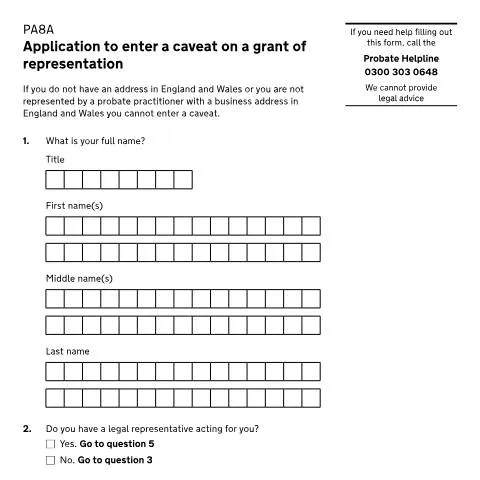
The death of a loved one often brings unexpected legal challenges, particularly when questions arise about who has the right to handle their estate. In England and Wales, when someone believes a grant of probate or letters of administration should not be issued to a particular person, they can halt the process entirely through a legal mechanism known as a caveat. Form PA8A serves as the official gateway to this protective measure, allowing concerned parties to effectively press pause on estate administration until their objections can be properly considered.
A caveat represents one of the most powerful tools available in probate disputes, creating an immediate barrier that prevents any grant of representation from being issued for a period of six months. This breathing space proves invaluable when families disagree about who should manage an estate, when the validity of a will comes under scrutiny, or when previously unknown relatives surface with legitimate claims.
The Strategic Landscape of Probate Intervention
Form PA8A operates within a carefully structured legal framework that balances competing interests. Unlike many court applications that require extensive documentation and legal argument upfront, entering a caveat demands relatively modest information but creates significant consequences. The person entering the caveat becomes known as the caveator, whilst the individual seeking to obtain probate becomes the caveated person.
The process deliberately favours swift action over detailed justification at the initial stage. HM Courts & Tribunals Service requires only basic identifying information about the deceased, the caveator's details, and a nominal fee of £3.00. This low barrier reflects the policy that legitimate concerns about estate administration should be heard before grants are issued, rather than requiring expensive legal challenges afterwards.
However, the apparent simplicity masks important strategic considerations. Once a caveat is entered, the caveated person can serve a warning requiring the caveator to justify their position within eight days or see the caveat automatically lapse. This creates a tactical dynamic where timing, preparation, and legal readiness become crucial factors in successful probate disputes.
Eligibility Criteria and Jurisdictional Requirements
Not everyone can enter a caveat, and Form PA8A includes specific eligibility requirements that reflect both practical and legal considerations. The most fundamental restriction requires that caveators must have either a personal address in England and Wales, or representation by a probate practitioner with a business address within this jurisdiction.
This geographical limitation serves multiple purposes within the probate system. It ensures that caveators remain within the reach of the English and Welsh courts should disputes escalate, and provides practical assurance that they can respond promptly to legal correspondence. The requirement extends to legal representatives, who must maintain an address for service within the jurisdiction and confirm their willingness to accept service by email.
| Caveator Status | Address Requirement | Additional Conditions |
|---|---|---|
| Personal applicant | Must have address in England/Wales | Must provide direct contact details |
| Represented applicant | Representative must have business address in England/Wales | Representative must accept service by email |
| Overseas resident | Cannot enter caveat without qualifying representative | Must use probate practitioner with local presence |
Beyond geographical requirements, caveators must demonstrate sufficient interest in the estate to justify their intervention. Whilst Form PA8A doesn't require detailed explanation of grounds at the application stage, the underlying legal principle demands that caveators possess legitimate concerns about the proposed grant. Common qualifying interests include potential beneficiaries under an earlier will, family members disputing the validity of testamentary documents, or creditors with substantial claims against the estate.
Navigating the Application Components
Form PA8A follows a logical progression that reflects the court's information requirements whilst minimising bureaucratic burden. The initial sections focus on establishing the caveator's identity and contact arrangements, with particular attention to whether legal representation is involved.
The distinction between self-represented applicants and those using legal representatives creates different communication pathways throughout the process. Self-represented caveators provide their direct email address for court correspondence, whilst represented applicants channel all communication through their legal representatives. This bifurcation reflects the court's recognition that probate disputes often involve complex legal issues requiring professional guidance.
Section 6 onwards addresses the deceased's details, requiring precise matching with information from the death certificate. This verification serves as a crucial safeguard against administrative errors and ensures that caveats attach to the correct estate. The form demands the deceased's full name exactly as recorded on official documentation, their date of death matching certificate records, and their last known address.
The provision for alternative names acknowledges the reality that individuals often use different variations of their names throughout their lives. Business names, maiden names, shortened versions, or cultural naming practices may all require recording to ensure comprehensive coverage. The "don't know" option recognises that caveators may lack complete information about the deceased's naming history whilst still possessing legitimate grounds for intervention.
Financial Obligations and Fee Structure
The £3.00 application fee represents one of the lowest charges within the court system, reflecting policy decisions that encourage legitimate challenges to questionable probate applications. This nominal amount ensures that financial constraints don't prevent valid interventions whilst maintaining some barrier against frivolous applications.
However, the modest fee can prove misleading about the overall costs of probate disputes. Whilst entering a caveat costs little, defending it against a warning, or pursuing substantive challenges through the court system, can involve significant legal expenses. Caveators should consider this initial fee as merely the entry point to potentially complex and costly litigation.
The Help with Fees scheme extends to probate applications, providing remission for those on low incomes or receiving qualifying benefits. Form EX160 allows applicants to demonstrate financial hardship, though the minimal caveat fee means relatively few applicants require this assistance. The online Help with Fees system offers quicker processing than paper applications, generating reference numbers that can be entered directly on Form PA8A.
Payment methods reflect modern court administration whilst accommodating different user preferences. Probate practitioners commonly use fee account facilities (PBA numbers) that allow streamlined payment processing for regular court users. Personal applicants typically pay by cheque or postal order, though in-person payment remains available at court counters for those preferring face-to-face transactions.
Submission Pathways and Processing Procedures
Form PA8A offers different submission routes depending on applicant status and payment method, reflecting the court service's adaptation to varied user needs. The distinction between probate practitioners and personal applicants creates separate processing streams designed to optimise efficiency whilst maintaining appropriate oversight.
Probate practitioners paying via fee accounts can submit applications electronically to [email protected], enabling rapid processing and immediate confirmation. This digital pathway recognises that legal professionals often operate under tight deadlines in contentious probate matters, where delays in entering caveats can prove strategically disadvantageous.
Personal applicants and practitioners paying by traditional methods must submit applications by post to Leeds District Probate Registry. This centralised processing ensures consistent handling whilst providing a clear postal address that applicants can rely upon. The requirement for physical submission when cheque payments are involved reflects banking security requirements and audit trail maintenance.
Upon successful submission, HM Courts & Tribunals Service sends notification confirming caveat entry. This confirmation carries significant legal weight, as it establishes the precise date and time when the caveat became effective. The timing can prove crucial if multiple parties attempt to enter caveats simultaneously, or if probate applications were submitted before the caveat but not yet processed.
The Broader Probate Dispute Ecosystem
Form PA8A operates within a sophisticated framework of probate procedures designed to balance efficiency with fairness. The caveat system represents just one component of a broader dispute resolution mechanism that includes warnings, appearances, and substantive court proceedings.
Once entered, a caveat remains in force for six months unless withdrawn, successfully challenged, or allowed to lapse. During this period, no grant of probate or letters of administration can be issued for the relevant estate, effectively freezing the administration process. This creates powerful leverage for caveators whilst imposing corresponding pressure to resolve disputes promptly.
The warning procedure allows caveated persons to challenge caveats by serving formal notice requiring justification. Caveators then have eight days to enter an appearance explaining their grounds, or see their caveat automatically removed. This mechanism prevents indefinite blocking of legitimate probate applications whilst ensuring that substantial concerns receive proper consideration.
Successful appearances trigger more complex procedures where parties may need to pursue substantive court applications to resolve their disputes. These might include challenges to will validity, claims for reasonable financial provision, or disputes about the appointment of personal representatives. Form PA8A thus serves as a gateway to potentially extensive litigation, making initial strategic decisions particularly important.
Compliance Considerations and Regulatory Framework
The caveat system operates under strict regulatory oversight designed to prevent abuse whilst facilitating legitimate challenges. The Data Protection Act 2018 and UK GDPR govern how personal information provided on Form PA8A is processed, stored, and shared within the court system.
Caveators should understand that their details become part of court records that may be accessed by other parties to the proceedings. The deceased's personal representatives, potential beneficiaries, and other interested parties can typically obtain information about who has entered caveats and their contact details. This transparency serves important procedural functions but may have privacy implications for caveators.
The optional equality and diversity questionnaire (Form EQ10) reflects the court service's commitment to monitoring fair treatment across different demographic groups. Whilst completion remains voluntary and responses don't affect case outcomes, the data helps identify potential barriers to court access and informs policy development.
Professional obligations apply to probate practitioners using Form PA8A on behalf of clients. Solicitors and other legal professionals must ensure they possess proper authority to enter caveats, maintain client confidentiality whilst complying with court requirements, and provide competent representation throughout subsequent proceedings. The Solicitors Regulation Authority and other professional bodies maintain oversight of standards in probate practice.
The integration of caveat procedures with broader estate administration reflects centuries of legal development aimed at balancing competing interests. Executors and administrators gain clear authority to act on behalf of estates, whilst potential challengers retain meaningful opportunities to raise legitimate concerns. Form PA8A serves as a critical mechanism within this framework, providing accessible entry to the dispute resolution system whilst maintaining appropriate safeguards against abuse.
Understanding the Legal Grounds for Caveat Applications
When submitting Form PA8A, you must specify clear legal grounds for opposing the grant of probate. The Probate Registry requires substantial evidence rather than mere suspicions or family disagreements. Understanding these grounds thoroughly can determine whether your application succeeds or faces immediate rejection.
Validity challenges to the will itself form the most common basis for caveat applications. You might question whether the deceased had testamentary capacity when making the will, particularly relevant if they suffered from dementia, mental illness, or were under medication affecting their judgment. Medical records, witness statements from healthcare professionals, and evidence of the deceased's mental state around the time of will-making become crucial supporting documents.
Undue influence represents another significant ground, where someone coerced or manipulated the deceased into changing their will. This often involves care workers, new partners, or family members who isolated the deceased from others. Documentary evidence might include sudden changes in banking arrangements, witness accounts of controlling behaviour, or medical records showing vulnerability to manipulation.
Procedural defects in will execution can invalidate even well-intentioned documents. Under the Wills Act 1837, a valid will requires the testator's signature in the presence of two independent witnesses, who must then sign simultaneously. Common defects include witnesses being beneficiaries (which invalidates their gifts), incomplete witnessing procedures, or alterations made without proper re-execution.
Fraud allegations require particularly robust evidence. This might involve forged signatures, backdated documents, or someone creating a false will. You'll need handwriting analysis, testimony from people familiar with the deceased's genuine signature, or evidence showing the deceased was elsewhere when supposedly signing the document.
Intestacy claims arise when you believe no valid will exists, despite someone presenting one for probate. Perhaps the deceased destroyed their will, or the document presented isn't their final version. You might have evidence of a later will that hasn't surfaced, or proof that the deceased revoked their will through marriage or divorce.
Family provision claims under the Inheritance (Provision for Family and Dependants) Act 1975 don't strictly require a caveat, but you might use PA8A strategically if you believe the will fails to make reasonable provision for dependants. This applies particularly to spouses, children, or people financially dependent on the deceased who receive inadequate inheritance.
When completing section 4 of Form PA8A, avoid vague statements like "the will seems unfair" or "family disputes exist." Instead, specify: "I have reason to believe the deceased lacked testamentary capacity due to advanced dementia, evidenced by medical records from [specific period]" or "The will shows signs of undue influence by [named person], supported by witness testimony of controlling behaviour."
Remember that entering a caveat doesn't guarantee success in subsequent probate proceedings. The Probate Registry treats caveats as interim measures, requiring you to substantiate your concerns through proper legal channels if the applicant serves you with a warning notice.
Navigating the Warning Notice Process and Response Requirements
Once you've successfully lodged your caveat using Form PA8A, the probate process doesn't simply halt indefinitely. The original probate applicant can serve you with a warning notice, triggering a formal 14-day response period that determines whether your caveat remains effective or gets removed.
Understanding warning notices starts with recognising their purpose: they force caveators to either substantiate their objections or withdraw. The probate applicant obtains a warning notice from the same Probate Registry where you filed your caveat, then serves it on you personally or through your solicitor if you've appointed one.
The warning notice contains specific information including the deceased's full name, date of death, your caveat reference number, and crucially, details of the will or proposed grant being challenged. Check these details carefully against your records, as discrepancies might indicate separate estates or administrative errors.
Your response options fall into three categories, each with distinct consequences. First, you can file an appearance, formally entering the probate dispute and requiring court proceedings to resolve the matter. This commits you to potentially expensive litigation but maintains your right to challenge the grant.
Second, you might negotiate directly with the probate applicant, perhaps reaching agreement on will interpretation, estate distribution, or other concerns that prompted your caveat. Many family disputes resolve through mediation or direct discussion, avoiding court costs and preserving relationships.
Third, you can simply allow the warning notice period to expire without response, automatically removing your caveat and permitting probate to proceed. Choose this option if you've discovered your concerns were unfounded, lack sufficient evidence, or decide the potential costs outweigh likely benefits.
Fill in your form directly online
No printing: type your details into the boxes of the official form, tick, then download the PDF ready to send.
- 1Type into the form boxes
- 2Tick in one click
- 3Save and download the PDF
Filing an appearance requires completing Form PA8B within 14 days of receiving the warning notice. This form, available from the same Probate Registry, demands more detailed information than your original caveat. You must specify whether you oppose the grant entirely or merely seek to ensure proper estate administration.
Include your full grounds for opposition, supporting evidence summaries, and indicate whether you're claiming interest in the estate yourself. The Registry charges a fee for filing appearances, currently subject to periodic review, so check current rates on the gov.uk website.
Consider the practical implications of filing an appearance carefully. Once entered, you become a party to probate proceedings, potentially liable for legal costs if your challenge fails. Courts can order unsuccessful challengers to pay the estate's legal fees, which might exceed the disputed inheritance's value.
If you're unsure about responding to a warning notice, seek legal advice promptly. The 14-day deadline is strict, with limited exceptions for extensions. Missing this deadline removes your caveat automatically, potentially ending your opportunity to challenge the grant unless you can demonstrate exceptional circumstances.
Strategic considerations include evaluating your evidence strength, potential legal costs, family relationship impacts, and the disputed estate's value. Sometimes, entering a caveat serves its purpose by prompting discussions that resolve underlying concerns without formal court proceedings.
Document all communications during the warning notice period carefully. Keep records of any negotiations, settlement discussions, or evidence gathering, as these might prove relevant in subsequent proceedings or appeals.
Costs, Timescales and Practical Considerations for Postal Applications
Submitting Form PA8A by post involves specific financial commitments, timing considerations, and practical challenges that differ significantly from in-person applications. Understanding these factors helps you plan effectively and avoid common pitfalls that could delay or invalidate your caveat application.
Current fee structures for caveat applications require payment alongside your Form PA8A submission. The standard caveat fee applies regardless of your submission method, but postal applications can't benefit from immediate fee queries or payment problem resolution available at registry counters. Always check the latest fee schedule on gov.uk before posting, as rates change periodically following government reviews.
Payment methods for postal applications typically include cheques made payable to "HM Courts and Tribunals Service" or postal orders. Avoid sending cash through the post, as this creates security risks and provides no payment trail if documents go missing. Include your full name and the deceased's name on payment instruments to help registry staff match payments with applications if processing delays occur.
Processing timescales for postal Form PA8A submissions generally range from 10-15 working days, depending on registry workload and application complexity. This timeframe covers initial processing, fee verification, and caveat registration in the probate system. However, you won't receive immediate confirmation like in-person applicants, potentially creating uncertainty about whether your caveat is effective.
Factor in postal delivery times when calculating critical deadlines. If you're aware of imminent probate applications or time-sensitive circumstances, postal submission might prove too slow. Royal Mail's standard delivery typically takes 1-2 working days, but delays can occur, particularly during peak periods or adverse weather conditions.
Document preparation requirements become more critical for postal applications since you can't rectify errors immediately. Ensure your Form PA8A is completed in black ink, with clear, legible handwriting throughout. Photocopies or scanned versions aren't acceptable; you must submit the original form obtained from the Probate Registry or downloaded from gov.uk.
Include a covering letter with your postal application, summarising your caveat's purpose and providing contact information for any queries. This helps registry staff process your application efficiently and contact you if clarification is needed. Specify your preferred communication method, whether telephone, email, or post.
Record-keeping for postal submissions requires more diligence than in-person applications. Use recorded delivery or special delivery services to obtain proof of posting and delivery confirmation. Keep photocopies of all documents submitted, including your completed Form PA8A, supporting documents, and payment instruments.
Note your posting date, tracking reference numbers, and expected delivery dates in your records. This information proves invaluable if disputes arise about submission timing or if documents go missing during postal transit.
Common postal application problems include incomplete forms being returned for correction, causing significant delays. Unlike in-person applications where staff can highlight errors immediately, postal submissions undergo complete review before any feedback. Returned applications might miss critical deadlines, particularly if probate proceedings advance during correction periods.
Address verification presents another frequent issue. Ensure your correspondence address matches official records and remains current throughout the caveat period. Registry communications about warning notices or other developments will use the address provided on Form PA8A, so any changes require immediate notification.
Following up on postal applications involves contacting the relevant Probate Registry if you haven't received acknowledgment within expected timeframes. Keep your tracking information readily available when making enquiries, as this helps registry staff locate your submission in their processing queue.
If urgent circumstances develop after posting your Form PA8A, contact the registry immediately by telephone. Staff might be able to expedite processing or provide interim advice while your postal application proceeds through normal channels.
Consider whether postal submission suits your specific circumstances. If you live far from the nearest Probate Registry office, postal application might be your only practical option. However, if complex legal issues surround your caveat or you need immediate confirmation of its effectiveness, in-person submission or professional legal representation might prove more appropriate.
Plan for potential postal strikes, holiday periods, or other service disruptions that could affect delivery times. During such periods, consider alternative submission methods or factor additional time into your planning to ensure critical deadlines aren't missed due to postal delays beyond your control.