Understanding the Appeal Process for Motorcycle Single Vehicle Approval (MSVA) Decisions in the UK
The Driver and Vehicle Standards Agency (DVSA) oversees the Motorcycle Single Vehicle Approval (MSVA) scheme, which ensures that custom-built or modified motorcycles meet the required safety and environmental standards before they are permitted on UK roads. When an application for a Minister’s Approval Certificate is refused, applicants have the right to challenge this decision through a formal appeal process. This guide provides an overview of the key steps, requirements, and considerations involved in appealing an MSVA decision.
Scope and Purpose of the Appeal Procedure
The appeal process is designed to offer applicants a fair opportunity to contest a refusal issued under the Road Traffic Act 1988, Section 60. If your motorcycle application is denied, you can submit a notice of appeal to the Secretary of State, seeking a reconsideration of the decision. This process is crucial for individuals who believe their vehicle complies with the necessary standards or who have undertaken modifications they wish to have reviewed.
Who Can Submit an Appeal?
This appeal process is applicable to any applicant who has received a Notification of Refusal (MSVA 30) from the DVSA. Typically, this includes motorcycle builders, owners, or companies involved in vehicle modifications who have undergone the MSVA testing and received a negative outcome.
Key Steps in the Appeal Process
1. Timely Submission
Appeals must be lodged within 14 days from the date the Notification of Refusal was issued. Delays beyond this period may result in the dismissal of the appeal, so prompt action is essential.
2. Completion of the Notice of Appeal
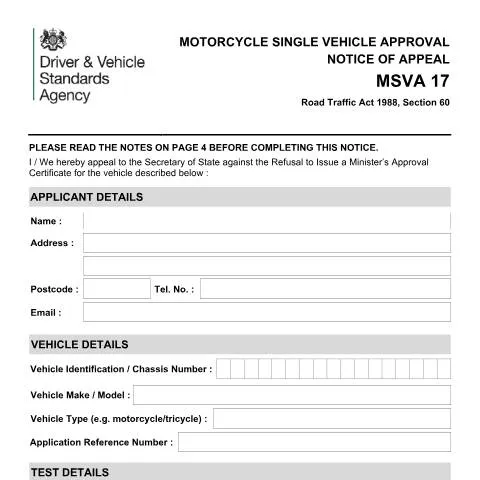
The official form, MSVA 17, must be fully completed. This includes providing applicant details, vehicle information, test location, and the specific reasons for the appeal. If necessary, additional sheets can be used to elaborate on your grounds for contesting the decision.
3. Explanation of Grounds for Appeal
You should clearly state why you believe the refusal was unwarranted. This might involve referencing particular aspects of the vehicle’s modifications, compliance with standards, or procedural concerns. Attaching a copy of the original Notification of Refusal can help clarify your points.
4. Submission of Supporting Evidence
If you have made any modifications or rectifications since the initial refusal, these should be listed and documented. Evidence such as photographs, technical reports, or certificates may strengthen your case.
Submitting Your Appeal
The completed MSVA 17 form must be sent via email to [email protected]. Postal submissions are also accepted, accompanied by payment of the applicable fee, which can be made by cheque, postal order, credit/debit card, or through a pre-funded account if you are a regular user of the scheme. Payment details and options are outlined on the official GOV.UK pages.
Re-Examination and Further Considerations
Following receipt of your appeal, the DVSA may decide to re-examine the vehicle, potentially at the original test location. This step helps ensure that the vehicle’s condition and modifications are thoroughly evaluated before a final decision is made.
Legal and Data Protection Aspects
All personal data collected during the appeal process is handled in accordance with the Data Protection Act 2018 and UK GDPR. The DVSA may share information if legally required, such as in criminal investigations or fraud prevention efforts. Applicants must declare that the information provided is accurate and sign the appeal form accordingly.
Additional Support and Resources
For further guidance or clarification, applicants can contact the DVSA Vehicle Approval section or consult the Vehicle Approval pages on GOV.UK. The DVSA Customer Service Centre can also provide assistance over the phone.
Conclusion
Appealing a Motorcycle Single Vehicle Approval decision is a formal process designed to ensure fairness and transparency. By understanding the procedures, deadlines, and documentation required, applicants can effectively challenge decisions they believe are unjustified, thereby ensuring their vehicle’s compliance with UK road safety standards.