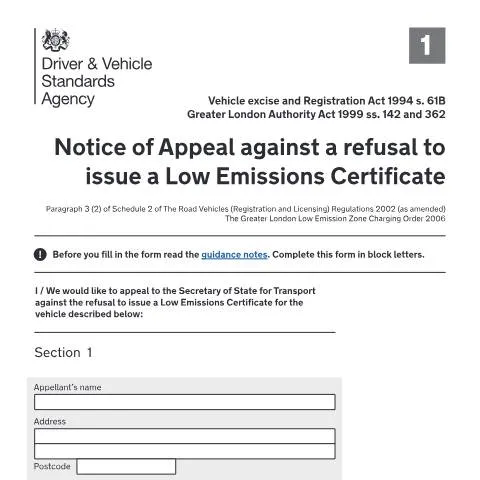
Understanding the Appeal Process for a Low Emissions Certificate (LEC) Test Decision
The Driver and Vehicle Standards Agency (DVSA) provides a formal procedure for vehicle owners who wish to challenge a refusal to issue a Low Emissions Certificate (LEC). This certificate is a key requirement for vehicles operating within certain low emission zones, such as the Greater London Low Emission Zone. If your vehicle has been refused an LEC following a test, understanding the appeal process is essential to ensure your rights are protected and to facilitate any necessary corrective actions.
Scope and Purpose of the Appeal
This official notice is designed for vehicle owners and operators who have received a notification of refusal from a DVSA-approved Goods Vehicle Testing Station. The refusal typically occurs after a vehicle fails an emissions test, which is required for compliance with environmental regulations. The appeal process allows the vehicle owner to formally request a review of the decision by the Secretary of State for Transport, providing an opportunity to contest the refusal and potentially obtain the certificate necessary for legal operation within designated low emission zones.
Key Elements of the Appeal Notice
Applicant Details and Vehicle Information
The appeal form requires comprehensive personal and vehicle information, including the appellant’s name, address, and contact details, as well as specifics about the vehicle such as make, model, registration number, chassis number or Vehicle Identification Number (VIN). Accurate completion of these details ensures the DVSA can efficiently process the appeal and identify the vehicle in question.
Details of the Refusal and Testing Station
The form asks for information about the testing station that issued the refusal notification, including its name and serial number. It also requests the date of the refusal and the notification number. Clarifying whether the test was conducted as part of a routine renewal or to clear a Rectification Notice helps contextualize the appeal.
Scheduling and Vehicle Changes
Applicants are asked to specify convenient days and times for vehicle submission, facilitating the scheduling of the appeal testing. Additionally, if any modifications have been made to the vehicle since the refusal notification, these must be detailed, as they could influence the outcome of the appeal.
Grounds for Appeal and Supporting Information
In the section dedicated to reasons for the appeal, the vehicle owner should clearly outline their case, including any technical, procedural, or factual arguments. This may involve pointing out discrepancies in testing procedures, vehicle modifications, or other relevant factors that could impact emissions performance. Providing additional information that may support the appeal is encouraged to strengthen the case.
Declaration and Data Protection
By signing the appeal form, the applicant affirms that all statements are true to the best of their knowledge. The process also emphasizes compliance with data protection legislation, notably the Data Protection Act 2018 and UK GDPR. Personal data collected during the appeal process will be used solely for statutory functions related to the DVSA and will not be shared with other organisations unless legally required.
Implications of the Appeal Process
Successfully appealing a refusal can result in the issuance of a Low Emissions Certificate, enabling the vehicle to operate within low emission zones. The process provides a vital avenue for vehicle owners to challenge decisions they believe are unjust or based on incorrect information. It is important to adhere to the specified procedures and deadlines, notably the 31 January deadline for Self Assessment tax returns, which underscores the importance of timely action in administrative procedures.
Additional Considerations
Applicants should be aware that the appeal process involves scheduling vehicle inspections at convenient times and providing detailed reasons for the challenge. If the appeal is successful, the DVSA will issue the LEC, allowing compliance with environmental regulations and avoiding potential penalties associated with non-compliance.
For further assistance, vehicle owners can contact the DVSA helpline at 0300 123 9000. The process is designed to ensure transparency, fairness, and compliance with legal standards, ultimately supporting efforts to reduce vehicle emissions and improve air quality.