Navigating the Appeal Application Process for Independent Schools
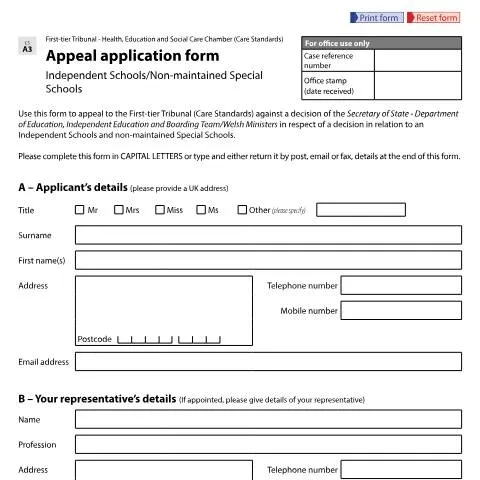
When faced with a significant decision regarding an independent school or a non-maintained special school, the ability to appeal can be crucial. The Appeal application in relation to independent schools and non-maintained special schools: Form CS A3 is designed for individuals seeking to challenge decisions made by the Secretary of State for Education through the HM Courts & Tribunals Service. This article provides an in-depth overview of the form's purpose, its structure, and the procedural journey involved in lodging an appeal.
Understanding the Context: When and Why to Use Form CS A3
The need for an appeal arises under various circumstances. Decisions regarding refusals to approve material changes, removals from the school register, or orders requiring a school to take specific actions can prompt an appeal. Each situation has its nuances and affects both the institution and its students. For example, a refusal to approve a material change could hinder a school’s expansion plans, impacting its ability to serve the community.
- Material Change Refusal: If a school proposes significant alterations, such as alterations in educational curriculum or student capacity, and this is denied, Form CS A3 is essential.
- Removal from Register: Schools facing removal from the official register risk losing their operational legitimacy, making this appeal critical for their future.
- Orders for Specific Actions: An order that mandates a school to take certain actions could drastically affect its operations, necessitating a challenge via the appeal process.
Dissecting Form CS A3: A Step-by-Step Analysis
The CS A3 form comprises several sections, each requiring careful attention to detail. Here's a breakdown of the sections:
A – Applicant’s Details
This section collects personal information of the applicant, including:
- Title
- Surname and First Names
- Address and postcode
- Contact numbers and email address
Accuracy is paramount here. Any mistakes in this section could lead to delays in processing or communication issues. Ensure that you use capital letters or type to avoid legibility problems.
B – Representative’s Details
If you have appointed a representative, their information must be provided. Notably, only one person can receive correspondence regarding the case, typically the applicant unless stated otherwise. Be sure to clarify who should receive updates to prevent confusion.
C – Regulated Activity Under Appeal
This critical section asks the applicant to specify the nature of the decision being challenged. It’s vital to select the appropriate option, as this influences the tribunal's understanding of the case:
- Refusal to approve a material change
- Decision to remove from the register
- Order requiring specified action
Failure to correctly identify the issue could undermine the appeal. Moreover, remember to attach a copy of the decision under appeal, as its absence can be detrimental to your case.
The Importance of Timeliness: Ensuring Appeals Are Filed On Time
In the context of the CS A3 form, timing is crucial. The section on whether the appeal is lodged within time limits is essential. If you suspect your appeal may be late, you must apply for an extension, providing justification for the delay. This underscores the importance of understanding the deadlines set out by the Tribunal.
Appeals that are not filed timely could be dismissed, regardless of their merit. Therefore, it’s advisable to refer to the guidance provided by the Care Standards Office or consult legal advice if there is uncertainty regarding timelines.
Understanding Appeal Outcomes
In the CS A3 form, applicants indicate the result they seek from the appeal. This should be articulated clearly in Section G. A vague request can lead to confusion; therefore, the desired outcome must be stated clearly. Factors to consider when drafting this section include:
- The specific changes you wish to see
- A rationale for why the tribunal should favour your request
The Journey Through the Tribunal Process
The appeal process doesn't end with the submission of Form CS A3. The ensuing steps involve several critical hearings and communication points with the tribunal:
Telephone Case Management Hearing (TCMH)
Once the application is registered, a preliminary directions hearing will be scheduled via telephone. This TCMH serves several purposes:
- Identifying and confirming witnesses
- Discussing the length of the hearing
- Drafting initial directions between parties
It is crucial for applicants to prepare adequately for this call. Any requests for witness summons or specific considerations, such as confidentiality, should be raised during this hearing.
Main Hearing
The main hearing is typically public unless directed otherwise. This hearing is where the substantive issues of the appeal are debated. Applicants need to present their case effectively, with the possibility of cross-examination of witnesses as part of the process.
- Preparation: Thorough preparation of evidence and arguments is essential.
- Disclosure Restrictions: If there’s a need to limit disclosure of certain information, applicants should be proactive in requesting such measures from the judge.
Submitting Your Appeal: Channels and Methods
Form CS A3 can be submitted through various channels, each with distinct advantages:
- By Post: This traditional method allows for a hard copy submission but can lead to longer processing times.
- Email: A faster alternative that can expedite the acknowledgment of your appeal.
- Fax: Useful for urgent matters, though it is becoming less common in modern administrative practice.
Regardless of the method chosen, ensure that all documentation is complete and included to avoid complications in processing your appeal.
Post-Submission: What Happens Next?
After submitting Form CS A3, the tribunal will communicate with the applicant regarding the next steps. It’s important to monitor any incoming correspondence closely. Applicants should be prepared to engage in follow-up actions as required by the tribunal.
What to Do If the Appeal Is Refused
Receiving a refusal can be disheartening. However, there are several options available:
- Seek Legal Review: If you believe that the decision was flawed, you may seek a legal review.
- Further Appeals: Depending on the grounds for refusal, you may have the option to appeal to a higher tribunal.
It’s advisable to consult with legal professionals who specialize in educational law to navigate these challenging waters effectively.
Final Thoughts: The Impact of the CS A3 Form on Educational Institutions
The Form CS A3 serves as a vital tool in safeguarding the rights of independent schools and non-maintained special schools. The implications of an appeal extend beyond the immediate decision, influencing the broader educational landscape. Understanding the complexities involved—from precise completion of the form to navigating the tribunal process—can empower applicants to advocate effectively for their educational institutions.
Engaging with this process requires diligence, attention to detail, and a robust understanding of the underlying legal framework. Thus, potential appellants should equip themselves with the necessary resources and possibly seek legal counsel to enhance their chances of success.
Understanding the Grounds for Appeal
When making an appeal application concerning an independent school or a non-maintained special school, it's crucial to clearly articulate the grounds for your appeal. The grounds can generally fall into several categories, including but not limited to:
Admission Decisions: If a child has been denied admission to a school, the appeal should detail reasons why the admission authority's decision was not justified. This could include evidence of the child’s academic achievements, social integration, or particular needs that the school caters to.
Special Educational Needs (SEN): For appeals related to non-maintained special schools, the emphasis is often on the school's ability to meet the specific needs of the child. Documentation from educational psychologists, therapists, or previous educational institutions can strengthen your appeal.
Procedural Errors: If an admission authority has not followed the correct procedures in handling an application, this could be a valid ground for appeal. This could involve improper communication regarding admissions criteria or failure to provide written reasons for a decision.
Discrimination Issues: The appeal can also be based on potential discrimination under the Equality Act 2010. If you believe the decision was influenced by factors such as disability, race, or gender, this should be clearly outlined in your appeal.
Factual Mistakes: Sometimes decisions are made based on incorrect information. If you can provide evidence showing that the admission authority made factual errors in assessing the application, this should form a critical part of your appeal.
It’s essential to back your claims with supporting documentation. This could include letters from teachers, evidence of past school performance, and any relevant assessments. Properly detailing these grounds can significantly improve the chances of your appeal being successful.
The Role of Documentation and Evidence
A successful appeal against an independent school or non-maintained special school decision is often reliant on the strength of your documentation and evidence. The appeal panel will often assess the situation based not only on your explanation but also on the substantiating materials you provide. Here’s how to effectively prepare your documentation:
Gather Relevant Records: Collect all essential documents related to your child’s education. This could include previous school reports, Individual Education Plans (IEPs), and any diagnoses from qualified professionals that outline your child’s educational needs.
Personal Statements: Consider including a personal statement that outlines your child’s unique situation. This is your chance to tell your story—why you believe the school is the right fit and how it can benefit your child. Make sure to keep it factual but also personal, reflecting your child’s personality and aspirations.
Fill in your form directly online
No printing: type your details into the boxes of the official form, tick, then download the PDF ready to send.
- 1Type into the form boxes
- 2Tick in one click
- 3Save and download the PDF
Professional Assessments: If your child has undergone any educational or psychological assessments, include these documents. Assessments from registered professionals can provide an objective view of your child’s needs and are often critical in cases regarding special educational needs.
Letters of Support: Collect support letters from prior teachers, educational specialists, or other professionals who are familiar with your child’s strengths and needs. These letters can substantiate your appeal by providing third-party validation of your claims.
Submission Format: Ensure your documents are clearly organized and labelled. Use tabs or a contents page if necessary, so that the appeal panel can easily navigate your submission. Each piece of evidence should directly correlate to the points made in your appeal letter.
Deadlines: Pay careful attention to any deadlines set by the school or local authority for submitting additional documentation. Missing deadlines could jeopardize the appeal process, so it's advisable to submit your documentation well in advance.
By taking the time to collect and present thorough documentation, you not only make a strong case for your appeal but also demonstrate your commitment to your child’s education.
Post-Appeal Procedures and Next Steps
Once your appeal has been submitted, understanding the subsequent steps and processes can help alleviate anxiety and set realistic expectations.
Acknowledgment of Appeal: After your appeal is lodged, you should receive an acknowledgment from the relevant authority. This acknowledgment will outline the next steps and timelines involved in the appeal process. Make sure to check these details carefully.
Panel Hearing: The appeal will typically lead to a hearing before an independent panel. You will be informed about the date and venue of the hearing. During this time, it is advisable to prepare your presentation. This includes rehearsing the main points you wish to convey verbally and anticipating questions the panel may ask.
Involvement of Supporters: You may bring a supporter to the hearing—a friend, relative, or professional advisor who can help present your case. Familiarizing your supporter with your arguments and evidence ahead of time can enhance the overall presentation.
Decision Making: Following the hearing, the panel will deliberate and make a decision based on the evidence presented. The decision must be communicated to you in writing within a set timeframe, usually a few days to a couple of weeks.
Accepting the Decision: If the appeal is successful, the school will be instructed to offer a place to your child. In cases where the appeal is unsuccessful, the decision letter should provide reasons for the rejection. Understand the rationale behind the decision, as this may inform any further action you might choose to take.
Further Action: If you believe that the appeal panel has not followed proper procedures or has made an unreasonable decision, you may have the option to take the case to judicial review. However, this is a complex legal process often requiring expert legal advice.
Feedback and Future Applications: Regardless of the outcome, reflect on the appeal process itself. Gather feedback, and if necessary, consider alternative institutions or reapplying in the future. Understanding what worked and what didn’t can significantly inform your approach moving forward.
Navigating the appeal process concerning independent schools and non-maintained special schools can be daunting, but being well-prepared and informed can empower you to advocate effectively for your child's educational needs.