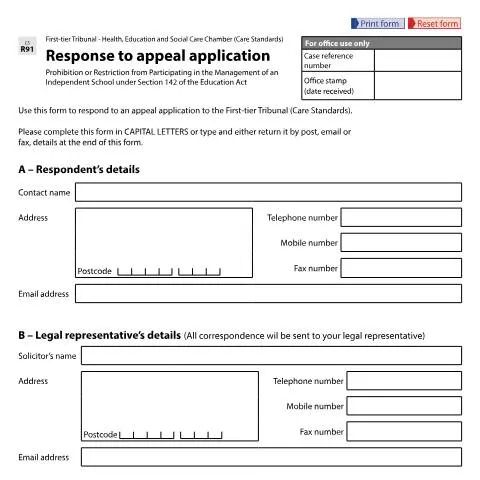
Understanding Form CS R91: A Critical Document in Independent School Management Appeals
Navigating the educational landscape in the UK can be both rewarding and challenging. For those involved in the management of independent schools, the potential for prohibition or restriction can arise, necessitating the use of specific legal avenues like those outlined in Form CS R91. This document serves as a formal response to an appeal concerning such prohibitions, making it essential for various stakeholders to understand its implications, usage, and the procedural requirements that accompany it.
Who Needs to Engage with Form CS R91?
Understanding who must interact with Form CS R91 hinges on the context of an appeal. This includes individuals or organisations that have received a notice of a decision or order from the First-tier Tribunal—specifically those dealing with care standards in independent schools. Key participants often include:
- School Managers and Governors: Individuals directly involved in the governance and management of independent schools.
- Legal Representatives: Solicitors or legal advisors acting on behalf of the school or individual opposing the prohibition.
- The Education Authority: This body can contest the appeal and must respond appropriately to the tribunal.
Each respondent’s role can vary significantly based on the educational institution's structure and the nature of the appeal.
Identifying Unique Scenarios
Several conditions may affect who fills out this form:
- Individual Appeals: If a single individual is appealing a prohibition on their management role, they would be the one to fill out the form, citing personal reasons and mitigating circumstances.
- Group Appeals: In cases where multiple individuals are involved, a designated representative should compile and submit the form.
Identifying the precise nature of your involvement will streamline the process and ensure that all necessary perspectives are articulated in the response.
The Regulatory Framework Behind Form CS R91
Grasping the importance of Form CS R91 requires an understanding of the regulatory backdrop against which it functions. The form is grounded in Section 142 of the Education Act, which outlines the conditions under which individuals may be prohibited from participating in the management of independent schools. This regulation was established to safeguard educational standards and ensure that individuals managing schools are fit to do so.
The Evolution of Educational Governance
The regulatory landscape has evolved significantly over the years, responding to various challenges in educational management. The introduction of robust frameworks for independent schools reflects a commitment to uphold quality standards and protect students. Form CS R91 is a result of these ongoing reforms, aimed at providing a structured way to respond to appeals against management prohibitions.
For some, the implications of being prohibited from management roles can be profound, impacting not only careers but also the institutions they serve. Therefore, understanding this context is crucial for formulating an effective response using Form CS R91.
Deciphering the Sections of Form CS R91
Completing Form CS R91 involves various sections, each requiring careful attention to detail. Let’s break down the critical components:
A. Respondent’s Details
This section is straightforward but crucial. It asks for the respondent’s contact information, ensuring clear communication throughout the appeal process. It is vital to provide accurate details here to avoid any administrative complications.
- Contact Name: Ensure the name is spelled correctly.
- Address and Postcode: Double-check these details, as they will be used for notifications.
- Telephone and Email: List multiple methods of contact if possible.
B. Legal Representative’s Details
If a legal representative is involved, this section captures their contact information to facilitate correspondence. All further communication will be directed to them, so accuracy is paramount.
C. Urgent Decision and Memorandum of Understanding (MOU)
This part addresses situations requiring expedited handling. If the appeal falls under an MOU, respondents must note the relevant details accordingly. Understanding this can streamline the appeal timeline significantly.
D. Type of Hearing
Respondents must indicate whether they agree to have the matter decided on the papers without an oral hearing. This decision can affect the timeline and the nature of the response.
E. Reasons for Opposing the Appeal
Arguably the most critical section, this is where the respondent provides detailed reasons for opposing the appeal. This section requires a careful articulation of facts, circumstances, and any relevant documentation that supports the opposition. Be prepared to:
- State clear and concise reasons.
- Include any supplementary documents that bolster your response.
- Use additional sheets if necessary to expand upon your arguments.
F. Time Limits and Submission Procedures
Time is of the essence when responding to an appeal. Respondents have 20 working days from receipt of the appeal application to submit their response. Understanding these timelines is crucial to ensure compliance:
- Responses can be submitted via post, email, or fax.
- Sending copies to both the Tribunal and the Applicant’s representative simultaneously is necessary.
What to Do in Case of Challenges
When navigating the appeals process, respondents may encounter various challenges, including refusals, missing information, or mistakes in submission. Here’s how to tackle these situations effectively:
Responding to a Refusal
If the Tribunal refuses the appeal, it’s essential to understand the reasons behind this decision. The refusal may be based on procedural errors or insufficient evidence. Respondents should:
- Request a detailed explanation for the refusal.
- Assess whether there are grounds for reconsideration or further appeal.
- Consult with legal representatives to explore any alternative pathways for challenging the decision.
Handling Missing Information
In cases where documentation is incomplete, the Tribunal may request additional information. Respondents should be proactive by:
- Reviewing what is missing and gathering those documents promptly.
- Contacting the Tribunal directly for clarification on what specifically is needed.
Chronological Journey from Submission to Decision
The lifecycle of Form CS R91 begins when an individual receives a notice of appeal. Here’s a step-by-step outline of the process:
- Receipt of Appeal Notification: The journey begins with the notification from the Tribunal.
- Completion of Form CS R91: Fill out the form, ensuring clarity and comprehensive detail in your reasons for opposing the appeal.
- Submission: Send the completed form and any necessary documentation to the Tribunal and the appellant.
- Awaiting Response: The Tribunal will review submissions, which typically takes up to 30 weeks from registration.
- Tribunal Decision: The Tribunal will issue its final decision, which could uphold the prohibition, modify it, or overturn it.
Implications of the Decision
The outcome of the appeal can have significant consequences for all parties involved. If the prohibition is upheld, the impacted individual may need to seek alternative employment or consider legal avenues for further redress. Conversely, a successful appeal may restore an individual’s position in the school’s management, with implications for the institution's governance and operations.
Next Steps Post-Decision
Regardless of the outcome, understanding the next steps is crucial. Should the appeal be denied, individuals may consider:
- Consulting legal advice: If further legal action is warranted.
- Engaging with the school community: Open communication can help rebuild relationships post-decision.
Final Remarks on Navigating the Appeals Process
Engaging with Form CS R91 and the appeals process may feel daunting, but it is pivotal for those facing management prohibitions in independent schools. By equipping yourself with an understanding of the form, the procedural landscape, and the potential consequences, stakeholders can navigate this complex system with greater confidence and clarity.
Fill in your form directly online
No printing: type your details into the boxes of the official form, tick, then download the PDF ready to send.
- 1Type into the form boxes
- 2Tick in one click
- 3Save and download the PDF
Understanding the Appeal Application Process
When an individual faces prohibition or restriction from participating in the management of an independent school, it's imperative to understand the nuances of the appeal process. The application for an appeal using Form CS R91 is a structured procedure that ensures both the applicant's rights and the integrity of the educational system are upheld. This process is governed by strict guidelines set forth by the Department for Education (DfE) and the relevant regulatory bodies.
To initiate an appeal, the applicant must complete Form CS R91 meticulously, ensuring that all sections are filled out accurately and comprehensively. This includes providing personal details, the specifics of the prohibition or restriction, and any supporting evidence that may substantiate the appeal. It's essential to present clear arguments that demonstrate why the prohibition should be lifted or the restriction modified.
Moreover, applicants should pay close attention to deadlines outlined in the notification of the prohibition or restriction. Appeals must be lodged within the stipulated time frame, typically within 28 days of receiving the initial decision. Late submissions may result in the rejection of the appeal, regardless of its merits. Thus, precise adherence to timelines is paramount.
Substantial Grounds for Appeal
One of the pivotal aspects of the appeal process against prohibition or restriction from management roles in independent schools is establishing substantial grounds for the appeal. The Secretary of State may impose such restrictions based on various factors, including safeguarding concerns, misconduct, or failure to meet regulatory standards. Therefore, when preparing to submit Form CS R91, it’s crucial to meticulously analyze and address the grounds on which the original prohibition was based.
Applicants can bolster their appeal by gathering evidence that counters the claims made against them. This might include character references, evidence of professional development, or documentation that proves adherence to regulatory requirements. Additionally, demonstrating a commitment to uphold the standards expected of management personnel in independent schools can significantly strengthen the appeal.
It is also beneficial to highlight any mitigating circumstances that may have contributed to the situation. For example, if the prohibition stemmed from an isolated incident or misunderstandings, clarifying these points provides context and may persuade the reviewing body to reconsider the initial decision. Applicants should strive to provide a holistic view of their professional conduct and personal integrity during the appeal process.
The Role of Legal Representation in Appeals
While it is possible to navigate the appeal process independently, many applicants choose to seek legal representation to enhance their chances of a successful appeal. Legal professionals specializing in educational law can offer invaluable insights into the procedural nuances and can help applicants effectively articulate their case. They are equipped to handle the intricacies of Form CS R91 and can ensure that all legal requirements are met.
Having legal representation can also provide a buffer during what can be an emotionally charged process. These professionals can manage communications with the DfE and other regulatory bodies, allowing the applicant to focus on gathering evidence and preparing their case without the added stress of direct negotiations.
Furthermore, experienced legal representatives are adept at identifying potential weaknesses in the case and advising on the best strategies for overcoming them. They can assist in drafting responses to any additional queries raised by the reviewing authorities and help in preparing for any hearings or interviews that may occur as part of the appeal process.
Ultimately, the decision to engage legal representation should be weighed against the complexity of the case, the applicant's confidence in navigating the appeal process, and the potential implications of the prohibition or restriction on their future career in education.