When Regulatory Decisions Turn Your Childcare World Upside Down
The phone rings at 4pm on a Tuesday. Ofsted's decision letter has arrived, and it's not the news you were hoping for. Your application to register as a childminder has been refused, or perhaps worse – your existing registration has been cancelled with immediate effect. The carefully built foundations of your childcare business, or your plans to start one, suddenly feel like they're crumbling beneath your feet.
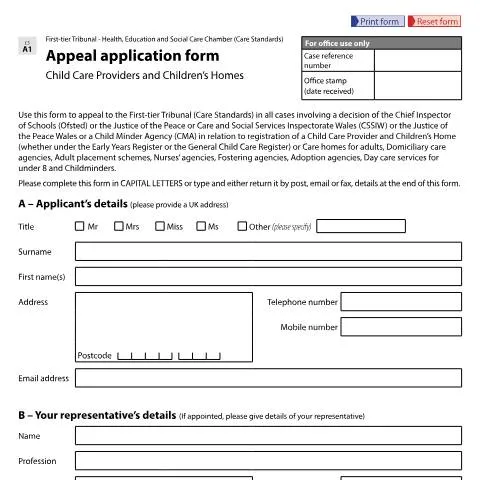
This is precisely when Form CS A1 becomes your lifeline. Far from being just another piece of bureaucracy, this appeal application form represents your statutory right to challenge decisions made by regulatory bodies including Ofsted, Care and Social Services Inspectorate Wales (CSSIW), or Child Minder Agencies (CMA). The First-tier Tribunal (Care Standards) exists specifically to provide an independent review when these powerful organisations make decisions that fundamentally affect your ability to work with children.
The scope of decisions you can challenge extends well beyond simple registration refusals. Whether you're facing suspension as a childcare provider, dealing with unwanted conditions imposed on your registration, or confronting disqualification proceedings, Form CS A1 opens the door to judicial review of these life-altering determinations.
Decoding the Tribunal's Jurisdiction: Who Can Appeal What
The First-tier Tribunal (Care Standards) operates within clearly defined parameters, but these boundaries encompass a surprisingly wide range of regulatory decisions. Understanding exactly which decisions fall within the tribunal's remit can mean the difference between mounting a successful challenge and wasting precious time on an appeal that cannot proceed.
Registration and Approval Disputes
The most common appeals involve fundamental questions about who can provide childcare services. When Ofsted refuses your initial application to join the Early Years Register or General Child Care Register, this represents more than administrative disappointment – it's a barrier to your chosen profession. Similarly, if you're seeking approval to work in a children's home and face rejection, Form CS A1 provides your route to independent review.
The tribunal's jurisdiction extends to cancellation decisions where existing registrations are revoked. These cases often arise following inspection visits that identify serious concerns, or when regulatory bodies conclude that fitness requirements are no longer met. The stakes couldn't be higher: cancellation typically means immediate cessation of childcare activities and potential reputational damage that extends far beyond the regulatory sphere.
Conditions and Restrictions: The Devil in the Detail
Registration conditions can transform an otherwise straightforward childcare operation into a complex web of restrictions. When Ofsted imposes conditions limiting the number of children you can care for, specifying particular training requirements, or mandating specific safety measures, these aren't mere suggestions – they're legally binding requirements with serious consequences for non-compliance.
Form CS A1 allows you to challenge both the imposition of new conditions and the variation of existing ones. Equally important is your right to appeal when requests to remove or modify conditions are refused. This becomes particularly relevant when circumstances change – perhaps you've completed additional training, made physical modifications to your premises, or addressed concerns that originally prompted the conditions.
Disqualification: The Nuclear Option
Disqualification represents the regulatory equivalent of a professional death sentence. Unlike cancellation, which affects specific registrations, disqualification can prevent you from working with children across multiple settings and roles. The grounds for disqualification are wide-ranging, encompassing criminal convictions, safeguarding concerns, and various forms of professional misconduct.
The tribunal can review decisions to impose disqualification and, crucially, refusals to waive existing disqualification. This waiver process becomes vital when individuals seek to return to childcare work after addressing the issues that led to their original disqualification.
Emergency Procedures: When Time Becomes Your Enemy
Some regulatory decisions demand immediate action, and the tribunal system recognises this urgency through special procedures that prioritise certain types of appeal. Understanding when these emergency provisions apply could determine whether your challenge succeeds or fails before it properly begins.
Suspension Appeals: The 28-Day Race
Suspension of childcare registration triggers the tribunal's most urgent procedures. When Ofsted or CSSIW suspends your registration, you're typically prevented from caring for children with immediate effect. This creates an obvious financial emergency for professional childminders and nursery operators, but the personal impact often cuts deeper – relationships with families are severed, staff may need to be laid off, and years of relationship-building can evaporate overnight.
The form specifically highlights that suspension cases are dealt with on an emergency basis and require swift action. This isn't mere administrative convenience – it reflects the recognition that suspension can destroy childcare businesses within weeks if not properly challenged. The tribunal will typically list suspension appeals for urgent consideration, often within days rather than the weeks or months that other appeals might take.
Crucially, when appealing suspension decisions, you must simultaneously send copies of your appeal to both the original decision-maker and any relevant Child Minder Agency. This parallel notification requirement ensures all parties are immediately aware of your challenge, preventing any suggestion that you're circumventing proper procedures.
Lifting Suspension: The Ongoing Battle
Even after launching a suspension appeal, you may find yourself seeking to have the suspension lifted before the full hearing takes place. Regulatory bodies sometimes refuse these requests, leaving childcare providers in professional limbo. Form CS A1 covers appeals against refusals to lift suspension, providing another avenue for urgent relief.
These cases require careful strategic consideration. Sometimes it's better to focus resources on the main suspension appeal rather than fighting an interim battle about lifting suspension. However, when the original suspension was clearly disproportionate or based on misunderstood facts, seeking immediate lifting can restore income and professional relationships before irreparable damage occurs.
Navigating the Labyrinth of Deadlines and Time Limits
The tribunal system operates within strict timeframes that can trap the unwary. Missing a deadline doesn't just mean administrative inconvenience – it can permanently bar your right to challenge even the most unreasonable regulatory decisions. Form CS A1's section F forces you to confront the timing of your appeal head-on, but understanding the underlying time limit rules requires deeper analysis.
| Type of Decision | Standard Time Limit | Key Considerations |
|---|---|---|
| Registration refusal | 28 days from decision | Time runs from receipt of written decision |
| Cancellation | 28 days from decision | May have immediate effect pending appeal |
| Suspension | 28 days from decision | Emergency procedures apply |
| Condition variations | 28 days from decision | Must identify specific conditions challenged |
| Disqualification | 28 days from decision | May affect multiple registrations |
When the Clock Starts Ticking
Understanding exactly when your 28-day period begins can be more complex than it initially appears. The time limit typically runs from when you received the decision, not when it was sent. This distinction becomes crucial when decisions are posted to outdated addresses, sent during holiday periods, or delivered to business addresses when you're away.
Electronic communications add another layer of complexity. If Ofsted sends a decision by email, when exactly did you "receive" it? Was it when the email arrived in your inbox, when you actually read it, or when you might reasonably be expected to have seen it? These seemingly technical questions can determine whether your appeal proceeds or fails at the first hurdle.
Extension Applications: Your Safety Net
When you realise your appeal may be late, Form CS A1 provides a mechanism for seeking extensions of time. Section F requires you to explain why your appeal is delayed, but the tribunal's approach to these applications is more nuanced than simply accepting or rejecting excuses.
Strong extension applications typically demonstrate:
- Good reasons for the delay – serious illness, family emergencies, or postal problems beyond your control
- Prompt action once the problem was resolved – showing you didn't simply ignore the deadline
- Merit in the underlying appeal – even with good excuses, tribunals are reluctant to extend time for hopeless cases
- No prejudice to other parties – demonstrating that delay hasn't compromised the respondent's ability to defend the decision
The tribunal has discretion to extend time limits, but this discretion isn't unlimited. Extensions of several months are rarely granted unless exceptional circumstances apply. More commonly, tribunals might accept delays of a few days or weeks where reasonable explanations are provided.
Strategic Considerations: Oral Hearings Versus Paper Determinations
Section D of Form CS A1 presents a choice that can fundamentally affect how your appeal unfolds. The decision between requesting an oral hearing or accepting a paper-based determination isn't simply about convenience – it's a strategic choice that should align with the strengths and weaknesses of your case.
The Power of Personal Testimony
Oral hearings provide opportunities that paper submissions cannot match. When your appeal turns on questions of credibility, character, or the interpretation of events that occurred during inspections, face-to-face testimony can be compelling. Tribunal judges can assess your demeanour, ask clarifying questions, and gain insights that written statements alone cannot provide.
Consider requesting an oral hearing when:
- Your case involves disputed facts about what happened during inspections
- You need to explain complex personal circumstances that led to regulatory concerns
- Witness testimony could support your position
- The regulatory decision seems to have misunderstood your situation or motivations
- You're challenging subjective assessments about your fitness or suitability
The tribunal's procedures include a Telephone Case Management Hearing (TCMH) that precedes the main hearing. This preliminary conference call allows you to discuss procedural matters with the judge and the respondent's representatives. It's an opportunity to clarify the issues in dispute, identify witnesses, and estimate how long the main hearing might take.
When Paper Determinations Make Sense
Paper-based determinations can be faster and less stressful, particularly when your appeal turns on straightforward legal or procedural points rather than complex factual disputes. If Ofsted has clearly misapplied their own policies, failed to follow proper procedures, or made decisions based on factual errors that can be demonstrated through documents, a paper determination might serve your interests better.
Paper appeals work well for:
- Challenges to procedural failures in the decision-making process
- Cases where the regulatory body has misinterpreted their own guidance
- Appeals based primarily on documentary evidence
- Situations where you're confident in your written advocacy skills
- Cases where attending hearings would create practical difficulties
Crafting Your Appeal: The Art of Persuasive Challenge
Sections G and H of Form CS A1 represent the heart of your appeal – the space where you must transform regulatory disappointment into legal arguments capable of persuading a tribunal judge. These sections demand more than venting frustration about unfair treatment; they require structured analysis of why the original decision was wrong and what outcome you're seeking.
Identifying the Result You Want
Section G asks you to specify the result you're seeking, but this apparently simple question requires careful thought. Are you asking the tribunal to overturn the original decision completely, or would you accept a modified outcome? Sometimes the most realistic goal isn't complete victory but rather a reduction in conditions, a shorter period of disqualification, or registration with different limitations.
Your requested outcome should be:
- Specific and measurable – "remove condition 3 from my registration" rather than "treat me more fairly"
- Legally possible – the tribunal can only make decisions within their statutory powers
- Proportionate to your arguments – ambitious requests need strong supporting evidence
- Realistic given the regulatory framework – understanding what regulators can and cannot accept
Building Your Legal Arguments
Section H requires you to explain why the respondent's decision was wrong. This isn't an opportunity for general complaints about regulatory unfairness – it's your chance to construct legal arguments that demonstrate specific errors in the decision-making process.
Effective appeals typically challenge decisions on one or more of these grounds:
Procedural failures: Did the regulatory body follow their own procedures? Were you given adequate opportunity to respond to concerns? Was the decision made by someone with proper authority?
Factual errors: Did the decision-maker misunderstand or misrepresent key facts? Are their conclusions supported by the available evidence?
Legal misinterpretation: Did the regulatory body misapply relevant legislation, guidance, or their own policies?
Disproportionate response: Even if concerns were justified, was the regulatory response appropriate to the level of risk or seriousness of the issues?
Failure to consider relevant factors: Did the decision-maker ignore important evidence or fail to take account of mitigating circumstances?
The Critical Importance of Supporting Documentation
Form CS A1 explicitly states that you must include copies of the decision you're appealing and any statement of reasons. This isn't merely helpful – it's a mandatory requirement that can result in your appeal being rejected if not met.
Beyond these essential documents, consider including:
Fill in your form directly online
No printing: type your details into the boxes of the official form, tick, then download the PDF ready to send.
- 1Type into the form boxes
- 2Tick in one click
- 3Save and download the PDF
- Correspondence with the regulatory body that shows your attempts to resolve concerns
- Evidence of remedial action you've taken since the original decision
- Professional references or testimonials that counter negative assessments
- Training certificates or qualifications that demonstrate your competence
- Photographs or other evidence that contradicts factual claims in the decision
The Human Side of Regulatory Appeals
Behind every Form CS A1 lies a personal story of professional disruption and, often, genuine distress. The regulatory framework governing childcare exists to protect children, but its application can sometimes feel mechanistic and unsympathetic to the human realities of providing care services.
Managing the Emotional Journey
Receiving adverse regulatory decisions can trigger a complex mix of emotions – anger at perceived unfairness, anxiety about professional survival, and sometimes shame about public scrutiny of your work. These feelings are entirely natural, but they can also cloud the strategic thinking needed to mount an effective appeal.
The tribunal system, while formal, is designed to be accessible to individuals representing themselves. Judges understand that appellants may not be legally qualified and will typically provide reasonable assistance in understanding procedures. However, the emotional stakes can make it difficult to present your case with the clarity and structure that legal proceedings demand.
Consider seeking support from:
- Professional associations that may offer guidance or representation
- Legal advisors specialising in regulatory law
- Other childcare providers who have navigated similar challenges
- Family and friends who can provide emotional support during the process
Representation: When to Seek Professional Help
Section B of Form CS A1 allows you to appoint a representative, and this decision deserves careful consideration. While many appeals succeed with self-representation, complex cases or those involving serious consequences might benefit from professional legal assistance.
Professional representation becomes particularly valuable when:
- Your livelihood depends entirely on the outcome
- The case involves complex legal or procedural issues
- Multiple regulatory decisions are being challenged simultaneously
- You lack confidence in presenting oral arguments
- The respondent is likely to be represented by experienced lawyers
If you choose professional representation, ensure your representative understands both the regulatory framework and tribunal procedures. Experience with Care Standards cases can be more valuable than general legal knowledge, given the specialised nature of childcare regulation.
After Submission: What Happens Next
Submitting Form CS A1 marks the beginning rather than the end of your tribunal journey. Understanding the procedural steps that follow can help you prepare effectively and avoid procedural pitfalls that might undermine your appeal.
Case Registration and Initial Directions
Once your appeal is received and accepted, the tribunal will assign a case reference number and begin the formal process. The respondent (typically Ofsted, CSSIW, or another regulatory body) must file their response, including the documents and evidence they relied upon when making the original decision.
This response phase can be revealing. Sometimes regulatory bodies struggle to justify their decisions when forced to articulate their reasoning for tribunal scrutiny. More commonly, you'll gain insight into evidence or concerns that weren't fully explained in the original decision letter.
The Telephone Case Management Hearing represents your first direct interaction with the tribunal. This conference call isn't about the merits of your appeal – it's focused on practical arrangements for the main hearing. However, it provides an opportunity to raise procedural issues and ensure the tribunal understands the scope of your challenge.
Privacy and Publicity Considerations
Form CS A1's accompanying notes highlight that tribunal hearings are generally held in public, reflecting the principle of open justice. However, the sensitive nature of childcare regulation means that privacy concerns often arise.
You can request that your hearing, or parts of it, be held in private by raising this during the TCMH. The tribunal will consider such requests where:
- Personal information about children might be disclosed
- Your own sensitive personal circumstances are relevant to the appeal
- Commercial confidentiality issues arise
- Public hearing might compromise child protection concerns
Similarly, you can seek orders preventing disclosure or publication of specific documents or information. These protective measures can be crucial when appeals involve detailed discussion of safeguarding concerns or personal circumstances.
The tribunal's decision in your case will typically be made public, but identifying details may be anonymised to protect privacy. Understanding these publication rules can help you decide how much personal detail to include in your submissions.
Witness Requirements and Summoning Powers
If your appeal requires witness testimony, the TCMH provides an opportunity to discuss practical arrangements. The tribunal has power to issue summons requiring reluctant witnesses to attend, but this formal step should be used judiciously.
Most witnesses in Care Standards appeals appear voluntarily, understanding the importance of the proceedings for the appellant's professional future. However, when key witnesses are employed by regulatory bodies or have other reasons to avoid involvement, the tribunal's summoning powers ensure that relevant evidence can still be heard.
Effective witness preparation involves more than simply asking people to attend. Consider:
- What specific evidence each witness can provide
- How their testimony supports your legal arguments
- Whether written statements might be more effective than oral testimony
- Practical arrangements for attendance at hearings
- The potential for hostile cross-examination by the respondent
The tribunal environment, while less formal than higher courts, still follows structured procedures that can intimidate witnesses unfamiliar with legal proceedings. Preparing your witnesses for this environment, while avoiding any suggestion of coaching their evidence, represents a delicate balance that can significantly affect your appeal's success.