Understanding the Appeal Process for Prohibition or Restriction from Managing an Independent School in the UK
The HM Courts & Tribunals Service provides a structured procedure for individuals who wish to challenge decisions made by the Secretary of State – Department for Education – that prohibit or restrict their involvement in the management of an independent school under Section 142 of the Education Act. This guide aims to clarify the purpose, scope, and key steps involved in submitting an appeal through the First-tier Tribunal (Care Standards) Chamber.
Scope and Purpose of Form CS A91
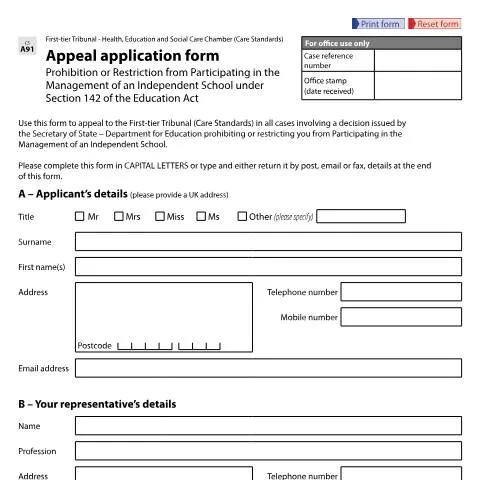
The Form CS A91 serves as the official application for individuals seeking to appeal a prohibition or restriction imposed on them concerning their participation in the management of an independent school. Such prohibitions can result from allegations of misconduct or other grounds deemed relevant by the Department for Education. This process ensures that affected parties have an opportunity to contest decisions that could significantly impact their professional reputation and legal standing within the education sector.
Who Should Use This Form?
This appeal process is specifically designed for persons who have received a formal decision from the Secretary of State prohibiting or restricting their involvement in managing an independent school. The form is applicable whether the individual wishes to challenge the original decision or to request the revocation or variation of existing restrictions. It is crucial that applicants complete the form accurately and within the designated time limits to ensure their appeal is considered.
Key Elements of the Appeal Procedure
Submitting the Appeal
Applicants must complete the form in capital letters or type, providing comprehensive details about themselves and their representatives if applicable. The completed form can be sent via post, email, or fax to the designated address of the Care Standards Chamber. It is important to include a copy of the original decision under appeal and any supporting documentation to substantiate the grounds of the appeal.
Timeliness and Deadlines
Appeals against a decision to prohibit or restrict participation in school management must be lodged within three months from the date the decision was served. If an applicant believes their appeal may be late, they are advised to request an extension of time, providing reasons for the delay. Failure to meet these deadlines could result in the dismissal of the appeal.
Types of Hearings
The appeal process offers two main options for how the case will be heard:
- Oral Hearing: A public or private hearing where witnesses may be called, and evidence presented before a tribunal panel.
- Paper Hearing: The case is decided based solely on written submissions, suitable for cases where factual disputes are minimal or in urgent situations.
Preparing for the Hearing
Applicants should consider whether they require an interpreter or wish to request private proceedings for sensitive information. The tribunal will notify the applicant of the hearing date and procedures, including preliminary directions and the possibility of a Telephone Case Management Hearing (TCMH). During this initial stage, the tribunal discusses witnesses, evidence, and logistical arrangements.
Fill in your form directly online
No printing: type your details into the boxes of the official form, tick, then download the PDF ready to send.
- 1Type into the form boxes
- 2Tick in one click
- 3Save and download the PDF
What Can Be Challenged and the Grounds for Appeal
The primary focus of the appeal is whether the decision to prohibit or restrict participation was justified. Grounds for appeal may include:
- Misconduct: Allegations or evidence that the decision was based on incorrect or incomplete information.
- Procedural Irregularities: Failures in following proper legal or administrative procedures during the decision-making process.
- Other Grounds: Any relevant reasons demonstrating that the decision was unreasonable or unjustified.
Conclusion: What This Means for Applicants
Individuals affected by a prohibition or restriction under Section 142 should understand that they have a formal route to challenge such decisions through the First-tier Tribunal. Properly completing and submitting the Form CS A91 within the specified timeframe is essential to safeguard their rights. The tribunal process offers a fair opportunity to present evidence, request hearings, and seek a review or reversal of the original decision, ensuring due process in the regulation of independent school management in the UK.