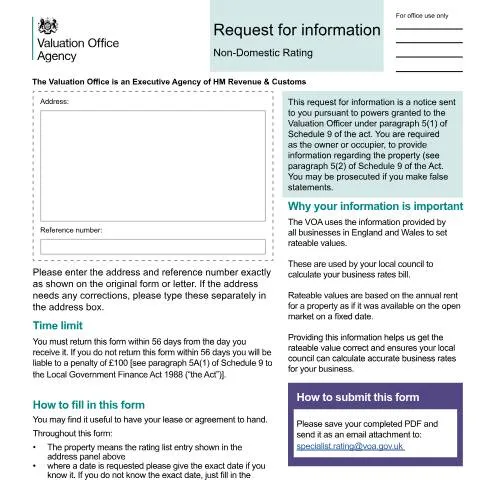
Navigating the VO 6050: Your Essential Guide to Rental Information Requests for Telecom Masts and Stations
The VO 6050 form, officially titled "Request for Rental Information: Telecom Masts and Stations," serves a crucial role in the framework of non-domestic rating in the UK. In a landscape where telecommunications infrastructure is rapidly evolving, this document is a vital tool for ensuring that local councils can accurately assess business rates based on the rental value of properties like telecom masts.
The Importance of Accurate Rental Information
Understanding the significance of the information requested by the Valuation Office Agency (VOA) cannot be overstated. The data collected through the VO 6050 informs the rateable values applied to properties, which in turn directly influence the business rates that operators must pay to local authorities. Here’s why providing accurate information is critical:
- Impact on Business Rates: Rateable values are derived from the annual rent a property could fetch on the open market. Accurate rental information leads to fair business rates.
- Legal Obligation: Owners or occupiers are legally required to provide the requested details, and failure to do so can result in penalties.
- Supporting Local Councils: By ensuring the VOA has the right data, local councils can better fund public services that benefit the community.
Who Should Submit the VO 6050 Form?
The VO 6050 is not just for any property owner; it specifically pertains to operators involved in telecommunications. This includes:
Telecom Operators
If you are a telecom operator utilizing a mast or station for broadcasting and communication, you are mandated to complete this form.
Site Sharers
In cases where multiple operators share infrastructure, each site sharer may need to provide input regarding their rental agreements and operational details.
Landlords
If you are a landlord with telecommunications equipment installed on your property, your input is crucial for ensuring accurate rate assessments and compliance with local regulations.
A Step-by-Step Walkthrough of Completing the VO 6050
Filling out the VO 6050 may seem daunting, but understanding the form's structure can simplify the process. Here’s how to navigate the form effectively:
Gather Necessary Documentation
Before you begin completing the form, gather any relevant agreements or documents related to the property in question. This includes:
- Lease agreements
- Tenancy agreements
- Any correspondence with the VOA or local council
Part A: Basic Information
The first section requires fundamental details about the current occupier and the nature of the property. Key points to note include:
- Current Occupier: Provide the full name of the individual or entity currently occupying the property.
- Shared Operations: If the site is shared with other operators, clearly indicate how many operators are involved and provide their details.
- Address Accuracy: Ensure the address is correct as it appears on any official documents to avoid processing delays.
Part B: Rental Information
This section is critical, as it deals with the specifics of your rental agreement. Keep in mind:
- Type of Tenure: Specify the nature of your occupation—whether it’s a freehold, leasehold, or license.
- Current Use: Clearly describe how the property is being used, including any installations related to telecommunications.
- Income from Site Sharing: If there is any agreement for site sharing, detail the financial arrangements and how it affects your rent.
Timelines and Deadlines: When to Submit the VO 6050
As the clock ticks, adherence to deadlines is vital. Upon receiving the VO 6050 form, you must return it within 56 days. Here’s a closer look at the key dates:
| Action | Timeline |
|---|---|
| Receive the VO 6050 form | Start of the 56-day period |
| Submission Deadline | 56 days from receipt |
| Penalty for Late Submission | £100 if submitted after the deadline |
Understanding the Consequences of Non-Compliance
Failing to submit the VO 6050 form accurately and on time can result in serious repercussions, particularly penalties that can impact your finances:
- Financial Penalties: A £100 fine for late submissions serves as a stark reminder of the importance of meeting deadlines.
- Legal Action: Providing false statements or failing to comply can lead to prosecution, emphasizing the necessity for honesty in your submissions.
What to Do in Case of Refusal or Errors
If your information is contested or if errors are found post-submission, take these steps:
- Clarify the Issue: Reach out to the Valuation Office Agency (VOA) to understand the specific concerns or errors noted.
- Document Your Evidence: Gather any supporting documentation that can substantiate your claims or correct inaccuracies.
- Submit a Revised Form: If necessary, resubmit the VO 6050 with the corrected information promptly.
The Historical and Regulatory Context of the VO 6050
Understanding the VO 6050 within the broader legislative framework highlights its importance. The form operates under the auspices of the Local Government Finance Act 1988, which defines the parameters for non-domestic rates in England and Wales. The following points illustrate its context:
- Legislative Framework: Established under the Local Government Finance Act, the VOA’s role is to ensure that properties are rated accurately for taxation purposes.
- Telecommunications Growth: As the demand for telecommunications infrastructure has surged, so too has the necessity for more precise data regarding property use and rental values.
Future Implications: The Evolution of Telecommunications Regulations
As technology advances, so will the regulatory environment surrounding telecommunications operations. Operators and landlords must stay informed about potential changes that could affect how the VO 6050 is used:
- Potential Regulatory Changes: Stay abreast of new legislation that may alter the requirements or processes associated with the VO 6050.
- Impact of 5G Technology: With the rollout of 5G, property valuation criteria may evolve, impacting how rental values are perceived in the telecom sector.
Maintaining Compliance: Best Practices for Future Filings
To ensure a smooth filing process for the VO 6050 and any future documents, consider these best practices:
- Keep Records Organized: Maintain a dedicated file for all rental agreements, correspondence with the VOA, and any related documents.
- Monitor Deadlines: Use a calendar to track important dates, ensuring you never miss a submission deadline.
- Seek Expert Advice if Necessary: If you’re uncertain about any part of the process, consult a professional to ensure compliance and accuracy.
Understanding the VO6050 Process for Telecom Masts and Stations
The VO6050 request for rental information is a unique process that involves property owners and telecommunication companies in the UK. When telecom operators wish to install masts or stations on private properties, they may need to review existing rental agreements, which are often covered by the VO6050. This form serves as a formal request to property owners to disclose rental details for telecom infrastructure.
The request can be initiated by a telecom company that has identified a property suitable for installing equipment. This includes a wide array of devices like mobile network masts or antennas. The information sought typically encompasses the current rental amounts, length of leases, and terms associated with the agreements. Understanding this request is essential for both landlords and telecom companies to ensure compliance with regulations while also protecting the interests of both parties.
Property owners should be aware that their response to a VO6050 request is not just a formality; it provides critical insights into market rates and can influence future negotiations with telecom operators. Consequently, timely and accurate responses are vital.
Impact of the VO6050 on Landlord-Tenant Relations
The process surrounding the VO6050 form can significantly affect landlord-tenant relationships, especially in the context of telecom infrastructure. For landlords, the revelation of rental information can lead to a reevaluation of existing agreements. If landlords discover that rental rates for similar properties have increased, they might feel inclined to renegotiate terms with tenants. This could lead to increased financial pressure on businesses that rely on telecommunications infrastructure for their operations.
On the flip side, telecom operators depend on accurate rental information to establish competitive rates for their services. If a landlord is reluctant to share information or provides inaccurate data, it may result in inflated costs for service provision, impacting service quality and accessibility. This dynamic underscores the importance of transparent communication and cooperation between landlords and telecom companies.
Furthermore, landlords should remain informed about their rights and responsibilities when responding to a VO6050 request. Under the UK GDPR and the Data Protection Act 2018, landlords must ensure that personal data is handled appropriately and that responses do not violate privacy laws. This legal framework mandates that property owners must only disclose information that is relevant and necessary for the telecom company’s request, thereby safeguarding their commercial interests while complying with legal obligations.
Future Considerations and Industry Evolution
The telecom industry in the UK is evolving rapidly, leading to an increased demand for infrastructure such as masts and stations. This growth brings with it a range of implications for VO6050 requests and rental agreements. As more telecom operators enter the market, competition will likely drive changes in rental rates and the terms of agreements. Property owners may find themselves in an advantageous position, able to negotiate better contracts.
Moreover, the growing importance of 5G technology and the anticipated expansion of coverage areas are likely to influence the frequency and nature of VO6050 requests. As telecom companies race to deploy 5G networks, they may need to access new properties for equipment installation, increasing the volume of rental information requests. Landlords, therefore, should be prepared for more frequent engagement with telecom companies and consider how to leverage their position effectively.
Landlords should also keep abreast of regulatory changes that might affect the process of VO6050 requests. Adjustments in legislation regarding telecommunications and property rights could alter how requests are handled and the obligations of both parties. Staying informed through resources provided by organizations such as the Valuation Office Agency (VOA) can help landlords navigate these scenarios with confidence.