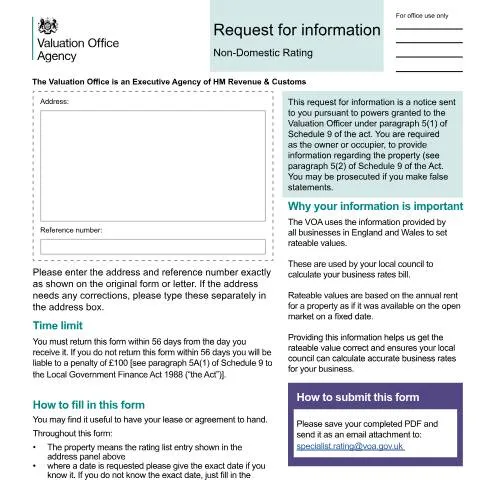
Navigating the VO 6040: Essential Insights for Property Owners
Understanding the intricacies of the VO 6040 form is crucial for property owners and occupiers in the UK. This document, issued by the Valuation Office Agency (VOA), serves a significant role in the management of non-domestic rates. It is not merely a bureaucratic requirement; instead, it influences the calculation of business rates, which can have substantial financial implications for businesses. The importance of this form cannot be overstated, especially when considering the penalties incurred for non-compliance.
The Role of the VO 6040 in the Business Rate System
The VO 6040 form is integral to the non-domestic rating system implemented under the Local Government Finance Act 1988. When a property is occupied, the VOA collects information necessary to establish an accurate rateable value, which local councils use to calculate business rates. This calculation is based on the annual rent of a property, assuming it is available on the market at a fixed date. Property owners must understand that providing accurate information ensures the VOA can set fair rates, which directly impacts their financial obligations.
Key Implications of Providing Information
- Financial Accuracy: Correct data leads to precise rateable values, which can significantly affect the overall business rates payable.
- Legal Obligations: Failing to provide information or submitting false details may result in prosecution, highlighting the weight of responsibility on the property owner.
- Impact on Local Services: Business rates contribute to local services; hence, accurate assessment aids in the community’s overall development and maintenance.
A Clear Distinction: VO 6040 vs. Other Forms
Many users may confuse the VO 6040 with other forms related to property and business rates. Understanding its unique features is essential to avoid administrative errors. For instance, while the SA100 tax return focuses on an individual's income tax obligations, the VO 6040 specifically addresses non-domestic ratings, gathering pertinent data about property usage and rent.
When to Use the VO 6040
The VO 6040 must be completed when the VOA requests information about a property’s rental details for rating purposes. It is primarily a response mechanism to inquiries made by the Valuation Officer, who may need this data to compile or maintain the rating list. Notably, this form is different from general registration forms or self-assessment tax forms, as it pertains exclusively to the rating of non-domestic properties.
Decoding the VO 6040: A Step-by-Step Guide
The completion of the VO 6040 is a process that requires attention to detail. Below, the critical sections of the form are broken down to assist you in providing the necessary information efficiently.
Section A: Basic Information
- Occupier’s Name: Ensure the name of the current occupier is filled in accurately, reflecting who runs the property.
- Date of Occupation: Specify the exact date of first occupation; if unknown, the month and year will suffice.
- Type of Tenure: Indicate whether the property is on a freehold, leasehold, or other arrangement. Misclassification could lead to inaccuracies in valuation.
Section B: Rental Details
This section delves deeper into the specifics of the property’s rental arrangements. It is vital to approach this part with caution.
- Current Annual Rent: Clearly state the amount excluding VAT. This figure is foundational in determining the rateable value.
- VAT and Other Charges: Specify whether the rent includes VAT, non-domestic rates, or water charges. Each of these elements affects the overall assessment.
- Rental Review Information: Be prepared to detail any ongoing rent reviews, as these could influence future valuations.
Timelines and Consequences: Key Dates to Remember
One of the most critical aspects to grasp involves the timelines associated with the VO 6040. The form must be returned within 56 days upon receipt to avoid penalties.
Understanding the 56-Day Deadline
Failure to submit the form within this stipulated timeframe incurs a penalty of £100. This fine is not merely a financial inconvenience but can also complicate the property’s rating status. Timely submission ensures your business remains compliant with the Valuation Office's regulations.
Connecting the Dots: The VO 6040 in the Greater Scheme of Things
The VO 6040 does not exist in a vacuum; it plays a crucial role within a broader administrative framework. Understanding this interconnectedness can provide valuable insights into its importance.
Integration with Business Rates
The information collected through the VO 6040 directly influences the annual business rates bill issued by the local council. The data helps councils assess the financial contributions of each business toward community services, which include waste collection, road maintenance, and public safety.
Cooperation with HM Revenue & Customs
There is a synergy between the VOA and HM Revenue & Customs (HMRC) in ensuring that properties are taxed appropriately. While the VOA handles the valuation and rating, HMRC focuses on the taxation side, ensuring that businesses pay their fair share of taxes based on their income and property values.
After Submission: What to Expect Next
Once the VO 6040 is submitted, the Valuation Officer will analyze the provided information and determine the property’s rateable value. This value is crucial for the local council to calculate the corresponding business rates.
Potential Outcomes Following Submission
Depending on the information provided, several scenarios might unfold:
- Accurate Rateable Value: If the data aligns with market conditions, the property’s rateable value will reflect an equitable assessment.
- Discrepancies: Inaccurate or incomplete submissions may lead to inquiries or audits by the Valuation Office, further complicating your situation.
- Updates to the Rating List: Any changes in occupancy or rental status can result in updates to the official rating list, affecting future business rates.
Practical Tips for Completing the VO 6040
Here are some practical tips to consider while filling out the VO 6040:
- Gather Documentation: Having your lease or rental agreement handy will facilitate filling out the relevant sections accurately.
- Double-Check Inputs: Ensure that names, addresses, and financial figures are correct to avoid delays or penalties.
- Seek Assistance if Needed: If you encounter difficulties, consider consulting a professional familiar with property ratings and the VO system.
Understanding Data Protection in Context
As you provide personal and sensitive information on the VO 6040, it is essential to recognize the implications under the Data Protection Act 2018 and UK GDPR. The information submitted must be processed in a manner that respects your rights regarding privacy and data security.
Rights Under Data Protection Act
- Access to Information: You have the right to request access to any personal data the Valuation Office may hold about you.
- Rectification Rights: Should you find inaccuracies in your information, you can request corrections to ensure the data remains accurate.
In summary, the VO 6040 form is a pivotal document in the UK's non-domestic rating landscape. By understanding its significance, adhering to deadlines, and providing accurate information, property owners can ensure compliance and support fair business rates that ultimately contribute to their local communities.
Understanding the VO6040 Request: Essential Steps and Requirements
The VO6040 form is pivotal in the process of gathering rental information, particularly concerning advertising rights for properties in the UK. Knowing how to properly complete this form can greatly influence the outcome of your request. The first step is to ensure you have all necessary details at hand, such as property addresses, tenant information, and landowner specifics.
When filling out the VO6040, clarity is paramount. Use clear, concise language to articulate your request. Be specific about the information you need regarding advertising rights, as ambiguity may lead to delays or misunderstandings. For instance, if you are seeking details on the terms of advertising agreements or any restrictions on signage, make those points explicit in your request.
Additionally, double-check that your request aligns with the guidelines provided by the Valuation Office Agency (VOA). Submitting incomplete or incorrect information can result in your request being rejected. If you’re uncertain about any section of the VO6040, consider reaching out to the VOA for clarification before submission.
Keep in mind that timeframes for processing requests can vary. Typically, you can expect a response within a specific period, but factors such as the complexity of your request and current workload at the VOA may impact this. Therefore, it’s wise to submit your request well ahead of any deadlines you may be facing, whether they relate to legal obligations or business decisions.
Potential Challenges and How to Overcome Them
When navigating the VO6040 request process, you may encounter several challenges that could hinder your ability to obtain the desired rental information. One common issue is resistance from property owners or landlords who may be reluctant to provide the requisite information. In such cases, it’s important to understand your rights as a tenant or potential tenant under the terms of your lease or contractual agreement. This knowledge can empower you to address any pushback constructively.
Another challenge often faced is the potential for incomplete or inaccurate data being provided by the VOA. To mitigate this risk, ensure you are meticulous when specifying the information required in your VO6040 request. If discrepancies arise, promptly follow up with the VOA to rectify any errors. Keeping a record of all correspondence can also be beneficial in tracking the progress of your request.
Lastly, time constraints can be a pressing issue. If you are working towards a particular timeline, factor in the processing time for your VO6040 request, and prepare for the possibility of delays. Having a contingency plan in place, such as alternative advertising methods or backup properties, can alleviate some of the pressure during this process.
Implications of Advertising Rights for Tenants and Landlords
Understanding advertising rights is crucial for both tenants and landlords, as these rights can significantly impact the marketing potential of a property. For landlords, there are benefits to granting tenants robust advertising rights. Enhancing the visibility of the property can lead to shorter vacancy periods and potentially higher rental income. Consequently, landlords should consider the implications of their advertising policies and ensure they comply with local regulations and guidelines stipulated by the VOA.
Conversely, tenants must be aware of their advertising rights as stipulated in their lease agreements. In some cases, tenants may have the right to advertise the property or sublet it, which can provide them with additional income streams. However, tenants should also be cautious and check for any clauses in their lease that may restrict advertising activities or require prior consent from the landlord.
It’s also worth noting that the terms surrounding advertising rights may differ between residential and commercial properties, so tailoring your approach according to the type of property in question is essential. Engaging with legal counsel or tenant associations can offer further guidance on navigating advertising rights effectively.