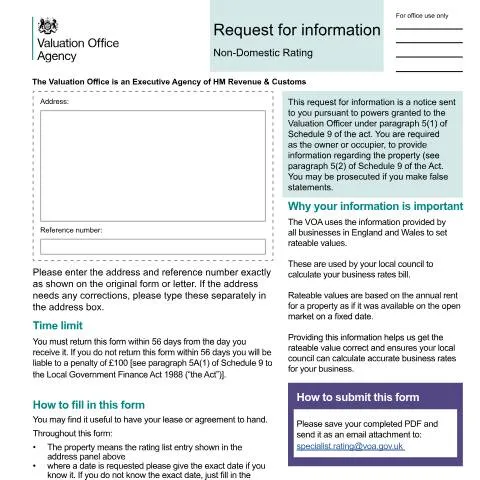
Navigating the VO 6037 Request for Rental Information: Marinas
In the realm of property management within the United Kingdom, particularly for marinas, the VO 6037 request for rental information stands as a pivotal document. The Valuation Office Agency (VOA), a key agency under HM Revenue & Customs (HMRC), utilises this form to gather vital information that influences business rates and ensures fair taxation practices. This article delves into the significance of this form, the intricacies of its completion, and the ramifications of the information provided.
Defining the Unique Role of VO 6037 in Property Assessment
Unlike many other forms associated with property and business operations, the VO 6037 specifically targets rental data relevant to marina operations. This document is pivotal in determining the rateable value of marina properties, which in turn impacts the business rates levied by local councils.
It is essential to differentiate VO 6037 from similar forms, such as those used for residential properties or other non-domestic rates, as its focus is distinctly on the specifics of berthing, marine-related income, and the unique operational context of marinas. The information gathered helps to ensure a fair assessment, reflecting the true market conditions of marina rentals.
Who Must Submit the VO 6037?
The completion of the VO 6037 form is a legal obligation for individuals or entities identified as either the owner or occupier of a marina property. This requirement extends to various profiles, including:
- Owners of marina facilities who lease spaces to customers.
- Operators managing berths and related services.
- Individuals involved in partnerships that own or operate marinas.
Importantly, in situations where a marina operates under a franchise or a concession agreement, the responsibility to submit this form may lie with the franchise or concession holder rather than the property owner. This distinction is crucial, as it may affect who is held accountable for compliance with the submission requirements.
Completing the VO 6037: Key Sections Explained
The information requested in the VO 6037 is comprehensive, covering various aspects of marina operations. Below are the critical components of the form that need careful attention:
Property Details and Occupancy Information
In the first part of the document, you are required to provide specific details about the property:
- Name of Current Occupier: It’s important to accurately list who currently operates the marina.
- Occupancy Date: This helps establish the time frame of the rental activities.
- Correct Address: Ensure the address listed is accurate to prevent any delays in processing.
- Tenancy Information: Clarification on whether there is a tenancy or lease agreement is essential.
Financial Disclosures: Trading Receipts
One of the pivotal sections of the VO 6037 is where you must disclose trading receipts for the past three financial years. This includes:
- Gross Receipts: Report income from various sources, explicitly excluding VAT.
- Specific Income Types: Include details on berthing, chandlery sales, fuel sales, and any other marina-related income streams.
Accurate reporting here is not merely an administrative requirement; it significantly impacts the calculation of the rateable value and subsequent business rates.
Berthing Details and Availability
The form also requires insights into the berthing situation over the last three financial years:
- Total Berthing Availability: How many berths does the marina offer?
- Total Berthing Let: How many of those berths were occupied?
This information assists the VOA in understanding the operational capacity and usage of marina facilities, which directly correlate with the property’s market value.
Submission Channels: Digital vs. Paper Applications
Submitting the VO 6037 form can be done through various channels, each with its advantages. Here’s a brief overview:
| Submission Method | Description | Advantages |
|---|---|---|
| Email Submission | Completed forms can be submitted as PDF attachments to [email protected]. | Quick processing, immediate confirmation of receipt. |
| Traditional Mail | Forms can also be printed and sent via postal services. | Physical confirmation of submission, useful for records. |
Regardless of the method chosen, ensuring that the form is submitted within the stipulated timeframe of 56 days is vital to avoid penalties, which could reach up to £100 for non-compliance.
The Penalties for Non-Compliance
Failure to return the VO 6037 within the designated period results in serious repercussions. Under paragraph 5A(1) of Schedule 9 to the Local Government Finance Act 1988, a penalty of £100 is imposed, which serves not only as a financial deterrent but also underscores the importance of this form in the larger context of local government finance.
Why Accurate Information Matters: The Broader Implications
Providing precise information on the VO 6037 is not merely about compliance; it has broader implications for local taxation and service provision. The rateable value derived from the data supplied affects local council budgets, which fund essential services such as waste collection, road maintenance, and public safety initiatives.
Moreover, accurate reporting ensures that your marina’s business rates are fair and reflective of actual market conditions, which is beneficial for all stakeholders involved.
Special Considerations: Complex Cases and Exceptions
Certain scenarios may complicate the submission of the VO 6037. For instance, if a marina operates under a complex ownership structure, such as partnerships or cooperative models, identifying who is responsible for filling out the form might not be straightforward. Additionally, international owners or occupiers may encounter unique challenges regarding compliance and should seek guidance from the VOA.
In cases where there are disputes about the information requested or if there are mitigating circumstances affecting the marina’s operation (like significant economic downturns or natural disasters), it is advisable to communicate directly with the VOA to discuss potential accommodations or extensions.
Ensuring Data Protection Compliance
As the VO 6037 involves the handling of personal data, it is essential to be aware of the legal framework governing data protection. The Data Protection Act 2018 and the UK GDPR provide guidelines on how personal information must be processed and protected. Individuals completing the VO 6037 must ensure that they handle sensitive information in accordance with these regulations to avoid potential legal repercussions.
Not only does this adherence protect personal data, but it also fosters trust between the marina operators and the Valuation Office Agency.
Resources and Support for Completing the VO 6037
For those who may find themselves overwhelmed by the details required in the VO 6037, several resources are available:
- VOA Official Website: The Valuation Office Agency’s website provides comprehensive guidance and contact information for inquiries.
- Legal Advisors: Consulting with a legal advisor who understands property law can clarify obligations and assist in the completion of the form.
- Business Associations: Industry associations related to marine businesses often offer resources and workshops on compliance.
By utilising these resources, marina operators can ensure that they are completing the VO 6037 accurately and in a timely manner.
Conclusion: The Importance of Compliance in a Competitive Sector
Within the competitive environment of marina operations, understanding and completing the VO 6037 request for rental information is vital. Accurate and timely submissions not only secure compliance with legal requirements but also contribute to a fair assessment of rateable values, ultimately supporting the sustainable operation of marine businesses in the UK.
Understanding the VO6037 Request Process for Marinas
The VO6037 form is a crucial tool for obtaining rental information specifically related to marinas in the UK. It is primarily used by local authorities to collect data on rental agreements and charges associated with marina berths and facilities. Understanding this process is essential for marina operators, landlords, and tenants alike.
When you submit a VO6037 request, the Valuation Office Agency (VOA) will usually require specific details about the marina, including its location, size, and the nature of the rentals being charged. The request can be initiated online or through a paper form, though online submissions are often processed more swiftly.
It’s important to note that the information provided must comply with the Data Protection Act 2018 and UK GDPR standards. This means that any data shared should not include personal identifiers unless absolutely necessary. Marina operators must ensure they have the legal grounds for sharing the requested rental information and should be prepared to explain the nature of their rental agreements in detail.
In cases where the marina has mixed-use facilities (e.g., restaurants or shops alongside berth rentals), it is vital to delineate which elements of the lease pertain to the marina and which to other businesses. Any ambiguity could lead to delays in processing your request and potential compliance issues.
Typical Scenarios for Submitting a VO6037 Request
Several scenarios might prompt the submission of a VO6037 request. Understanding these can help marina operators prepare the necessary documentation and context for their request.
New Developments: If a marina is newly developed or has undergone significant renovations, local councils might need updated rental information to assess potential impacts on local rates and planning permissions. In these cases, submitting a VO6037 request can facilitate accurate evaluations by the local authority.
Disputes Over Rental Charges: In situations where there are disputes between tenants and landlords regarding rental costs or terms of lease agreements, either party may submit a VO6037 request to validate the amounts being charged. This can be particularly important if there are questions regarding compliance with local rate regulations or market standards.
Tax Assessments: The information obtained through a VO6037 request is often utilized by HMRC for tax assessments related to property income. This means that marina operators must be diligent in ensuring the accuracy of the information provided, as any discrepancies may lead to tax liabilities or penalties.
Market Research: For potential investors or parties interested in purchasing or leasing waterfront properties, submitting a VO6037 request can serve as a preliminary step in market research. Understanding current rental rates and occupancy levels can provide valuable insights for making informed decisions.
Implications of Non-Compliance with VO6037 Requests
Failure to comply with a VO6037 request can lead to significant implications for both the requesting party and the marina operators involved. Understanding these repercussions is essential for ensuring adherence to legal and regulatory frameworks.
Fines and Penalties: Local councils and the VOA can impose fines for non-compliance with requests for information. This can include financial penalties for failing to supply the requested documentation or for providing incomplete or inaccurate information.
Legal Consequences: If a marina operator consistently refuses to comply with VO6037 requests, there may be grounds for further legal action, including potential enforcement measures by local authorities. These could include court orders to compel compliance and the possibility of eviction or closure of the marina if found in violation of local regulations.
Reputation Impact: Non-compliance can also harm the reputation of a marina operator within the community. Landlords and tenants alike rely on transparency and adherence to regulations, and a pattern of non-compliance can deter future business relationships and affect occupancy rates.
Impact on Local Economy: Finally, failure to provide accurate rental information through VO6037 requests can skew data that local authorities rely on for economic planning and development initiatives. This can ultimately affect the local economy, including funding for public services reliant on accurate property assessments.
In conclusion, the VO6037 process is not merely a bureaucratic step; it plays a critical role in ensuring the integrity of rental practices within the marina sector and contributes to the overall governance of local property markets. Understanding this process is key for all parties involved in marina rentals.