Navigating the VO 6066: Essential Insights for Business Owners
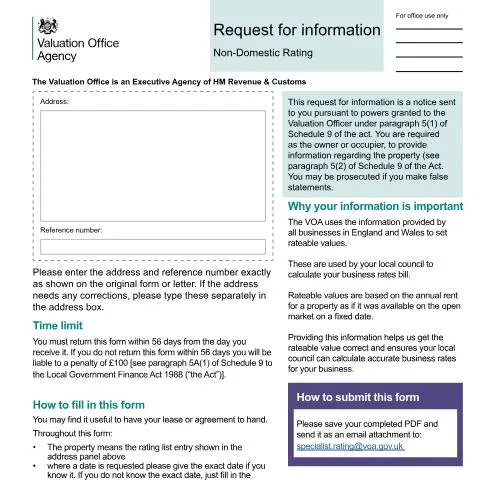
In the world of commercial property management and taxation in the UK, the VO 6066 form stands as a critical document for ensuring proper valuation. This request for rental information, issued by the Valuation Office Agency (VOA), plays a significant role in determining the business rates that property owners and occupiers must pay. Understanding the nuances of this form can streamline your obligations and help mitigate potential penalties.
Understanding the Context: Why the VO 6066 Matters
The VO 6066 form is not just a bureaucratic hurdle; it is fundamentally tied to the business rates system governed by the Local Government Finance Act 1988. The VOA, which operates under HM Revenue & Customs (HMRC), uses the information gathered through this document to establish accurate rateable values for properties in England and Wales, which local councils then use to calculate business rates bills.
When a property is rented, the annual rent is a key factor in determining its rateable value. The data collected through the VO 6066 allows the VOA to ensure that these valuations reflect fair market conditions, ultimately influencing the business rates you will owe. The implications of failing to comply with this form are significant, including the possibility of prosecution for providing false information.
The Lifecycle of the VO 6066: From Dispatch to Submission
The Trigger: Receiving the Form
The process begins when the VOA identifies a need for rental information concerning a property. This could be triggered by various factors, such as changes in occupancy, adjustments in market conditions, or updates in local council requirements. When the VOA sends out a VO 6066, it includes a reference number tied to the specific property in question.
Your Responsibilities: Filling Out the Form
Upon receipt of the VO 6066, the clock starts ticking. You have 56 days to complete and return the form to avoid a £100 penalty. It is crucial to gather the necessary documents, such as your lease agreement, to provide accurate information. The form is divided into distinct sections that require comprehensive details about the property, the occupier, and the rental arrangements.
Completing the Form: A Step-by-Step Guide
- Part 1: The Property and You This section requests information about the property, including its current use, occupancy, and ownership status. Be precise when entering details, as any inaccuracies can lead to complications.
- Part 2: Your Landlord Provide comprehensive details about your landlord, including their name and address. If you're unsure of these details, include your rental agent's information.
- Part 3: Your Lease or Agreement Indicate the start date of your current lease or agreement, along with whether it allows for rent reviews.
- Part 4: Rent Reviews If applicable, provide details on how and when rent reviews are conducted.
- Part 5: How Your Rent Was Fixed Describe the methodology used to determine your rent if it wasn't established through a formal review process.
Each component is designed to capture essential information that helps the VOA perform its valuation duties effectively. Accuracy is key; false statements can result in severe penalties.
Key Considerations for Specific Situations
While the VO 6066 may seem straightforward, various scenarios can complicate matters, demanding careful attention to detail.
Unique Cases: What If You're a New Business?
If your business is newly established and you do not have historical data on rent payments, provide as much information as possible regarding your anticipated rental costs and how they relate to your property type. Be prepared to explain your lease terms clearly, even if they are not typical.
What If the Property Is Vacant?
In cases where the property is not currently occupied, it’s still necessary to fill out the VO 6066. Indicate that the property is vacant and provide a description of its likely future use. The VOA may need this information to adjust future ratings accordingly.
Dealing with Complex Ownership Structures
For properties involving multiple owners or partners, clarity is essential. Ensure that each party’s role is well-documented within the form. If you are linked to the landlord through a business relationship, this connection must be explicitly stated to maintain transparency.
Methods of Submission: Paper vs. Digital
The VO 6066 form can be submitted in different ways, allowing for flexibility depending on your circumstances.
Electronic Submission: Streamlined for Speed
One of the most efficient methods is to complete the VO 6066 digitally and submit it via email. This method not only reduces the risk of losing physical documentation but also speeds up the processing time. Ensure that your form is saved in PDF format before attaching it to your email addressed to [email protected].
Traditional Paper Submission: A Tried-and-True Method
If you prefer the traditional route, print the completed form and send it via post. Make sure to keep a copy for your records. Be aware that postal submissions may take longer to process, which could lead to penalties if deadlines are not met.
Following Up: Tracking Your Submission Progress
Once your VO 6066 is submitted, you may find yourself wondering about the status of your request. The VOA allows for follow-ups, but understanding how they handle processing can provide insight into what to expect.
What Happens After Submission?
Upon receiving your completed form, the VOA will assess the information provided to determine the appropriate rateable value for your property. This process may take several weeks, during which time they could contact you for additional information or clarification if needed.
How to Check the Status of Your Submission
If you haven’t received confirmation or have concerns about your submission, it is advisable to reach out to the VOA directly. Provide them with the reference number from your original form, and they will be able to assist you in tracking your submission and any necessary follow-up actions.
Understanding the Broader Implications of the VO 6066
The role of the VO 6066 extends beyond a simple information request; it is part of a larger regulatory framework aimed at ensuring fair and equitable taxation for commercial properties. Understanding its context helps in appreciating the importance of compliance.
The Regulatory Framework: A Brief Overview
The regulations governing business rates and property valuations are rooted in various legislative provisions, most notably the Local Government Finance Act 1988. This act mandates that the VOA assess properties to determine their rateable value, which is crucial for local councils when calculating business rates. By providing accurate information through the VO 6066, business owners contribute to a transparent valuation system that affects their own financial obligations and those of their community.
Implications of Non-Compliance
Failure to submit the VO 6066 form within the designated timeframe may result in penalties. Additionally, inaccuracies in the information provided could lead to either overvaluation or undervaluation of a property, affecting future business rates. Therefore, maintaining diligence throughout the process is essential.
Final Thoughts: The Importance of Accurate Reporting
The VO 6066 form represents a significant aspect of managing commercial properties in the UK. Its completion is not merely a compliance task; it is a strategic component of financial planning for business owners. By understanding the nuances of this document and the implications tied to it, you can effectively navigate the complexities of property valuation and associated tax responsibilities.
As you prepare to fill out the VO 6066, remember that the details matter. Providing accurate, comprehensive information not only fulfills your legal obligations but also ensures that the business rates you pay reflect a fair assessment of your property. Engaging with this process diligently will benefit not just your business, but the broader community through appropriate revenue generation for local councils.
Understanding the VO 6066 Form: A Detailed Overview
The VO 6066 is a specific request form used by the Valuation Office Agency (VOA) in the UK to gather crucial rental information related to properties where turnover rents are applicable. Turnover rents are typically based on a percentage of the tenant's gross sales or turnover, making them common in retail leases. This system enables landlords to align their rental income with the performance of their tenants, promoting a mutually beneficial relationship.
To complete the VO 6066 form, landlords or property owners must provide detailed information about their property's rental agreements, including the nature of the business, the terms of the lease, and historical turnover figures. Including accurate data is vital, as the VOA relies on this information to assess property values and rental market conditions.
It's important to understand that the VO 6066 form is not a generic rental information request; it is specifically designed to capture the nuances of turnover rents. This specialization means that the information collected can have direct implications for business rates and council tax assessments associated with the property. Therefore, landlords should approach this form meticulously, ensuring that they report their financial details transparently and comprehensively.
Common Challenges in Completing the VO 6066 Form
Landlords may encounter several challenges when completing the VO 6066 form. One of the primary issues is the accuracy of turnover figures. Since turnover rents fluctuate seasonally or based on market conditions, providing a reliable average can be complex. It's advisable for landlords to maintain detailed records of tenant sales and any adjustments made to the rent throughout the year.
Another challenge can arise from the complexity of leasing agreements themselves. Some leases may include additional clauses that affect rent calculations, such as cap rates or minimum base rents. Landlords must fully understand these terms to ensure that the figures reported on the VO 6066 accurately reflect their agreements with tenants. Misreporting can lead to disputes or revaluations that might not favor the landlord.
Moreover, landlords may find it difficult to differentiate between what constitutes turnover for the purposes of the VO 6066. Some expenses or discounts given to clients may not be counted as turnover, thus complicating the reporting process. It’s crucial to consult with a property advisor or legal professional if uncertainties arise regarding what should be included or excluded.
Implications of VO 6066 Data on Business Rates Assessments
The information provided via the VO 6066 form can significantly impact business rates assessments. Business rates are taxes paid by commercial property owners based on the estimated value of their property, and turnover rents can affect this valuation. For example, if the reported turnover figures represent a significant drop from previous years, it could lead to a reassessment of the property's rateable value.
Once the VOA receives the VO 6066 form, they analyze patterns across similar properties within the same area. If a pattern of declining turnover rents is observed, this may lead to a re-evaluation of not only the property in question but also the area’s business rates overall. In cases where landlords report increases in turnover rents, this could indicate a thriving business environment, potentially leading to an increase in the property’s assessed value.
It’s also worth noting that landlords can appeal decisions made by the VOA regarding their property’s business rates if they feel the assessment is inaccurate based on the information provided through the VO 6066 form. Having accurate and well-documented turnover data can strengthen an appeal, providing a clearer picture of the property's financial performance.
In summary, the VO 6066 form serves as a critical tool for landlords operating under turnover rent agreements in the UK. Understanding how to complete this form accurately and the broader implications of the data submitted can help landlords manage their properties more effectively while ensuring compliance with national regulations.