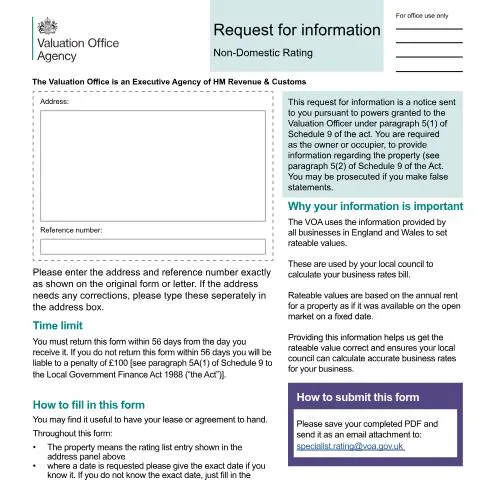
Understanding the Importance of the VO 6038 Request for Rental Information
The VO 6038 request for rental information serves a critical function within the UK’s non-domestic rating system. This document is essentially a statutory notice issued by the Valuation Office Agency (VOA) under the powers granted by the Local Government Finance Act 1988. For anyone owning or occupying a property, understanding the implications of this form is vital. Failure to comply can lead to penalties and affect the calculation of business rates, which directly impacts the financial obligations of businesses.
The local council utilizes information from the VO 6038 to establish a property’s rateable value, which forms the basis of the business rates bill. The rateable value mirrors the expected rental value of a property if it were to be available on the open market on a specific date. Thus, providing accurate and robust data not only assists in ensuring equitable taxation but also safeguards the business against inflated rates.
Who is Required to Submit the VO 6038?
The responsibility of completing the VO 6038 falls primarily on the property owner or occupier. This includes various entities such as businesses, public sector organizations, and individuals who occupy non-domestic premises. Below is a detailed look into who needs to be aware of this document:
- Business Owners: Any business operating out of non-domestic premises is obligated to fill out the form if requested.
- Landlords: Those who lease properties for commercial use must ensure their tenants are informed about the requirements surrounding the VO 6038.
- Public Sector Bodies: Entities that occupy government buildings need to comply to ensure correct rateable values are established.
Certain exceptions may apply depending on the nature and usage of the property, but the general rule remains that if you receive a VO 6038 request, action is required.
Detailing the Completion of the Form
Filling out the VO 6038 is a straightforward process, but meticulous attention to detail is essential. Below are some of the key components required:
What Information is Needed?
- Occupier Details: You must provide your name and confirm the accuracy of the address shown on the notice.
- Property Usage: Clearly state the current use of the property. For instance, is it a ferry terminal, a shipping dock, or a storage facility?
- Container Details: This includes the number of containers handled in the last three years or since you commenced occupation.
- Financial Information: Include gross receipts and expenditures for the last three financial years. This financial data helps in assessing the rateable value more accurately.
This section requires a thorough understanding of your financials as well as a precise description of your property’s usage. Having your lease or agreement at hand can be beneficial during this step.
Submitting the Form
Once completed, the form must be returned within 56 days from the date of receipt. It is crucial to adhere to this deadline, as failure to do so could result in a £100 fine under the Local Government Finance Act 1988. The preferred method of submission is via email, allowing for efficient processing. Attach the completed PDF to an email addressed to [email protected].
Consequences of Inaction
Ignoring the VO 6038 request can have serious repercussions. Not only can you face a penalty for non-submission, but also your property’s rateable value may be inaccurately assessed, leading to potentially inflated business rates.
Moreover, any false information provided, whether intentional or accidental, can result in legal consequences, including prosecution. The VOA is empowered to take action against those who do not comply, emphasizing the importance of submitting accurate and timely information.
The Processing of Your Submitted Information
Upon submission, the VOA reviews the information provided in the VO 6038 thoroughly. The processing timeframe can vary, but generally, you may expect acknowledgment of your submission.
What Happens Next?
- Acknowledgment: You should receive a confirmation that your form has been received.
- Assessment: The VOA will assess the data submitted to determine the accurate rateable value of your property.
- Notification of Outcomes: Once the assessment is complete, you will be informed of your property’s rateable value, which will be used by your local council to calculate your business rates.
It is advisable to keep a record of your submission and any correspondence with the VOA, as this will aid if any discrepancies arise during the review process.
Comparisons with Other Forms
Understanding how the VO 6038 differs from similar forms is crucial for proper compliance and management of your property’s rating obligations. For example, many may confuse it with the SA100 tax return used for personal income tax, but there are distinct purposes for each.
| Form | Purpose | Responsible Party | Deadline |
|---|---|---|---|
| VO 6038 | Request for rental information related to non-domestic property | Owner or occupier of non-domestic premises | 56 days from receipt |
| SA100 | Personal tax return for income tax purposes | Individuals with taxable income | 31 January following the end of the tax year |
This table illustrates the differences in responsibility and deadlines, underscoring the need for diligence in managing your property obligations.
Timeframes and Key Dates
Understanding the timeline associated with the VO 6038 request can significantly impact your compliance. Here are the crucial dates to keep in mind:
- Date of Receipt: The starting point for your 56-day deadline begins when you receive the form.
- Submission Deadline: Ensure your completed form is submitted within the 56-day timeframe to avoid penalties.
- Assessment Period: After submission, the VOA will take some time to review and assess your details before notifying you of your property’s rateable value.
Staying organized with these timelines can save you from unnecessary stress and potential penalties.
Final Thoughts on the VO 6038
Complying with the VO 6038 request for rental information is an essential part of maintaining a business in the UK. By providing accurate data, you not only ensure that your property’s rateable value is correctly assessed but also avoid potentially significant penalties. Being proactive and informed about your responsibilities can facilitate smoother interactions with the Valuation Office Agency and contribute more broadly to fair business practices.
Engaging with this document may seem daunting, but the implications of neglecting it are far more significant. Remember, accurate information is crucial for ensuring that your council can levy fair business rates, ultimately reflecting the true market value of your property.
Understanding the Valuation Office Agency's Role in Rental Information Requests
The Valuation Office Agency (VOA) plays a crucial role in the rental market in the UK, particularly when it comes to assessing properties for taxation purposes. One of their responsibilities includes handling requests for rental information, such as the VO 6038 form. This request is particularly important in the context of local authority areas, where accurate rental data is essential for setting local council tax rates and ensuring proper housing regulations.
The VOA gathers rental information to inform decisions about property valuations, which can affect both landlords and tenants. When filling out the VO 6038 form, it's important to provide accurate and complete information. This includes details about the property, such as the number of bedrooms, the amenities offered, and the general condition of the property. Inaccuracies can lead to delays and potential fines, so it's crucial to double-check all entries.
Another key aspect of the VOA's role is ensuring compliance with the Data Protection Act 2018 and UK GDPR. When the agency processes rental data, it must adhere to strict regulations regarding the handling of personal information, including the necessity for data minimization and ensuring that information is only retained for as long as necessary. This means that landlords and property managers must also be thorough in their understanding of data protection laws when submitting rental information.
Failure to provide requested rental information can result in penalties. The VOA has the authority to conduct audits and inspections to ensure compliance with regulations. By submitting a VO 6038 form, property owners not only comply with legal obligations but also contribute to the overarching goal of transparency in the rental market.
Common Pitfalls When Submitting VO 6038 Forms
Submitting a VO 6038 request for rental information can seem straightforward, but many individuals and organizations encounter common pitfalls that can derail the process. Understanding these pitfalls is vital for ensuring a smooth submission experience.
One common mistake is the failure to include all relevant rental data. When submitting the form, it's essential to provide comprehensive details about the rental property, including historical rental prices, recent changes in rental value, and any unique features that may affect rental worth. Omitting information can lead to inaccuracies in the property assessment and may require resubmission, causing unnecessary delays.
Another pitfall is misunderstanding the deadlines associated with the submission of the VO 6038 form. The VOA typically sets specific timeframes for when rental information must be submitted, especially in relation to new legislative changes or policy updates. Keeping abreast of these deadlines is essential for compliance and avoiding potential fines.
One often overlooked aspect is the importance of engaging with the local authority. Many property owners fail to consult with their local council regarding the information they need to provide. Local councils may have specific requirements or additional documentation that should accompany the VO 6038 form, and understanding these nuances can prevent problems later on.
Lastly, some submitters underestimate the implications of incorrect or incomplete information on their tax assessment. An inaccurate submission can lead to overpayment or underpayment of taxes, which can have serious financial repercussions. Therefore, it is advisable to consult with a tax advisor or a property consultant before submitting the VO 6038 form to ensure that all information is accurate and complete.
Implications of Rental Data on Local Economic Development
The completion and submission of the VO 6038 form have broader implications beyond property tax assessments; they can significantly influence local economic development strategies. Accurate rental information helps local authorities to better understand the housing market and its dynamics, which is crucial for planning and resource allocation.
For instance, when local councils receive timely and accurate rental data, they can identify areas of high demand and areas needing development. This can inform investments in infrastructure, amenities, and services that cater to the needs of both current residents and potential newcomers. If rental prices are rising in a specific area, local authorities might consider expanding public services, developing transportation links, or even incentivizing businesses to move into the area, thereby stimulating local economic growth.
Furthermore, accurate rental data can assist in housing policy creation. By analyzing trends in rental information submitted through forms like the VO 6038, councils can make evidence-based decisions regarding affordable housing initiatives and regulations. This is particularly important in regions facing housing shortages or affordability crises. Effective policy development relies on a reliable understanding of local rental markets, which starts with accurate data submission.
Another crucial implication is the potential for fostering community engagement. When local authorities are transparent about how rental information is collected and used, it builds trust among residents. This transparency can encourage more property owners to submit their data, which ultimately contributes to a more comprehensive understanding of the local housing market. Engaging with the community and soliciting feedback can lead to better-informed policies and initiatives that reflect the needs and desires of residents.
In summary, the act of submitting the VO 6038 form is not merely a bureaucratic requirement; it is a vital component in shaping effective local policies and driving sustainable economic development. Property owners and landlords should therefore view their role in providing rental information as part of a larger ecosystem that supports their community and enhances local living conditions.