Understanding the Park Homes Proposal Notice: A Comprehensive Guide
The Park Homes Proposal Notice serves as a vital document for site owners and residents within mobile home communities across England. Its significance is rooted in regulatory compliance and community cohesion, ensuring smooth operations and respectful interactions among residents. This guide delves into the essential elements of this notice, its intended audience, and its practical applications, all while elucidating the regulatory framework surrounding it.
Defining the Scope of the Proposal Notice
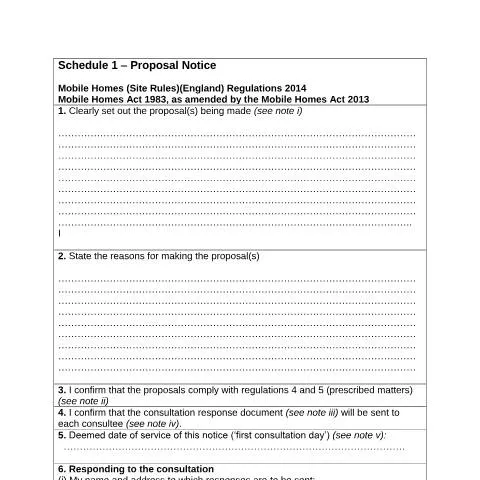
The Park Homes Proposal Notice is fundamentally a formal communication outlining proposed changes to site rules within mobile home parks. The notice is governed by the Mobile Homes (Site Rules)(England) Regulations 2014, which set the stage for transparency and fairness in the management of mobile home sites. Here’s a breakdown of what the notice includes:
- Clear Proposals: The core of the notice comprises any changes, additions, or deletions to existing site rules, aimed at promoting acceptable standards or ensuring community cohesion.
- Rationale: An explanation of why these changes are being proposed, providing context and justification for stakeholders.
- Regulatory Compliance: Confirmation that proposals adhere to prescribed regulations, ensuring that any amendments are lawful and appropriate.
- Consultation Process: Details regarding how residents may respond to the proposals, including timelines and methods for submission.
Understanding these components is crucial for both site owners and residents, as they navigate changes that could significantly affect their living environment.
Practical Steps to Utilizing the Proposal Notice
When a site owner intends to make changes to existing rules, the Proposal Notice is an essential instrument for facilitating communication and feedback. Here's a practical step-by-step guide on how to effectively use this notice:
- Drafting the Proposal: Clearly articulate proposed changes, ensuring they align with regulatory obligations outlined in the Mobile Homes Act. This step involves meticulous attention to detail to ensure clarity and transparency.
- Providing Justification: State the reasons for each proposed change. This not only helps residents understand the rationale but also fosters trust and cooperation among the community.
- Confirming Compliance: Verify that the proposals meet the necessary regulations 4 and 5. This is a critical step that requires careful review to avoid legal pitfalls.
- Consultation Notification: Inform residents of their right to respond to the proposals. Include details such as the deadline for responses and the appropriate contact information.
- Distributing the Notice: Ensure that the notice is properly disseminated to all residents, marking the official start of the consultation period.
By following these steps, site owners can ensure a democratic approach to rule changes, encouraging feedback and community participation, which are essential for fostering good relationships among residents.
Key Concepts and Terminologies to Navigate the Proposal Notice
To effectively engage with the Proposal Notice, it is vital to understand the terminology utilized within it. Here are some key concepts and what they entail:
| Term | Description |
|---|---|
| Proposal: | A suggestion to make, alter, or remove site rules to better reflect community needs and expectations. |
| Consultation Response: | The feedback provided by residents in relation to the proposed changes. This is a critical component for site management as it informs decision-making. |
| Deemed Date of Service: | The official start date of the consultation period, after which responses will be collected and considered. |
| Personal Details: | Information about residents that may be required during the consultation, which must be managed in compliance with data protection laws. |
| Regulatory Compliance: | The adherence to relevant laws and regulations governing mobile home sites and the rights of residents. |
These terms are integral to understanding the implications of the Proposal Notice and ensuring that all parties are informed and prepared to engage effectively.
Addressing Frequently Raised Queries Regarding the Proposal Notice
As site owners and residents interact with the Proposal Notice, various questions may arise. Here are common queries along with clarifications:
- What types of proposals can be made? Proposals can range from establishing new site rules to altering or removing existing ones. However, any proposal must align with the criteria of maintaining acceptable site standards and promoting community cohesion.
- What happens if residents disagree with the proposals? The consultation process allows residents to voice their opinions and objections. It's crucial for site owners to consider this feedback seriously, as it may influence the final decision.
- How is confidentiality managed in the consultation process? Under the Data Protection Act 2018, all representations made cannot be treated as confidential. However, site owners must handle personal details with care and ensure compliance with data protection laws.
- What is the timeline for responses? The Proposal Notice will specify a deadline by which responses must be submitted. It's essential for residents to adhere to this timeline to ensure their feedback is considered.
Understanding these common queries helps demystify the procedure and prepares all stakeholders for active engagement in the consultation process.
Avoiding Misinterpretations: Common Pitfalls in Understanding the Proposal Notice
Despite its importance, the Proposal Notice can sometimes lead to confusion or misinterpretation. Below are some common pitfalls to avoid:
- Assuming All Proposals Are Mandatory: Not all proposed changes will necessarily be enacted. The consultation process is a critical phase where feedback will determine the outcome.
- Misunderstanding Personal Data Disclosure: While the notice states that representations cannot be confidential, it is vital for all participants to understand what personal data may be shared and how it will be protected.
- Overlooking the Importance of Community Feedback: Some site owners may underestimate the weight residents' responses carry. Ignoring feedback can lead to community dissatisfaction and conflict.
- Failing to Meet Regulatory Requirements: It is imperative to ensure that any proposals comply with the relevant regulations. Neglecting this can result in challenges or disputes.
Being aware of these common misunderstandings can aid both site owners and residents in navigating the Proposal Notice more effectively.
Identifying Target Audiences: Who Should Pay Attention to the Proposal Notice
The Proposal Notice is pertinent to various stakeholders within mobile home communities. Understanding who should engage with the notice can enhance participation and ensure that all voices are heard:
- Site Owners: They are responsible for drafting and disseminating the notice, and must ensure compliance with regulatory requirements while addressing residents’ concerns.
- Residents: They have the right to respond to proposals, and their feedback is crucial for creating an agreeable living environment. It is in their best interest to stay informed and actively participate in consultations.
- Local Authorities: They may provide oversight and support throughout the consultation process, ensuring that regulations are followed and that community welfare is prioritized.
- Advocacy Groups: Groups advocating for mobile home residents can offer guidance and support, helping residents understand their rights and the implications of the proposals.
By clearly identifying these audiences, the communication surrounding the Proposal Notice can be more tailored and effective, fostering a collaborative atmosphere within mobile home parks.
Final Thoughts on the Importance of Engaging with the Proposal Notice
The Park Homes Proposal Notice serves as a critical tool for fostering communication between site owners and residents. Its role in shaping community dynamics cannot be overstated, as it provides a structured way for residents to engage with proposed changes that may affect their living conditions. By understanding its components, terminology, and processes, both parties can navigate this important aspect of mobile home living more effectively.
Engagement through feedback not only enhances compliance but also strengthens community bonds, ensuring that mobile home parks remain vibrant and harmonious places to live. The Proposal Notice is not just a procedural formality; it is an opportunity for collaboration, understanding, and the collective shaping of community standards.
Understanding Park Home Legislation in the UK
Park homes, also known as mobile homes, play a unique role in the UK housing landscape. The legal framework governing park homes is primarily found in the Mobile Homes Act 1983, which was later amended by the Mobile Homes (Amendment) Act 2013. This legislation ensures that park home residents have a variety of rights and protections, particularly concerning the ownership and use of the land on which their homes are situated. Understanding these laws is crucial for both residents and park owners, as they delineate responsibilities and rights.
Under this legislative framework, park home residents are granted security of tenure, meaning they cannot be forcibly evicted without proper legal process. Additionally, the legislation includes provisions for the sale of homes, requiring park owners to provide a written statement detailing any conditions related to the sale. This aims to safeguard residents from potentially exploitative practices. Furthermore, the regulations cover the reasons a park owner may give for a notice to terminate the pitch agreement, such as non-payment of rent or breach of other terms. However, even in these scenarios, the park owner must follow a prescribed legal process that includes providing adequate notice and, in some cases, court action.
Moreover, the Mobile Homes Act also obligates park owners to maintain the site and ensure that it meets safety and health regulations. This includes ensuring common areas are kept tidy and that services such as water, gas, and electricity are maintained. Residents have the right to complain to local authorities if they feel that the site is not being adequately managed, which can initiate an inspection of the site. Understanding these responsibilities can empower residents to advocate for a better living environment.
The Role of the Park Home Owners’ Association
The Park Home Owners' Association (PHOA) is an essential body representing the interests of park home residents across the UK. Established to advocate for the rights of park home owners, the PHOA provides support, guidance, and resources to residents who may feel vulnerable in their living situations. One of the primary functions of the PHOA is to educate residents about their rights and the legal recourse available to them. This includes detailed information about how to respond to notices from park owners, understanding the implications of pitch fees, and navigating disputes.
The association also engages in dialogue with policymakers to influence legislation affecting park home residents. By lobbying for changes that enhance security for residents and improve living conditions, the PHOA plays a crucial role in the ongoing development of park home legislation. Additionally, the PHOA hosts seminars and workshops, offering residents the opportunity to voice concerns and share experiences, thereby fostering a sense of community among park residents.
Membership in the PHO is particularly beneficial for those new to park living, as it provides access to a wealth of information and a network of support. Residents can find peace of mind knowing that they are not alone in navigating the complexities of park home living, and that they have an advocate who understands their needs.
Key Considerations When Receiving a Proposal Notice
Receiving a proposal notice from a park owner can be a daunting experience for residents. These notices typically address changes to pitch fees, site rules, or other significant alterations affecting the living conditions within the park. It is essential for residents to understand the implications of such notices and how to respond effectively.
First and foremost, residents should carefully review the content of the proposal notice. According to the Mobile Homes Act, a proposal notice must include specific information: the proposed change, the reason for the change, and the date it will take effect. Additionally, park owners must provide sufficient notice before implementing the changes, which is usually 28 days. This timeline allows residents to consider their options and prepare any responses.
Once a proposal notice is received, residents should assess how the proposed changes will affect their cost of living and overall experience within the park. If the increase in pitch fees, for instance, significantly impacts the budget, residents may want to discuss their situation with fellow park residents or the PHOA. Collective action or feedback can sometimes lead to negotiations with the park owner, fostering a cooperative approach to potential disputes.
Moreover, if residents believe the proposed changes are unjust or not in accordance with the law, they have the right to challenge the notice. This can involve seeking legal advice or contacting a local citizens advice bureau for support. Understanding one's rights and the legal recourse available is crucial in effectively navigating any disputes arising from a proposal notice. Additionally, maintaining open and respectful communication with the park owner may facilitate smoother resolutions and potentially mitigate further conflicts.