Understanding the Park Homes: Notification of Deposit
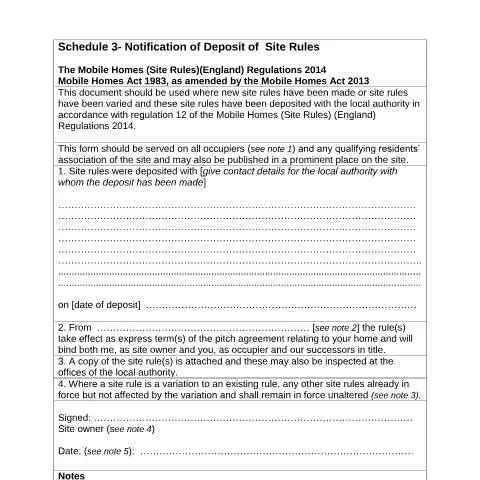
In the landscape of mobile home living in England, the Park Homes: Notification of Deposit document plays a pivotal role in ensuring that both site owners and occupiers are kept informed about the rules governing their residential environment. This notification is not merely a formality; it constitutes a legally binding agreement that shapes the relationship between site owners and residents. Understanding its nuances is crucial to avoid future disputes and foster harmony within the community.
The Profile of Participants: Who Needs to Engage?
To navigate this process effectively, it’s essential to identify who is involved. The key players include:
- Site Owners: Individuals or entities that own the mobile home park and are responsible for setting site rules.
- Occupiers: Residents living in the park, whose agreements are directly influenced by the site rules.
- Residents’ Associations: Groups representing the interests of occupiers, particularly in larger sites.
There are specific scenarios that determine who exactly must submit the notification:
- If a new set of rules is established, the site owner must notify the local authority and all occupiers.
- If existing rules are altered, the site owner must similarly notify all affected parties but may not require a completely new notification if the changes are minor.
Who is Exempt from Participation?
It’s important to note that not all mobile home parks will require the submission of this notification. For example, parks operating under different legislative frameworks may have alternative requirements. Additionally, if the changes do not significantly affect the usage of the park or the agreements in place, the need for notification might be waived.
The Administrative Process: From Notification to Compliance
Upon the decision to implement or modify site rules, several administrative steps must be taken:
- Complete the notification form accurately.
- Deposit the completed form with the local authority.
- Provide all occupiers and relevant residents’ associations with a copy of the rules or any changes made.
- Post the notification in a prominent location within the site for transparency.
This sequence ensures that all parties are informed and can act according to the new regulations. It’s crucial that these steps are followed meticulously, as failure to do so can result in challenges regarding the enforceability of the rules.
Diving Into the Details: Completing the Notification Form
Completing the Park Homes: Notification of Deposit form requires careful attention to detail. Each section must be filled out with precision to ensure compliance and clarity.
Examining Each Section of the Form
| Section | Description | Common Pitfalls |
|---|---|---|
| Contact Details | Provide full contact information for the local authority. | Omitting information or providing outdated contact details. |
| Date of Deposit | Specify when the rules were submitted to the local authority. | Failing to include the correct date can lead to disputes over implementation. |
| Effective Date | Indicate when the rules will take effect (22 days post-notification). | Miscalculating the 22-day period can confuse residents. |
| Signature | The site owner or an authorized individual must sign. | Unsigned forms or signatures from unauthorized individuals can invalidate the notification. |
When completing the form, it is imperative to double-check each section against the rules. Any inaccuracies or omissions can delay the process and lead to legal complications.
Understanding the Implications of Site Rules
Once the notification is deposited, the site rules become a key element of the pitch agreements. It’s vital for both owners and occupiers to understand the implications:
- Binding Nature: The rules bind both the site owner and the occupiers, including successors in title, ensuring consistency in the enforcement of the rules.
- Modifications: If the rules are varied, only the affected rules change; previous rules remain in force unless explicitly altered.
Failure to comply with the rules by either party can lead to disputes and enforcement actions. Therefore, understanding the binding nature of these rules is essential for both parties to maintain a harmonious living environment.
Timelines and Follow-Up: Ensuring Compliance
Post-deposit, it’s vital for both the site owner and the occupiers to be aware of the timelines:
- The effective date of the rules is 22 days after the deposit.
- Any objections to the rules should ideally be raised before this effective date.
- Site owners must be prepared for potential disputes and have a process in place for resolving conflicts that may arise.
Maintaining a record of communications and notifications is crucial, and site owners should consider following up with occupiers to ensure they are aware of the changes and have received copies of the rules.
Distinguishing This Document from Similar Forms
The Park Homes: Notification of Deposit is sometimes confused with other forms regarding site management. Understanding this document's unique attributes is crucial for accurate compliance:
- The Site Rules (Deposit) form is specifically for notifying changes in rules, whereas other forms like the Pitch Fee Review deal with financial adjustments.
- Unlike the Application for a New Site Licence, this notification does not involve initial licensing or regulatory approval processes.
Misunderstanding these differences can lead to improper filings, potentially resulting in legal repercussions for the site owners.
Preparing Supporting Documents: Justifying Changes
When submitting the notification, certain justifications and additional documents might be necessary, especially in cases of rule variations. Here’s a guide on what may be required:
- Documentation illustrating why the rules have changed.
- Records of consultation with occupiers, particularly if the changes are significant.
- Evidence that the rules align with existing legislation, including the Mobile Homes Act 1983 and its amendments.
These documents not only support the submission but also protect the site owner against potential disputes regarding the alterations to the rules.
Historical Context and Regulatory Framework
The Park Homes: Notification of Deposit is grounded in substantial legislation, reflecting the evolving landscape of mobile home living in England. This includes:
- The Mobile Homes Act 1983, which laid the groundwork for residents’ rights in mobile home parks.
- The Mobile Homes (Site Rules) (England) Regulations 2014, which established the requirement for site rules and their notifications.
- Amendments through subsequent acts that have responded to the changing nature of housing needs and resident protections.
By understanding this historical context, both site owners and occupiers can appreciate the significance of the notification and its role in promoting fair residential practices in mobile home parks.
Final Thoughts: Navigating the Path Forward
The completion and submission of the Park Homes: Notification of Deposit form is more than a bureaucratic necessity; it’s a commitment to transparency and mutual respect between site owners and occupiers. By engaging thoroughly with this process, both parties can ensure a stable living environment, minimizing disputes and fostering community spirit.
For site owners, staying informed and compliant with the latest legislative changes is crucial. Engaging with occupiers regularly, discussing rules, and being open to feedback can enhance relationships and lead to a more harmonious living environment.
For occupiers, understanding their rights and the implications of the site rules enhances their ability to advocate for themselves and their community. With the right knowledge, they can navigate the complexities of mobile home living effectively.
Understanding the Legal Framework for Park Homes Deposits
In the United Kingdom, the legal framework governing park homes and the notification of deposits is primarily set out in the Mobile Homes Act 2013. This legislation aims to enhance the protection of residents living in park homes and to ensure that deposits are managed fairly and transparently. It's crucial for both park home residents and owners to understand their rights and obligations under this Act.
Under the Mobile Homes Act 2013, a park owner is required to provide a written statement of the terms of the agreement for a home on their site. This includes specific conditions related to the deposit. When a new resident moves into a park home, they may be required to pay a deposit, which the park owner must notify the local authority about. The notification must include details such as the amount of the deposit, the name and address of the resident, and the location of the park home.
Failure to comply with these notification requirements can result in penalties for park owners, including potential enforcement action from local authorities. It's crucial for residents to keep records of their deposit payments and any correspondence with the park owner regarding the deposit, as this can be helpful in resolving disputes should they arise.
Dispute Resolution for Park Home Deposits
Disputes over deposits can be a significant concern for residents living in park homes. Under the Mobile Homes Act 2013, there are specific mechanisms in place to handle disputes related to deposits and other tenancy issues. If a resident believes that their deposit has not been handled correctly, they can initially raise the issue with the park owner directly.
Should the issue remain unresolved, residents have the option to escalate the matter to the First-tier Tribunal (Property Chamber). This tribunal is designed to handle disputes regarding residential property, including park homes. It’s advisable for residents to seek advice from local advocacy groups or legal advisors before taking this step. They can provide guidance on the process, help gather evidence, and advise on the likelihood of success based on the specific circumstances.
The decision of the First-tier Tribunal is legally binding, meaning that both parties must adhere to the ruling. If the park owner is found to have acted unlawfully concerning the deposit, they may be ordered to return the deposit, pay compensation, or cover the resident's legal costs. Moreover, if the park owner refuses to comply with the tribunal's decision, further legal action could be pursued, which can lead to more serious consequences, including enforcement through a county court.
Additionally, it's important for residents to understand their rights under the Data Protection Act 2018 and UK GDPR regarding their personal data when it comes to deposits. Park owners must ensure that any information shared with local authorities or during dispute resolutions complies with data protection regulations.
Best Practices for Managing Park Home Deposits
For both park owners and residents, adhering to best practices when it comes to managing deposits can help prevent disputes and ensure compliance with legal requirements. Here are some key considerations for each party:
For Park Owners:
Clear Documentation: Ensure that all agreements regarding deposits are documented clearly in the written statement provided to residents. This should include the amount of the deposit, payment terms, and conditions under which the deposit may be retained or returned.
Timely Notifications: Notify the local authority of any deposits received within the required timeframe to avoid penalties. Keeping accurate records of such notifications can also be beneficial for compliance.
Transparent Communication: Maintain open lines of communication with residents regarding their deposits. Any changes in policy or procedures should be communicated promptly.
Training Staff: If applicable, provide training for staff involved in managing park home deposits to ensure they understand the legal requirements and best practices for customer service.
For Residents:
Keep Records: Maintain meticulous records of all payments made regarding the deposit, including receipts and any correspondence with the park owner. This documentation is crucial should a dispute arise.
Understand Your Rights: Familiarize yourself with the Mobile Homes Act 2013 and your rights regarding deposits. Knowing what you are entitled to can empower you to address issues effectively.
Engage in Open Dialogue: If you have concerns about your deposit, address them with your park owner as soon as possible. Open communication can often resolve issues before they escalate.
Seek Support: If you're unsure about your rights or how to proceed with a dispute, consider reaching out to local advocacy groups or legal advisors who specialize in housing law. Their expertise can provide valuable guidance and support throughout the process.
By following these best practices, both park owners and residents can contribute to a fairer and more transparent system regarding park home deposits, ultimately fostering a better living environment for all parties involved.