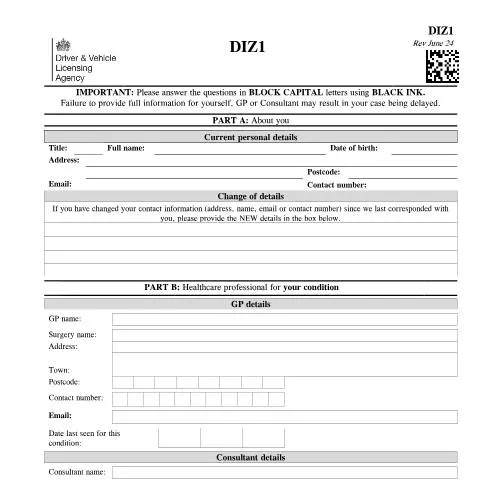
When Dizziness Threatens Your Right to Drive: The Critical Role of Form DIZ1
A sudden spell of dizziness whilst navigating a roundabout, an episode of vertigo that leaves you disoriented behind the wheel, or recurring balance issues that make you question your safety on the road – these scenarios trigger a legal obligation that many drivers are unaware of. Under UK driving licence regulations, certain medical conditions must be reported to the Driver and Vehicle Licensing Agency (DVLA), and dizziness-related disorders fall squarely within this requirement.
Form DIZ1 serves as the official mechanism for drivers to declare episodes of dizziness, vertigo, labyrinthitis, Ménière's disease, and related balance disorders that could compromise road safety. This isn't merely a bureaucratic formality – it's a legal safeguard that protects both the individual driver and other road users from the potentially catastrophic consequences of sudden incapacitation whilst driving.
The form's five-page structure reflects the complexity of assessing neurological and vestibular conditions in relation to driving fitness. Unlike straightforward vision tests or diabetes declarations, dizziness presents unique challenges: episodes can be unpredictable, symptoms vary dramatically between individuals, and the underlying causes range from benign positional vertigo to more serious neurological conditions.
Navigating the Medical Declaration Landscape: Who Must Complete DIZ1
The obligation to complete form DIZ1 extends beyond drivers who have already been diagnosed with specific conditions. Any licence holder experiencing dizziness episodes that could reasonably affect their driving ability must report these incidents, regardless of whether they've received a formal medical diagnosis.
This reporting requirement applies across all licence categories, from standard car drivers to those holding commercial vehicle entitlements. However, the assessment criteria and potential outcomes differ significantly depending on your licence type. Professional drivers – including those with Category C (lorry) or D (bus) licences – face more stringent medical standards, as their conditions could endanger multiple passengers or other road users.
| Condition Type | Typical Reporting Threshold | Assessment Focus |
|---|---|---|
| Labyrinthitis | Any episode causing disorientation | Recovery timeframe and recurrence risk |
| Ménière's Disease | Diagnosed condition or suspected symptoms | Episode frequency and warning signs |
| Migraine-associated vertigo | Episodes affecting balance or vision | Trigger identification and management |
| Benign positional vertigo | Severe episodes or those causing falls | Treatment response and lifestyle impact |
Overseas licence holders seeking to exchange their permits for UK licences may also encounter DIZ1 requirements if their medical history or current symptoms suggest balance-related issues. The DVLA's medical standards apply equally to all UK licence applicants, regardless of their previous driving experience abroad.
Decoding the Assessment Framework: Medical Professionals and Documentation Requirements
Form DIZ1's emphasis on healthcare professional details reflects the DVLA's reliance on medical expertise in fitness-to-drive assessments. The form requires comprehensive information about both your GP and any consultant specialists involved in diagnosing or treating your condition – this dual approach ensures the DVLA receives both primary care oversight and specialist clinical opinion.
The distinction between GP and consultant input proves crucial in complex cases. Your GP provides longitudinal care perspective, tracking how your condition affects daily activities over time. Meanwhile, specialist consultants – whether neurologists, ENT surgeons, or audio-vestibular physicians – offer detailed diagnostic insights and treatment prognoses that directly inform driving safety assessments.
Timing requirements embedded within the form highlight the dynamic nature of dizziness conditions. The DVLA specifically requests dates of recent and upcoming medical appointments, recognising that ongoing monitoring forms an essential component of fitness assessment. Gaps in medical follow-up can trigger additional investigation requirements or temporary licence restrictions.
Electronic communication preferences, detailed in the form's authorisation section, streamline the medical information exchange process. Opting for email correspondence can significantly reduce assessment timelines, particularly when specialists need to provide additional clarification or updated reports. However, this convenience comes with data protection considerations that drivers should carefully evaluate.
Critical Symptoms and Their Impact on Licence Retention
The form's detailed symptom enquiry reflects established medical criteria for driving fitness assessment. Question sequences focusing on episode severity, warning signs, and blackout occurrences directly correlate with research-based safety thresholds used in DVLA decision-making.
Episodes causing complete incapacitation or loss of consciousness represent the highest risk category. Even single blackout incidents within the preceding twelve months can trigger immediate licence suspension pending comprehensive medical evaluation. The form's specific request for blackout details enables medical officers to distinguish between different types of consciousness loss – from brief vestibular episodes to more serious neurological events.
Warning sign assessment proves equally critical in determining continued driving eligibility. Drivers who consistently experience adequate warning periods before dizziness episodes may retain their licences with specific conditions or restrictions. The form's inquiry about stopping time sufficiency reflects real-world driving scenarios where drivers must make split-second safety decisions.
- Severe disabling episodes: Typically result in temporary licence suspension until symptoms stabilise
- Predictable warning patterns: May allow continued driving with specific medical monitoring requirements
- Sudden-onset symptoms: Usually trigger immediate fitness review and potential licence withdrawal
- Treatment-responsive conditions: Often permit licence retention following successful intervention
Submission Pathways and Processing Realities
Form DIZ1 offers both traditional postal submission and electronic filing options, each carrying distinct advantages and limitations. Electronic submission via [email protected] typically accelerates initial processing, with digital documents reaching the Drivers Medical Group within hours rather than days. However, incomplete electronic submissions often face longer resolution times due to the additional correspondence required for missing information.
Postal submission to the Swansea processing centre remains the most reliable method for complex cases involving multiple medical reports or supplementary documentation. The physical handling process allows for easier management of varied document types and formats, though overall processing times extend accordingly.
Processing timelines vary significantly based on case complexity and medical information availability. Straightforward cases with complete GP cooperation may resolve within four to six weeks, whilst complex conditions requiring specialist panel review can extend beyond three months. The form's emphasis on complete healthcare professional contact details directly impacts these timelines – incomplete or outdated medical contacts frequently double processing duration.
Urgent medical deterioration during the assessment period requires immediate DVLA notification outside the standard DIZ1 process. Drivers experiencing sudden symptom worsening must cease driving immediately and contact the medical licensing team directly, rather than waiting for routine form processing completion.
Beyond Initial Assessment: Ongoing Monitoring and Licence Conditions
Successful DIZ1 processing rarely results in simple licence retention without conditions. The DVLA commonly imposes periodic medical review requirements ranging from annual assessments to five-yearly evaluations, depending on condition stability and treatment response.
Conditional licences represent the most frequent outcome for drivers with managed dizziness conditions. These restrictions might include specialist medical monitoring, treatment compliance requirements, or specific driving limitations such as motorway restrictions or daylight-only permissions. The form's detailed symptom assessment directly influences which conditions apply to individual cases.
Professional driver implications extend beyond personal licence retention. Commercial vehicle operators must notify their employers of any DVLA medical proceedings, and temporary licence restrictions can impact employment status. The form's comprehensive assessment helps establish whether alternative role adjustments might maintain employment whilst ensuring public safety.
Appeal processes exist for drivers disagreeing with DVLA medical decisions, though these require substantial medical evidence contradicting initial assessments. The detailed information captured in form DIZ1 forms the foundation for any subsequent appeal documentation, making accurate initial completion crucial for future proceedings.
Legal Frameworks and Compliance Obligations
Form DIZ1 operates within the broader framework of the Road Traffic Act 1988 and subsequent regulations governing medical fitness to drive. The legal obligation to report relevant medical conditions carries criminal sanctions for non-compliance, with prosecutions resulting in substantial fines and automatic licence disqualification.
The form's declaration section explicitly references these criminal implications, requiring drivers to acknowledge their understanding of false declaration consequences. This legal framework extends beyond initial reporting – drivers must also notify the DVLA of any significant condition changes occurring after DIZ1 submission.
Data protection compliance under the Data Protection Act 2018 governs all medical information handling throughout the DIZ1 process. The form's detailed authorisation sections ensure legal information sharing between healthcare professionals and DVLA medical officers, whilst maintaining strict confidentiality protocols.
Insurance implications intersect significantly with DIZ1 reporting requirements. Failure to declare medical conditions to both the DVLA and insurance providers can void coverage, leaving drivers personally liable for accident costs. The form's comprehensive medical disclosure helps ensure consistent reporting across all relevant authorities.
Strategic Completion Approaches for Optimal Outcomes
Effective DIZ1 completion requires strategic consideration of medical information presentation and timing. Collaboration with healthcare professionals before form submission often improves assessment outcomes by ensuring consistent medical narrative across all documentation.
The form's request for specific dates and episode details benefits from careful preparation using medical diaries or symptom logs. Vague or incomplete symptom descriptions frequently trigger additional investigation requirements, extending processing timelines unnecessarily. Conversely, detailed but concise symptom accounts enable efficient medical officer assessment.
Timing considerations prove particularly important for drivers with episodic conditions. Submitting DIZ1 during symptom-free periods may facilitate more favourable assessments, whilst submission during acute episodes often results in immediate driving restrictions pending symptom resolution.
Medical evidence quality directly correlates with assessment efficiency. Recent specialist reports, current medication lists, and up-to-date test results significantly enhance the DVLA's ability to make informed fitness decisions without requiring additional medical examinations.
Understanding the broader medical assessment context helps drivers prepare effectively for potential outcomes. The DIZ1 process represents just one component of comprehensive fitness evaluation – drivers should anticipate possible requirements for additional medical examinations, driving assessments, or specialist consultations depending on their individual circumstances and condition severity.
Medical Evidence Requirements and Documentation Standards
The DIZ1 form requires substantial medical evidence to support your claim, and understanding what constitutes acceptable documentation can significantly impact your application's success rate. The Department for Work and Pensions maintains strict standards for medical evidence, reflecting the need to ensure fair allocation of disability benefits whilst preventing fraudulent claims.
Primary medical evidence typically includes reports from your GP, consultant letters from hospital specialists, and diagnostic test results such as MRI scans, blood tests, or psychological assessments. However, the quality and recency of this evidence matters considerably. Medical reports older than two years may carry less weight unless they document a stable, long-term condition. For fluctuating conditions like multiple sclerosis or bipolar disorder, you'll need evidence spanning different phases of your illness to demonstrate the variable impact on your daily functioning.
Consultant reports generally carry more weight than GP letters, particularly for complex conditions requiring specialist knowledge. If you're under the care of multiple specialists—common with conditions like fibromyalgia or chronic fatigue syndrome—ensure you include reports from all relevant consultants. Mental health conditions require particular attention to documentation; reports from psychiatrists, clinical psychologists, or community mental health teams are essential, alongside any Care Programme Approach (CPA) documentation if you're receiving secondary mental health services.
Private medical reports can supplement NHS evidence but won't typically replace it entirely. The DWP recognises that some individuals seek private healthcare due to NHS waiting times, but private reports must demonstrate the same clinical rigour as NHS documentation. Ensure any private medical professional is registered with the appropriate regulatory body—the General Medical Council for doctors or Health and Care Professions Council for allied health professionals.
Occupational health reports from your employer can provide valuable evidence about workplace adjustments and functional limitations. These reports often detail specific difficulties with tasks like lifting, concentration, or interpersonal interactions, providing real-world context to clinical assessments. If you've been dismissed on ill-health grounds or retired early due to your condition, employment records and occupational health assessments become particularly relevant evidence.
Care plans from social services, if you receive adult social care support, offer additional evidence of functional limitations. These documents detail your assessed needs for personal care, domestic tasks, or community access, providing independent verification of your condition's impact. Similarly, if you're receiving support from voluntary organisations or charities related to your condition, letters from these organisations can supplement your medical evidence.
Impact Assessment: Daily Living Activities and Mobility Descriptors
Successfully completing the DIZ1 form requires detailed understanding of how the Personal Independence Payment assessment framework evaluates functional impact. The assessment doesn't simply consider your medical diagnosis but focuses on how your condition affects specific activities, measured against standardised descriptors that determine your points score and benefit entitlement.
For daily living activities, the assessment covers ten key areas: preparing food, taking nutrition, managing therapy or monitoring health conditions, washing and bathing, managing toilet needs, dressing and undressing, communicating verbally, reading and understanding signs, engaging with others face-to-face, and making budgeting decisions. Each activity has multiple descriptors ranging from "can do safely, to an acceptable standard, as often as required and in reasonable time" (0 points) to "cannot do at all" (typically 8-12 points).
The mobility component focuses on planning and following journeys, and moving around. For journey planning, assessors consider whether you can plan and follow a familiar journey without assistance, or require prompting, supervision, or cannot undertake any journey. The moving around descriptor examines distances you can walk before experiencing overwhelming psychological distress or physical discomfort, with thresholds at 20 metres, 50 metres, 200 metres, and beyond.
Understanding these descriptors helps you provide relevant examples in your DIZ1 form. Rather than simply stating "I have difficulty cooking," describe specifically what happens: "I can prepare a simple meal like beans on toast, but cannot safely use sharp knives due to hand tremor from Parkinson's disease, and cannot stand for longer than five minutes due to back pain, meaning I cannot prepare a cooked meal from fresh ingredients." This level of detail helps assessors understand which descriptor applies to your situation.
Fluctuating conditions require particular attention to the "50% rule"—if you cannot perform an activity safely, to an acceptable standard, as often as required, and in reasonable time for more than 50% of days, you should be assessed as unable to perform that activity. Document your worst days alongside typical days, providing examples of how your condition varies. For conditions like rheumatoid arthritis or depression, describe how flare-ups or episodes affect your functioning differently from stable periods.
The "safely" criterion encompasses physical safety and psychological wellbeing. If performing an activity causes significant distress, panic attacks, or risk of self-harm, this constitutes being unable to do it safely. Mental health conditions often impact multiple descriptors—depression might affect motivation for personal care, anxiety could impact face-to-face engagement, and cognitive symptoms might impair budgeting decisions or journey planning.
Consider indirect effects of your condition. Chronic pain might not directly affect your ability to communicate, but if pain medication causes drowsiness that impairs concentration during conversations, this becomes relevant to the communicating descriptor. Similarly, if fatigue from your condition means you must choose between washing and preparing food, explain these competing demands on your limited energy.
Appeals Process and Mandatory Reconsideration Strategy
Understanding the appeals process before submitting your DIZ1 form can inform how you present your case initially and prepare you for potential next steps. Approximately 70% of initial PIP applications result in some level of award, but many claimants receive lower rates than their condition warrants, making the appeals process a crucial element of the overall system.
The mandatory reconsideration stage requires you to request a review within one month of receiving your decision letter, though you can request an extension if you have good reasons for the delay. This isn't simply a paper exercise—provide new evidence if available, but more importantly, identify specific errors in the original assessment. Common issues include assessors misunderstanding fluctuating conditions, failing to consider cumulative effects of multiple impairments, or incorrectly applying the legal test for descriptors.
Review your assessment report carefully, available through your online PIP account or by requesting a copy. Look for factual errors about your condition, statements that contradict your medical evidence, or conclusions that don't follow logically from the evidence presented. If the assessor noted you walked from the car park without difficulty but failed to mention you used a walking stick and experienced pain, highlight this omission. Similarly, if they observed you making eye contact and concluded you had no social interaction difficulties, but you'd explained this was masking anxiety that left you exhausted, emphasise this misinterpretation.
Gather additional evidence for your mandatory reconsideration, particularly if circumstances have changed or you have new medical reports. However, focus on evidence that was available at the time of your original claim—the reconsideration should assess your condition as it was during the relevant period, not as it is now if it has deteriorated further.
If mandatory reconsideration fails to achieve the outcome you believe correct, you can appeal to an independent tribunal. Tribunal hearings have significantly higher success rates than initial assessments—approximately 70% of appeals result in increased awards. The tribunal consists of a judge, a medical professional, and often a disability expert, providing more specialist knowledge than the initial assessment process.
Preparing for tribunal requires understanding that this is a judicial process, not a medical appointment. The tribunal will consider all evidence afresh, including new medical evidence that has emerged since your original claim. Focus on how your condition affected you during the period under assessment, using specific examples and timeframes. If your condition has worsened since the original assessment period, clearly distinguish between your historical symptoms and current state.
Consider whether you need representation at tribunal. While not essential, advisers from Citizens Advice, disability charities, or welfare rights organisations can help present your case effectively. They understand the legal framework and can identify relevant case law or help structure your evidence coherently. Some areas have specialist PIP appeal services that achieve particularly high success rates.
The tribunal process typically takes 6-12 months from lodging your appeal, during which you'll continue receiving any existing award. If you're not currently receiving PIP but believe you should be, consider whether your condition has worsened since the original assessment period—you may be able to make a new claim for the current period while appealing the historical decision.