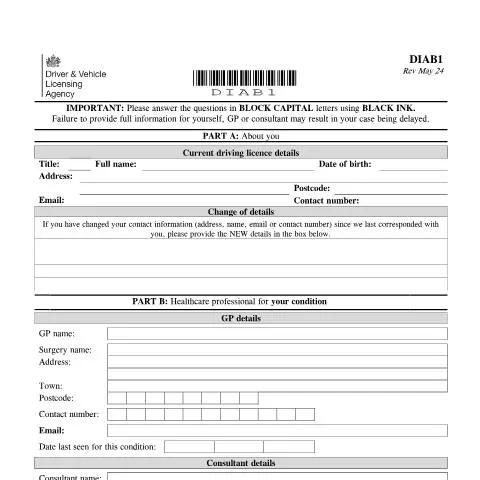
When Diabetes Becomes a Driving Matter: Understanding Form DIAB1
Your GP has just mentioned that your diabetes diagnosis might affect your driving licence. Perhaps you've been managing the condition for years, but a recent change in treatment has triggered correspondence from the DVLA. The form DIAB1 lands on your doormat, and suddenly the connection between blood glucose levels and road safety becomes very real indeed.
This six-page medical questionnaire represents a crucial checkpoint in the Driver and Vehicle Licensing Agency's assessment process for drivers with diabetes. Unlike the standard medical declaration you tick on your initial licence application, DIAB1 delves deep into the specifics of your condition, treatment regime, and crucially, your experience with hypoglycaemic episodes. The form's completion can determine whether you keep your full driving entitlement, face restrictions, or temporarily lose your licence altogether.
The stakes are particularly high because diabetes affects driving safety in ways that aren't immediately obvious to many drivers. While a broken arm or deteriorating eyesight presents clear physical limitations, the cognitive impairment and unpredictability of severe hypoglycaemia creates safety risks that require careful medical assessment.
Navigating the Medical Complexity Behind Each Question
The questionnaire's structure reflects the DVLA's risk-based approach to diabetic drivers, with different pathways depending on your treatment type. Question 1 serves as the critical branching point, determining which subsequent sections you'll complete based on whether you use insulin, sulphonylurea/glinide medications, or other treatments.
If you're on insulin therapy, you'll face the most comprehensive questioning, reflecting the higher hypoglycaemia risk associated with these medications. The form specifically asks about blood glucose monitoring habits, warning sign recognition, and detailed histories of severe episodes requiring assistance from others.
The sulphonylurea and glinide section includes an extensive medication list that many patients find surprising. Drugs like gliclazide appear under multiple brand names - Zicron, Diamicron, Glydex - and the form emphasises consulting your healthcare professional if you're uncertain about your medications. This reflects a common issue where patients know their tablets by colour or size rather than chemical name.
For those managing diabetes through diet, metformin, or newer medications like SGLT2 inhibitors, the questionnaire streamlines significantly. These treatments carry minimal hypoglycaemia risk, allowing you to skip directly to questions about diabetic complications affecting vision or limb function.
Decoding the Hypoglycaemia Risk Assessment
Questions 3 through 6 form the heart of the DVLA's safety evaluation, focusing on hypoglycaemic awareness and episode frequency. The form provides detailed symptom descriptions, from early warnings like anxiety and sweating through to severe manifestations including confusion and unconsciousness that could be mistaken for intoxication.
Hypoglycaemia unawareness - the inability to recognise dropping blood glucose levels - represents the highest risk category. If you answer "No" to getting warning signs in Question 4, you're immediately flagged for potential driving restrictions, as you cannot take preventive action before cognitive impairment begins.
The definition of "severe episodes" proves crucial: these must involve needing help from another person, not situations where assistance was offered but unnecessary. This distinction matters significantly in the DVLA's risk calculation, as it differentiates between minor episodes you can self-manage and those where you've lost the capacity for safe decision-making.
Healthcare Professional Details: More Than Administrative Necessity
Part B requires comprehensive contact information for both your GP and any diabetes specialist consultant. This isn't merely administrative - the DVLA will likely contact these professionals directly for medical reports, making accuracy essential. Incomplete or outdated contact details can delay your case by weeks or months.
The "date last seen" fields carry particular weight. If you haven't been reviewed recently, the DVLA may question whether your condition is adequately monitored. Diabetic drivers are expected to maintain regular medical oversight, and gaps in care can raise red flags about your commitment to safe driving practices.
Many applicants underestimate the importance of consultant details, assuming their GP information suffices. However, if you've ever been referred to an endocrinologist, ophthalmologist for diabetic retinopathy, or podiatrist for neuropathy, these specialist relationships demonstrate the complexity of your condition and may be crucial for the assessment.
Vehicle Modifications and Driving Restrictions: The Technical Details
Questions 9 and 10 address physical complications of diabetes that might necessitate vehicle adaptations. Diabetic neuropathy affecting feet and legs can impair pedal operation, while retinopathy might affect peripheral vision. The form provides extensive lists of potential modifications, from simple automatic transmission requirements to complex combined brake-accelerator systems.
| Modification Type | Code | Typical Indication |
|---|---|---|
| Automatic transmission | 10 | Foot neuropathy affecting clutch operation |
| Pedal adaptations | 31 | Reduced sensation or mobility in feet |
| Combined brake/accelerator | 32 | Single-foot operation required |
| Hand controls | Various | Severe lower limb complications |
The distinction between modifications required for safety versus personal preference proves important. Many drivers choose automatic transmission for convenience, but only those who cannot safely operate a manual clutch due to medical reasons need this restriction on their licence.
Strategic Completion: Avoiding Common Pitfalls
The form's opening instructions emphasise block capitals and black ink, but more subtle requirements can trap unwary applicants. Date formats follow the DD/MM/YY convention throughout, and the DVLA's systems are notoriously sensitive to formatting variations.
Blood glucose monitoring agreements in Question 7 represent a formal commitment to test before driving and at two-hour intervals on longer journeys. Refusing this monitoring significantly increases the likelihood of licence restrictions or refusal, as it demonstrates unwillingness to take basic safety precautions.
When describing severe hypoglycaemic episodes, specificity matters enormously. Vague statements like "occasionally feel dizzy" provide little useful information, while detailed accounts including circumstances, symptoms, and recovery times help assessors understand your individual risk profile.
The eye treatment section requires careful consideration of what constitutes "diabetic related issues affecting both eyes." Routine eye tests don't qualify, but laser photocoagulation, vitrectomy, or injection treatments for diabetic retinopathy or macular oedema must be declared with precise dates.
Understanding the Assessment Timeline
Processing times for DIAB1 submissions vary considerably based on complexity and the need for additional medical evidence. Straightforward cases with well-controlled diabetes and no complications might resolve within 6-8 weeks, while complex cases requiring specialist reports can extend to several months.
The DVLA's medical advisers review each case individually, considering not just the raw data from your form but the overall pattern of diabetes management. Consistent monitoring, good glycaemic control, and proactive management of complications all weigh in your favour.
Beyond Submission: Managing the Medical Review Process
Once submitted, DIAB1 triggers a formal medical review process that may require additional evidence. The DVLA commonly requests reports from your healthcare providers, and occasionally arranges independent medical examinations. Understanding this process helps manage expectations and avoid unnecessary anxiety.
Your healthcare professionals receive standardised questionnaires asking about your diabetes control, hypoglycaemia frequency, complications, and their professional opinion on your fitness to drive. These reports carry significant weight, making your relationship with your medical team crucial for a positive outcome.
If driving restrictions are imposed, they typically take specific forms: requirements for regular medical reviews, glucose monitoring commitments, or limitations to vehicles with particular adaptations. Complete licence revocation is reserved for the most severe cases where safe driving cannot be assured under any circumstances.
The review process includes appeal rights if you disagree with the DVLA's decision. Independent medical panels can reassess cases, though success requires compelling medical evidence that the original decision was inappropriate based on current guidelines.
Living with Diabetic Driving Restrictions: Practical Implications
For many diabetic drivers, completing DIAB1 results in modified licence conditions rather than outright prohibition. Understanding these restrictions and their practical implications helps maintain both legal compliance and personal mobility.
Annual or biennial medical reviews become standard requirements for insulin-treated drivers, creating ongoing obligations to demonstrate continued fitness to drive. These reviews typically involve completing updated DIAB1 forms and providing fresh medical reports, making the initial submission part of a longer-term relationship with DVLA medical services.
Vocational driving faces stricter standards, with Group 2 licences (lorries, buses, taxis) subject to more stringent hypoglycaemia criteria. Many diabetic drivers discover that conditions acceptable for private driving prevent commercial or passenger-carrying activities.
Insurance implications often surprise applicants who assume DVLA approval guarantees insurance availability. Modified licences must be declared to insurers, potentially affecting premiums or coverage terms. However, most major insurers accommodate diabetic drivers with appropriate medical oversight.
The form's completion marks not an end but a beginning of enhanced medical oversight that, while sometimes burdensome, ultimately protects both the diabetic driver and other road users. This balance between individual mobility rights and collective safety sits at the heart of the DIAB1 assessment process, making thorough and honest completion essential for achieving the best possible outcome.
Understanding DVLA's Medical Assessment Process for Diabetes
When you submit your DIAB1 form, the Driver and Vehicle Licensing Agency initiates a structured medical assessment process that varies considerably depending on your specific diabetes management and medical history. This process isn't simply a tick-box exercise – it involves qualified medical professionals reviewing your individual circumstances against established fitness-to-drive standards.
The DVLA medical team, comprising doctors and specialist advisers, will examine several key factors from your submitted information. Your HbA1c levels over recent months provide crucial insight into your glucose control stability. Values consistently above 69 mmol/mol (8.5%) may trigger additional scrutiny, particularly if you're applying for Group 2 entitlement (lorry or bus licences). However, the DVLA doesn't operate on rigid thresholds alone – they consider trends, circumstances around any elevated readings, and your overall diabetes management approach.
If you've indicated recent hypoglycaemic episodes on your DIAB1 form, expect more detailed investigation. The medical team distinguishes between different types of hypos: those with clear warning symptoms that you can recognise and manage, versus episodes with impaired awareness or occurring during activities like driving. A single severe hypoglycaemic event requiring third-party assistance within the past 12 months will likely result in licence restrictions until you demonstrate improved control.
Your diabetes treatment method significantly influences the assessment timeline. Drivers managing diabetes through diet alone typically face the most straightforward process, often receiving licence renewal within 2-3 weeks of submitting a complete DIAB1 form. Those on metformin or similar non-hypoglycaemic medications usually experience similar timescales, provided there are no concerning medical indicators.
Insulin-dependent drivers face more complex evaluation. The DVLA must satisfy itself that you maintain adequate hypoglycaemia awareness and have established reliable blood glucose monitoring routines. If your DIAB1 indicates you're newly started on insulin, you'll typically face an immediate licence revocation until you've demonstrated stable control over at least several weeks. The exact period depends on your individual medical circumstances and any previous diabetes-related driving incidents.
The medical assessment may trigger requests for additional information from your healthcare providers. Your GP, diabetes specialist nurse, or hospital consultant might receive DVLA correspondence requesting detailed reports about your condition management, recent hospital admissions, or specialist treatment plans. This process operates independently of your consent – the DVLA has legal authority to obtain necessary medical information for licensing decisions, though they'll usually inform you when seeking such reports.
Special Circumstances and Complex Cases
Certain diabetes-related situations require particularly careful handling when completing your DIAB1 form, as they fall outside standard assessment protocols and may necessitate individual medical panel review.
Pregnancy-related diabetes presents unique challenges for licensing decisions. If you've developed gestational diabetes, the DVLA needs to understand whether this represents a temporary condition or indicates underlying glucose intolerance that might persist post-pregnancy. Your DIAB1 submission should clearly indicate your current pregnancy status and any specialist obstetric advice you've received about ongoing diabetes risk. The medical team will typically defer major licensing decisions until after delivery and subsequent glucose tolerance testing, though they may issue temporary licences for essential driving needs.
Drivers with diabetes secondary to other medical conditions – such as pancreatic disease, steroid treatment, or genetic syndromes – require more nuanced assessment. Your DIAB1 form should comprehensively detail the underlying condition causing your diabetes, as this influences both your prognosis and the DVLA's approach to licence duration and restrictions. For instance, diabetes resulting from chronic pancreatitis might indicate ongoing deterioration requiring more frequent medical reviews, while steroid-induced diabetes could potentially resolve with treatment changes.
Multiple medical conditions alongside diabetes complicate the assessment process significantly. If you have diabetes plus cardiovascular disease, epilepsy, visual impairment, or other DVLA-notifiable conditions, each condition is assessed both independently and for cumulative effects on driving safety. Your DIAB1 form triggers cross-referencing with any existing medical markers on your driving record, potentially leading to more restrictive licensing outcomes than diabetes alone might warrant.
Professional drivers holding Group 2 entitlements face substantially different criteria when reporting diabetes via DIAB1. The vocational driving standards are considerably more stringent, reflecting the increased responsibility of driving large vehicles or carrying passengers commercially. Even well-controlled Type 2 diabetes treated with certain medications can result in Group 2 licence restrictions that don't affect ordinary car driving entitlements.
The DVLA applies a two-year maximum licence duration for most insulin-treated drivers, regardless of their control quality or driving history. However, exceptional circumstances might result in shorter periods – particularly for drivers with recent diagnosis, changing treatment regimens, or concurrent medical issues. Some drivers receive licences valid for just 6-12 months initially, with longer periods granted once stable management is demonstrated.
International drivers resident in the UK face additional complications when submitting DIAB1 forms. If you hold a non-UK licence but are UK resident, you must still report your diabetes to the DVLA if you plan to exchange your licence or have been UK resident for more than 185 days in a 12-month period. The medical assessment process remains identical, but administrative handling may take longer due to international verification requirements.
Post-Submission Monitoring and Ongoing Obligations
Submitting your DIAB1 form marks the beginning, not the end, of your ongoing relationship with the DVLA regarding your diabetes management. Understanding your continuing obligations helps maintain your driving entitlements and avoid inadvertent licence breaches.
The DVLA operates a systematic medical review programme for drivers with diabetes. Depending on your treatment type and medical stability, you'll receive renewal reminders typically 90 days before your medical licence expiry. These aren't automatic renewals – each review requires fresh medical evidence, often involving updated DIAB1 submissions or alternative medical forms like D4 (medical examination report) if your circumstances have changed significantly.
You must notify the DVLA immediately of any material changes in your diabetes management between routine reviews. Starting insulin therapy, experiencing severe hypoglycaemic episodes, developing diabetes complications affecting vision or circulation, or receiving advice from healthcare professionals about driving safety all constitute notifiable changes. The DVLA provides specific guidance that 'immediately' means within days of the change occurring, not waiting for your next routine review period.
Blood glucose monitoring requirements continue throughout your licenced driving period. While the DIAB1 form captures your monitoring routine at submission time, the DVLA expects you to maintain appropriate testing regimens throughout your licence validity. For insulin-treated drivers, this typically means testing before driving and at regular intervals during longer journeys, keeping records available for potential DVLA or police inspection.
Healthcare provider communications represent another ongoing obligation area. If your GP, diabetes nurse, or hospital consultant expresses concerns about your driving safety, or if you're advised to stop driving temporarily due to poor glucose control, you must notify the DVLA regardless of whether you agree with the professional advice. Failing to report such communications can invalidate your insurance and result in prosecution for driving without valid entitlement.
The DVLA's medical monitoring extends beyond routine renewals through their 'at any time' review powers. If they receive information suggesting your medical fitness has deteriorated – whether from healthcare providers, police reports following incidents, or family members expressing concerns – they can immediately investigate your continued licensing eligibility. This might involve urgent medical examinations, temporary licence suspension, or requirements for updated specialist reports.
Technology changes in diabetes management create new monitoring considerations. Continuous glucose monitoring systems, insulin pumps, and smartphone applications increasingly feature in diabetes care, but their use doesn't automatically satisfy DVLA requirements for blood glucose testing before driving. The medical team's guidance evolves with technological advances, but traditional fingerprick testing remains the gold standard for pre-driving glucose checks in most circumstances.
Record-keeping obligations extend beyond glucose monitoring to include hypoglycaemic episodes, medication changes, hospital admissions, and any diabetes-related health incidents. While the DVLA doesn't routinely audit these records, they may request detailed documentation during medical reviews or following driving incidents. Maintaining comprehensive records demonstrates responsible diabetes management and can support licence retention in borderline cases.