Understanding Hepatitis B Sequencing: When Molecular Analysis Becomes Essential
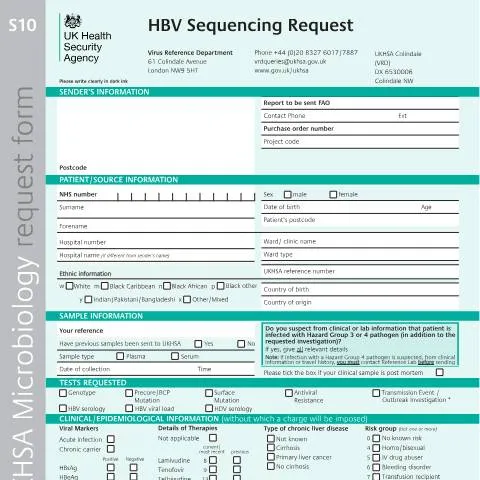
The landscape of hepatitis B virus monitoring has evolved dramatically with advances in molecular diagnostics, particularly when standard serology and viral load measurements prove insufficient for clinical decision-making. The UK Health Security Agency's HBV sequencing request form represents a sophisticated diagnostic tool that bridges the gap between routine surveillance and complex virological investigations requiring detailed genetic analysis of the hepatitis B virus.
Unlike routine HBV monitoring through regular blood tests, sequencing requests typically arise in treatment failure scenarios, suspected transmission clusters, or cases where unusual viral behaviour patterns emerge. Healthcare professionals reach for this specialised form when they need to understand the genetic makeup of a patient's HBV strain, particularly for identifying mutations that confer resistance to antiviral treatments or determining viral genotypes that influence treatment response.
The form's comprehensive structure reflects the complexity of modern hepatitis B management, encompassing everything from basic patient demographics to detailed treatment histories and sophisticated molecular epidemiology requirements. This diagnostic pathway becomes particularly crucial when patients experience breakthrough infections despite treatment, or when public health investigations require detailed viral fingerprinting for outbreak control.
Clinical Scenarios Driving Sequencing Requests
Healthcare providers typically initiate HBV sequencing requests in several distinct clinical circumstances, each requiring different approaches to form completion and sample handling. Treatment-experienced patients represent the most common scenario, particularly those showing signs of virological breakthrough while on established antiviral therapy.
The form's detailed therapy section reflects this reality, listing current and historical treatments including lamivudine, tenofovir, entecavir, and newer combination therapies like Truvada. Each medication carries specific resistance profiles, and the sequencing laboratory requires complete treatment histories to interpret resistance mutation patterns accurately. For instance, patients with prior lamivudine exposure commonly develop YMDD mutations, while tenofovir resistance remains relatively rare but clinically significant when detected.
Transmission investigations constitute another critical use case, particularly in healthcare settings, household clusters, or community outbreaks. The epidemiological section of the form captures risk factors including perinatal transmission, household contacts, travel to endemic areas, and high-risk behaviours. These details enable phylogenetic analysis that can confirm or refute suspected transmission links between cases.
| Clinical Scenario | Key Form Sections | Laboratory Priority |
|---|---|---|
| Treatment failure | Therapy history, viral load trends | Resistance mutation detection |
| Outbreak investigation | Risk factors, epidemiological links | Phylogenetic analysis |
| Unusual serology patterns | Viral markers, clinical presentation | Genotype determination |
| Chronic disease progression | Liver function, disease stage | Precore/BCP mutation analysis |
Navigating the Complex Viral Markers Section
The viral markers section demands careful attention to detail, as these results directly influence the laboratory's analytical approach and interpretation of sequencing data. HBsAg positivity confirms active infection but provides limited information about viral replication levels or treatment susceptibility, necessitating the additional markers listed on the form.
HBeAg status particularly influences sequencing priorities, as HBeAg-positive patients typically harbour wild-type virus with different mutation patterns compared to HBeAg-negative chronic hepatitis B. The anti-HBe antibody status further refines this picture, helping laboratories understand the natural history stage and likely mutation burden in the precore and basal core promoter regions.
Anti-HBc IgM results indicate recent infection or reactivation, prompting laboratories to focus on different genomic regions during analysis. Co-infection markers for hepatitis D virus, hepatitis C virus, and HIV significantly complicate treatment decisions and resistance development patterns, making accurate completion of these sections essential for meaningful sequencing interpretation.
The biochemistry section captures liver function parameters that correlate with viral activity and treatment urgency. Elevated ALT/AST levels suggest active hepatitis, while platelet counts and bilirubin levels indicate potential cirrhosis development. These clinical markers help laboratories prioritise urgent cases and guide the depth of sequencing analysis required.
Sample Requirements and Handling Protocols
Sample quality directly impacts sequencing success rates, making proper collection and handling procedures critical for reliable results. The form specifies plasma or serum samples, with plasma generally preferred for molecular diagnostics due to reduced protein interference during nucleic acid extraction processes.
Viral load measurements preceding sequencing requests provide essential context for laboratory processing decisions. Samples with viral loads below 1000 IU/ml may require concentration techniques or alternative extraction methods to achieve sufficient template for reliable sequencing. The timing relationship between viral load measurement and sample collection affects interpretation, particularly in patients with rapidly declining viral loads following treatment initiation.
Risk Assessment and Biosafety Considerations
The form's prominent biosafety section reflects the serious nature of handling potentially dangerous pathogens alongside routine HBV samples. Healthcare providers must carefully assess whether patients might harbour Hazard Group 3 or 4 pathogens based on clinical presentation, travel history, or epidemiological factors.
This assessment becomes particularly complex for patients with recent travel to areas endemic for viral haemorrhagic fevers, or those presenting with severe hepatitis of unclear aetiology. The requirement to contact the reference laboratory before sending suspected Hazard Group 4 samples ensures appropriate containment measures and staff protection protocols.
Post-mortem samples require special handling procedures and additional safety precautions, reflected in the dedicated checkbox on the form. These samples often provide crucial epidemiological information for outbreak investigations but demand enhanced biosafety protocols throughout the analytical process.
Demographic and Epidemiological Data Collection
The comprehensive demographic section serves multiple purposes beyond basic patient identification, contributing to national surveillance programmes and epidemiological research initiatives. Ethnic background information enables analysis of HBV genotype distribution patterns across different population groups, informing public health strategies and treatment guidelines.
Country of birth and origin data prove particularly valuable for genotype prediction and resistance pattern analysis, as different geographical regions harbour distinct HBV genotypes with varying treatment responses and natural history patterns. This information helps laboratories prioritise specific genomic regions for detailed analysis and interpret resistance mutations within appropriate epidemiological contexts.
Laboratory Processing Pathways and Analytical Priorities
The UK Health Security Agency's Virus Reference Department processes HBV sequencing requests through sophisticated analytical pipelines designed to extract maximum clinical utility from each sample. Genotype determination typically represents the first analytical step, as genotype influences both treatment selection and resistance development patterns.
Precore and basal core promoter mutation analysis follows genotyping, particularly for patients with HBeAg-negative chronic hepatitis B or those showing signs of disease progression. These mutations affect viral replication efficiency and immune recognition, influencing both treatment decisions and long-term prognosis.
Surface gene sequencing becomes essential for patients with unusual serological patterns or suspected vaccine escape mutations. The surface protein represents the primary target for both natural immunity and vaccination, making mutations in this region clinically significant for infection control and treatment planning.
Antiviral resistance testing constitutes the most complex analytical component, requiring detailed knowledge of treatment history and current therapeutic regimens. The laboratory correlates detected mutations with known resistance profiles, providing clinicians with actionable information about treatment modification requirements.
Reporting Timelines and Clinical Integration
Sequencing results typically require 10-15 working days from sample receipt, depending on analytical complexity and sample quality. Urgent cases, particularly those involving suspected transmission events or treatment failures in immunocompromised patients, may receive expedited processing upon direct communication with laboratory staff.
Results integration into clinical decision-making requires careful correlation with patient history, current treatment regimens, and clinical presentation. The laboratory provides detailed interpretation notes explaining the clinical significance of detected mutations and their implications for treatment modification.
Quality Assurance and Validation Protocols
The UK Health Security Agency maintains rigorous quality assurance standards for HBV sequencing services, including participation in international proficiency testing schemes and maintenance of extensive mutation databases. Sequence validation involves multiple analytical steps including phylogenetic analysis, contamination screening, and clinical correlation checks.
Internal quality control measures include processing of known positive and negative controls with each analytical batch, ensuring consistent performance across different operators and analytical runs. The laboratory maintains comprehensive databases of HBV sequences from UK patients, enabling comparison with historical patterns and identification of emerging resistance trends.
Result verification involves independent review by senior virologists before report release, ensuring clinical interpretation accuracy and appropriate treatment recommendations. This multi-layered approach minimises analytical errors and maximises clinical utility of sequencing results.
The integration of HBV sequencing data into national surveillance systems provides valuable epidemiological intelligence about circulating genotypes, resistance patterns, and transmission networks across different population groups. This information directly informs public health policy development and clinical guideline updates, ensuring that sequencing investments translate into improved patient outcomes and population health protection.
Laboratory Capacity and Regional Processing Networks
The UK's hepatitis B sequencing infrastructure operates through a carefully coordinated network of specialist laboratories, each with distinct capabilities and catchment areas. Understanding this network is crucial for healthcare providers submitting sequencing requests, as processing times and available services can vary significantly between facilities.
The Public Health England (now UK Health Security Agency) Reference Laboratory at Colindale serves as the primary national facility for complex HBV sequencing cases. This laboratory handles samples requiring full genome sequencing, drug resistance profiling, and phylogenetic analysis for outbreak investigations. Samples are typically processed within 14-21 working days, though urgent cases linked to healthcare-associated incidents may receive priority processing within 5-7 working days.
Regional laboratories across England, Wales, Scotland, and Northern Ireland provide routine HBV genotyping services. The Birmingham laboratory covers the Midlands and parts of Wales, processing approximately 200-300 samples monthly. Scotland's specialist virology services are centralised through NHS Greater Glasgow and Clyde, which maintains sophisticated sequencing capabilities for both routine surveillance and research applications.
Capacity constraints can significantly impact processing times, particularly during periods of increased surveillance activity or outbreak investigations. Healthcare providers should be aware that samples submitted during peak periods—typically following identification of healthcare-associated transmission clusters or during enhanced screening programmes—may experience delays. The UKHSA provides quarterly capacity updates to regional health protection teams, which can inform submission timing for non-urgent cases.
Sample transport logistics represent another critical consideration. Most laboratories require samples to be transported at 2-8°C within 48 hours of collection. However, some facilities accept frozen samples at -20°C for extended storage periods, particularly useful for retrospective studies or delayed analysis requirements. The National Pathology Exchange operates dedicated routes for high-priority samples, including those requiring urgent sequencing for contact tracing investigations.
Laboratory accreditation standards vary across the network, with most facilities holding ISO 15189 accreditation for medical laboratories. This ensures consistent quality standards, though specific sequencing methodologies may differ. Some laboratories utilise Sanger sequencing for targeted regions, whilst others employ next-generation sequencing platforms capable of full genome analysis. Healthcare providers should specify their analytical requirements clearly, as this influences both processing time and the appropriate receiving laboratory.
Clinical Interpretation and Reporting Frameworks
HBV sequencing results require sophisticated interpretation frameworks that extend far beyond basic genotype identification. The clinical significance of sequence data depends heavily on the patient's clinical context, treatment history, and epidemiological circumstances, necessitating close collaboration between requesting clinicians and specialist virologists.
Genotype determination represents the foundation of clinical interpretation, with implications for disease progression, treatment response, and transmission risk assessment. Genotype A infections, more common in Northern and Western Europe, typically demonstrate different clinical trajectories compared to genotypes B and C, which predominate in certain migrant populations. The sequencing report will specify not only the primary genotype but also identify any recombinant forms or mixed infections, which may influence treatment decisions.
Drug resistance profiling constitutes perhaps the most clinically actionable component of HBV sequencing. The report will detail specific mutations in the polymerase gene associated with resistance to nucleos(t)ide analogues. Common resistance patterns include rtM204I/V mutations conferring lamivudine and telbivudine resistance, or rtN236T mutations associated with adefovir resistance. However, interpretation requires understanding of the patient's treatment history, as some mutations may represent archived resistance from previous therapies rather than current treatment failure.
Phylogenetic analysis, when performed, provides crucial epidemiological context. This analysis can establish transmission links between cases, identify outbreak sources, and inform contact tracing activities. Healthcare-associated transmission investigations rely heavily on phylogenetic clustering, with closely related sequences (typically >99% similarity) suggesting recent transmission events. However, interpretation must consider the molecular clock of HBV evolution and potential for convergent evolution in similar selective environments.
The reporting format typically follows standardised templates developed by specialist virology networks. Reports include sequence quality metrics, phylogenetic positioning relative to reference strains, and specific commentary on clinically relevant findings. Turnaround times for preliminary genotyping results range from 5-10 working days, whilst comprehensive reports including phylogenetic analysis may require 14-21 working days.
Quality assurance measures ensure result reliability through multiple validation steps. Most laboratories employ duplicate sequencing for critical samples, particularly those from healthcare workers or cases involved in potential transmission incidents. External quality assessment schemes, coordinated through organisations like Quality Control for Molecular Diagnostics, provide ongoing validation of laboratory performance across the national network.
Regulatory Compliance and Data Governance Frameworks
HBV sequencing operations in the UK operate within a complex regulatory framework encompassing clinical governance, data protection, and public health surveillance obligations. Healthcare providers submitting sequencing requests must navigate these requirements whilst ensuring appropriate consent and data handling procedures.
The Data Protection Act 2018 and UK GDPR establish fundamental requirements for processing genetic sequence data, which constitutes special category personal data requiring enhanced protection measures. Sequencing requests must include explicit legal basis for processing, typically public health surveillance under Article 9(2)(i) or healthcare provision under Article 9(2)(h). The requesting clinician bears responsibility for ensuring appropriate legal basis exists and that patients receive adequate information about data processing activities.
Consent requirements vary depending on the sequencing purpose and patient circumstances. Routine clinical management typically relies on implied consent within the healthcare relationship, whilst research applications or extended phylogenetic studies may require explicit written consent. Particular considerations apply to samples from healthcare workers, where sequencing may have employment implications, necessitating careful consent processes and occupational health involvement.
Data retention policies reflect the dual clinical and public health value of sequence data. Clinical samples are typically retained according to standard pathology retention schedules—usually 30 years for significant results. However, sequence data for public health surveillance may be retained indefinitely within national databases, subject to appropriate governance frameworks and regular review processes.
The UKHSA maintains the national HBV sequence database, which supports both surveillance activities and research initiatives. Sequence submission to this database follows standardised protocols ensuring data quality and appropriate metadata collection. Healthcare providers should understand that sequences may be used for retrospective analysis, outbreak investigations, and epidemiological research, subject to appropriate governance approvals.
Cross-border data sharing arrangements enable participation in international surveillance networks and research collaborations. The European Centre for Disease Prevention and Control coordinates multinational HBV surveillance activities, whilst research networks facilitate broader scientific collaboration. However, post-Brexit arrangements require careful consideration of data adequacy decisions and appropriate legal mechanisms for international transfers.
Audit requirements ensure appropriate oversight of sequencing activities and data processing operations. Healthcare providers must maintain records of sequencing requests, consent processes, and result dissemination. Regular audits examine compliance with data protection requirements, clinical governance standards, and public health surveillance protocols. The Care Quality Commission includes genetic testing oversight within its inspection frameworks, whilst the UKHSA conducts periodic reviews of surveillance data quality and governance arrangements.