When Hepatitis B Threatens the Newborn: Understanding the UKHSA's Critical Protection Process
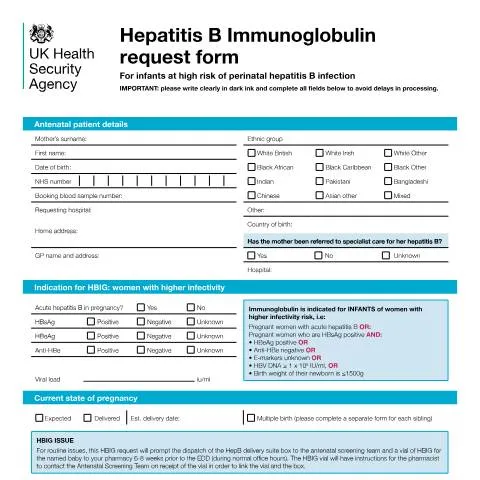
Every year in the UK, hundreds of pregnant women test positive for hepatitis B, creating an urgent medical scenario that requires swift, coordinated action to protect their newborns. The UK Health Security Agency's Hepatitis B Immunoglobulin Request Form (reference IMW281.05) represents a crucial lifeline in this process, serving as the gateway to obtaining life-saving immunoglobulin for infants at high risk of perinatal infection.
This specialised form addresses one of the most time-sensitive challenges in maternal and neonatal care: preventing vertical transmission of hepatitis B from mother to child during birth. Without proper intervention, infants born to mothers with high infectivity risk face up to a 90% chance of developing chronic hepatitis B infection, with potentially devastating long-term consequences including liver cirrhosis and hepatocellular carcinoma.
The form operates within the UK's comprehensive antenatal screening programme, connecting multiple healthcare professionals across different settings - from antenatal screening coordinators to hospital pharmacies, delivery suites, and community GP practices. Its design reflects the complex logistics required to ensure that hepatitis B immunoglobulin (HBIG) reaches the right place at precisely the right time, typically within hours of birth.
The Clinical Framework: Identifying High-Risk Scenarios
The form's primary focus centres on what the UKHSA terms "women with higher infectivity" - a specific clinical classification that triggers the need for immunoglobulin intervention. This isn't a blanket requirement for all hepatitis B-positive mothers, but rather a targeted approach based on sophisticated viral markers and clinical indicators.
Two distinct pathways lead to HBIG requirement. The first involves pregnant women experiencing acute hepatitis B during pregnancy - a relatively rare but highly infectious scenario where recent infection creates maximum viral load and transmission risk. The second pathway applies to women who are HBsAg positive (indicating chronic infection) combined with specific high-risk markers.
| Risk Indicator | Clinical Significance | Form Documentation Required |
|---|---|---|
| HBeAg positive | High viral replication activity | Laboratory result confirmation |
| Anti-HBe negative | Absence of seroconversion marker | Negative test result documentation |
| E-markers unknown | Insufficient testing completed | Laboratory report stating unknown status |
| HBV DNA ≥ 1 x 10⁶ IU/ml | Quantifiable high viral load | Precise viral load measurement |
| Newborn weight ≤1500g | Premature/low birth weight vulnerability | Accurate birth weight recording |
The form's structure acknowledges that viral markers may be unknown at the time of request, recognising the practical realities of antenatal care where complete hepatitis B profiling may be incomplete or pending. This flexibility ensures that protection isn't delayed while awaiting comprehensive test results, particularly in emergency delivery situations.
Dual Pathways: Routine Versus Emergency HBIG Procurement
The form accommodates two fundamentally different procurement scenarios, each with distinct logistical requirements and timelines. Understanding this dual pathway approach is essential for healthcare professionals managing hepatitis B-positive pregnancies.
Routine HBIG issue operates on a predictive model, designed for planned deliveries where hepatitis B status is known well in advance. When processed through the standard pathway, the form triggers dispatch of both the "HepB delivery suite box" to the antenatal screening team and a vial of HBIG to the hospital pharmacy, typically 6-8 weeks prior to the expected delivery date. This advance preparation ensures that all necessary components are in place before labour begins.
The routine pathway involves sophisticated coordination between the UKHSA and local healthcare systems. Upon receiving the vial, the pharmacist must contact the Antenatal Screening Team to "link the vial and the box" - a quality assurance measure ensuring that the correct immunoglobulin reaches the intended patient. This linkage system prevents mix-ups and maintains the chain of custody for this critical medication.
Emergency HBIG issue addresses unpredictable scenarios: precipitous labour, late-diagnosed hepatitis B, or system failures where routine procurement hasn't occurred. The emergency pathway operates 24/7 through dedicated contact numbers - 0330 1281020 option 2 during office hours, escalating to 020 8327 7471 for out-of-hours duty doctor access. Emergency HBIG is dispatched directly to the location specified by the requester, bypassing normal pharmacy distribution channels.
Dissecting the Form's Complex Data Requirements
The form's comprehensive data collection reflects the multi-faceted nature of hepatitis B management, extending far beyond basic patient identification to encompass clinical markers, logistical coordination, and post-delivery follow-up requirements.
Antenatal patient details begin with standard demographic information but quickly expand into specific hepatitis B-related data points. The inclusion of booking blood sample number creates a direct link to the original antenatal screening results, enabling verification of hepatitis B status and viral markers. The ethnic group classification, while potentially sensitive, serves important epidemiological purposes, as hepatitis B prevalence varies significantly across different populations in the UK.
The current state of pregnancy section captures critical timing information through the expected delivery date, recognising that HBIG timing is absolutely crucial. The form accommodates both planned and actual delivery scenarios, with separate sections for pre-delivery requests and post-delivery notifications. Multiple birth pregnancies require individual forms for each sibling, acknowledging that each infant needs separate immunoglobulin provision.
Perhaps most critically, the form documents specialist care referral status, asking whether the mother has been referred to specialist hepatitis B care. This information influences ongoing management and ensures continuity of care beyond the immediate perinatal period. Mothers with chronic hepatitis B often require long-term monitoring and treatment, particularly those with high viral loads or active liver disease.
Viral Load Documentation and Clinical Decision-Making
The viral load section represents one of the form's most technically demanding components, requiring precise transcription of laboratory results measured in international units per millilitre (IU/ml). The threshold of 1 x 10⁶ IU/ml represents a specific clinical cut-off point where transmission risk becomes significantly elevated, justifying immunoglobulin intervention.
Healthcare professionals completing this section must understand that viral load results can fluctuate throughout pregnancy, influenced by factors including antiviral treatment, immune system changes, and natural disease progression. The form captures a snapshot at a specific point, but clinical teams must remain alert to changing circumstances that might affect transmission risk.
Antiviral Treatment Integration and Maternal Care Coordination
Modern hepatitis B management increasingly incorporates antiviral therapy during pregnancy, particularly for women with extremely high viral loads. The form dedicates specific sections to documenting maternal antiviral treatment during the last trimester, recognising that such treatment can significantly reduce transmission risk while potentially affecting immunoglobulin requirements.
Antiviral treatment documentation requires precise recording of drug names, dosages, and treatment duration. Common antivirals used in pregnancy include tenofovir and telbivudine, both considered safe during pregnancy and capable of reducing viral loads by several log scales. However, antiviral treatment doesn't eliminate the need for infant immunoglobulin and vaccination - it represents an additional protective measure rather than a replacement intervention.
The form's emphasis on maternal hepatologist contact details reflects the multidisciplinary approach required for optimal hepatitis B management. Pregnant women with hepatitis B often receive care from multiple specialists: obstetricians managing the pregnancy, hepatologists addressing liver disease, and infectious disease specialists coordinating antiviral therapy. The form serves as a communication bridge between these different care teams.
Post-Delivery Documentation and Immediate Intervention Requirements
The form's post-delivery section captures the critical first hours of an infant's life, when immediate intervention can determine long-term health outcomes. This section becomes active only after delivery, documenting the precise timing and dosing of both hepatitis B immunoglobulin and vaccination.
The recommended HBIG dosage of 200-250 IU intramuscular injection reflects careful balancing between therapeutic efficacy and infant safety. Standard HBIG vials contain approximately 500 IU, meaning that healthcare providers must carefully measure partial doses rather than administering entire vials. This precision dosing is particularly critical for low birth weight infants, who may require divided doses administered over time.
Timing documentation extends beyond simple date recording to include precise time stamps for both immunoglobulin and vaccine administration. This temporal precision serves multiple purposes: ensuring optimal therapeutic timing, supporting quality assurance audits, and providing data for ongoing programme evaluation. The form acknowledges that very low birth weight infants may receive divided HBIG doses, requiring additional documentation for the second dose administration.
Vaccine Coordination and Batch Tracking
The form's vaccine documentation requirements extend beyond basic administration records to include vaccine manufacturer, batch numbers, and specific dosages. This detailed tracking serves crucial safety monitoring purposes, enabling rapid response if vaccine safety issues emerge post-administration. The paediatric hepatitis B vaccine differs from adult formulations, requiring age-appropriate dosing and administration techniques.
Healthcare providers must coordinate immediate post-birth interventions with ongoing vaccination schedules outlined in the UK's "Green Book" (the comprehensive immunisation guidance). The form specifically reminds practitioners to communicate with GPs about the second dose requirement at 4 weeks, ensuring continuity of the protective vaccination series beyond the immediate hospital period.
Administrative Safeguards and Professional Accountability
The form incorporates multiple administrative safeguards designed to ensure appropriate use of this specialised medication. Most significantly, it requires signature from a GMC-registered medical practitioner, reflecting MHRA (Medicines and Healthcare products Regulatory Agency) requirements for immunoglobulin dispensing. This signature requirement ensures that qualified medical professionals make clinical decisions about HBIG necessity.
Submission protocols mandate that completed forms arrive via email from @nhs.net addresses only, creating a secure communication pathway that reduces fraud risk and maintains patient confidentiality. The email requirement ([email protected]) creates a centralised processing point while maintaining audit trails for all requests.
The form's reference number IMW281.05 and version control (Version 3, gateway number 2021905) ensure that healthcare providers use current documentation standards. These version controls become particularly important when clinical guidance evolves or when supply chain modifications require procedural adjustments.
Integration Within the Broader Antenatal Screening Architecture
This immunoglobulin request form operates as a critical component within the UK's comprehensive antenatal screening programme, connecting seamlessly with existing hepatitis B detection and management pathways. The form's design assumes prior completion of routine antenatal screening, including the standard blood tests performed during early pregnancy appointments.
The Antenatal Screening Coordinator serves as a pivotal figure in this process, maintaining oversight of individual cases while coordinating between different healthcare settings. These coordinators possess specialised knowledge of hepatitis B management protocols and serve as the primary liaison between hospital-based care teams and community healthcare providers.
Post-delivery, the form facilitates transition of care responsibility from hospital-based teams to community GP practices, ensuring that ongoing infant monitoring and vaccination continue seamlessly. The detailed documentation provided enables GPs to understand the specific risk factors that necessitated immunoglobulin intervention and to maintain appropriate follow-up care.
The form's comprehensive approach reflects the UK's commitment to eliminating perinatal hepatitis B transmission through systematic, evidence-based intervention. By capturing detailed clinical and logistical information, it supports both immediate patient care and ongoing programme evaluation, contributing to continuous improvement in maternal and neonatal health outcomes. This systematic approach positions the UK among global leaders in preventing mother-to-child hepatitis B transmission, with intervention rates approaching international best practice standards.
Dosage Calculations and Administration Protocols for Different Infant Categories
The precise calculation of hepatitis B immunoglobulin dosage for infants follows strict protocols established by the UK Health Security Agency, with variations depending on the infant's birth weight, gestational age, and specific risk category. Standard dosing typically follows a weight-based calculation of 0.5ml per kilogram of body weight, administered intramuscularly within the critical first 24-hour window.
For premature infants born before 37 weeks gestation, healthcare professionals must consider adjusted dosing protocols. These vulnerable infants may require modified administration schedules, particularly when birth weight falls below 2.5kg. The immunoglobulin must be administered in the anterolateral thigh muscle using appropriate needle gauge - typically 25-gauge, 16mm length for term infants, with adjustments for smaller premature babies.
Multiple birth scenarios present additional complexity in dosage planning. When requesting immunoglobulin for twins, triplets, or higher-order multiples born to hepatitis B positive mothers, each infant requires individual assessment and separate dosage calculations. Healthcare providers must specify the number of infants requiring treatment in their initial request, as bulk ordering may be necessary to ensure adequate supply availability.
Infants with underlying medical conditions may require modified administration approaches. Those with bleeding disorders, immune deficiencies, or other contraindications to intramuscular injection need special consideration. In such cases, the requesting clinician must provide detailed medical history and propose alternative administration strategies when submitting their immunoglobulin request.
The timing of administration relative to hepatitis B vaccination creates another critical consideration. While both interventions should ideally occur within the first 24 hours, they must be administered at different anatomical sites using separate syringes. The immunoglobulin provides immediate passive protection while the vaccine stimulates active immunity development over subsequent weeks and months.
Regional Variations in Supply Chain Management and Procurement
Hepatitis B immunoglobulin procurement operates through distinct regional frameworks across England, Scotland, Wales, and Northern Ireland, each with specific ordering procedures and supply chain protocols. NHS England coordinates distribution through regional pharmaceutical procurement hubs, while NHS Scotland operates its own specialised biological products distribution network through the National Services Scotland.
In England, most acute NHS trusts maintain emergency stocks of hepatitis B immunoglobulin within their pharmacy departments, typically holding sufficient quantities for immediate requirements. However, community midwifery services and smaller birthing units may need to request emergency supplies from their local hospital pharmacy or through regional on-call services. The process involves contacting the designated pharmacy department, providing maternal hepatitis B status documentation, and confirming expected delivery timeframes.
Scottish health boards operate under slightly different procurement protocols, with the Common Services Agency coordinating biological product distribution. Healthcare providers in remote or island communities may face additional logistical challenges, requiring advance planning for high-risk pregnancies identified during antenatal screening programmes. Emergency helicopter or ferry transport may be necessary to deliver immunoglobulin to outlying areas within the critical administration window.
Welsh NHS trusts coordinate through Health Solutions Wales for specialised biological products, including hepatitis B immunoglobulin. The Welsh system emphasises collaborative planning between maternity services and pharmacy departments to anticipate requirements based on antenatal screening results and expected delivery dates for high-risk pregnancies.
Northern Ireland's procurement operates through the Business Services Organisation, with particular attention to cross-border considerations for mothers who may deliver in the Republic of Ireland or transfer between jurisdictions during labour. Clear protocols exist for emergency supply requests that cross administrative boundaries within the island of Ireland.
Temperature-controlled storage and transport requirements add complexity to regional distribution. All immunoglobulin products must maintain cold chain integrity between 2°C and 8°C throughout the supply chain. Regional distribution centres employ specialised refrigerated transport vehicles, while smaller facilities may require portable cooling systems for emergency deliveries.
Quality Assurance, Batch Tracking, and Adverse Event Monitoring
Every hepatitis B immunoglobulin administration requires meticulous documentation for quality assurance and pharmacovigilance purposes. Healthcare providers must record specific batch numbers, expiry dates, administration times, and injection sites for each infant receiving treatment. This information becomes part of the permanent medical record and contributes to national safety monitoring databases.
The Medicines and Healthcare products Regulatory Agency (MHRA) maintains comprehensive oversight of all blood-derived products, including hepatitis B immunoglobulin. Batch release protocols ensure each production lot meets stringent safety and efficacy standards before distribution to healthcare facilities. These protocols include testing for infectious agents, protein concentration verification, and sterility confirmation.
Healthcare professionals administering hepatitis B immunoglobulin must complete Yellow Card reporting for any suspected adverse reactions. While serious adverse events remain extremely rare, documented reactions may include local injection site reactions, fever, or allergic responses. The MHRA's adverse event database helps identify potential safety signals and informs ongoing product safety assessments.
Batch tracking systems enable rapid identification and recall of specific product lots if safety concerns arise. Each vial carries unique identifiers linking to manufacturing records, distribution pathways, and administration sites. Healthcare facilities must maintain accurate records enabling swift identification of affected infants if product recalls become necessary.
Storage monitoring within healthcare facilities requires continuous temperature logging and alarm systems. Pharmacy departments typically employ automated monitoring systems with 24-hour alert capabilities to ensure product integrity. Any temperature excursions outside the 2°C to 8°C range trigger immediate investigation and potential product quarantine procedures.
Staff training programmes ensure healthcare professionals understand proper handling, preparation, and administration techniques for hepatitis B immunoglobulin. These programmes cover aseptic technique, dose calculation verification, injection site selection, and post-administration monitoring requirements. Regular competency assessments help maintain high standards of clinical practice.
Integration with national immunisation databases enables long-term follow-up monitoring of infants receiving hepatitis B immunoglobulin. These systems track subsequent vaccination schedules, serological testing results, and long-term protection outcomes. Data analysis helps inform policy decisions about optimal treatment protocols and identifies opportunities for programme improvement.