Navigating the COVID-19: E53 Sequencing Request Form
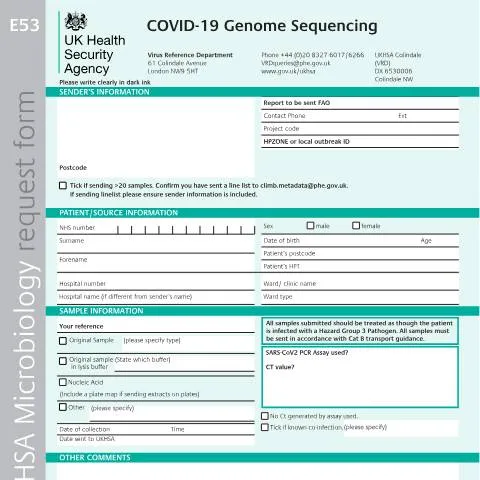
As the world adapts to the ongoing challenges posed by the COVID-19 pandemic, understanding the intricate processes involved in genomic sequencing has never been more vital. The COVID-19: E53 sequencing request form serves as a critical gateway for healthcare professionals and laboratories to submit samples for sequencing to the UK Health Security Agency (UKHSA). This document not only facilitates the tracking and understanding of viral variants but also plays a significant role in public health surveillance.
Key Milestones: The Timeline of Sample Submission
Submitting the E53 form is not just a bureaucratic step; it is part of a larger timeline that stretches from sample collection to the generation of valuable data. Understanding this timeline can ensure effective participation in the UKHSA's efforts to monitor COVID-19 variants.
Sample Collection and Initial Considerations
- When to Collect: Samples should ideally be collected as soon as a COVID-19 diagnosis is confirmed, considering the need for timely sequencing.
- Sample Types: The forms can be used for various sample types, including throat swabs and respiratory samples. Each type may necessitate different handling procedures.
Submission Window
The request form can be submitted anytime; however, adherence to certain timelines can enhance the efficacy of public health responses. For instance, samples are expected to be sent swiftly to facilitate timely processing.
Post-Submission: What Happens Next?
Upon submission, the UKHSA team begins processing the request. The timeline for results can vary based on several factors, including sample volume and laboratory capacity, but generally aims to provide results within a few weeks.
Channels of Submission: Online vs. Paper
Healthcare providers have multiple channels available for submitting the E53 form, each with its own advantages. Making an informed choice can streamline the process and reduce delays.
Online Submission
For those familiar with digital platforms, online submission of the E53 form is encouraged. It is generally faster and allows for real-time tracking of submission status. Email submissions, especially for multiple samples, can be accompanied by a spreadsheet detailing individual sample information.
Paper Submission
While digital submissions are becoming the norm, paper-based submissions are still accepted. It is essential, however, to ensure that the form is filled out clearly in dark ink to avoid processing delays.
Understanding the Processing and Tracking of Your Submission
Once submitted, tracking your request is crucial, especially if your samples are tied to an outbreak or a research project. Familiarity with the tracking process can alleviate concerns and ensure transparency.
Initial Acknowledgment
Upon receipt of the form, UKHSA will acknowledge submission usually through an email confirmation. This confirmation is vital as it includes unique identifiers for tracking your request.
How to Follow-Up
If you encounter delays or have specific questions about your submission, contacting the UKHSA directly via the provided contact details is recommended. Ensure you have your reference number handy for efficient communication.
The E53 Form within a Broader Context of Public Health
The E53 sequencing request form is not an isolated document; it is part of a comprehensive strategy to combat COVID-19. Understanding its role within this context can enhance its perceived importance.
Linking to Public Health Initiatives
- Variant Surveillance: The data generated from E53 submissions feeds into national databases, assisting in variant tracking and informing health policies.
- Research Contributions: Data obtained may contribute to ongoing research and development initiatives aimed at vaccine improvements and treatment protocols.
Practical Implications for Healthcare Providers
Understanding the implications of using the E53 form can significantly impact healthcare providers’ operations and responsibilities. Compliance and thoroughness in this procedure can yield tangible benefits.
Rights and Responsibilities
Submitting the E53 form comes with certain obligations, such as ensuring the patient’s privacy is respected and that all information is accurate. Failure to comply with these regulations could lead to repercussions from the UKHSA.
Consequences of Inaction
Delays or omissions in submitting the E53 form could hinder public health responses, particularly in outbreak scenarios. Ensuring timely submission not only supports healthcare systems but also protects the wider community.
A Deep Dive into the E53 Form: Decoding Each Section
To ensure utmost accuracy and efficiency in filling out the E53 form, a detailed examination of each section reveals potential pitfalls and best practices.
Sender's Information Section
This section asks for details about the healthcare provider submitting the form. Ensure all information is current and complete, as inaccuracies can delay processing.
- Hospital Number: Provide the unique identifier for your facility.
- NHS Number: Essential for patient identification.
- Contact Information: A valid phone number is crucial for follow-up communications.
Patient Information Section
Accurate patient information is paramount. The form requires:
- Surname and Forename: Exact spelling is required.
- Date of Birth: Essential for age verification and identification.
- Postcode: Helps in geographical tracking of COVID-19 cases.
Sample Information Section
Carefully documenting sample details is critical, as this information directly influences sequencing accuracy. Here’s what to keep in mind:
- Sample Type: Clearly specify the type of sample being sent (e.g., throat swab).
- Assay Used: Indicate the method used for initial testing (SARS-CoV2 PCR).
- CT Value: Include this if available, as it can provide insights into the viral load.
Important Contacts and Further Information
For further assistance, it’s beneficial to have direct contact with the UKHSA. Should you have any queries regarding the E53 form or the sequencing process, the contact details provided on the form can guide you effectively.
| Contact Method | Details |
|---|---|
| Phone | +44 (0)20 8327 6017/6266 |
| [email protected] | |
| Website | www.gov.uk/ukhsa |
In conclusion, navigating the COVID-19: E53 sequencing request form is integral to the public health response to the pandemic. By understanding each aspect of this essential document, healthcare providers can contribute effectively to the efforts of the UK Health Security Agency, ensuring that the population remains informed and safeguarded against emerging threats.