Understanding UKHSA Hepatitis Investigation Protocols
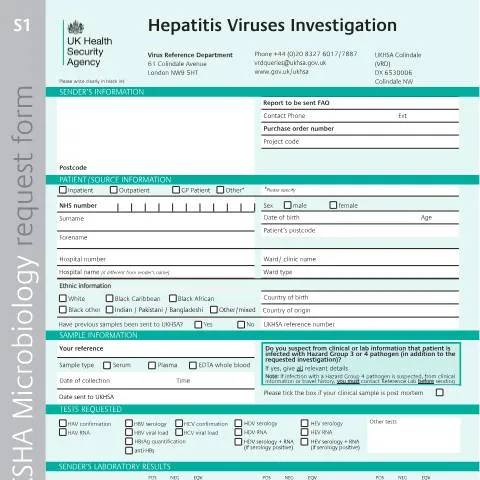
When healthcare professionals encounter suspected hepatitis cases requiring specialist laboratory confirmation or outbreak investigation, the UK Health Security Agency's Virus Reference Department becomes the critical link between clinical suspicion and definitive diagnosis. The hepatitis viruses investigation request form serves as the gateway to accessing England's premier viral hepatitis reference services, housed at the Colindale facility that coordinates national surveillance and provides expert diagnostic support beyond standard hospital laboratory capabilities.
This specialised request system operates distinctly from routine hepatitis screening performed in hospital laboratories. While local pathology services handle standard hepatitis B surface antigen tests or hepatitis C antibody screening, the UKHSA form targets complex diagnostic scenarios requiring viral load quantification, genotyping analysis, or outbreak strain characterisation. The form's design reflects the sophisticated testing portfolio available through the Virus Reference Department, encompassing hepatitis A through E investigations alongside co-infection studies.
Clinical Scenarios Triggering Specialist Referral
Healthcare workers typically initiate UKHSA hepatitis investigations when facing diagnostic uncertainty or public health implications beyond routine clinical care. Outbreak investigations represent perhaps the most urgent scenario, where multiple linked cases require rapid genotyping to confirm transmission chains and guide control measures. Hospital infection control teams frequently submit samples during suspected nosocomial hepatitis transmission, particularly involving healthcare worker exposure incidents.
The form accommodates diverse clinical contexts through its risk group classification system. Antenatal screening programmes utilise UKHSA services when initial hepatitis B results require confirmation or viral load assessment for transmission risk stratification. Blood transfusion services submit samples for enhanced donor screening, while transplant units seek comprehensive hepatitis profiling for both donors and recipients.
Needle-stick injury protocols often necessitate specialist investigation, particularly when the exposure source presents complex serology patterns or requires urgent viral load determination. The form distinguishes between injury recipients and injury donors, enabling appropriate follow-up testing strategies for both parties involved in occupational exposure incidents.
Travel-Related Hepatitis Investigations
International travellers presenting with acute hepatitis frequently require UKHSA investigation to identify specific viral strains and assess public health implications. Hepatitis A cases may need genotyping to trace outbreak sources, while hepatitis E investigations have gained prominence following increased recognition of chronic infection in immunocompromised patients. The form's travel history section enables epidemiological linking of cases to specific geographical regions or common exposure sources.
Navigating the Clinical Information Requirements
The form's clinical information section demands comprehensive detail beyond standard laboratory requests. Healthcare providers must document antiviral therapy history, including specific medications such as interferon, ribavirin, lamivudine, tenofovir, or adefovir. This therapeutic history profoundly influences test interpretation, particularly for viral load monitoring and resistance testing.
HIV co-infection status requires special attention, as hepatitis B and C progression differs significantly in immunocompromised patients. The form specifically requests HAART (Highly Active Antiretroviral Therapy) details, enabling UKHSA scientists to interpret hepatitis results within the appropriate clinical context. Bleeding disorders and transfusion history provide crucial epidemiological context for chronic hepatitis cases potentially acquired through contaminated blood products.
| Risk Category | Testing Priority | Additional Requirements |
|---|---|---|
| Healthcare worker exposure | Urgent (same day) | Source patient details mandatory |
| Outbreak investigation | High (24-48 hours) | Epidemiological questionnaire |
| Antenatal screening | Routine (5-7 days) | Gestational age documentation |
| Transplant assessment | High (48-72 hours) | Immunosuppression details |
Laboratory Results Integration and Test Selection
The form's laboratory results section requires submission of sender's preliminary findings before UKHSA investigation commences. This approach prevents duplication of standard tests while ensuring specialist investigations build upon existing data. Hepatitis A investigations typically require anti-HAV IgM and IgG results, enabling UKHSA scientists to focus on RNA detection for acute infection confirmation or genotyping studies.
Hepatitis B submissions demand comprehensive serology panels including HBsAg, HBeAg, anti-HBe, anti-HBc total, anti-HBc IgM, and anti-HBs results. The form accommodates quantitative HBsAg measurements, increasingly important for monitoring chronic infection and treatment response. Viral load quantification requests require documentation of previous measurements to establish trends and guide therapeutic decisions.
Hepatitis C investigations build upon anti-HCV EIA results, with UKHSA providing confirmatory testing, viral load measurement, and genotyping services. The distinction between confirmation testing and viral load monitoring influences turnaround times and reporting formats, with urgent clinical scenarios receiving prioritised processing.
Specialised Testing Portfolios
The form encompasses hepatitis D (HDV) and hepatitis E (HEV) investigations, reflecting UKHSA's comprehensive viral hepatitis expertise. HDV serology and RNA testing becomes relevant for hepatitis B co-infection cases, particularly among high-risk populations including intravenous drug users. HEV investigations have expanded significantly, addressing both acute infection diagnosis and chronic infection monitoring in immunocompromised patients.
Sample Handling and Biosafety Considerations
Sample submission protocols reflect stringent biosafety requirements governing infectious material transport to reference laboratories. The form accommodates various sample types including serum, plasma, EDTA whole blood, with specific requirements varying according to requested investigations. Viral RNA detection typically requires serum or plasma samples, while some epidemiological studies may utilise whole blood for comprehensive genetic analysis.
The form includes critical biosafety declarations regarding Hazard Group 3 or 4 pathogen suspicion beyond hepatitis viruses. Healthcare providers must contact the reference laboratory before dispatch if clinical information or travel history suggests exposure to highly dangerous pathogens. This precaution ensures appropriate laboratory containment measures and staff protection during sample processing.
Post-mortem samples require special handling protocols, with the form providing specific documentation requirements for deceased patient investigations. Forensic hepatitis investigations may involve complex legal considerations, necessitating careful chain of custody documentation and communication with coroner services.
Demographic Data and Epidemiological Surveillance
The comprehensive demographic section serves dual purposes: ensuring accurate patient identification and supporting national hepatitis surveillance programmes. NHS number verification enables linkage with previous UKHSA submissions and integration with national health databases for longitudinal monitoring. Ethnic information collection reflects hepatitis prevalence variations across different population groups, informing targeted prevention strategies.
Country of birth and origin documentation assumes particular importance for hepatitis B investigations, given high endemic prevalence in specific geographical regions. This information guides screening recommendations for family members and community contacts, while supporting immigration health assessments and outbreak investigation activities.
The form distinguishes between various healthcare settings including inpatient, outpatient, GP, and other contexts, enabling analysis of diagnostic pathways and healthcare utilisation patterns. Ward type classification supports hospital infection control investigations, particularly for surgical or intensive care unit exposures requiring enhanced surveillance measures.
Contact Tracing and Communication Protocols
Report distribution requirements ensure results reach appropriate clinical teams and public health authorities simultaneously. The form accommodates multiple recipient designations, reflecting complex communication needs during outbreak investigations or multi-disciplinary case management. Purchase order and project code fields support research collaborations and enhanced surveillance studies undertaken in partnership with academic institutions.
Processing Timelines and Result Interpretation
UKHSA processing timelines vary significantly according to test complexity and clinical urgency. Routine confirmatory testing typically requires 5-7 working days, while viral load quantification may extend to 10-14 days depending on methodology requirements. Genotyping investigations demand 2-3 weeks for completion, reflecting sophisticated sequencing and phylogenetic analysis protocols.
Urgent investigations receive expedited processing, with preliminary results available within 24-48 hours for critical clinical scenarios. Healthcare worker exposure incidents benefit from same-day processing when samples arrive before laboratory cut-off times, enabling rapid post-exposure prophylaxis decisions.
Result interpretation requires understanding of UKHSA reporting conventions and reference ranges specific to their methodologies. Viral load results utilise International Units per millilitre (IU/mL) standardisation, ensuring compatibility with international treatment guidelines and longitudinal monitoring protocols. Genotyping reports provide detailed strain characterisation supporting treatment selection and epidemiological investigation activities.
Quality Assurance and Regulatory Compliance
All UKHSA hepatitis investigations operate within stringent quality assurance frameworks reflecting their role as the national reference laboratory. The form submission process incorporates multiple verification steps ensuring sample integrity and clinical information accuracy before laboratory processing commences. Standard terms and conditions govern all investigations, establishing clear responsibilities for sample quality, clinical information provision, and result utilisation.
Data protection compliance follows Data Protection Act 2018 and UK GDPR requirements, with patient information handling protocols designed to support legitimate clinical care and public health activities while maintaining strict confidentiality standards. The form design incorporates privacy-by-design principles, collecting only essential information required for accurate diagnosis and appropriate result interpretation.
Version control systems ensure healthcare providers utilise current form iterations, with the VW0143.07 version effective from April 2026 incorporating latest regulatory requirements and testing portfolio updates. Regular form revisions reflect evolving diagnostic capabilities and changing epidemiological surveillance needs, requiring healthcare providers to verify current version availability through UKHSA communication channels.
Laboratory Processing Timescales and Priority Classifications
Understanding the processing timescales for hepatitis virus investigations helps clinicians and patients manage expectations whilst ensuring appropriate clinical decision-making. The UK Health Security Agency (UKHSA) operates a tiered priority system that directly impacts how quickly results become available.
Routine processing typically takes 5-10 working days from specimen receipt at the reference laboratory. This applies to most screening requests, pre-employment health checks, and follow-up monitoring where immediate clinical decisions are not pending. Specimens arriving Monday to Thursday generally receive faster processing than those received late in the week, particularly if they require complex molecular testing.
Urgent investigations receive expedited handling with results available within 24-48 hours. These include suspected acute hepatitis cases with clinical deterioration, occupational exposures requiring immediate post-exposure prophylaxis decisions, and outbreak investigations. The requesting clinician must clearly indicate urgency and provide clinical justification on the investigation form.
Same-day processing exists for genuine clinical emergencies, such as acute liver failure cases where hepatitis aetiology could influence transplant decisions, or severe occupational exposures in healthcare settings. This requires direct telephone discussion with the duty virologist before specimen dispatch.
Molecular testing for hepatitis B and C viral loads generally takes longer than serological screening, often requiring 7-14 working days due to batch processing requirements and quality control procedures. Genotyping requests may extend to 3-4 weeks, particularly for hepatitis C where treatment selection depends on subtype identification.
The laboratory issues preliminary reports for positive results within 24 hours of detection, followed by comprehensive reports including quantitative results and clinical interpretation. Critical results, such as high viral loads or evidence of acute infection, trigger immediate telephone contact with the requesting clinician during working hours.
Factors that can delay processing include insufficient specimen volume, haemolysed samples requiring repeat collection, discrepancies between clinical details and laboratory findings requiring clarification, and technical failures necessitating repeat testing. Weekend and bank holiday periods inevitably extend routine processing times, though urgent cases continue to receive priority attention.
Data Protection and Patient Confidentiality Considerations
Hepatitis virus testing involves particularly sensitive personal data that requires stringent protection under the Data Protection Act 2018 and UK GDPR. The investigation request form serves as both a clinical tool and a legal document establishing the lawful basis for processing health data.
Lawful basis for processing typically relies on vital interests (where testing relates to public health protection), legitimate interests (for occupational health screening), or explicit consent (for routine screening). The form must clearly identify which basis applies, particularly important for hepatitis testing given potential implications for employment, insurance, and personal relationships.
Patient consent requirements vary depending on the clinical context. Emergency testing may proceed without explicit consent under vital interests provisions, but routine screening generally requires informed consent. The investigation form should document consent status, particularly for HIV co-infection testing which often accompanies hepatitis investigations.
Information sharing protocols become complex when hepatitis results have public health implications. Positive results may require notification to local health protection teams, particularly for acute hepatitis A or food handler screening. The form should indicate any anticipated information sharing and ensure patients understand these requirements.
Occupational health considerations require particular care around data protection. Healthcare workers undergoing hepatitis B screening for patient safety reasons may have results shared with occupational health departments, but this requires clear documentation of the legal basis and proportionality of such sharing.
Data retention periods follow NHS records management guidelines, with hepatitis results typically retained for 30 years given their long-term clinical significance. However, research use of anonymised data requires separate ethical approval and cannot rely solely on the clinical investigation request.
Patient access rights under UK GDPR allow individuals to request copies of their hepatitis test results directly from laboratories. The investigation form should include clear contact details for such requests and inform patients of their rights to data portability and correction.
Third-party access restrictions prevent sharing results with family members, employers, or insurers without explicit patient consent or legal obligation. Even positive results with public health implications require careful consideration of proportionate disclosure, with legal advice sought for complex cases.
Breaches of hepatitis data confidentiality can have severe consequences including professional sanctions, legal action, and significant patient harm. The investigation form represents the first line of defence in establishing proper data handling protocols from the point of specimen collection.
Quality Assurance and Result Interpretation Framework
The reliability of hepatitis virus investigations depends on robust quality assurance measures that begin with accurate completion of the investigation request form and extend through every stage of the testing process.
Pre-analytical quality control starts with proper patient identification using NHS numbers, full names, and dates of birth. Misidentification represents one of the most serious laboratory errors, with hepatitis results potentially affecting lifelong medical management. The form must include sufficient identifiers to prevent sample mix-ups, particularly important in high-volume screening programmes.
Clinical correlation requirements ensure results are interpreted within appropriate clinical contexts. The investigation form should provide sufficient clinical history to enable laboratory staff to identify unexpected results requiring confirmation or additional testing. For instance, negative hepatitis B surface antigen in a patient with a history of chronic infection might indicate laboratory error or immune clearance requiring further investigation.
Analytical validation involves multiple quality control measures including positive and negative controls with each batch, participation in external quality assurance schemes, and regular calibration of automated analysers. The laboratory maintains detailed records of all quality control results, which may be requested by clinicians interpreting unusual results.
Result verification protocols require technical and clinical review before release. Positive results undergo additional scrutiny, often including repeat testing from the original specimen or request for a fresh sample. Critical results, such as acute hepatitis B infection or high hepatitis C viral loads, require consultant virologist approval before release.
Reference range considerations become complex for hepatitis serology where results are often qualitative (positive/negative) rather than quantitative. However, quantitative results such as hepatitis B surface antigen levels or viral loads require careful interpretation using validated reference ranges appropriate for the testing methodology and patient population.
Interfering substances can affect hepatitis test results, including high levels of heterophile antibodies, rheumatoid factor, or immunoglobulin abnormalities. The investigation form should note any relevant medical history, including autoimmune conditions or recent immunoglobulin therapy, that might affect result interpretation.
External quality assessment participation through schemes such as UK NEQAS (National External Quality Assessment Service) ensures ongoing analytical performance monitoring. Laboratories receive regular proficiency testing samples with expected results compared against peer laboratories nationally and internationally.
Turnaround time monitoring tracks performance against agreed targets, with delays investigated and remedial action taken. The investigation form timestamp provides the baseline for calculating processing times, making accurate completion essential for performance monitoring.
Post-analytical review involves clinical scientists and consultant virologists reviewing results for clinical plausibility, consistency with previous results, and appropriateness of additional testing recommendations. Significant discrepancies or unexpected results trigger investigation protocols that may require clinician contact for additional clinical information or fresh specimens.