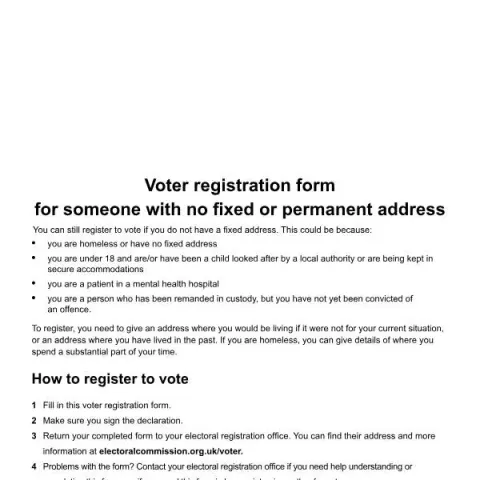
Understanding the Voter Registration Form for Individuals Without a Fixed Address in the UK
The UK government provides a specific voter registration process for individuals who do not have a fixed or permanent address. This is essential for ensuring that even those experiencing homelessness or in other temporary living situations can participate in elections. The official form designated for this purpose is the ITR-N-W, issued by the Ministry of Housing, Communities & Local Government.
Objectives of the Form
The primary goal of the Voter registration form for someone with no fixed or permanent address is to enable eligible residents to register to vote despite their lack of a permanent residence. This inclusivity ensures that all eligible citizens, regardless of their living circumstances, can exercise their democratic rights. The form addresses specific challenges faced by homeless individuals, patients in mental health hospitals, remanded prisoners, and young people in secure accommodation, facilitating their participation in local and national elections.
Who Can Use This Form?
This registration form is intended for residents in Wales who are eligible to vote and do not have a fixed address. Eligibility criteria include:
- Being aged 14 or over (although voting rights in elections vary with age)
- Possessing British, Irish, Commonwealth, or EU nationality
- Having permission to stay or enter the UK, Channel Islands, or Isle of Man, or being exempt from immigration controls
It is important to note that individuals under 18 can register, but their voting rights depend on the specific election type and age requirements.
How to Complete the Registration Process
Registering to vote using this form involves several straightforward steps:
- Fill out the form: Provide personal details, including full name, date of birth, nationality, and immigration status.
- Sign the declaration: Confirm the accuracy of the information provided by signing the form.
- Return the form: Send the completed form to your local electoral registration office. Contact details for this office can be found at the official electoral commission website.
- Seek assistance if needed: If you encounter difficulties understanding or completing the form, contact your electoral registration office for support. The form can also be provided in alternative formats, such as large print.
Addressing Unique Living Situations
The form allows applicants to specify their living circumstances, which is crucial for those without a fixed address. Options include:
- Homelessness: Applicants can provide details of where they spend a significant amount of time.
- Hospital Patients: Those in mental health hospitals can give the hospital's address and their last known residence.
- Remanded Prisoners: Individuals remanded in custody can provide the detention facility's address and their previous residence.
- Younger Individuals in Care: Children or young people in secure accommodation or under local authority care can specify their address accordingly.
Important Considerations and Deadlines
It is advisable to register as early as possible to ensure eligibility to vote in upcoming elections. The form emphasizes that registration delays might result in missing the opportunity to vote in the next scheduled election. The process is designed to be accessible, with provisions for assistance and alternative formats, ensuring inclusivity for all eligible voters.
Fill in your form directly online
No printing: type your details into the boxes of the official form, tick, then download the PDF ready to send.
- 1Type into the form boxes
- 2Tick in one click
- 3Save and download the PDF
Additional Support and Contact Information
If there are questions or issues related to the registration process, applicants are encouraged to contact their electoral registration office directly. The electoral commission's website offers further guidance and information about voter registration procedures and deadlines.
In summary, the ITR-N-W form is a vital tool for ensuring electoral participation among those without a fixed address, reinforcing the UK's commitment to inclusive democracy. Proper completion and timely submission of this form enable all eligible residents to have their say in the democratic process, regardless of their living situation.