Understanding the Anonymous Voter Registration Form in the UK
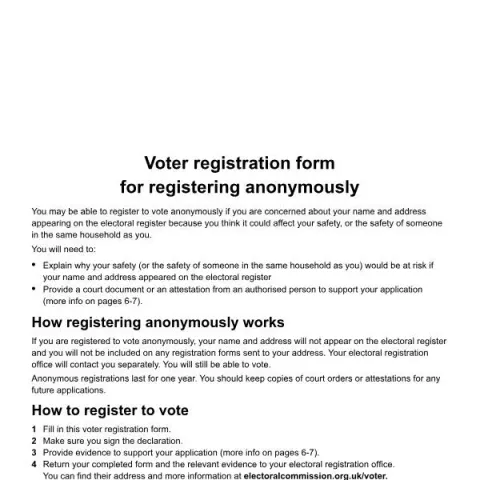
The Voter registration form for registering anonymously (form code: ITR-A-W), issued by the Ministry of Housing, Communities & Local Government, serves a specific purpose within the UK's electoral system. It provides a mechanism for individuals who face safety concerns to register to vote without their personal details being publicly accessible on the electoral register. This article explains who should consider using this form, how to complete it correctly, what supporting documents are required, and where to submit it.
Purpose and Eligibility
The primary purpose of this form is to allow individuals to register anonymously if they believe that their safety, or the safety of someone in their household, would be compromised if their name and address appeared on the electoral register. This situation might arise in cases of domestic violence, harassment, or other safety threats. The registration ensures that the person's electoral details are kept confidential, while still enabling them to participate in elections.
To be eligible, applicants must be resident in Wales and aged 14 or over. However, voting rights differ based on age and the type of election: individuals can vote in UK Parliament, local council, or Police and Crime Commissioner elections once they are 18, and in Senedd (Welsh Parliament) elections from age 16. Applicants must also hold specific nationalities or immigration statuses, including British, Irish, Commonwealth, or EU citizenship, with certain permissions to remain in the UK.
How to Fill Out the Form
Completing the form involves several key steps:
- Personal Details: Provide your first and last name, current address, and, if applicable, a correspondence address if different from your residential address. Applicants should specify whether they have changed their name recently and the date of the change, if applicable.
- Nationality and Immigration Status: State your nationality(s) and, if relevant, your immigration status, especially for EU citizens. This includes indicating whether you have settled or pre-settled status under the EU settlement scheme or other legal permissions to stay in the UK.
- Additional Addresses and Date of Birth: Indicate if you have moved within the last 12 months and provide your date of birth. If you do not know your exact date of birth, there are options to specify this.
- National Insurance Number: If you are aged 16 or over, include your National Insurance number, which can be found on official correspondence or payslips.
- Contact Details: Providing a phone number or email address is optional but recommended to facilitate communication regarding your registration.
- Voting Method: Specify whether you intend to vote by post or proxy, if applicable.
Most sections require accurate and up-to-date information to prevent delays or rejection of your application.
Supporting Evidence and Submission
To qualify for anonymous registration, applicants must provide supporting evidence demonstrating why their safety is at risk. This involves submitting a court document or an attestation from an authorized person, such as a social worker or police officer. The supporting document must clearly state the reasons for anonymity and be included with the completed form.
Once completed, the form along with the supporting evidence should be returned to your local electoral registration office. Contact details for the office can be found on the electoral registration website or through the local council's electoral services department.
Important Considerations and Duration
Registered anonymously, your details will not appear on the electoral register, and you will not receive any registration forms at your home address. Your registration lasts for one year, after which you will need to renew it if you wish to continue voting anonymously. It is advisable to keep copies of your court orders or attestations for future reference or renewal applications.
Fill in your form directly online
No printing: type your details into the boxes of the official form, tick, then download the PDF ready to send.
- 1Type into the form boxes
- 2Tick in one click
- 3Save and download the PDF
If you encounter any difficulties filling out the form or need it in an alternative format, such as large print, you should contact your electoral registration office directly for assistance.
Registering promptly is crucial to ensure your eligibility to vote in upcoming elections, as late applications might mean missing the opportunity to participate.