Understanding the Voter Registration Form for Individuals Without a Fixed or Permanent Address in the UK
The UK electoral system provides a pathway for individuals to register to vote even if they do not have a fixed or permanent address. The official form designed for this purpose, known as the ITR-N-S, is issued by the Ministry of Housing, Communities & Local Government. This guide aims to explain the circumstances under which this form is used, the information it requires, and the process for submitting it effectively.
Who Should Use This Form?
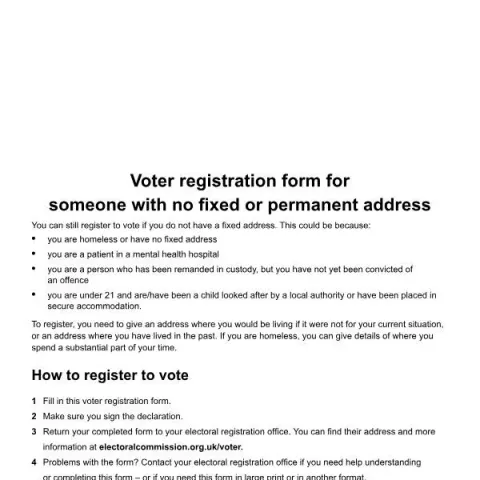
This specific registration process is tailored for those who face unique housing situations. It is applicable to:
- Homeless individuals or those without a fixed address
- Patients in mental health hospitals who are not detained under criminal proceedings
- Persons remanded in custody but not yet convicted of an offence
- Younger individuals under 21 who are or have been looked after by a local authority or placed in secure accommodation
In all these cases, the individual’s current living situation prevents them from having a traditional fixed address. The form allows for the registration of these voters by providing alternative address details.
Key Information Required for Registration
The form gathers essential personal and situational data to ensure the individual’s eligibility and to establish their voting registration. The main sections include:
- Full Name: Including any previous or changed names and the date of change if applicable.
- Date of Birth: To confirm eligibility based on age.
- Nationality: Listing all nationalities if multiple are held.
- National Insurance Number: For those aged 16 or over, to verify identity and eligibility.
- Recent Address History: Details of any address changes within the last 12 months, including overseas registration if relevant.
- Preferred Method of Contact: Whether correspondence should be collected in person or sent to an address.
Importantly, the form requires the applicant to specify their current living situation explicitly, selecting from options such as homelessness, detention in a mental health hospital, remand in custody, or being under 21 and looked after by a local authority.
Providing an Address When No Fixed Residence Exists
For individuals without a fixed address, the form asks for details of the place where they spend a substantial part of their time. This could be a temporary shelter, a friend’s residence, or any location where they regularly stay. If the applicant is a patient in a mental health hospital or detained under criminal proceedings, they must provide the hospital or detention centre’s address and their last known address prior to detention or hospitalization.
Steps to Complete and Submit the Form
The process is straightforward:
- Complete the form by filling in all relevant sections, ensuring accuracy and completeness.
- Sign the declaration at the end of the form to confirm the information provided is true.
- Return the completed form to the local electoral registration office. Contact details for this office can be found at the official electoral registration website.
If assistance is needed, applicants are encouraged to contact their electoral registration office for help, especially if they require the form in an alternative format such as large print.
Fill in your form directly online
No printing: type your details into the boxes of the official form, tick, then download the PDF ready to send.
- 1Type into the form boxes
- 2Tick in one click
- 3Save and download the PDF
Important Considerations and Deadlines
Registering to vote promptly is crucial, as there are deadlines before each election. Failure to register in time may result in missing the opportunity to vote in upcoming ballots. The form’s design ensures inclusivity by accommodating individuals in challenging housing situations, reaffirming the UK’s commitment to accessible democratic participation.
In summary, the ITR-N-S form provides a vital service for those without a fixed address, ensuring their right to vote is preserved. By understanding the specific circumstances under which it is used and the information it requires, applicants can navigate the registration process effectively and contribute to the democratic process.