Navigating the Waters of Device Registration: Understanding the Vessel Monitoring System
As the maritime landscape evolves, so does the necessity for transparent and efficient monitoring of fishing activities. For fishing vessels measuring 12 metres and over, the implementation of a Vessel Monitoring System (VMS) is not just a regulatory requirement; it is a commitment to sustainability and compliance with the law. The registration or re-registration of your satellite tracking device is a critical step towards ensuring that your vessel is equipped for monitoring under the auspices of the Marine Management Organisation (MMO). This document outlines the process, its nuances, and the obligations involved in getting your device registered effectively.
Setting the Stage: Who Needs to Register?
The registration process for the VMS is primarily directed at owners of fishing vessels within UK jurisdiction that meet the stipulated size criteria. However, understanding who qualifies as an owner or representative is essential. Let’s break down the key profiles involved in this registration:
1. Vessel Owners
- Individuals or companies that hold legal title to a fishing vessel.
2. Representatives of the Owners
- Persons or entities acting on behalf of the vessel owner, including charter companies or management firms.
In specific scenarios, such as when there is a change in vessel ownership or the tracking device, re-registration becomes necessary. Owners must remain diligent about updating their registration details to avoid compliance issues.
The Registration Process: Step by Step
Before embarking on the registration of your satellite terminal, it's imperative to gather all required information and documentation. The following steps outline the complete registration journey from start to finish:
1. Preparation of Documentation
You must ensure that several key documents are at hand for the registration process:
- Current Certificate of Registry indicating ownership details.
- Specifications of the satellite tracking device, including make, model, and serial number.
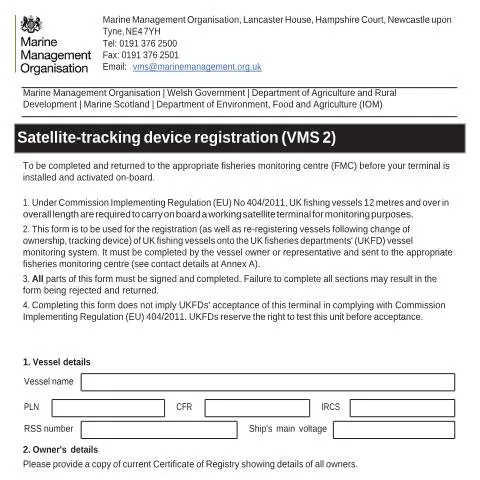
2. Completing the VMS 2 Form
Once you have your documents ready, proceed to fill out the VMS 2 form accurately:
- Vessel Details: Include the name, PLN, CFR, IRCS, RSS number, and the ship's main voltage.
- Owner's Details: Complete with a copy of your Certificate of Registry.
- Contact Information: Provide complete postal addresses and contact numbers.
- Tracking Device Information: Clearly state the details of your approved tracking device.
3. Submission of the Form
The completed VMS 2 form must be sent to the appropriate Fisheries Monitoring Centre (FMC) before the installation and activation of the device onboard. You may also need to forward a copy to AST Marine Sciences Limited for processing.
Key Dates and Timeline: When to Register?
Understanding the timeline associated with the registration of your tracking device is vital. Here’s a breakdown of important dates and actions to consider:
| Action | Deadline | Notes |
|---|---|---|
| Complete Registration Form | As soon as device installation is anticipated | Delay may result in compliance issues. |
| Submit Registration | Prior to device activation | Registration confirmation is essential for compliance. |
| Re-register After Ownership Change | Immediately after transfer | Failure to update may lead to penalties. |
By adhering to these timelines, vessel owners can ensure their operations continue smoothly without interruptions or legal penalties.
Complex Scenarios: Addressing Special Cases
While the process may seem straightforward, there are instances where complexities arise. Let's examine some of these scenarios:
1. Change of Ownership
In the event of a sale or transfer of ownership, the new owner must ensure that the device is re-registered in their name. This step is crucial not only for monitoring but also for accountability and traceability. It is the new owner’s responsibility to contact the relevant FMC to initiate the re-registration process.
2. Multi-Vessel Owners
For individuals or companies managing multiple vessels, it is imperative to maintain separate registration details for each. This includes distinct VMS 2 forms for every vessel, even if the devices are of the same make and model. A systematic approach is advisable to avoid administrative errors and compliance issues.
3. Emergency Situations
If a vessel experiences an emergency that affects the functionality of the satellite tracking device, immediate communication with the FMC is necessary. The operator must report the incident and seek guidance on temporary measures while addressing the issue.
Understanding Compliance: The Perspective of the Marine Management Organisation
The MMO plays a crucial role in overseeing compliance with the VMS requirements. It is essential for vessel owners to comprehend the implications of non-compliance:
1. Monitoring and Surveillance
Once registered, the MMO has the authority to monitor the satellite data generated by the tracking device. This data aids in ensuring that fishing practices adhere to UK and EU regulations.
2. Testing and Validation
It is important to note that the completion of the VMS 2 form does not automatically confirm acceptance of the terminal by the UK Fisheries Departments (UKFD). The MMO retains the right to test the unit before granting full compliance. Owners must be prepared for potential assessments.
3. Data Sharing and Privacy Considerations
Under the Data Protection Act 2018, vessel owners must be aware that data collected may be shared with authorised agents, other fisheries departments, and relevant authorities. Transparency in data processing ensures that owner privacy is upheld while maintaining compliance and safety in maritime operations.
Remaining Informed: Keeping Up with Regulatory Changes
The maritime industry is subject to ongoing regulatory updates and changes. Vessel owners must remain proactive in keeping themselves informed about potential alterations in legislation that might affect their monitoring obligations:
- Subscribe to updates from the Marine Management Organisation for the latest news.
- Engage with local fishing associations that provide insights into regulatory changes.
- Regularly review training and compliance workshops designed for vessel operators.
What Comes Next: Acknowledgment and Record-Keeping
After submission of the VMS 2 form, vessel owners can expect an acknowledgment from the relevant Fisheries Monitoring Centre. It is advisable to keep a digital or physical copy of this communication for future reference. Proper record-keeping is not just a best practice; it’s an essential aspect of regulatory compliance.
In conclusion, registering or re-registering your vessel's satellite monitoring device involves a series of detailed steps designed to ensure compliance with UK fisheries regulations. By understanding the intricacies of this process, vessel owners can effectively navigate the administrative waters of the Marine Management Organisation, safeguarding their operations while contributing to sustainable fishing practices.
Understanding the Importance of Vessel Monitoring Systems (VMS)
A Vessel Monitoring System (VMS) is an electronic system that monitors the location of fishing vessels to ensure compliance with fishing regulations. These systems provide real-time data about the movements of vessels, which is vital for authorities like the Marine Management Organisation (MMO) in the UK to ensure sustainable fishing practices and protect marine ecosystems.
The use of VMS is not just about adhering to the law; it plays a fundamental role in conserving fish stocks and managing marine resources effectively. By tracking vessels, the MMO can assess the fishing activities and identify overfishing hotspots, which may require regulatory changes or additional protections. This data-driven approach enhances transparency and accountability in the fishing industry, fostering a culture of responsibility among fishers.
Moreover, VMS has gained prominence due to the increasing pressure to safeguard maritime environments. As climate change affects marine habitats, monitoring fishing practices allows for quicker responses to evolving situations, ensuring that practices do not further compromise vulnerable species. Thus, registering or re-registering your VMS device is not merely a bureaucratic obligation; it is a step towards contributing to a healthier ocean ecosystem and a sustainable fishing future.
Common Issues Faced During VMS Registration and How to Resolve Them
While the process of registering or re-registering your Vessel Monitoring System might seem straightforward, several common issues can arise that may complicate the experience. Being aware of these pitfalls can save you time and ensure compliance with the regulations.
- Device Compatibility: Not all VMS devices are compatible with the UK regulations. Ensure your device meets the standards set by the MMO. This may require consulting the MMO’s official guidelines or reaching out to device manufacturers for confirmation.
- Data Transmission Issues: Problems can occur if the VMS device fails to transmit data accurately. Regular maintenance and checking the device’s functionality can prevent this. If issues arise, contact your service provider immediately to resolve connectivity problems.
- Incomplete Information: When submitting your registration, ensure all required fields are filled accurately. Missing or incorrect data can lead to delays in processing. Double-check your details against the MMO’s requirements to avoid unnecessary complications.
- Notification of Changes: If there are any changes to your vessel’s status or ownership, you must inform the MMO promptly. Failing to do so may lead to penalties. Keeping a record of any changes and promptly notifying authorities is essential for compliance.
In summary, while registering your VMS device is crucial, being proactive in addressing these common issues can facilitate a smoother process. By employing best practices and maintaining open lines of communication with the MMO, you can ensure that your VMS registration remains in good standing.
The Role of Compliance Monitoring in the Fishing Industry
Compliance monitoring through vessel tracking is a cornerstone of responsible fishing practices. The MMO employs VMS not only to ensure that fishing vessels adhere to national and international regulations but also to promote sustainable practices within the fishing community.
Enforcement of regulations through VMS aids in monitoring fishing quotas, protected fishing areas, and seasonal restrictions. For instance, if a vessel enters a restricted zone without appropriate permissions, the MMO can take immediate action based on the data received from the VMS. This level of monitoring is vital for maintaining the balance between economic activities and conservation efforts.
Additionally, compliance monitoring serves an educational purpose. Fishermen who understand that their activities are being tracked are often more conscientious about adhering to regulations. This awareness cultivates a culture of sustainability within the industry, as fishers recognize their role in preserving marine environments for future generations.
Moreover, data collected from VMS can be used for research purposes, informing policy-making and resource management strategies. The MMO collaborates with scientific bodies to ensure that the data collected helps develop effective conservation policies that benefit both the marine environment and the fishing industry.
Ultimately, compliance monitoring through vessel tracking is indispensable for fostering a responsible fishing culture that prioritizes the health of marine ecosystems while ensuring the livelihoods of fishers are sustainable in the long term.